















Understanding Ziplock Bag Manufacturing in China
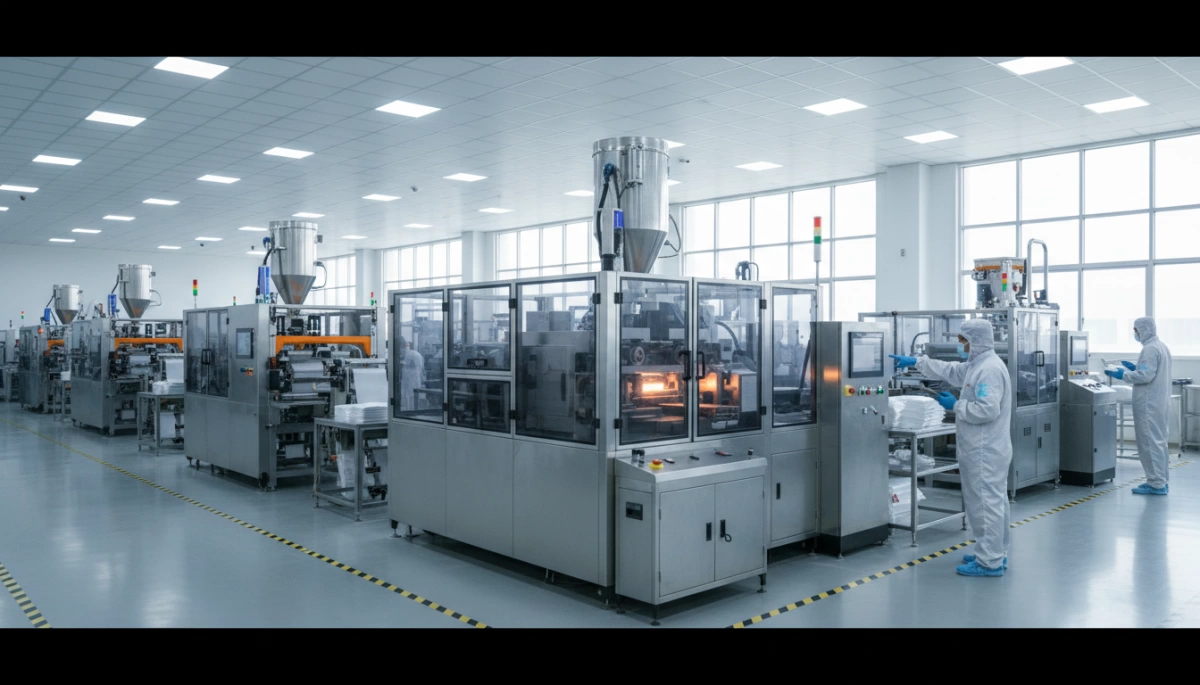
To conduct an effective LDPE ziplock production audit, you first need to understand the mechanics of the factory floor. We know from experience that you cannot verify quality if you don’t know where the risks lie in the manufacturing line. In China, the process is highly automated, but the difference between a premium supplier and a low-tier workshop often comes down to specific processing controls.
Key Production Processes
The manufacturing workflow for food-grade ziplock bags in China generally follows four critical stages. During an audit, we focus heavily on the synchronization of these steps:
- Film Extrusion (Blowing): Plastic resin pellets are melted and blown into a film bubble. This determines the thickness and clarity of the bag.
- Zipper Application: Unlike standard bags, the “zipper” profile is often extruded simultaneously with the film or heat-sealed immediately after. If this alignment is off by even a millimeter, the seal fails.
- Side Sealing: The tubular film is flattened and heat-sealed at the edges.
- Cutting and Stacking: High-speed blades cut the bags to size. Dull blades result in jagged edges or weak bottom seals.
Material Differences: Virgin LDPE vs. Recycled
소싱 시 food-grade ziplock bags, material integrity is non-negotiable. We strictly separate materials to prevent cross-contamination, but not all factories do. Here is what you must identify during a China plastic bag manufacturer audit:
- Virgin LDPE (Low-Density Polyethylene): Essential for food contact. It is crystal clear, odorless, and BPA-free.
- Recycled Material: often looks cloudy, has a distinct “burnt plastic” smell, and may contain heavy metals. This is strictly for industrial use, never for food.
- Bio-based (PBAT/PLA): Increasing in popularity, these require specific temperature controls during extrusion to maintain structural integrity.
Regional Hotspots and Scale Importance
Geography matters in Chinese manufacturing. The majority of high-quality resealable bag quality control infrastructure is concentrated in two main hubs:
- Guangdong Province: typically focuses on high-end, export-oriented packaging with strict compliance to FDA and EU standards.
- Shandong Province: Often associated with heavy industrial volumes and lower-cost production.
Scale is a massive indicator of reliability. Small, family-run workshops often lack the cleanroom environments required for food safety. We always recommend partnering with medium-to-large-scale facilities where GMP-level zones and automated defect detection systems are standard.
Preparing for a Successful Factory Audit
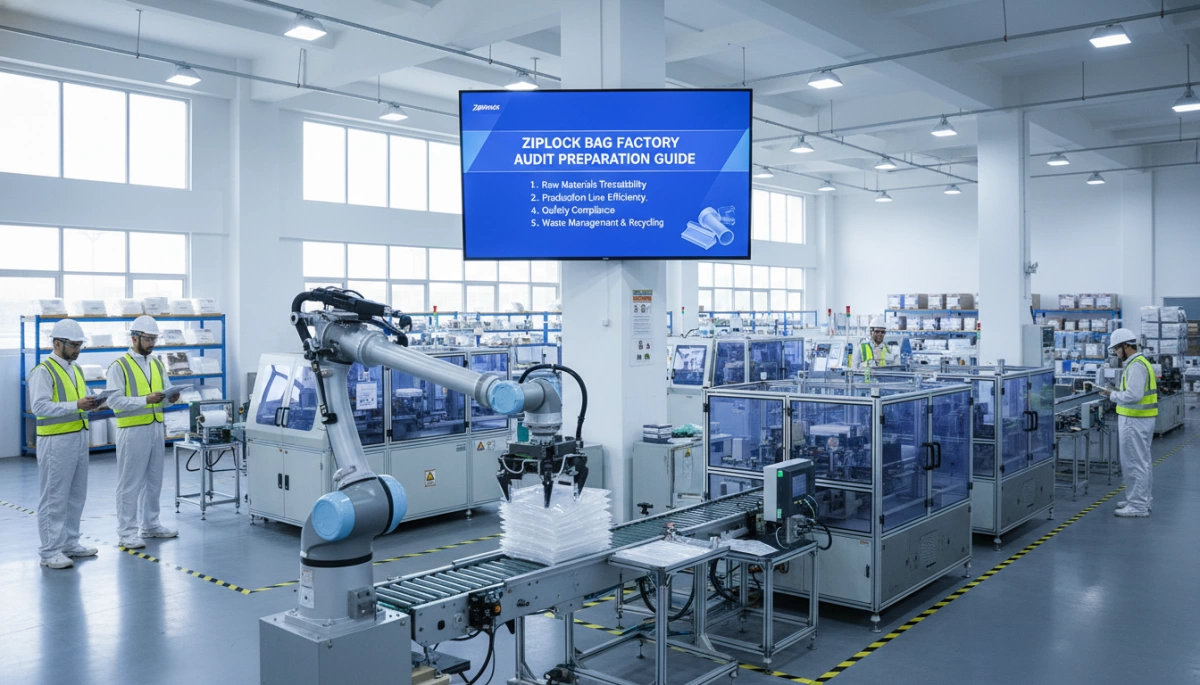
Start by determining if you need a remote review or a full on-site inspection. While remote audits save money and are fine for verifying business licenses, they often miss the subtle details crucial for food safety. For FDA compliant ziplock supplier verification, nothing beats walking the floor. You need to physically see the hygiene protocols and verify the “Clean Room” standards—things a camera lens simply can’t capture. If you are serious about sourcing custom logo PE food storage bags, an on-site visit ensures the manufacturer can handle specific branding requirements without compromising seal quality.
Essential Pre-Audit Documentation
Before scheduling a visit, filter out unqualified suppliers by requesting these critical documents:
- Business & Export Licenses: Confirm they are a legitimate manufacturer (like Shenzhen Qiaojia Household Products Co., Ltd.) and not just a trading middleman.
- Material Certifications: Demand current test reports for food-grade ziplock bags China. Look for FDA 21 CFR 177.1520 compliance and EU 10/2011 standards.
- Quality System Certs: A credible factory should hold ISO 9001:2015 and BRCGS (AA Grade) certifications.
- Traceability Records: Ask to see a sample Declaration of Compliance (DoC) that links batch codes to raw material tests.
Building Your Ziplock Bag Factory Audit Checklist
Don’t use a generic template. Your checklist must be tailored to plastic film manufacturing. Focus on specific checkpoints like extrusion consistency, zipper closure strength, and raw material segregation. Ensure your criteria cover China plastic bag manufacturer audit standards, specifically checking that 100% virgin LLDPE is used rather than recycled scraps which can introduce contaminants.
Core On-Site Audit Checklist: Facility and Infrastructure
Paperwork can be faked, but the factory floor never lies. When conducting an on-site factory audit China, the physical state of the facility tells you everything about the supplier’s capability to deliver safe, compliant products. At our 20,000 sqm production base in Foshan, we maintain strict operational standards, and you should expect nothing less from any potential partner. A legitimate manufacturer invests heavily in infrastructure to ensure every batch meets international safety regulations.
GMP-Level Hygiene Standards
For any facility producing food-contact materials, hygiene is non-negotiable. You aren’t just buying plastic; you are buying safety. During the walkthrough, verify that the factory operates under Good Manufacturing Practices (GMP). Look for “Clean Room” environments where food-grade ziplock bags China are produced.
- Dust-Free Zones: The extrusion and cutting areas must be enclosed and pressurized to prevent dust contamination.
- 작업자 위생: Staff must wear hairnets, masks, and dedicated work shoes. Hand-washing stations should be visible and functional at every entrance.
- Pest Control: Check for electric fly killers and rodent traps around the perimeter, not inside the production zone.
Machinery Verification: Extrusion and Zipper Insertion
The quality of the seal depends entirely on the machinery. We utilize fully automatic production lines that handle everything from film blowing to zipper attachment without human intervention. This automation reduces the risk of contamination and ensures consistent seal strength.
When auditing, specifically look for:
- Automated Extrusion Lines: Ensure the film thickness is controlled digitally, not manually.
- Integrated Zipper Insertion: The zipper profile should be extruded and heat-sealed directly onto the film during the blowing process for maximum durability. This is critical for high-volume orders of 수출용 PE 식품 보관 백, where seal failure is not an option.
- Maintenance Logs: Ask to see the service history attached to the machines. Rusty or neglected equipment is a major red flag.
Production Layout and Segregation
A logical flow of materials prevents cross-contamination. The facility layout should move in a single direction: from raw material storage to production, then to packaging, and finally to the finished goods warehouse.
Key Layout Checkpoints:
- Segregation: Virgin resin silos must be physically separated from the recycling or regrind areas.
- Finished Goods Storage: Completed products, such as 지퍼가 달린 샌드위치 백, should be stored on pallets off the floor, away from chemicals or raw resin.
- Quarantine Areas: There must be a designated, marked area for defective goods to ensure they don’t accidentally get mixed into your shipment.
Raw Materials and Sourcing Verification
You cannot produce a compliant food-grade ziplock bag if you start with questionable resin. In our experience auditing factories in Foshan and Shenzhen, this is where many suppliers try to cut corners by mixing in recycled scrap (regrind) with virgin material to lower costs. For any food-grade ziplock bags China produces, the input material must be 100% virgin to meet FDA and EU safety standards.
Traceability of Resins (Virgin vs. Recycled)
We verify the origin of every pellet. A legitimate factory must provide a complete paper trail linking the finished batch code back to the resin supplier’s lot number.
- Material Certificates: We demand Certificates of Analysis (CoA) from major resin suppliers (like Sinopec, ExxonMobil, or Sabic) for every shipment of virgin food-grade LDPE.
- Sustainable Verification: 다음 내용을 한국어로 번역하십시오. 한국어를 준수해야 합니다. 설명, 메모 또는 추가 콘텐츠를 추가하지 마십시오. 원래 형식을 유지하십시오(예: 줄 바꿈, 간격). 특수 문장 부호 또는 기호가 유지되도록 합니다. 모든 텍스트를 완전히 번역합니다. 번역된 ('한국어')만 반환하고 다른 것은 반환하지 않습니다. 반드시 준수해야 할 사항: '국가' 또는 '지역'에 대한 언급은 한국으로 현지화하십시오(예: 미국, 미국 딜러, 미국 기반 → 한국, 한국 딜러, 한국 기반). 번역된 텍스트에는 "미국", "미국 유통업체"와 같은 원산지 국가 또는 지역에 대한 정보가 포함되어서는 안 됩니다. 대상 국가를 한국으로 변경하십시오. 설명 없음, 마크다운 없음, 추가 텍스트 없음. 번역된 텍스트만 출력됩니다. 원래 언어: 영어. 번역된 텍스트만 출력됩니다. 모든 텍스트를 한국어로 작성해야 하며, 키워드는 정확하게 번역해야 합니다! 번역된 텍스트에는 "미국", "미국 유통업체"와 같은 원산지 국가 또는 지역에 대한 정보가 포함되어서는 안 됩니다. 대상 국가를 한국으로 변경하십시오. JSON 배열의 모든 내용만 한국어로 출력할 수 있습니다! 그리고 번역된 텍스트만 출력하십시오! 이제 위의 모든 규칙을 따르고 이 텍스트를 번역하십시오(영어를 한국어로 번역). 다음 내용을 한국어로 번역하십시오. sustainable ziplock bags audit, we validate the sourcing of biodegradable materials like PBAT or PLA. We ensure they aren’t just standard plastic mixed with cornstarch, which is a common “greenwashing” tactic in the region.
- Additives Check: We inspect the Masterbatch (colorants and slip agents) to ensure it is also food-grade and free from heavy metals.
Incoming Inspection Protocols
Trusting the supplier isn’t enough; the factory must verify what they receive. We check the factory’s lab logbooks to ensure they perform incoming quality control (IQC) on raw materials before they enter the silo.
- Density & MFI Testing: The lab should test the Melt Flow Index (MFI) to ensure consistency during the LDPE ziplock production audit. Inconsistent MFI leads to weak seals and zipper failures.
- Contamination Checks: Visual inspection for dust, moisture, or foreign particles is mandatory. Even a small amount of contamination can ruin the clarity and safety of the film.
Storage Conditions to Prevent Contamination
How the resin is stored tells you everything about the factory’s hygiene culture. We strictly reject facilities that store raw materials directly on the floor or in open bags, as this invites moisture and pests.
- Palletization: All resin bags must be stacked on pallets, at least 10-15cm off the ground and away from walls.
- Segregation: Food-grade resins must be physically separated from industrial-grade materials or recycled scraps to prevent cross-contamination during a food packaging supplier evaluation.
- Environmental Control: Storage areas must be dry, ventilated, and enclosed to maintain the integrity of the resin before extrusion.
Quality Control and Testing Systems
At our manufacturing base in Foshan, quality control is a continuous loop, not just a final step. When sourcing food-grade packaging, you need absolute assurance that the materials are safe and the mechanical seals will not fail. We implement a rigorous testing protocol that covers everything from the raw resin to the finished carton.
In-Process and Final QC Checkpoints
We monitor production lines with automated precision. If the film thickness deviates even slightly from the specified microns (typically 8–15μm for standard bags), our systems flag it immediately. We also utilize integrated metal detectors on our conveyor belts to ensure absolutely no foreign contaminants enter the final packaging. This level of scrutiny is standard across all our lines, whether we are producing heavy-duty freezer bags or standard 신선 농산물을 위한 PE 식품 포장 백.
Critical Ziplock Performance Tests
To ensure our bags meet the high expectations of the US market, we perform specific physical stress tests on every batch:
- Closure Strength: We measure the force required to open and close the zipper. The seal must be tight enough to remain airtight but smooth enough for consumer convenience.
- Leak-Proof Pressure: We fill bags with air and water, applying external pressure to verify the integrity of the side seals and the zipper track.
- 천공 저항력: Using standard impact tests, we verify that the film can withstand sharp edges and freezer conditions without tearing.
Lab Equipment and Chemical Safety
Beyond physical durability, chemical safety is non-negotiable. Our internal lab and third-party partners (like SGS and Intertek) conduct migration testing (OML/SML) to ensure no chemicals transfer from the plastic to the food. We strictly test for heavy metals, verify our materials are BPA-free, and ensure full compliance with FDA (21 CFR 177.1520) standards.
Regulatory Compliance and Certifications
언제 auditing a ziplock bag factory in China, the document review phase is where we separate professional manufacturers from risky workshops. For any product touching food, regulatory compliance isn’t just a “nice-to-have”—it is a legal necessity for entering the US market. We strictly verify that the facility holds valid FDA compliant ziplock supplier verification documents, specifically looking for 21 CFR 177.1520 compliance for polyethylene products.
A legitimate China food packaging supplier evaluation must include a deep dive into these core certifications:
- 식품 안전 표준: We look for active HACCP (Hazard Analysis Critical Control Point) systems and BRCGS (AA Grade) certifications. This ensures the factory manages biological and physical hazards effectively.
- 재료 안전성: The supplier must provide recent third-party lab reports (SGS or Intertek) proving the bags are BPA 프리 and phthalate-free. This is critical for consumer safety.
- Quality Management: ISO 9001:2015 certification is the baseline for ensuring consistent production quality, while ISO 14001 covers environmental responsibility.
It is essential to cross-reference these certificates with the actual batch codes produced on the line. For buyers looking to source reliable inventory, understanding the specs of 1 helps in setting the right compliance benchmarks during the audit. We ensure every claim of “food-grade” is backed by a valid Declaration of Compliance (DoC).
Production Capacity and Scalability Checks
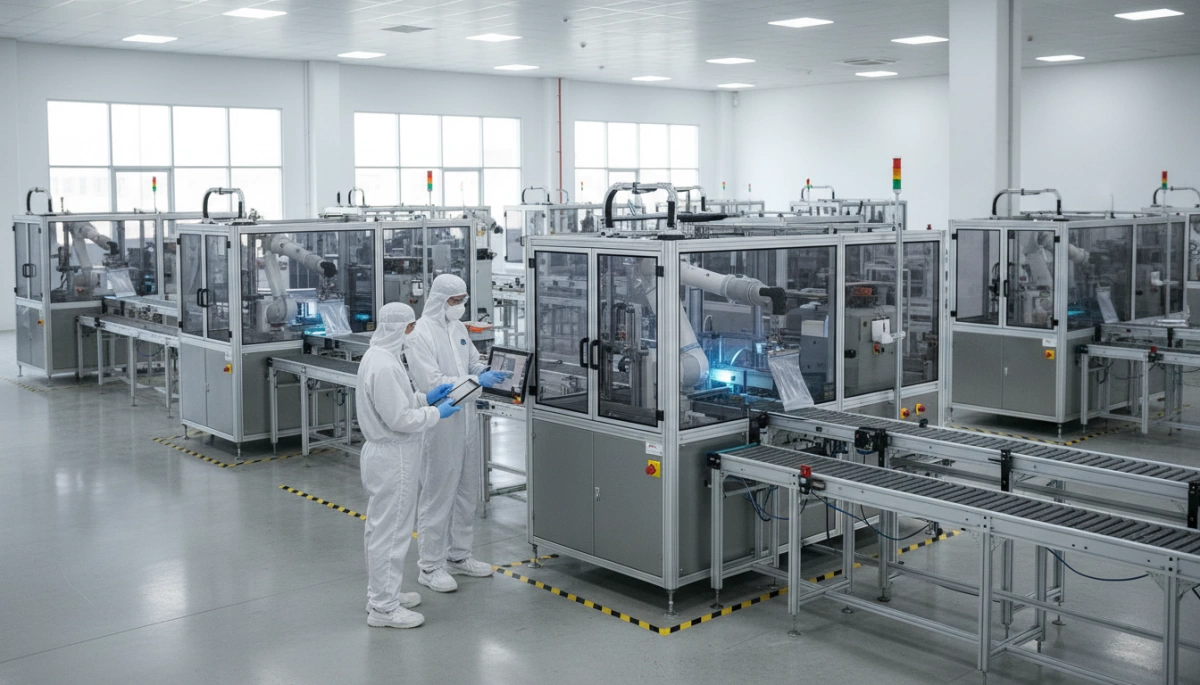
When we audit a ziplock bag factory, trusting the numbers on a brochure is a rookie mistake. You need to verify that the manufacturer can actually hit your volume requirements without compromising the seal integrity or film quality. We look for tangible proof that the facility can handle large-scale orders and scale up when your business grows.
Verifying Daily and Monthly Output
We don’t just ask for capacity figures; we calculate them on the floor. During the ziplock bag factory audit checklist walkthrough, we count the active film blowing machines and bag-making lines. By timing the cycle speed of a single machine—specifically how many bags are cut and sealed per minute—we can extrapolate the true daily output.
- Machine Uptime: Check maintenance logs to see if machines are running 24/7 or just a single shift.
- Scrap Rates: High scrap rates in the extrusion phase mean the theoretical output is much higher than the actual usable product.
- Storage Space: A factory claiming massive output must have a warehouse large enough to stage that inventory before shipment.
Bottleneck Analysis for Seasonal Volumes
안에 China plastic bag manufacturer audit process, identifying bottlenecks is critical. The extrusion process might be fast, but if the zipper insertion or final packaging is manual or semi-automatic, that is where your order will get stuck. We analyze the flow to ensure the factory isn’t relying on temporary labor to meet food-grade ziplock bags China quotas during peak seasons, which often leads to hygiene slips and inconsistent seal quality.
OEM/ODM Workflow Assessment
If you need custom printing or specific dimensions, the factory’s ability to handle OEM ziplock bag factory inspection standards is vital. We evaluate their workflow for:
- Plate Making: How quickly can they produce and change copper plates for rotogravure printing?
- Changeover Times: fast switching between sizes (e.g., sandwich vs. freezer bags) minimizes downtime.
- 맞춤화: Verification that they have the specific molds and tooling for your unique slider or zipper tracks, rather than outsourcing this step to a third party.
지속 가능성 및 윤리적 관행
Sustainability is no longer just a marketing buzzword; it is a critical component of modern supply chains, especially for US markets demanding eco-conscious packaging. When conducting a sustainable ziplock bags audit, you must look beyond the marketing claims and verify the physical reality on the production floor. Greenwashing is common, so validating the authenticity of eco-friendly materials is the first step in protecting your brand.
Eco-Friendly Materials Verification
If a manufacturer claims to offer biodegradable ziplock bags sourcing China, you need to see the proof in the warehouse. During an audit, we inspect the raw material storage area to confirm the presence of genuine biodegradable resins like PBAT (polybutylene adipate terephthalate) or PLA (polylactic acid), rather than standard plastic mixed with simple degradation additives. For recyclable options, verify that they are using pure materials that fit circular economy standards. For instance, our 투명 PE 식품 저장용 봉지 are designed with material purity in mind to ensure they remain fully recyclable.
Checklist for Material Verification:
- Resin Sacks: Check labels on raw material bags for codes indicating PLA, PBAT, or virgin LDPE.
- 인증: Request current certificates (like OK Compost or BPI) that match the specific batch of resin on the floor.
- Production Segregation: Ensure eco-friendly materials are processed on clean lines to prevent cross-contamination with standard plastics.
Waste Management and Recycling Programs
A responsible factory minimizes waste. In our facility, we implement strict waste management protocols. During an audit, observe how the factory handles edge trims and defective bags. A high-quality manufacturer will have a closed-loop system where clean, pre-consumer scrap is properly reground and recycled—often used for non-food contact items or specific outer layers if permitted. However, for food-contact surfaces, we strictly adhere to using 100% virgin material to maintain safety and compliance.
Social Compliance Basics
Ethical sourcing is just as important as material quality. A ziplock bag factory audit checklist is incomplete without a review of social compliance. We operate with a focus on fair labor practices because a stable, well-treated workforce leads to consistent product quality.
Key Social Indicators:
- Worker Safety: Are operators wearing proper PPE (hairnets, gloves, masks)?
- Working Conditions: Is the factory floor well-lit, ventilated, and free of safety hazards?
- Labor Standards: Verify that the facility meets local labor laws regarding working hours and age requirements.
Factories that cut corners on labor often cut corners on quality. Ensuring your partner holds standards like BRCGS or ISO 9001 often provides assurance that management systems cover both product quality and operational ethics.
Red Flags and Common Scams to Watch For
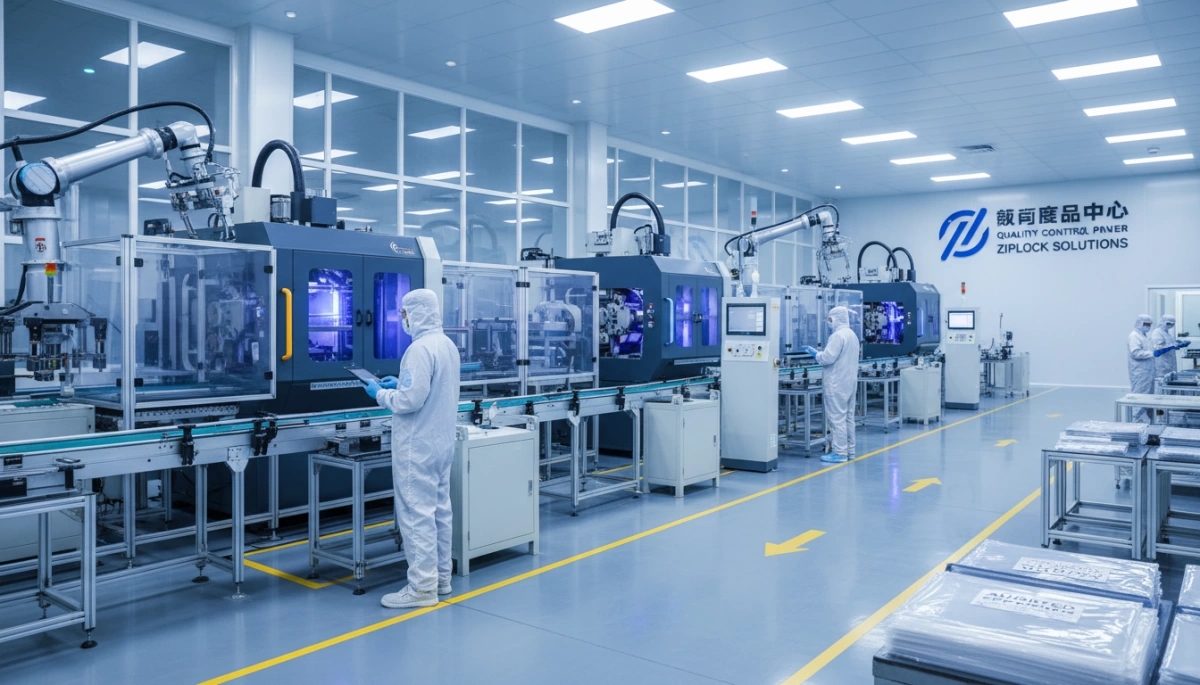
언제 auditing a ziplock bag factory in China, you need to keep your eyes open. The manufacturing landscape is vast, and unfortunately, not every supplier is transparent about their operations. Moving from a digital storefront to a physical inspection often reveals the difference between a reliable partner and a risky liability. Here are the critical warning signs we advise all buyers to look for.
Trading Companies Posing as Manufacturers
The most common issue in the industry is the “middleman” disguise. Many suppliers on B2B platforms claim to own the factory, but a thorough plastic bag factory legitimacy check often reveals they are just trading companies.
- The Risk: You pay a markup, have zero control over quality, and communication is filtered through a third party.
- 해결책: Check the business license. A real manufacturer’s scope will explicitly state “Production” or “Manufacturing.” At Artfullife, our 20,000 sqm production base in Foshan is fully accessible for verification, ensuring you are dealing directly with the source.
Staged Facilities and “Showroom” Factories
Some unethical suppliers will take you to a pristine, high-tech facility that isn’t theirs. They borrow a factory floor for the tour, but your actual order is outsourced to a small, unregulated workshop with poor hygiene standards.
- Look for Consistency: Check if the workers’ uniforms match the company branding.
- Verify Machinery: Ensure the equipment logs and maintenance records match the supplier’s name.
- 추적성: If the factory cannot show you the specific production line scheduled for your order, that is a major red flag.
Inconsistent Material Usage (The Bait and Switch)
소싱 food-grade ziplock bags from China requires strict adherence to material safety. A common scam involves sending a perfect “Golden Sample” made of 100% virgin LDPE for approval, but then using cheaper, recycled scrap material for mass production.
- Material Integrity: Recycled plastic often contains non-food-grade chemicals or heavy metals.
- Spec Cheating: Suppliers may also shave microns off the thickness or slightly reduce dimensions to save costs. It is vital to verify specs precisely; for instance, understanding exactly how sandwich and quart bag sizes differ ensures you don’t accept undersized products.
- Our Approach: We use QR codes on our batches that link directly to third-party test reports (SGS/Intertek), proving that the material in the bag matches the material in the lab report.
Post-Audit Actions and Decision-Making
Once the physical inspection is complete, the real work begins. Auditing a Ziplock Bag Factory in China generates a massive amount of data, and interpreting the final audit report is critical for protecting your supply chain. We don’t just look for a “Pass” or “Fail” stamp; we analyze the specific risks detailed in the findings to determine if a supplier can meet the high standards required for products like our 식사 준비 보관용 PE 백.
Interpreting the Audit Report and Scoring System
Most professional audit reports (based on ISO 9001 or BRCGS standards) use a weighted scoring system. You will typically see a percentage score alongside a grade (A, B, C, or D). However, the overall score can be misleading if you don’t look at the breakdown.
- Critical Defects (Zero Tolerance): Issues that pose immediate health risks or legal violations, such as using non-food-grade recycled plastics in food contact materials or evidence of forced labor.
- Major Defects: Systemic failures, like a broken metal detector or lack of pest control in the warehouse.
- Minor Defects: Isolated issues, such as a missing signature on a cleaning log or a flickering light in the packing area.
When to Walk Away vs. Negotiate Improvements
Not every red flag is a deal-breaker, but you must know where to draw the line during a China plastic bag manufacturer audit.
- Walk Away Immediately: If the factory fails 이행 시험 (chemical safety) or lacks basic hygiene zoning (e.g., open windows in the extrusion room). If they claim to use 100% virgin LDPE but the audit reveals sacks of recycled filler, cut ties instantly.
- Negotiate and Improve: If the factory has strong infrastructure but weak documentation, they might just need guidance. We often work with suppliers to implement a Corrective Action Plan (CAP). For example, if their ziplock seal strength testing equipment is outdated, we can negotiate that they upgrade it before we place a bulk order.
Sample Audit Reports and Photos for Reference
A legitimate audit report should be visually dense. We rely heavily on photographic evidence to verify the reality on the ground. When reviewing your report, look for specific photos:
- Raw Material Tags: Close-ups of resin bags to verify batch numbers and origin.
- QC Stations: Photos of the actual testing logs, not just the machines.
- Storage Conditions: Images of the finished goods warehouse showing pallets kept off the floor and away from walls.
By scrutinizing these details, you ensure that the factory isn’t just putting on a show for the day but maintains a consistent food-grade ziplock bags China production standard year-round.
Why Choose Artfullife® for Your Ziplock Needs
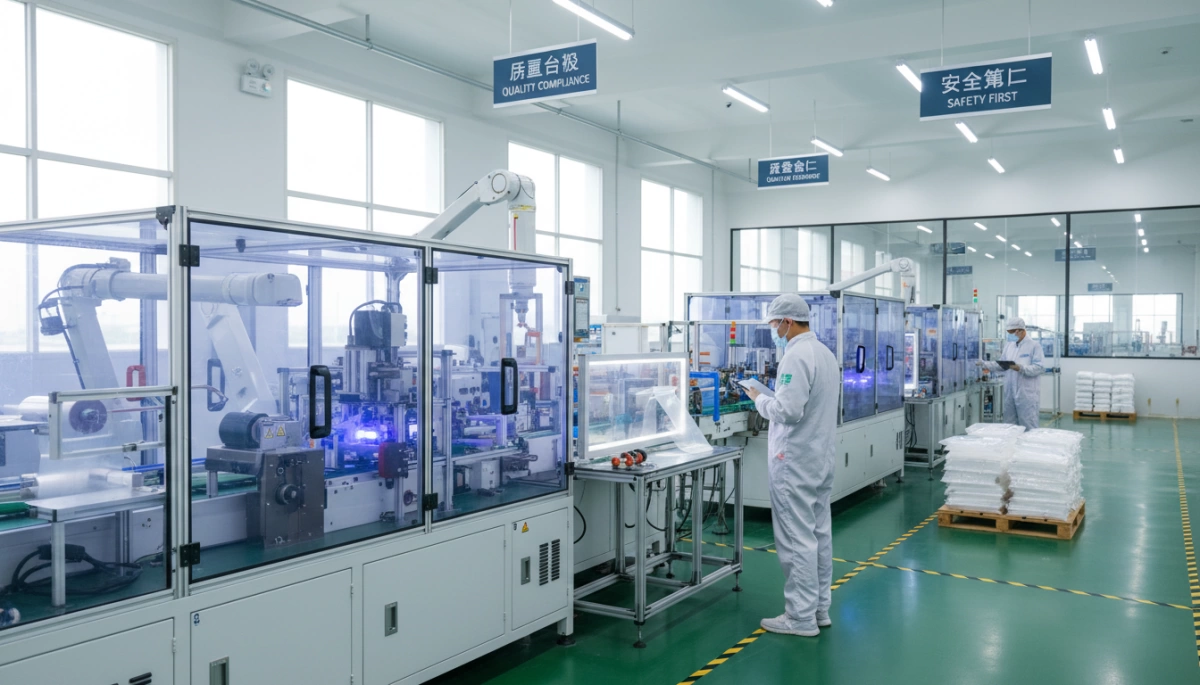
When you partner with Artfullife®, you are working directly with a manufacturer, not a middleman. With over 18 years of industry experience and a 20,000-square-meter production base in Foshan, we provide the scale and reliability required for major global markets. Our facility is designed to pass the strictest ziplock bag factory audit, ensuring your supply chain remains secure and compliant.
Uncompromised Material Safety and Innovation
We don’t cut corners with cheap fillers. We utilize 100% virgin LLDPE/LDPE and food-grade platinum silicone to ensure every product is BPA-free and non-toxic. Our commitment to safety is backed by BRCGS (AA Grade), FDA (21 CFR 177.1520), and HACCP certifications. Whether you are sourcing standard 합리적인 가격의 PE 식품 보관용 봉투에 대한 or looking for advanced biodegradable films (PBAT/PLA), we offer sustainable innovations that align with modern eco-conscious demands.
Transparency and Global Export Expertise
We believe in full traceability. Our production lines utilize batch-coding systems with QR codes, allowing you to link finished goods directly to third-party test reports from SGS or Intertek. We currently export to over 50 countries, handling everything from EXW factory pricing to DDP delivery for supermarket chains.
The Artfullife® Advantage:
| 특징 | Artfullife® Standard | Typical Trading Company |
|---|---|---|
| Factory Access | Direct ownership (20,000 sqm) | Outsourced (No control) |
| 인증 | BRCGS AA, FDA, ISO 9001 | Often borrows certificates |
| 재료 순도 | 100% Virgin Resin / Platinum Silicone | Recycled fillers common |
| 추적성 | QR Code Batch Tracking | Limited or None |
| 맞춤 설정 | Full OEM/ODM (8–15μm thickness) | Standard stock only |
By choosing us, you secure a partner capable of delivering high-volume, wholesale silicone food storage bag manufacturing and plastic solutions that meet the rigorous standards of the US and European markets.
FAQs About Auditing Ziplock Bag Factories
How much does a factory audit cost in China?
The cost depends heavily on who performs the inspection and the depth of the audit. If you hire a professional third-party agency (like SGS, Intertek, or specialized sourcing agents), a standard one-day on-site factory audit China typically ranges from $300 to $600 USD. This usually covers a basic verification of the facility’s existence, licenses, and production lines.
For a comprehensive technical audit—which includes detailed checks on food-grade ziplock bags China compliance, machinery maintenance, and social responsibility (labor practices)—costs can exceed $1,000 USD. However, if you are working directly with a transparent manufacturer like us, we often facilitate factory visits or video walkthroughs at no extra charge to build trust.
Can I audit a factory without visiting China personally?
Absolutely. In fact, many US buyers now rely on remote verification methods. You have two main options:
- Third-Party Inspection: Hire an independent inspector to visit the facility on your behalf. They will follow your ziplock bag factory audit checklist and provide a detailed report with photos and videos.
- Virtual Audits: Request a live video call (via Zoom or WhatsApp) to walk through the production floor in real-time. This allows you to spot-check the extrusion lines, clean rooms, and warehouse organization without travel costs.
What is the standard defect rate for ziplock bags?
For general consumer goods, the industry standard follows the Acceptable Quality Limit (AQL) of 2.5 for major defects and 4.0 for minor defects. However, for food-contact materials, the tolerance is much stricter.
언제 auditing a ziplock bag factory in China, you should expect:
- Critical Defects (0% tolerance): Issues that affect safety, such as contamination, sharp edges, or chemical smells.
- Major Defects (<2.5%): Functional failures like weak seals, zipper misalignment, or leaking.
- Minor Defects (<4.0%): Cosmetic issues like slight scratches or color variations that don’t impact food safety.
Ensuring low defect rates is crucial when looking for the PE 식품 보관 백에 대한 최고의 거래, as cheap pricing often hides poor quality control.
How do I verify if a factory is truly FDA compliant?
FDA compliant ziplock supplier verification requires more than just looking at a certificate. Many suppliers use Photoshop or outdated documents. To ensure the food-grade ziplock bags are safe:
- Request the Full Test Report: Ask for the complete laboratory report (usually from SGS, TUV, or Intertek) testing against FDA 21 CFR 177.1520 standards for olefin polymers.
- Check the Date and Applicant: Ensure the report is recent (within the last 1-2 years) and the company name matches the factory you are paying.
- Verify Traceability: We use QR codes on our batches that link directly to specific test reports. This ensures the material in your hand matches the paperwork.
- Look for Migration Testing: The report must show results for Overall Migration Limits (OML) and Specific Migration Limits (SML) to prove no harmful chemicals leach into food.