

















What Are Double-Zip Ziplock Bags?
Double-zip ziplock bags represent a significant upgrade in flexible packaging technology, designed to offer superior security compared to standard single-track options. These bags utilize two parallel interlocking tracks that function simultaneously to create a reinforced barrier against external elements. As a provider of high-performance packaging solutions, we engineer these bags to ensure that contents—whether raw food packaging or sensitive electronics—remain isolated from moisture, oxygen, and contaminants. The dual-locking mechanism provides tactile feedback, ensuring the user knows exactly when the bag is sealed shut.
The Technology Behind Double-Track Seals
The core of double-zip technology lies in the precision engineering of the male and female profiles. Unlike basic closures, double-track seals employ a Lock Seal mechanism where two distinct ridges interlock with corresponding grooves. This redundancy ensures that if one track is compromised by debris or pressure, the second track maintains the Tight seal.
- Primary Track: Engages first to align the opening and prevent immediate spilling.
- Secondary Track: Acts as a fail-safe, creating a vacuum-like barrier essential for liquid containment.
- Tactile Assurance: The design provides a distinct “snap” or texture change, confirming the seal is secure without visual inspection.
Differences Between Single and Double Zipper Designs
Choosing the right closure depends on the storage duration and the physical state of the contents. While single zippers are easy to open, double zippers prioritize security and preservation.
| Feature | Single Zipper Design | Double Zipper Design |
|---|---|---|
| Seal Integrity | Standard closure; suitable for solids. | Reinforced dual-lock; ideal for liquid containment. |
| Air Resistance | Moderate; air may seep in over time. | High; minimizes oxidation for freezer safe storage. |
| Durability | Lighter weight; prone to popping open under pressure. | Heavy-duty construction; resists internal pressure. |
| Best Use | Short-term storage (sandwiches, dry snacks). | Long-term preservation (marinating meats, bulk storage). |
Material Composition and Food Safety Standards
Our double-zip bags are manufactured using high-grade, multi-layer laminates to ensure compliance with strict food safety regulations. We primarily utilize Low-Density Polyethylene (LDPE) and PET blends that are 100% BPA-free and non-toxic.
- Food-Grade Compliance: Materials meet FDA standards for direct contact with consumables, making them safe for meat storage and fresh produce.
- Barrier Properties: The multi-layer construction prevents chemical leaching and blocks UV light, preserving the nutritional value of stored food.
- Temperature Resilience: The composition is engineered to withstand extreme temperature fluctuations, ensuring the bag remains flexible and intact whether used for hot sous-vide cooking or deep freezing.
Key Benefits of Using Double-Zip Technology
When browsing a Standard Ziplock Bag Size Chart, the dimensions are only half the battle; the sealing mechanism defines the bag’s performance. We prioritize double-zip technology because it provides a fail-safe that single-track bags simply cannot match. Whether you are packaging retail products or organizing a home pantry, the dual-track system ensures that if one line is compromised, the second track maintains the barrier integrity. This redundancy is critical for maintaining our high standards for flexible packaging solutions.
Enhanced Leak Protection and Airtight Sealing
For applications requiring Liquid containment, a double-zip design is non-negotiable. The primary benefit here is the creation of a Tight seal that prevents spills during transport or storage. In our testing, double-track zippers significantly reduce the risk of accidental opening when pressure is applied to the bag.
- Security: The dual tracks interlock to create a vacuum-like environment, essential for preventing leaks in soups, sauces, or marinades.
- Confidence: You can physically feel the Lock Seal engage twice, giving you audible and tactile confirmation that the bag is closed.
- Safety: Prevents cross-contamination by keeping contents strictly inside the barrier.
Superior Freshness Preservation for Perishables
Oxygen and moisture are the enemies of fresh food. Double-zip bags excel at Raw food packaging because they minimize air exchange more effectively than standard seals. This is particularly important for Meat storage, where oxidation can lead to spoilage and discoloration rapidly. While some users are transitioning to reusable silicone storage bags for specific eco-friendly applications, high-quality plastic double-zip bags remain the industrial standard for maximizing shelf life in bulk storage.
Freshness Impact Table:
| Feature | Single Zip | Double Zip | Benefit |
|---|---|---|---|
| Air Barrier | Moderate | High | Reduces oxidation rate |
| Moisture Lock | Standard | Superior | Keeps dry goods crisp |
| Odor Control | Basic | Advanced | Contains strong smells (e.g., fish, coffee) |
Durability for Long-Term Storage and Reuse
We design these bags to be freezer safe and rugged. A double-zip feature is often paired with thicker material (typically 2 mil to 4 mil), ensuring the bag doesn’t crack under freezing temperatures. Despite the strong seal, these bags remain Easy to open thanks to extended tabs or textured grip strips. This durability allows for multiple uses, making them a cost-effective choice for long-term organization. Whether you are storing hardware or freezing seasonal produce, the reinforced seal withstands the expansion of freezing liquids without popping open.
Types of Double-Zip Bags and Their Uses

When we look at flexible packaging, not all double-track bags serve the same purpose. The construction, material thickness, and seal integrity dictate whether a bag is suitable for simple pantry organization or harsh freezer environments. Understanding these distinctions ensures you pick the right packaging for liquid containment or long-term preservation.
Standard Storage vs. Heavy-Duty Freezer Bags
The main difference between standard storage bags and freezer-grade options lies in the film thickness and barrier properties. Standard storage bags are typically made from thinner polyethylene (PE), usually around 2 to 3 mil. These are excellent for short-term needs like packing dry snacks or organizing small hardware, where a basic tight seal is sufficient to keep contents contained.
In contrast, freezer safe bags are engineered for durability. We typically manufacture these with a thickness ranging from 4 mil to 6 mil to prevent puncture and freezer burn. This added density is crucial for raw food packaging and meat storage, as it blocks moisture loss and prevents ice crystals from forming. For those managing kitchen supplies, understanding the specific properties of PE food bags for kitchen use helps in selecting the right gauge for the job.
- Standard Bags: ~2-3 mil thickness, breathable, best for room temperature.
- Freezer Bags: ~4-6 mil thickness, high barrier, designed for sub-zero temperatures.
Common Sizes: Snack, Sandwich, Quart, and Gallon
Navigating the Standard Ziplock Bag Size Chart is essential for optimizing storage space and ensuring product fit. While we offer custom sizing for industrial clients, most household and commercial applications rely on these industry-standard dimensions. Using the correct size minimizes waste and ensures a secure closure without overstuffing the bag.
| Bag Type | Standard Dimensions (Width x Height) | Typical Usage |
|---|---|---|
| Snack | 6.5″ x 3.25″ | Nuts, vitamins, small electronics accessories. |
| Sandwich | 6.5″ x 5.8″ | Sandwiches, pastries, travel toiletries. |
| Quart | 7″ x 8″ | Leftovers, medium produce, hardware parts. |
| Gallon | 10.5″ x 11″ | Bulk meat storage, marinating, clothing organization. |
| 2 Gallon | 13″ x 15″ | Large linens, bulk dry goods, bulky equipment. |
Double-Zip Compression Bags for Travel and Space Saving
Beyond food storage, double-zip technology is pivotal in compression and vacuum sealer bags. These bags utilize a specialized Lock Seal mechanism designed to withstand significant pressure. When air is expelled—either by rolling or vacuuming—the double zipper prevents air re-entry, maintaining a vacuum state that protects against moisture, mildew, and odors.
This application requires a zipper profile that is easy to open yet capable of holding a hermetic seal for months. The mechanics behind this involve precise interlocking tracks that resist popping open under stress. You can learn more about the engineering behind reliable closures in our overview of zip locking technology. Whether for travel or archiving seasonal clothes, the double-track system provides the security needed to reduce volume by up to 80%.
Practical Applications and Storage Hacks
Optimal Food Storage: From Produce to Meat
Using the right bag from a Standard Ziplock Bag Size Chart is critical for maximizing shelf life and reducing waste. When handling meat storage, I always recommend using heavy-duty, freezer safe bags to prevent freezer burn and maintain texture. Raw food packaging requires a tight seal to ensure safety and prevent cross-contamination in your refrigerator.
For items with high moisture content, like soups or marinated steaks, verify that your bag is rated for liquid containment. Our cost-effective PE food packaging solutions provide the barrier protection needed to keep liquids secure.
- Produce: Use vented or standard bags to maintain humidity levels.
- Bulk Grains: Large gallon sizes protect against pests and moisture.
- Leftovers: Ensure the food has cooled completely before sealing to prevent condensation.
Creative Non-Food Uses: Organizing Electronics and Travel Gear
Storage bags are incredibly versatile beyond the kitchen. I frequently use smaller dimensions, like 3×4 inch bags, to organize loose electronics, charging cables, and memory cards. This protects sensitive tech from moisture and dust while keeping your gear tangle-free.
For travelers, a reliable Lock Seal is essential. I pack toiletries in quart-sized bags; if a shampoo bottle leaks due to cabin pressure changes, the mess stays contained inside the bag rather than ruining clothes. These bags are easy to open for TSA inspections and transparent enough to identify contents quickly.
Tips for Properly Sealing and Expelling Air
To get the most out of your packaging, removing excess air is non-negotiable. Oxygen is the enemy of fresh food.
- The Roll Method: For solid items like bread or dry goods, close the zipper 90% of the way. Roll the bag from the bottom up to push air out, then snap the final section shut.
- Water Displacement: For meat storage without a vacuum sealer, submerge the filled bag in a bowl of water (keeping the zipper above the surface). The water pressure forces the air out, allowing you to create a near-vacuum tight seal.
- Check the Track: Always run your fingers across the double-track twice to ensure there are no gaps. A proper seal should feel smooth and uniform across the entire width.
Choosing the Right Double-Zip Bags
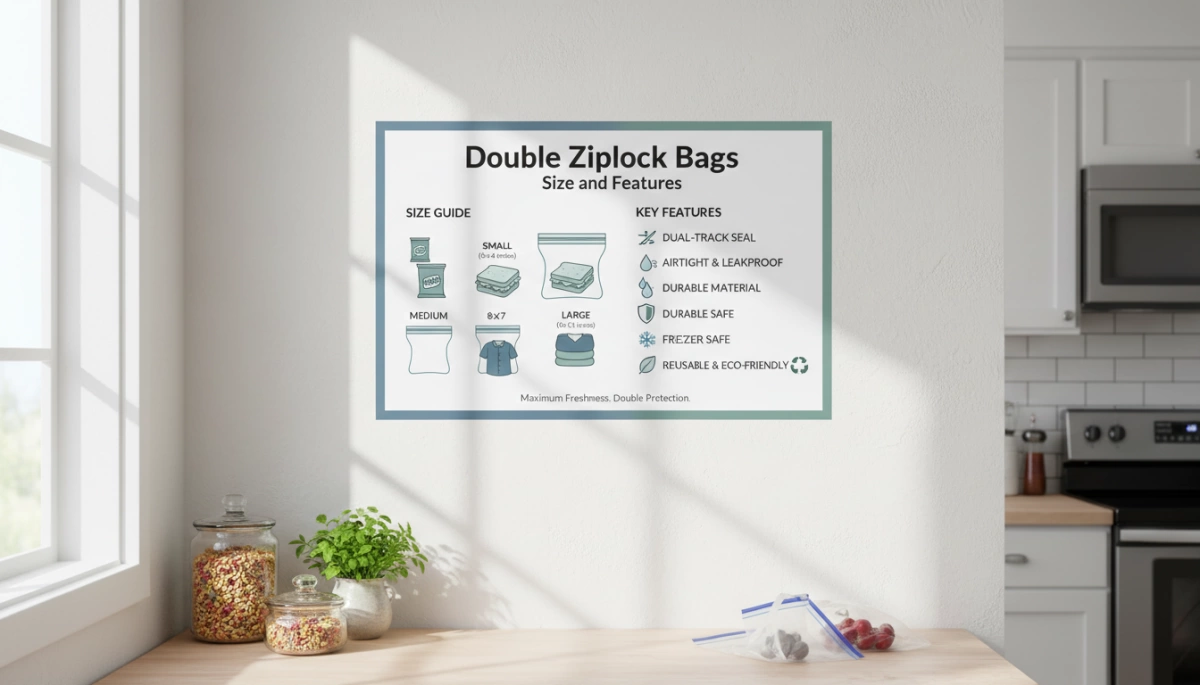
Selecting the perfect bag goes beyond just grabbing the first box on the shelf. As someone deeply involved in packaging solutions, I know that the difference between a ruined meal and fresh ingredients often comes down to the specifications of the bag you choose. You need to balance durability with capacity to ensure your storage bags perform exactly how you need them to.
Factors to Consider: Thickness, Size, and Quantity
When evaluating options, thickness is your first indicator of quality. This is usually measured in mils (thousandths of an inch). A standard sandwich bag might be around 1.5 mil, but if you need something freezer safe, you should look for bags that are at least 2.7 mil thick. This added density prevents freezer burn and punctures when handling sharp items like bone-in Meat storage.
Size is the next critical factor. Using a bag that is too small compromises the seal, while a bag that is too large traps excess air, accelerating spoilage. I always recommend referencing a Standard Ziplock Bag Size Chart to match your contents with the correct dimensions.
Quick Reference for Bag Thickness:
| Bag Type | Approx. Thickness (mil) | Best Use Case |
|---|---|---|
| Sandwich/Snack | 1.2 – 1.5 mil | Short-term storage, dry snacks |
| Standard Storage | 1.75 mil | Leftovers, pantry organization |
| Heavy-Duty Freezer | 2.7+ mil | Raw food packaging, long-term freezing |
If you are dealing with bulk quantities or oversized items, opting for specific large food storage bags ensures you have the necessary capacity without forcing the zipper.
Comparing Top Brands and Bulk Buying Options
In the US market, big names like Ziploc and Hefty set the bar high with their proprietary Lock Seal technologies. These brands focus heavily on the “click” sound that assures you the bag is closed. However, for my business needs, I often look at bulk buying options or store brands (like Great Value or Kirkland).
While premium brands offer a consistent Tight seal, many bulk options now utilize similar double-track technology at a fraction of the cost per unit. The key feature to test is whether the bag is Easy to open yet resistant to popping open under pressure. If you are storing soups or marinades, prioritize brands that guarantee Liquid containment to avoid messy spills in your fridge.
Sustainability: Identifying Recyclable and Reusable Options
We are seeing a massive shift toward sustainable packaging materials that reduce plastic waste. While traditional polyethylene (PE) bags are recyclable at specific drop-off locations (like grocery stores), they cannot go in your curbside bin.
If you want to reduce your footprint, look for these features:
- Silicone Alternatives: These are dishwasher safe and can be used hundreds of times, though they have a higher upfront cost.
- BPA-Free PE Bags: These can be washed and reused for dry goods, though I advise against reusing them after holding raw meat.
- Compostable Options: Newer plant-based plastics are entering the market, though they often have a shorter shelf life.
Maintenance and Frequently Asked Questions
Best Practices for Cleaning and Reusing Bags
We design our packaging to be durable, meaning a single use often isn’t the end of the line. To extend the life of your storage bags, turn them inside out and wash them with warm soapy water, similar to the methods used to clean silicone food storage bags. Ensure they are completely air-dried before storing them again to prevent mold growth. However, safety is paramount; never reuse a bag that was used for Raw food packaging or Meat storage, as bacteria can linger even after washing.
* **Rinse Thoroughly:** Remove all food residue from the corners.
* **Air Dry:** Prop the bag open on a drying rack.
* **Inspect:** Check for tears or compromised seals before reuse.
Safe Usage: Microwaving and Defrosting Guidelines
When reheating food, it is critical to know if plastic bags are safe for food storage under heat stress. Most of our heavy-duty bags are freezer safe and can handle defrosting, but you must vent the bag first. Always crack the seal about an inch to allow steam to escape; otherwise, the pressure can cause the bag to burst. For Liquid containment during defrosting, place the bag in a bowl to catch any potential condensation or leaks. Avoid high-heat settings; stick to the defrost or low-power mode to maintain the structural integrity of the plastic.
How to Troubleshoot a Stubborn Double-Track Seal
Regardless of the size you picked from the **Standard Ziplock Bag Size Chart**, a misaligned zipper can be frustrating. If you are struggling to get a Tight seal, check the tracks for debris like coffee grounds or flour. A quick wipe with a damp cloth usually clears the obstruction. If the Lock Seal feels stiff, run your thumb and index finger firmly back and forth along the entire length of the zipper to warm up the plastic and engage the tracks. For bags that are hard to open, pull from the center of the header rather than the edges to ensure it remains Easy to open without tearing the side seams.