















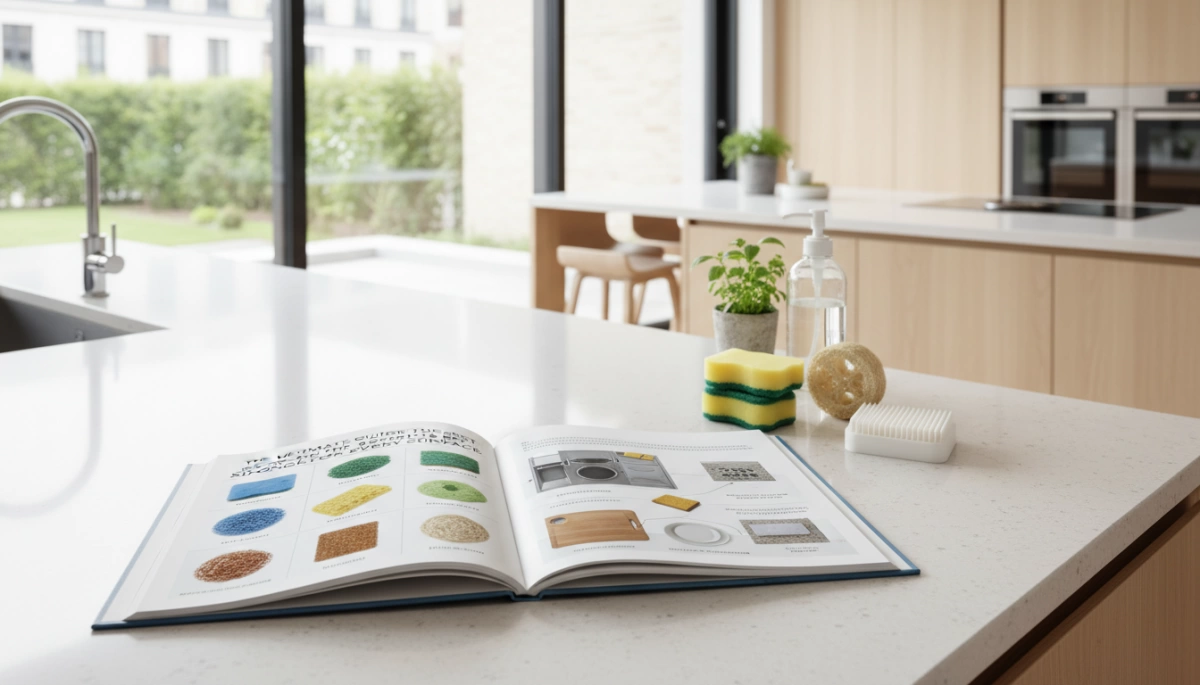
Understanding Different Kitchen Sponge Materials
Selecting the right cleaning tool starts with understanding what it is made of. The material determines absorbency, scrubbing power, and environmental impact.
Cellulose and Polyurethane Sponges
Most traditional yellow-and-green sponges found in grocery stores are made from polyurethane, a petroleum-based plastic. While cheap, they shed microplastics into the water system and sit in landfills for centuries.
In contrast, cellulose sponges are crafted from plant-based fibers. At EcoArtfulLife, our cellulose options offer superior absorbency and hold soap suds efficiently without the environmental guilt. Because they are plastic-free, genuine cellulose sponges are fully biodegradable and compostable at the end of their lifecycle.
Silicone and Mesh-Covered Options
Silicone scrubbers have gained popularity for being non-porous, which helps resist odors. However, they lack the absorbency required to wipe down counters or soak up spills effectively. Mesh-covered sponges typically rely on synthetic plastic netting to provide abrasion, which can trap food particles and breed bacteria.
Natural Fibers: Loofah, Bamboo, and Wood Pulp
Sustainable materials offer the best balance of performance and eco-friendliness. We prioritize natural fibers that return to the earth safely.
- Loofah: Derived from the dried loofah plant, this material is firm when dry and softens when wet. It provides excellent non-scratch scouring power for cookware.
- Wood Pulp & Cotton: The core components of our Swedish Dishcloths. This blend absorbs up to 20x its weight in liquid, replacing paper towels entirely.
- Bamboo: Used in our dish brushes, bamboo is naturally antimicrobial, durable, and resists water damage better than traditional woods.
| Material | Primary Use | Absorbency | Eco-Impact |
|---|---|---|---|
| Wood Pulp/Cotton | Spills, Glass, Counters | High (20x weight) | Compostable |
| Natural Loofah | Scrubbing, Exfoliating | Moderate | Compostable |
| Polyurethane | General Cleaning | Moderate | Landfill Waste |
| Silicone | Light Scrubbing | None | Non-Biodegradable |
Main Types of Kitchen Sponges and Scrubbers
Navigating the cleaning aisle—or our online catalog—can be overwhelming with so many textures and shapes available. To find the Ultimate Guide to Choosing the Best Kitchen Sponge for Every Surface, you first need to understand the mechanics of the tools at your disposal. We break down the main categories to help you decide what belongs at your sink.
Dual-Action Combination Sponges
These are the workhorses of the American kitchen, typically featuring a soft side for wiping and an abrasive side for scouring. While traditional versions use synthetic yellow foam and green plastic mesh, we advocate for **sustainable materials**. Our eco-friendly versions utilize plant-based cellulose for the sponge base and natural fibers like coconut husk or loofah for the scrubbing layer.
* **Best for:** General dishwashing where you need to switch between sudsing and light scrubbing instantly.
* **Why switch:** As we see broader shifts in sustainability trends, including the impact of plastic bans, moving away from synthetic combo sponges reduces microplastic waste entering our water systems.
Abrasive Scouring Pads and Heavy-Duty Scrubbers
When you are dealing with baked-on lasagna or cast-iron skillets, you need friction. Standard steel wool or plastic mesh pads are effective but can be harsh on the environment and your hands.
* **The Eco Solution:** We rely on **natural loofah sponges** and bamboo dish brushes. Derived from the loofah plant, these sponges are firm when dry but soften slightly when wet.
* **Performance:** They offer excellent **durability** and scouring power without scratching most cookware. Unlike metal scrubbers, a compostable loofah won’t rust or leave dangerous splinters behind.
Soft Sponges and Specialized Fabric-Covered Tools
For delicate tasks, you need a tool that prioritizes **absorbency** and a gentle touch over abrasion. This category is where the **Swedish dishcloth** dominates. Made from a blend of 70% wood pulp (cellulose) and 30% cotton, these cloths function like a sponge-fabric hybrid.
* **Glassware Cleaning:** Perfect for wine glasses and crystal, as they leave a streak-free finish without lint.
* **Surface Safety:** These are **non-scratch** by nature, making them safe for granite, marble, and stainless steel appliances.
* **Efficiency:** One Swedish dishcloth can replace up to 17 rolls of paper towels, offering a massive upgrade in absorbency compared to standard rags.
Eraser Sponges for Tough Stains
Often known by brand names like “magic” erasers, these are blocks of melamine foam that act like ultra-fine sandpaper to lift scuffs off walls and sneakers. While effective for spot cleaning, they function by physically wearing down and disintegrating into micro-particles.
* **Our Take:** For a truly zero-waste home, we recommend using a firm **natural loofah** with a baking soda paste. This combination provides the necessary abrasion to remove tough marks without introducing synthetic foam particles into your home ecosystem.
How to Choose the Best Sponge for Every Surface
Selecting the right cleaning tool isn’t just about hygiene; it’s about protecting your investments. Using the wrong material can permanently damage delicate finishes or fail to remove stubborn grime. Here is how we match sustainable materials to specific kitchen tasks.
Daily Dishwashing and Fragile Glassware
For everyday plates, bowls, and mugs, you need a tool that balances soap retention with a gentle touch. Cellulose sponges are the superior choice here. Made from plant-based fibers, they are naturally soft and porous, allowing them to create a rich lather without requiring excessive dish soap.
When it comes to glassware cleaning, avoiding micro-scratches is critical. Synthetic scrubbers can leave tiny abrasions that make glass cloudy over time. A compostable cellulose sponge glides over wine glasses and tumblers, ensuring they stay crystal clear.
- Best Tool: Compostable Cellulose Sponge
- Key Benefit: High suds retention and zero abrasion.
- Tip: Squeeze out excess moisture after use to prevent bacterial growth.
Non-Stick Cookware and Delicate Surfaces
Non-stick pans coated with Teflon or ceramic require non-scratch tools to maintain their integrity. Once the coating is scratched, the pan becomes unsafe to use. We recommend natural loofah sponges for these delicate tasks.
While loofah appears fibrous and tough in its dry state, it softens significantly once soaked in warm water. This unique property allows it to scrub away food residue without stripping the non-stick coating. It provides the perfect middle ground—tougher than a soft cloth but safer than a metal scourer.
- Best Tool: Natural Loofah Sponge (Wet)
- Key Benefit: Softens to protect coatings while removing stuck-on food.
- Eco Factor: Fully biodegradable and plastic-free.
Heavy-Duty Scrubbing for Greasy Pans and Grills
Cast iron skillets, stainless steel pots, and barbecue grills demand durability and abrasion. For burnt-on messes, a standard soft sponge simply won’t cut it. A bamboo dish brush or a firm loofah is ideal here.
If you have been cooking outdoors using heavy-duty aluminum foil for grilling and barbecue, you know that grease and char can be stubborn. A stiff plant-fiber brush can tackle these grates and pans effectively. Unlike plastic bristles that flatten and fray, bamboo and tough plant fibers hold their shape against heavy pressure.
- Best Tool: Bamboo Dish Brush or Firm Loofah
- Key Benefit: High abrasion for carbonized food and grease.
- Application: Cast iron, grill grates, and stainless steel bottoms.
Countertops and General Household Cleaning
When wiping down granite, marble, or quartz, absorbency is the main priority. You want to lift spills and bacteria, not push them around. The Swedish dishcloth is the ultimate tool for this job.
Engineered from a blend of cellulose (wood pulp) and cotton, these cloths absorb up to 20 times their weight in liquid. They leave a streak-free finish on countertops and stainless steel appliances, effectively replacing single-use paper towels.
Quick Reference: Surface vs. Tool
| Surface Type | Recommended Tool | Why It Works |
|---|---|---|
| Glass & Crystal | Cellulose Sponge | Soft texture prevents clouding and scratches. |
| Non-Stick Pans | Loofah Sponge (Wet) | Gentle scrubbing that preserves coatings. |
| Cast Iron & Grills | Bamboo Brush | Stiff bristles remove burnt-on carbon. |
| Countertops | Swedish Dishcloth | Superior absorbency for streak-free wiping. |
Key Features to Evaluate Before Purchasing
Scrubbing Power vs. Surface Safety
Finding the sweet spot between removing stuck-on lasagna and protecting your cookware is crucial. Many synthetic scouring pads are too abrasive and can strip the coating off non-stick pans or leave micro-scratches on delicate china. We prioritize **sustainable materials** like natural loofah and plant fibers because they offer effective abrasion without the damage. A good non-scratch scrubber should tackle grease effectively but soften enough when wet to glide over surfaces. If you need targeted precision for grout or heavy cast iron, specialized household cleaning brushes are often a safer bet than harsh steel wool.
Absorbency and Suds Retention
If your goal is wiping down granite countertops or soaking up spills, **absorbency** is the most important metric. Traditional foam sponges often push water around rather than picking it up. In our experience, cellulose-based options, particularly Swedish dishcloths, are superior because they can hold up to 20 times their weight in liquid. For washing dishes, you also want a material that holds soap well. Natural cellulose fibers create rich suds with less detergent compared to plastic alternatives, making your dish soap bottle last longer.
Durability and Material Longevity
We believe a kitchen tool shouldn’t become trash after a week of use. **Durability** is a major factor when switching to eco-friendly options. Cheap synthetic sponges tend to crumble and harbor bacteria quickly, requiring frequent replacement. High-quality plant-based options are designed to be washed and reused. Look for materials that are machine washable or dishwasher safe; this feature significantly extends the product’s life cycle and ensures better hygiene over time.
Ergonomic Design and Ease of Use
Cleaning shouldn’t be a workout for your wrists. The shape and flexibility of your sponge determine how easily you can reach the bottom of a tall glass or clean around faucet handles. We favor materials that are flexible enough to contour to **glassware cleaning** needs but substantial enough to grip firmly.
Quick Comparison of Material Features:
| Feature | Cellulose/Swedish Cloth | Natural Loofah | Bamboo Brush |
|---|---|---|---|
| Primary Use | Spills & Wiping | Scrubbing & Scouring | Heavy Duty Scrubbing |
| Flexibility | High | Medium (when wet) | Low (Rigid handle) |
| Surface Safety | Excellent (Non-scratch) | Very Good | Good (Check bristle type) |
| Maintenance | Machine Wash/Boil | Rinse & Dry | Air Dry |
The Benefits of Switching to Eco-Friendly Sponges
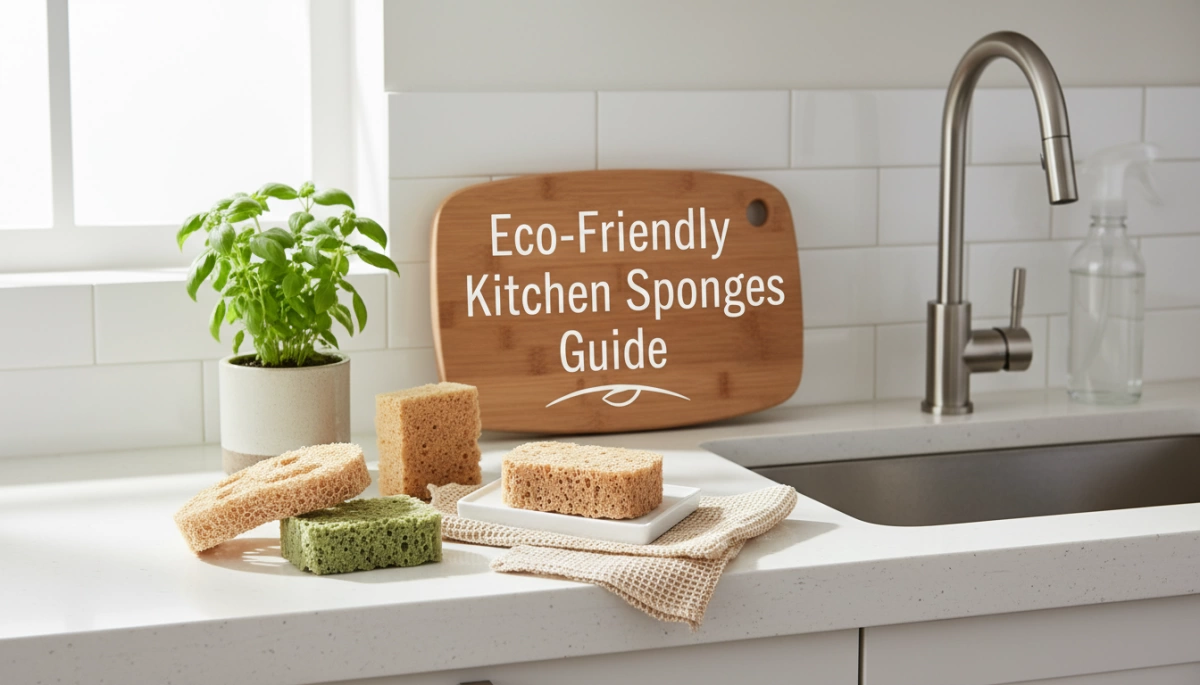
Making the switch to eco-friendly cleaning tools is one of the easiest ways to reduce your household’s carbon footprint. We often overlook the impact of that bright yellow synthetic sponge sitting by the sink, but the reality is that traditional plastic sponges shed microplastics every time you scrub. By choosing plant-based alternatives, you aren’t just cleaning your dishes; you are actively preventing plastic waste from entering our water systems and landfills. Just as you might choose reusable food covers for bowls and plates to cut down on single-use plastic wrap, choosing the right sponge is a critical step toward a zero-waste kitchen.
Biodegradability and Environmental Impact
The biggest issue with standard synthetic sponges is that they never truly go away. They break down into tiny microplastics that linger in the environment for centuries. In contrast, our Swedish dishcloths and loofah sponges are designed with sustainable materials that return to the earth.
- Plastic-Free: Made from 70% cellulose (wood pulp) and 30% cotton.
- Zero Waste: Fully biodegradable and compostable at the end of their life.
- Resource Efficient: One Swedish dishcloth replaces up to 17 rolls of paper towels.
Chemical-Free and Non-Toxic Materials
Many commercial sponges are treated with triclosan or other antimicrobial chemicals that can leach onto your cookware and eventually wash down the drain. I believe a clean home shouldn’t come at the cost of chemical exposure. Our products rely on the natural properties of the fibers themselves.
- Natural Loofah: Derived directly from the loofah plant, offering powerful scrubbing without synthetic abrasives.
- Cellulose: A plant-based fiber that dries quickly, naturally inhibiting bacteria growth without added toxins.
- Safe for Families: No harsh chemical residues left on your plates or countertops.
Comparing Compostable vs. Reusable Sponges
There is often confusion between “reusable” and “compostable,” but the best eco-friendly tools are actually both. We design our products to be durable enough for months of reuse, yet safe to compost when they finally wear out. Understanding this lifecycle helps you maximize value while minimizing waste.
| Feature | Reusable (Swedish Dishcloth) | Compostable (Loofah & Cellulose) |
|---|---|---|
| Primary Benefit | High durability; machine washable up to 200 times. | Breaks down naturally; adds nutrients to soil. |
| Lifespan | 6–9 months with proper care. | 1–3 months depending on scrubbing intensity. |
| Disposal | Backyard compost or municipal green waste. | Backyard compost or bury in the garden. |
| Best For | Wiping spills, polishing glass, general cleaning. | Scrubbing stuck-on food and heavy-duty scouring. |
Maintenance Tips for Hygiene and Longevity
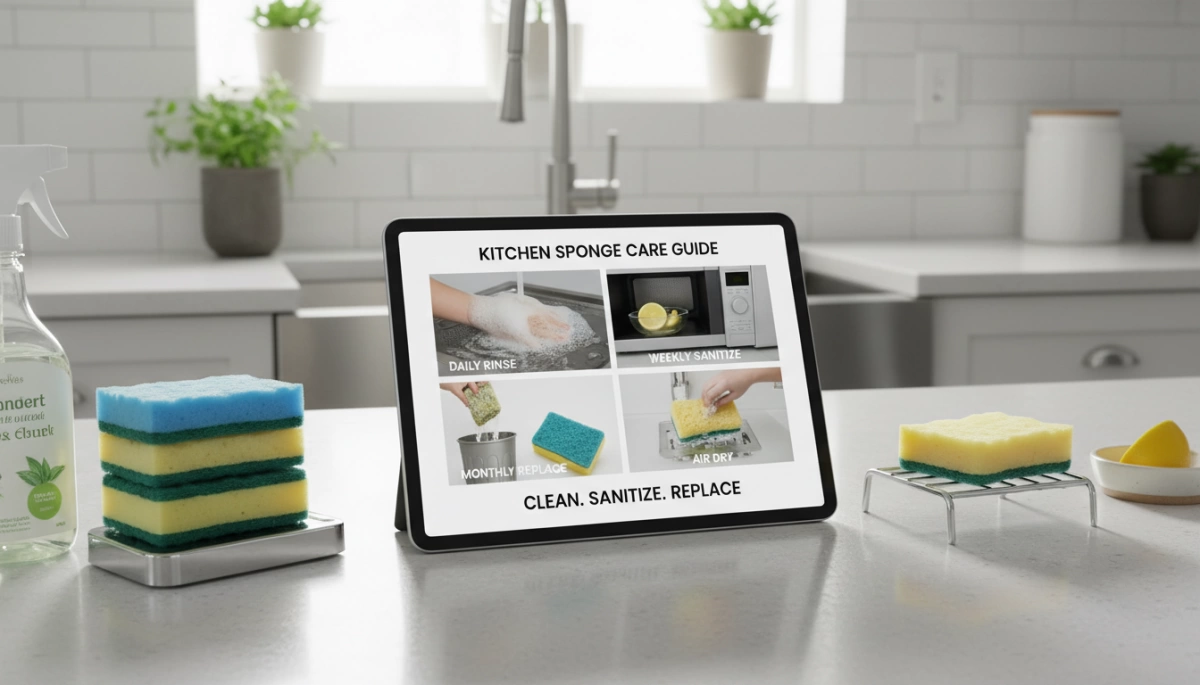
To get the most out of The Ultimate Guide to Choosing the Best Kitchen Sponge for Every Surface, you need to know how to care for your tools. Proper maintenance not only keeps your kitchen sanitary but also extends the life of your eco-friendly scrubbers, ensuring you get maximum value before composting them.
Effective Rinsing and Drying Techniques
Moisture is the enemy of hygiene. Bacteria thrive in damp environments, which is why standard synthetic sponges often get smelly so quickly. To prevent this, I always recommend rinsing your sponge thoroughly with warm water immediately after use to remove any trapped food particles or soap residue.
Once rinsed, wring it out as much as possible. This is where sustainable materials like our Swedish dishcloths shine—they are designed to dry incredibly fast.
- Squeeze tight: Remove excess water.
- Air flow: Store upright in a caddy or hang it up; never leave it flat on the bottom of a wet sink.
- Ventilation: Ensure air circulates around the sponge to speed up the drying process.
Safe Methods for Disinfecting Your Sponge
You don’t need harsh chemicals to keep your kitchen tools safe. Since our products are made from natural fibers like cellulose and loofah, they can handle high heat, which is the best way to sanitize them without damaging the material.
- Dishwasher: Place your Swedish dishcloths and cellulose sponges on the top rack of your dishwasher. Run a standard cycle to clean and sanitize them effortlessly.
- Boiling Water: For a deep clean, boil your sponges in a pot of water for 3 to 5 minutes. This kills bacteria effectively without degrading the durability of the wood pulp fibers.
- Microwave (Caution): Make sure your cellulose sponge is completely wet (never dry!) and microwave it for one minute to zap germs.
Warning Signs: When to Replace Your Sponge
Even with excellent care, every cleaning tool eventually reaches the end of its life. However, unlike plastic sponges that just get gross, our natural options degrade gracefully. You should look for specific signs that it is time to swap your current sponge for a fresh one.
- Persistent Odor: If the sponge smells bad even after boiling or washing, bacteria have taken hold deep in the fibers.
- Structural Breakdown: If the loofah is shedding excessively or the cellulose is tearing apart.
- Loss of Texture: When the scrubbing power diminishes significantly.
When it is finally time to let go, remember that our products are 100% compostable. Cut them into smaller pieces and toss them in your green bin rather than the trash.
Frequently Asked Questions About Kitchen Sponges
Are scouring sponges safe for non-stick pans?
It depends entirely on the abrasive material used. Standard heavy-duty synthetic scouring pads (often green) are too harsh and will scratch the coating off your non-stick cookware, ruining the pan’s effectiveness. For these delicate surfaces, you need a non-scratch alternative. We recommend using natural loofah sponges or soft cellulose options. These natural fibers soften significantly when wet, providing enough scrubbing power to remove food residue without damaging the finish of your pots and pans.
Can I clean my kitchen sponge in the dishwasher?
Yes, and you absolutely should. Cleaning your sponge in the dishwasher is one of the most effective ways to kill bacteria and extend the tool’s lifespan. Our Swedish dishcloths and cellulose sponges are designed to be dishwasher safe; simply place them on the top rack during a normal cycle. For a deeper clean, you can also boil these sustainable materials in water for a minute. Regular sanitization prevents odors and ensures you are cleaning with a hygienic tool.
How often should I replace my sponge to avoid bacteria?
If you are using cheap, synthetic foam sponges, experts recommend replacing them every two weeks because they trap moisture and breed bacteria rapidly. However, high-quality eco-friendly options offer better durability. Swedish dishcloths and natural cellulose sponges dry much faster than plastic, which naturally inhibits bacterial growth. With regular washing, these can last for several months. When they finally start to break down, you can simply compost them rather than sending more plastic to the landfill.
Do antimicrobial sponges really eliminate all germs?
“Antimicrobial” is often a marketing term referring to sponges treated with chemicals intended to inhibit mold and bacterial growth. However, these treatments can wash out over time and do not guarantee a sterile surface. The most effective way to combat germs is not chemical additives, but physics: choosing a material that dries quickly. Sponges made from wood pulp and cotton release moisture rapidly, denying bacteria the damp environment they need to multiply. Relying on quick-drying materials and regular heat sanitization is far safer and more effective than chemical coatings.