















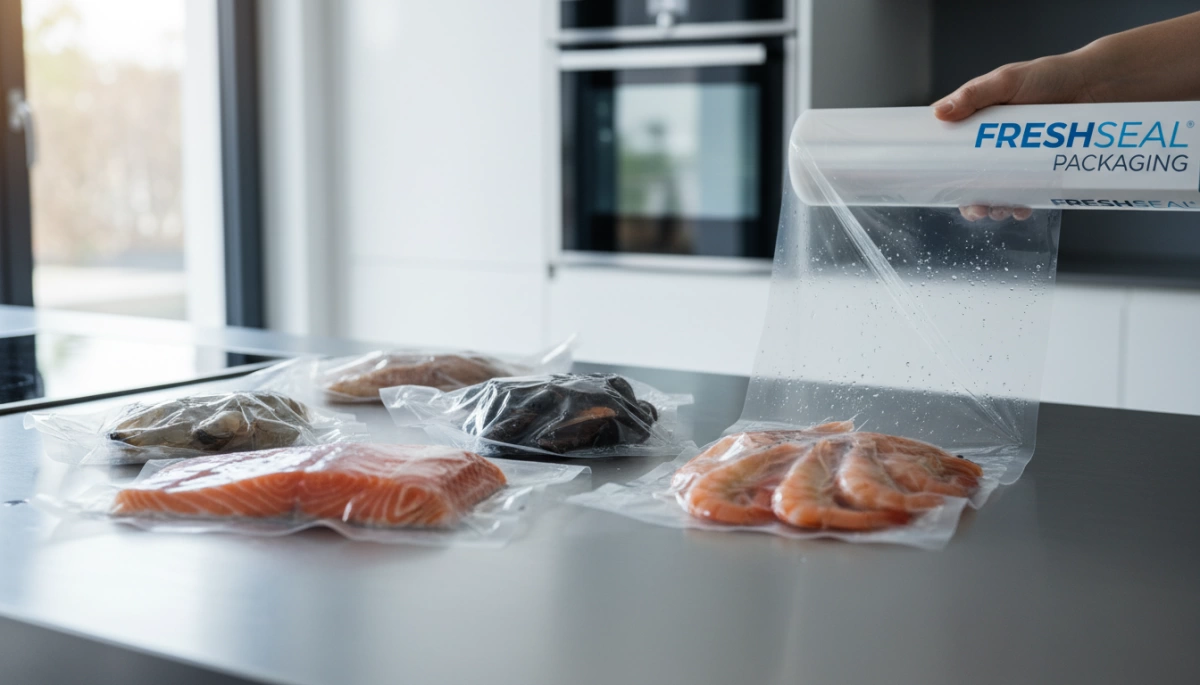
If you’re handling fish, shrimp, or shellfish every day, you already know this: the wrong cling film for seafood packaging can ruin good product fast.
Leaking trays. Strong fishy odors spreading through the fridge. Ice burn in the freezer. Messy displays that turn shoppers away.
All because the wrap isn’t doing its job.
In this guide, you’ll see exactly what separates ordinary wrap from high‑performance seafood cling wrap—from leak-proof food film and odor-control cling film to freezer-safe, biodegradable cling film options that actually work in real kitchens, fish counters, and processing rooms.
You’ll learn which materials (like PE cling film for fish) are safest and most durable in cold storage, how to keep raw seafood fresh, sealed, and drip-free, and why sustainable films such as Artfullife® biodegradable cling film are quickly becoming the smart choice for pros and home users alike.
If you want cleaner displays, longer shelf life, and less plastic waste—without trial and error—keep reading.
Why Cling Film Is Essential for Seafood Packaging
If you’ve ever opened your fridge and been hit with a strong fishy smell, found liquid pooling under a seafood tray, or seen your fresh fillets turn dull and dry overnight, you already know why cling film for seafood packaging matters.
High-Moisture, High-Odor Seafood Is Tough to Pack
Raw seafood is one of the hardest foods to package well:
- It releases a lot of juice and moisture
- It gives off strong, persistent odors
- It’s delicate and easily damaged
- It spoils fast if exposed to air and bacteria
Without the right seafood cling wrap, you get leaks, smells, and product that looks “old” long before it’s actually expired.
How the Right Cling Film Protects Seafood
A good food-grade plastic wrap for seafood works like a protective shield:
- Locks in freshness by limiting oxygen and slowing oxidation
- Controls odor so fishy smells stay inside the pack, not in your fridge or display case
- Keeps surfaces clean by limiting drips, splashes, and cross-contamination
- Improves appearance with clear, tight wrapping that makes seafood look fresh and premium
Using odor-control cling film or leak-proof food film is one of the simplest ways to keep seafood safe, appetizing, and market-ready.
Where Seafood Cling Film Matters Most
Strong, reliable seafood cling film is critical anywhere raw fish or shellfish is handled:
- Homes – wrapping raw fish, shrimp, and leftovers in the fridge or freezer
- Fish markets – tight, clear fresh fish wrapping film on trays and ice displays
- Restaurants – raw seafood storage wrap to keep walk-in coolers organized and hygienic
- Supermarkets – anti-fog cling film on retail trays so customers see bright, fresh product
From home kitchens to busy seafood counters, choosing the right sustainable food packaging film is the first step to solving odor, leakage, and freshness problems before they start.
Key Challenges in Fresh and Frozen Seafood Packaging
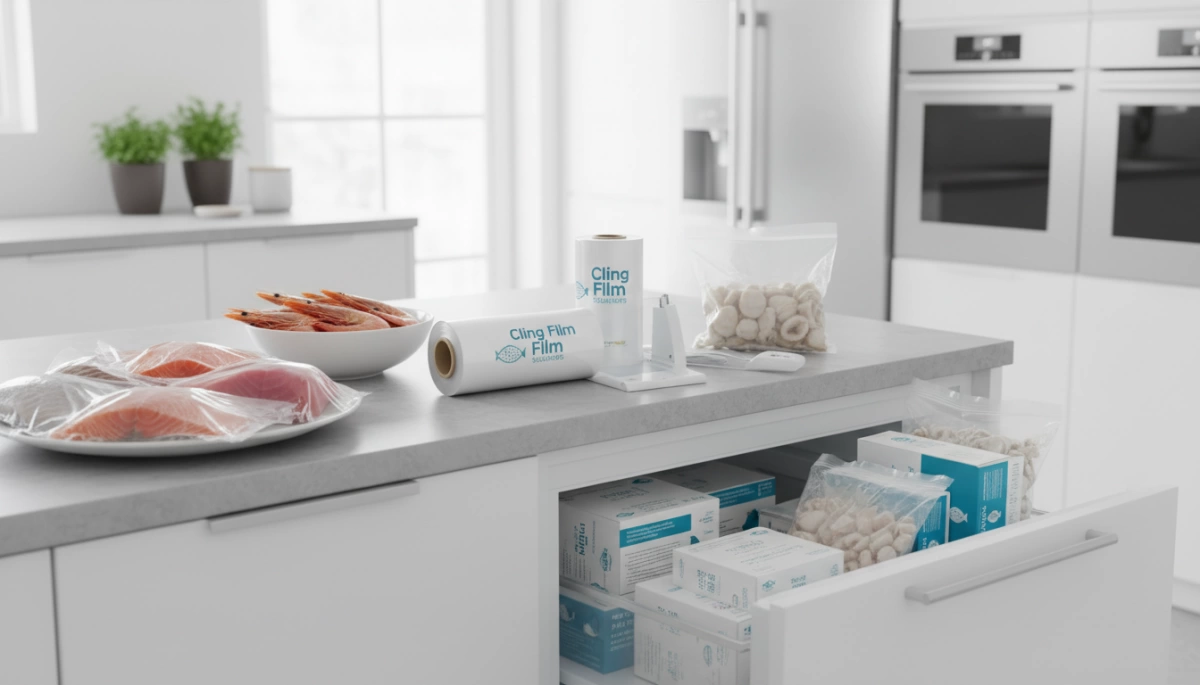
Fresh and frozen seafood is tough to handle. If the cling film isn’t right, you’ll see leaks, smell, and food safety issues fast. Here’s what we design our seafood cling wrap to solve:
1. Juice and Moisture Leakage
Fish, shrimp, crab, and shellfish release a lot of liquid, especially under refrigeration. Weak wrap leads to:
- Dripping trays in display cases and home fridges
- Messy, sticky shelves and transport boxes
- Faster spoilage when air gets in through gaps
You need leak-proof food film with strong cling and good puncture resistance so the pack stays tight, even with sharp fins, shells, or ice crystals.
2. Strong Odors in Fridges and Displays
Seafood smells fast if it’s not packed right. Poor wrap lets:
- Fishy odors spread through home refrigerators
- Smell leak into mixed cases in seafood counters
- Unpleasant customer experience at fish markets and supermarkets
A good odor-control cling film locks in smell so seafood stays where it belongs—seen, not smelled.
3. Oxidation, Bacteria, and Texture Loss
In cold storage, seafood is still at risk:
- Oxygen exposure leads to discoloration and off-flavors
- Moisture loss ruins texture and makes fillets dry or rubbery
- Bacteria can still grow if the wrap doesn’t seal tight
Here, a tight food-grade plastic wrap for seafood makes a difference by cutting air contact and helping maintain that fresh, firm bite customers expect.
4. Cross-Contamination in Busy Kitchens and Counters
In U.S. restaurant kitchens, fish markets, and supermarket prep rooms, raw seafood is constantly moving:
- Multiple species and batches on the same prep tables
- Shared knives, cutting boards, and storage racks
- Risk of raw seafood contacting ready-to-eat foods
A strong raw seafood storage wrap helps keep each item separated, sealed, and labeled. That means fewer spills, safer handling, and cleaner operations in real-world conditions.
If you’re planning large-scale use in retail or foodservice, it’s worth checking how we tune specs for seafood in our cling film for supermarket packaging case studies at Artfullife®.
How Cling Film Solves Seafood Packaging Problems
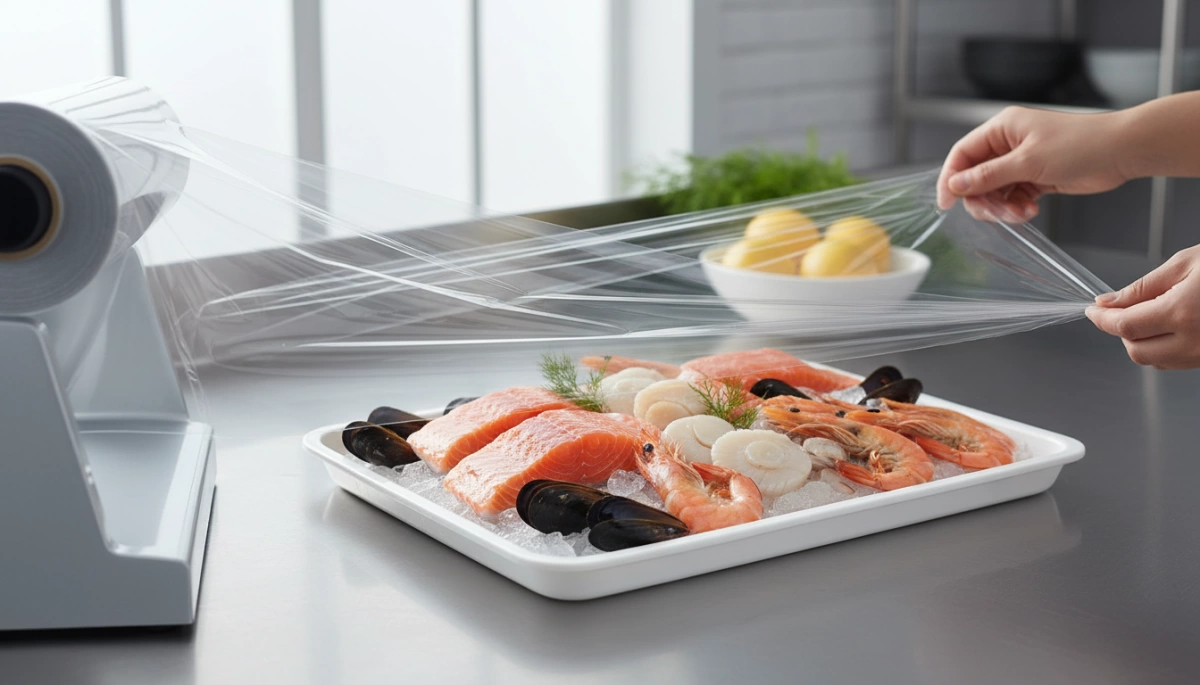
Airtight barrier keeps seafood fresh
For raw fish, shrimp, and shellfish, a tight seafood cling wrap is non‑negotiable. A good food‑grade plastic wrap for seafood pulls snug around the product and the tray, pushing out excess air. Less air means:
- Slower oxidation and color change
- Better texture retention in the fridge
- Safer storage for raw seafood portions
That airtight seal is what keeps fillets looking fresh in a supermarket case and in your home fridge.
Leak-proof film for juicy seafood
Seafood releases a lot of juice. Our leak-proof food film and puncture-resistant cling film are made to grip trays and pans tightly so liquids don’t run:
- Strong stretch and cling to lock film under the tray
- High tear resistance so bones, shells, and fins don’t punch through
- Less mess in refrigerated cases and home refrigerators
This is key for fish counters, meal prep, and any raw seafood storage wrap that needs to stay clean and controlled.
Odor-control cling film
Fishy smells spread fast. A quality odor-control cling film creates a barrier that locks in strong seafood odors so they don’t take over the whole fridge or seafood display:
- Dense film structure to slow odor transfer
- Tight wrap around edges and tray rims
- Better customer experience at fresh seafood counters
Paired with the right storage containers (similar to how we think about the healthiest container to store food in in other categories), this kind of film keeps the smell where it belongs—inside the pack.
Wraps odd shapes with ease
Whole fish, shell-on shrimp, crab legs, or mixed seafood trays are never one-size-fits-all. Quality fresh fish wrapping film needs:
- High stretch to mold around heads, tails, and shells
- Strong cling so it stays in place, even on uneven surfaces
- Compatibility with both trays and direct wrapping
Whether you’re packing bulk fish at a market or portioning fillets for the freezer with freezer-safe cling film, the right wrap handles awkward shapes without slipping or tearing.
Types of Cling Film for Seafood Packaging
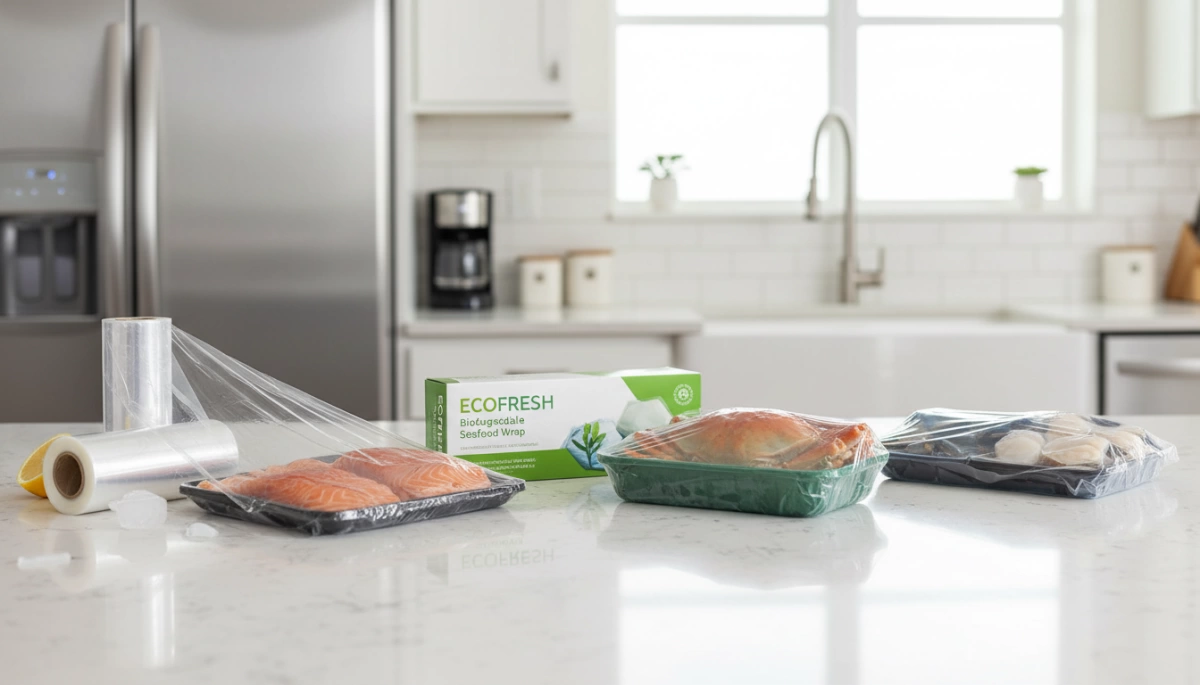
PVC Cling Film for Seafood
PVC cling film is still the go-to seafood cling wrap in many U.S. kitchens and seafood counters because it:
- Has very strong cling, so it hugs trays and wraps tight around whole fish and fillets
- Offers high clarity, giving a bright, fresh look in seafood displays
- Works great as fresh fish wrapping film for short-term chilled storage
I mainly recommend PVC for:
- Fresh seafood on trays in display cases
- Short-term storage in the fridge (not long-term freezing)
PE Cling Film for Fish and Freezer Use
PE cling film (polyethylene) is what most buyers choose when they want safer, freezer-safe cling film:
- No plasticizer issues, making it a safer choice for direct contact with raw seafood storage wrap
- Better low-temperature flexibility, so it won’t crack in the freezer
- Ideal as PE cling film for fish, shrimp, and shellfish in bulk packs and home freezers
PE is my pick for:
- Frozen and long-chilled seafood
- Vacuum-prepped portions and bulk freezer packs
Biodegradable and Compostable Cling Wrap
For eco-friendly seafood packaging, biodegradable and compostable films are growing fast in the U.S. market:
- Often plant-based with lower carbon footprint
- Designed as sustainable food packaging film with good odor-control cling film performance
- Some can be recyclable cling wrap for seafood, depending on local recycling rules
These biodegradable food wrap options pair well with other green solutions like edible preservative films that extend shelf life.
How to Choose: PVC vs PE vs Eco-Friendly Film
Here’s how I guide seafood buyers and kitchen managers:
-
Choose PVC cling film if:
- You need maximum cling and clarity for retail trays
- Storage is short-term in the fridge, not deep freezing
-
Choose PE cling film if:
- You want freezer-safe cling film for frozen seafood
- You care more about safety and durability than ultra-high gloss
-
Choose biodegradable or compostable cling wrap if:
- You want eco-friendly seafood packaging without giving up leak and odor control
- Your brand or kitchen is pushing sustainable food packaging film and lower plastic waste
In the U.S. market, most of my customers mix these: PVC or PE for the counter, and biodegradable food wrap for branded, eco-conscious packs.
Artfullife® Biodegradable Cling Film for Seafood Packaging
I designed Artfullife® Biodegradable Cling Film for seafood packaging that actually handles real-world problems in U.S. kitchens, fish counters, and freezers.
Key Features for Seafood Cling Wrap
| Feature | What It Means for You |
|---|---|
| Strong adhesion | Tight wrap on trays, fillets, whole fish |
| Leak-proof food film | Helps control juices, less mess in pans and displays |
| Odor-control cling film | Reduces fishy smells spreading in the fridge or case |
| Freezer-safe cling film | Stays flexible and seals well at low temps |
| Puncture-resistant cling film | Less tearing on bones, shells, and sharp edges |
| Clear, anti-fog option | Better product visibility for retail seafood displays |
Benefits for Fresh & Frozen Seafood Wrapping
- Fresh fish wrapping film that keeps moisture in and air out.
- Works for raw seafood storage wrap (salmon, shrimp, shellfish, squid).
- Reliable in deep freeze for bulk seafood, meal prep, and portion packs.
- Helps maintain color, texture, and drip control for seafood trays and grab-and-go packs.
Eco-Friendly Seafood Packaging
Artfullife® is built around eco-friendly seafood packaging:
- Biodegradable food wrap made from eco-conscious materials.
- Recyclable cling wrap for seafood options available depending on local programs.
- Helps brands and restaurants cut down on traditional single-use plastics and pair well with other sustainable packaging like food storage bag materials engineered for recyclability.
Real-World Use Cases
Artfullife® seafood cling wrap fits straight into daily operations:
- Fishmongers & seafood markets – wrapping fillets, whole fish, and iced display trays.
- Supermarkets – overwrapping foam or pulp trays, case-ready packs, and promo displays.
- Restaurants & pro kitchens – line prep, portion control, and odor-control cling film for cooler storage.
- Home kitchens – freezing bulk buys, repacking Costco seafood, and sealing leftovers without the smell taking over the fridge.
If you’re upgrading to sustainable food packaging film without giving up performance, this is the seafood cling film I built for that exact job.
Key Specifications for Seafood Cling Film
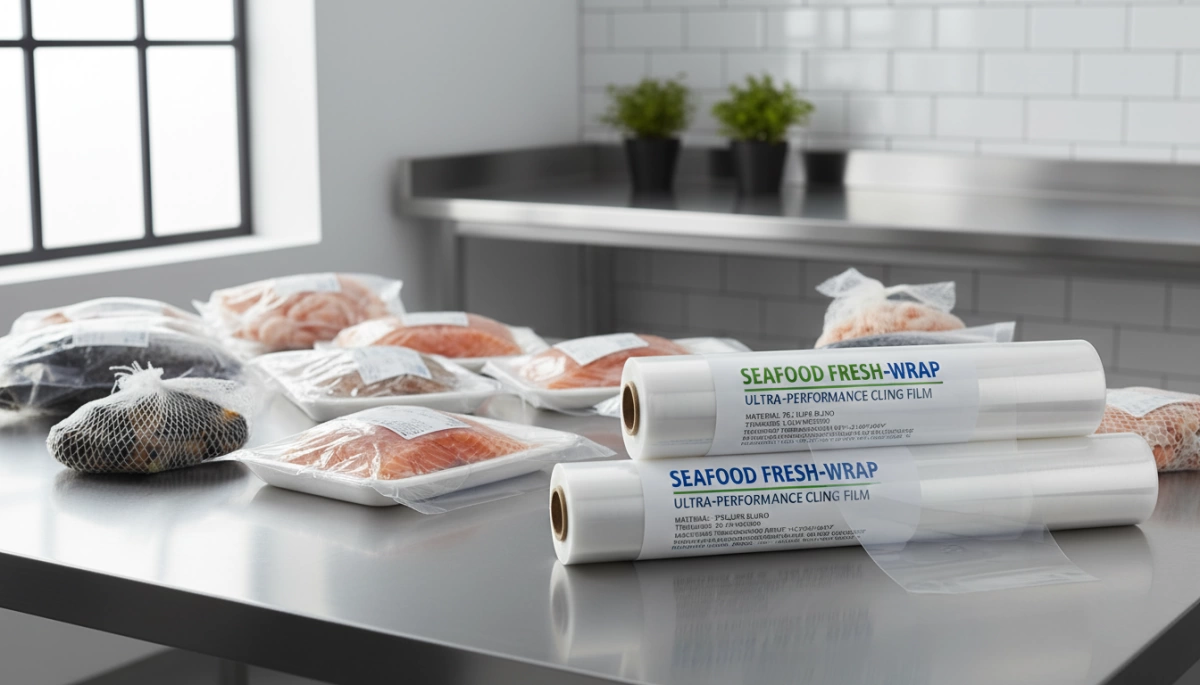
When you’re wrapping raw fish, shrimp, or shellfish, the specs on your cling film matter more than the brand name on the tray. Here’s what I focus on when we design cling film for seafood packaging for U.S. kitchens and seafood counters.
1. Thickness & Strength
You need film that can handle sharp fins, shell edges, and heavy trays without tearing.
Typical spec range for seafood cling wrap:
| Use Case | Recommended Thickness | Key Features |
|---|---|---|
| Small portions / home use | 10–12 µm | Good cling, basic leak control |
| Supermarket trays / display | 12–15 µm | Strong stretch, tight seal, glossy look |
| Bulk packs / foodservice tubs | 15–18 µm | Puncture-resistant cling film, leak control |
Look for high stretch + high puncture strength so you can pull it tight around fresh fish without blowouts.
2. Temperature Range (Fridge & Freezer)
Seafood goes straight from ice to cold storage, so your freezer-safe cling film has to stay flexible.
| Storage Condition | Ideal Film Performance |
|---|---|
| Fridge (32–39°F) | Strong cling, no lifting at tray edges |
| Chiller / Prep line | Stable, no shrinking or loosening |
| Freezer (down to -18°F) | No brittleness, no cracking, strong seal |
For long-term frozen storage, I recommend PE cling film for fish or biodegradable films specifically tested for low temps.
3. Food Safety Standards
Always choose food-grade plastic wrap for seafood that meets:
- FDA-compliant food-contact materials (U.S.)
- BPA-free & plasticizer-safe for direct contact with raw seafood
- Clear traceability and lot control from the factory
If you’re sourcing bags or secondary packaging too, it’s worth knowing how food-grade plastic bags are defined and tested in the market; we follow similar safety logic in our films, just like in our food-grade plastic bag materials guide.
4. Anti-Fog & Clarity for Display
For supermarkets and fish markets, clear presentation sells.
- High clarity: lets customers see color and moisture level of fish easily
- Anti-fog cling film: stops condensation from clouding packs in chilled display cases
- Glossy surface: makes seafood look fresher and cleaner on the shelf
This is critical if you’re using eco-friendly seafood packaging but still need a premium look.
5. Roll Sizes & Cutter Options
For busy prep lines and seafood counters, handling matters as much as material.
| Location / User | Roll Width | Roll Length | Cutter Type |
|---|---|---|---|
| Home kitchen | 11–13 in | 200–300 ft | Built-in metal/plastic cutter |
| Restaurant back-of-house | 12–18 in | 1000–2000 ft | Box cutter or wall-mounted |
| Fish markets / supermarkets | 15–18+ in | 2000–3000 ft | Heavy-duty sliding cutter |
Look for:
- Wide rolls for seafood trays and pans
- Sturdy dispensers that allow one-hand pulls
- Clean edge cutting to reduce film waste and speed up wrapping
Dialing in these specs gives you leak-proof food film, strong odor-control cling film, and a smoother workflow whether you’re wrapping at home, in a restaurant, or at a seafood counter.
Best Practices for Using Cling Film on Seafood
Packaging seafood is unforgiving—if the wrap fails, you see it (and smell it) fast. Here’s how I recommend using seafood cling wrap the right way to control odor, stop leaks, and cut waste.
Step-by-Step: Wrapping Seafood on Trays
For fresh fish fillets, shrimp, and shellfish on trays:
-
Prep the tray
- Use an absorbent pad under the seafood to catch juices.
- Pat seafood lightly with a paper towel so the surface isn’t dripping.
-
Cut the cling film
- Cut a sheet big enough to wrap under the tray on all sides.
- Keep the film tight and smooth—wrinkles = weak seals.
-
Wrap and seal
- Place the tray in the center of the film.
- Pull film firmly over the top, then tuck under all four sides.
- Stretch slightly to build tension; this boosts adhesion and leak resistance.
-
Check leak and odor control
- Gently press around the edges—no gaps.
- For strong-smelling seafood, double-layer the film around the top.
Wrapping Portions and Bulk Seafood
Individual portions (home, restaurants):
- Place the portion in the center of your food-grade plastic wrap for seafood.
- Fold film over once and press to seal.
- Roll tightly like a candy wrapper, pushing out air.
- Fold or twist ends under the portion so they don’t pop open.
Bulk seafood (fishmongers, back-of-house use):
- Use thicker, puncture-resistant cling film.
- Layer seafood in shallow stacks; don’t overload.
- Wrap in multiple passes:
- First pass: direct contact wrap around seafood.
- Second pass: reinforce seams and corners for leak-proof food film performance.
- Label with product and date before storing.
Tips to Improve Seal Quality and Reduce Film Waste
Use less film but make it work harder:
- Stretch, don’t stack layers blindly
A slightly stretched film clings better than three loose layers. - Keep contact surfaces dry and clean
Wet tray rims or seafood juices on the outside break the seal. - Use the right width roll
For standard seafood trays, 12–18″ rolls usually cover in one pass and cut waste. - Sharp cutter = less waste
Dull blades cause jagged edges and extra pulling; the same logic applies to other food packaging tools and even quality food storage products with silicone protection.
Storing Wrapped Seafood in Fridge and Freezer
In the fridge:
- Keep wrapped seafood on a tray or plate—even with leak-proof food film, this is extra insurance.
- Store on the lowest shelf, away from ready-to-eat foods.
- Use within:
- 1–2 days for most fresh fish and shrimp
- Same day for highly perishable items like fresh shellfish
In the freezer (with freezer-safe cling film):
- Use freezer-safe cling film (PE or specialty biodegradable film rated for low temps).
- For longer storage:
- Wrap tightly in cling film
- Then place in a freezer bag or container for extra frost protection.
- Freeze flat so pieces don’t poke through the film.
Hygiene Tips to Reduce Cross-Contamination
When dealing with raw seafood, hygiene matters as much as packaging:
- Use separate film dispensers
Don’t use the same roll for raw seafood and ready-to-eat foods. - Clean counters and cutters often
Wipe down blades, dispenser edges, and cutting areas that touch raw juices. - Glove discipline
Don’t touch the film roll or cutter with dirty gloves that have handled raw seafood. - Store safely
Keep raw seafood storage wrap and wrapped seafood away from cooked foods and salads. - Follow basic food safety
Good packaging works best when paired with strict hygiene—very similar to how we manage quality control in other food-contact products.
Used right, cling film for seafood packaging does three big jobs at once: it protects freshness, keeps your cooler or display clean, and cuts odor and mess that customers notice immediately.
Sustainable Seafood Packaging and Future Trends
Shift to eco-conscious cling film for seafood
In the U.S., seafood buyers are pushing hard to get away from single-use plastics. For seafood cling wrap, that means:
- Moving from standard PVC to biodegradable food wrap and recyclable cling wrap for seafood
- Choosing freezer-safe cling film that performs well but uses less plastic overall
- Using eco-friendly seafood packaging to meet retailer sustainability goals and local regulations
For seafood processors, restaurants, and supermarkets, switching to sustainable food packaging film isn’t just a “green” move—it’s fast becoming a requirement for tenders, audits, and brand reputation.
How Artfullife® supports greener seafood packaging
As a cling film factory, we’ve built Artfullife® around biodegradable, recyclable, and reusable products that work for real kitchens and seafood counters, not just on paper. Our biodegradable cling film for seafood is designed to:
- Cut plastic waste vs traditional food-grade plastic wrap seafood
- Maintain strong odor-control cling film performance for fish, shrimp, and shellfish
- Stay durable in cold rooms and freezers without cracking or losing cling
If you want more background on materials, we break down the main commercial film options in our guide to the key materials used in commercial cling film (http://65.21.89.238/news/what-are-the-key-materials-used-in-commercial-cling-film/).
Traditional vs biodegradable cling film: cost, performance, impact
When customers in the U.S. compare regular PVC/PE with compostable cling wrap or other eco-films, this is how it usually shakes out:
-
Cost
- Traditional PVC/PE: slightly cheaper per roll
- Biodegradable films: a bit higher per roll, but often offset by lower waste and better brand value
-
Performance
- PVC/PE: excellent cling, clarity, and puncture-resistant cling film for sharp bones
- Biodegradable films: now match or come close on leak-proof food film performance, freezer safety, and anti-fog cling film options
-
Environmental impact
- Traditional: long-term plastic footprint and disposal challenges
- Biodegradable: breaks down faster under proper conditions; better fit for retailers and restaurants with public sustainability goals
For most seafood operations today, the trend is clear: keep the fresh fish wrapping film performance, but move as fast as possible toward eco-friendly seafood packaging that cuts plastic and supports a cleaner brand image.
FAQ on Cling Film for Seafood Packaging
Is cling film safe to use directly on raw seafood?
Yes—when you use food-grade plastic wrap for seafood from a trusted manufacturer. Our Artfullife® films are made for direct contact with raw fish, shrimp, and shellfish. For best safety:
- Make sure the wrap is clearly labeled food-grade and BPA-free
- Avoid direct contact with very hot surfaces or open flames
- Always keep raw seafood wrapped separately from ready-to-eat foods
If you want more background on safety and materials, our full PVC cling film guide breaks down standards and safe-use tips in detail.
How does biodegradable cling film perform in the freezer and with odor control?
Our biodegradable food wrap is designed as a freezer-safe cling film:
- Stays flexible at low temps (no easy cracking or peeling)
- Keeps a tight seal to reduce freezer burn on fish and shellfish
- Acts as an odor-control cling film, keeping strong fish smells from spreading through your freezer
In normal home and commercial freezer conditions, it performs on par with quality PE film, while cutting down plastic waste.
How does cling film help stop leaks from juicy seafood packs?
The right seafood cling wrap works like a leak-proof food film:
- Strong cling hugs trays and portions tightly
- Puncture-resistant cling film helps prevent leaks from spines, shells, and sharp corners
- Multiple wraps around the tray rim or product create a barrier that keeps juices inside
For very “wet” seafood (like thawed shrimp or whole fish on ice), pair the wrap with an absorbent pad or lined tray for maximum leak control.
Why does Artfullife® cling film work so well for pro kitchens and retail?
Pro users in the U.S. care about speed, consistency, and food safety. Our fresh fish wrapping film is built for that:
- Strong, fast cling that grabs trays and odd shapes quickly
- Good clarity and optional anti-fog cling film options for clear display
- Rolls sized for restaurants, fish markets, and supermarket seafood counters
- Eco-friendly seafood packaging options (biodegradable and recyclable) that support brand sustainability goals
We design the rolls and cutter boxes around real-world kitchen and seafood counter workflows so teams can wrap more, waste less, and keep displays tight.
Can I use cling film for reheating or leftovers with seafood?
Yes, with a few simple rules:
- For leftovers, wrap cooled seafood tightly as raw seafood storage wrap is also ideal for cooked fish
- In the microwave, keep the wrap off the food surface if possible and leave a small vent for steam
- Never use cling film under a broiler, on a grill, or in an oven above the temperatures listed on the packaging
For most U.S. home use, wrapping seafood leftovers and then reheating in a microwave-safe dish (with the film slightly vented) is safe and practical.
How long can seafood stay fresh when wrapped properly?
With proper seafood cling film for packaging and correct storage temps:
- Fresh fish fillets in the fridge: about 1–2 days
- Shrimp and shellfish (raw) in the fridge: about 1–2 days
- Frozen fish and shrimp in Artfullife® freezer-safe cling film: typically 2–3 months for best quality
Always follow USDA guidance, watch dates, and rely on smell/appearance. Cling film slows oxidation, odor spread, and moisture loss—but it can’t “fix” seafood that’s already past its prime.
How should I dispose of biodegradable cling film the right way?
For our compostable cling wrap and biodegradable food wrap:
- Check the packaging: some films are industrially compostable, not for backyard compost
- Where available, send used film to approved organic/composting facilities
- If local composting isn’t available, you can still trash it knowing it’s designed to break down faster and with less impact than traditional plastics
We’re pushing sustainable food packaging film that fits real U.S. waste systems, so always follow your local recycling and composting rules for the most responsible disposal.