















What Does “Clarity” Mean in Cling Film?
Supermarket buyers usually know when a pack looks dull, but not always why. In cling film, “clarity” is a technical idea with very visible results.
Key clarity terms in plain English
| Term | What it means in cling film | What you see in-store |
|---|---|---|
| Optical clarity | Overall “see-through” quality | Product looks sharp, true to color, easy to inspect |
| Haze | Light scattering caused by the |
2. Industry Clarity Standards & Measurement Methods

What is haze value in cling film clarity?
When we talk about cling film clarity levels, “haze value” is the key number.
- Haze = how much light gets scattered when it passes through the film
- Low haze = sharp, clear view of the product
- High haze = cloudy, milky look
For supermarkets, haze value is the fastest way to compare high clarity cling film vs basic wrap across different suppliers.
ASTM D1003 haze test for cling film
Most professional food wrap and cling film producers use the ASTM D1003 test.
In simple terms, this test:
- Shines light through the film
- Measures how much light goes straight through vs how much scatters
- Outputs a haze % (the lower, the clearer)
If your current supplier can’t provide ASTM D1003 haze data on their supermarket meat film clarity, they’re asking you to buy blind.
Light transmittance and
PVC vs PE Cling Film – Clarity Comparison
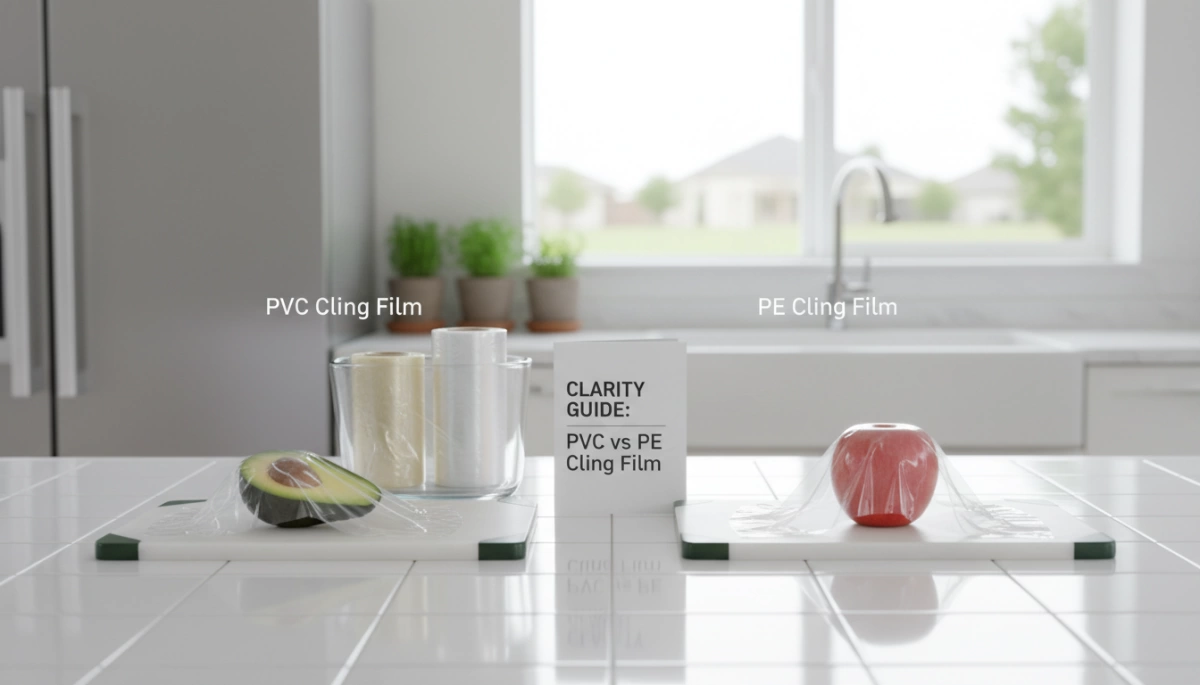
Optical clarity: PVC vs PE/LDPE cling film
When we talk about cling film clarity levels, PVC and PE behave very differently:
| Film Type | Typical Look | Haze Level* | Visual Effect |
|---|---|---|---|
| PVC (food-grade) | Very clear, high gloss | Low haze | Sharp color, “wet” shine |
| PE / LDPE | Slightly milky, softer gloss | Medium–high haze | Softer, less contrast |
*Haze = how “milky” the film looks when light passes through.
PVC has better optical clarity because its structure and additives are tuned for high light transmittance and high gloss, which is what gives that “crystal clear food wrap” effect.
Why food‑grade PVC cling film looks clearer on display
For supermarket meat film clarity and deli displays, PVC is usually the first choice because:
- It delivers strong color pop on red meat, cheese, and fresh-cut produce.
- High gloss gives a premium, “just packed” look.
- It hugs trays tightly, so you see fewer folds and stress marks.
That’s why most professional meat and deli counters use clear PVC food wrap instead of standard PE.
When PE cling film clarity is “good enough”
PE/LDPE cling film works well when cost and regulations matter more than ultra-clear display:
- Produce walls with bulk vegetables, herbs, and fruit where packs turn quickly.
- Back-of-house use (covering hotel pans, prep containers, and in-kitchen storage).
- Cost-focused applications where a bit of haze is acceptable and you care more about price and toughness.
If your main goal is basic visibility + lower cost, PE cling film is usually good enough.
Clarity pros and cons for meat, deli, produce, bakery
| Department | PVC Clarity – Pros | PVC – Cons | PE Clarity – Pros | PE – Cons |
|---|---|---|---|---|
| Meat | Sharp red color, premium look | Sometimes higher cost | Lower cost option | Can look dull or grayish |
| Deli | Great for cheese, sliced meats | Watch local PVC rules | OK for bulk wraps | Less “grab” on shopper eyes |
| Produce | Makes colors pop on cut fruit | May be “overkill” for cheap items | Fine for value packs | Slightly cloudy look |
| Bakery | High gloss for cakes & pastries | Needs careful heat control | Works for bread/rolls | Cakes look less high-end |
If you sell premium or high-margin items, high clarity cling film (PVC) usually pays off in better shelf appeal and higher perceived freshness.
How clarity, cost, and regulations shape the choice
When we help U.S. buyers pick between PVC vs PE cling film clarity, we look at:
- Clarity priority
- Premium case-ready meat, decorated cakes, and deli platters → PVC
- Bulk produce, in-kitchen use → PE
- Cost per roll / cost per pack
- PE generally wins on price, PVC wins on visual impact.
- Regulations & store policy
- Some chains prefer PE in certain hot-fill or microwave applications.
- Always match film type with local food-contact rules and your internal standards.
If you’re also offering prepared meals with lunch boxes or reusable containers, clarity expectations can change again, especially when pairing cling film with clear stainless steel lunch box containers or other premium packaging in grab-and-go sets.
Real-World Display Impact of Clarity in Cling Film
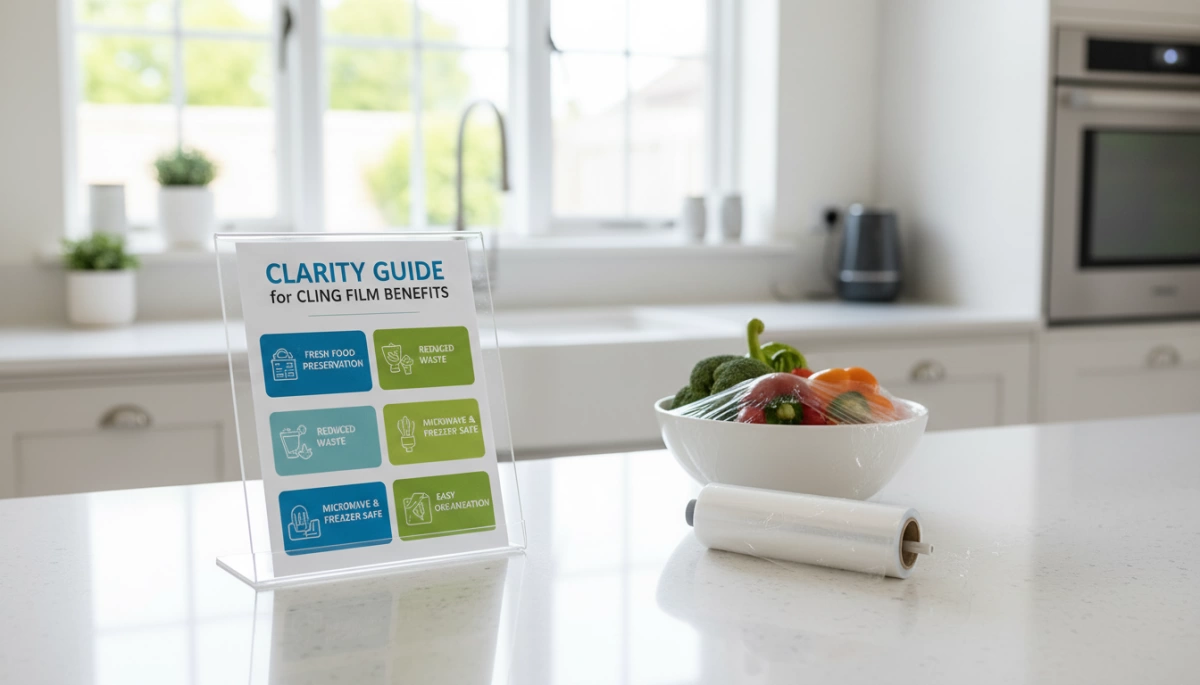
How cling film clarity changes your cases
High-clarity cling film makes your meat, deli, produce, and bakery cases look brighter and cleaner. When the film is truly clear (not milky or hazy):
- Reds in beef and pork look deeper and fresher
- Marbling and texture stay visible instead of looking “washed out”
- Fresh produce looks glossy, crisp, and well-hydrated
- Bakery items show off crust color, toppings, and detail instead of sitting behind a dull veil
In a U.S. supermarket, that’s the difference between a case that looks “OK” and one that feels like a premium fresh market.
In-store test results: clarity vs sales
From the store tests we’ve run with our supermarket partners, swapping standard wrap for high clarity cling film consistently delivers:
- Visibly brighter display walls under the same lighting
- 3–8% sales uplift in fresh meat and deli when high clarity film replaces economy-grade film
- Fewer “gray” or “flat” looking packs at the back of the case
If you want a deeper dive into how clear packaging evolved in food retail, our short breakdown of the history of food preservation film technology gives useful context for these results.
Dwell time and impulse buying
Shoppers in the U.S. move fast. Clarity helps you slow them down:
- Clearer packs = longer dwell time at the case (they can actually see the product)
- Longer dwell time = more impulse picks (extra steak pack, extra dessert, extra salad)
- When shoppers don’t need to “guess” what’s inside, they decide faster and buy more confidently
“Fresh and safe” in the shopper’s mind
High-clarity cling film sends strong quality signals:
- Fresh – color is true, moisture beads are visible but not smeared, texture is sharp
- Safe – no cloudiness, no yellowing, no odd tint that makes customers question age or handling
- Professional – tight wrap, high gloss, no wrinkles or stress marks suggests strong store standards
Customers rarely say, “Wow, that’s clear film,” but they absolutely feel “This looks fresher than the other store.”
Categories that benefit most from high clarity cling film
If you can’t upgrade every department at once, focus your high clarity cling film on:
- Fresh meat & poultry – color and marbling sell; haze kills impact
- Deli & cheese – sliced meats and cheeses look more premium and “cut today”
- Fresh produce – peppers, tomatoes, berries, cut fruit bowls, and salad kits pop under clear wrap
- In-store bakery – cakes, pastries, and sweet goods rely heavily on visual appeal
We’ve seen some of the strongest before/after case results in supermarkets that paired high-clarity wrap with better merchandising, as highlighted in our cling film for supermarket packaging case studies: cling film for supermarket packaging uses, specs, and real results.
5. Features That Work Together With Clarity
Clarity isn’t just about the base film. A “crystal clear” supermarket pack depends on a few key features working together.
Anti-fog cling film for cold cases
In open coolers and high-humidity meat or produce cases, standard film fogs fast. Anti-fog cling film keeps the view sharp by:
- Spreading condensed water into a clear, even layer instead of droplets
- Maintaining visibility in meat, deli, produce, and bakery chillers
- Reducing “white mist” that makes product look old or unsafe
For stores already using reusable containers or pouches, anti-fog wrap complements solutions like **[durable food
6. Simple Ways to Test Cling Film Clarity Yourself
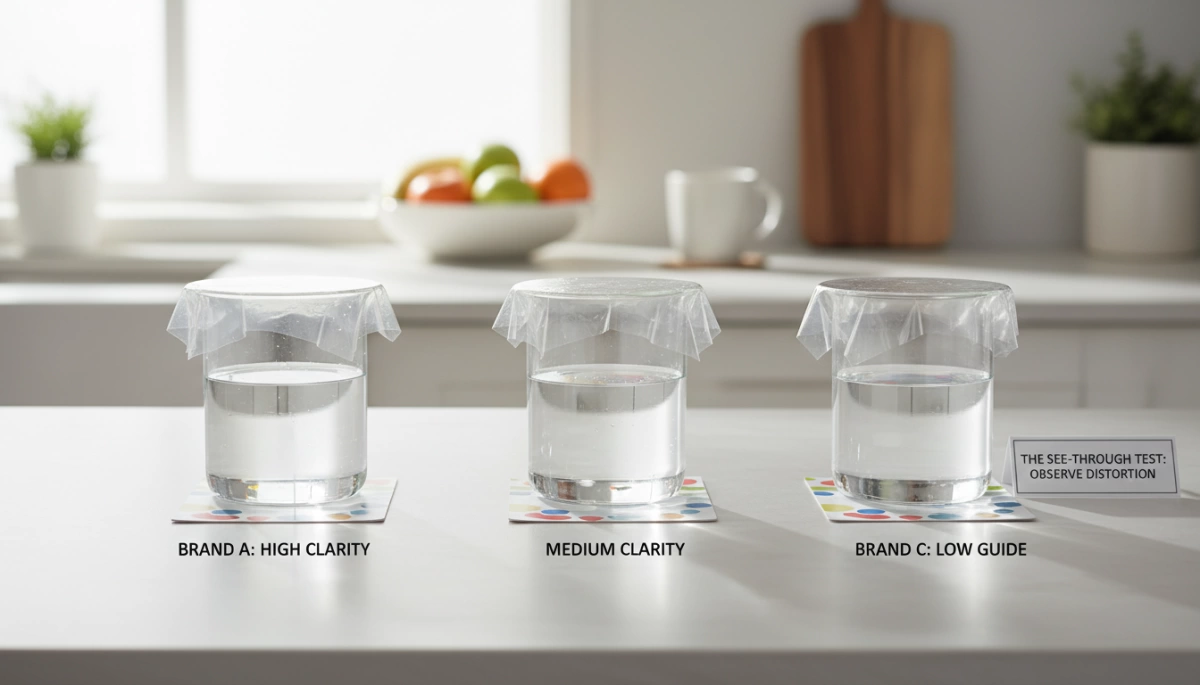
You don’t need a lab to judge cling film clarity. Here’s how I’d do quick, repeatable tests in a store, commissary kitchen, or office using tools you already have.
Quick “newspaper test” for cling film clarity
Use this anytime you’re comparing high clarity cling film vs standard wrap.
What you need:
- A newspaper or small-print flyer
- A flat glass or white cutting board
- 2–3 cling film samples
Steps:
- Lay the newspaper flat on the table.
- Stretch one cling film sample tightly over the paper. Avoid wrinkles and overlaps.
- Stand about 3–5 ft away and read a block of small text.
- Repeat with each film sample, keeping distance and lighting the same.
What to look for:
- High clarity cling film: Text is sharp, dark, easy to read, minimal “fog” around letters.
- Lower clarity film: Letters look washed out, fuzzy, or “milky,” especially on bold headlines.
- Check gloss: Tilt the surface—high-gloss, premium supermarket cling film will show a clean mirror-like reflection, not a dull blur.
This is a quick “yes/no” test for buyers who want a fast clarity check before talking specs like haze value or light transmittance.
Simple light box test for cling film samples
If you’re comparing multiple suppliers, build a basic “light box” to standardize what you see.
What you need:
- A bright LED panel, tablet at full brightness, or under-shelf lighting
- White paper or foam board
- Cling film samples cut to the same size
Setup:
- Place the light source under or behind the white board.
- Stretch each cling film sample over the board—no folds, no double layers.
- Label each film (A, B, C) so you can compare blind without brand bias.
How to compare:
- Put a printed logo or color chart under the film and check:
- **
Clarity Grades in the Artfullife® Cling Film Range
As Artfullife®, I design our cling film line around one thing: how your shelves look in real stores. Below is how our clarity-focused range breaks down so you can match each film to the right department and budget.
CrystalPro – 8 μm High-Clarity PVC
CrystalPro 8 μm is our premium, crystal clear PVC cling film for supermarkets that care about presentation.
- Type: Food-grade PVC stretch film
- Thickness: 8 μm (ultra-thin, high stretch)
- Clarity: Very low haze, high gloss, “glass-like” display
- Best for:
- Fresh meat and poultry trays
- High-margin deli and cheese
- Premium bakery items (cakes, pastries, decorated products)
- Why buyers choose it:
- Bright, sharp product color
- Tight, wrinkle-free wrap on manual and automatic machines
- Ideal where appearance drives higher selling price
ClearSelect – 10 μm High Clarity for Everyday Retail
ClearSelect 10 μm is the “workhorse” high clarity cling film for daily use across the store
Common Cling Film Clarity Myths
Myth 1: “Thicker Cling Film Is Always Clearer and More Premium”
Thickness and clarity are not the same thing.
A 12 μm film can look cloudier than an 8 μm film if the resin quality, formulation, or extrusion process is poor.
What actually drives clarity:
- Resin quality (PVC vs PE and grade of each)
- Haze value (measured, not guessed)
- Production process and cooling
- Additives (anti-fog, UV, etc.)
When you compare samples, always compare haze values and real packs, not just thickness and price.
Myth 2: “All PVC Cling Films Have the Same Clarity”
They don’t. Two PVC films can look completely different in your meat or produce case.
What makes one PVC film clearer than another:
- Different formulas and plasticizers
- Level of purity and filtration
- Production line technology and quality control
This is why you’ll see a wide clarity range between “economy” PVC and professional-grade clear PVC food wrap from serious manufacturers. If you’re sourcing from China, using a structured approach to find a reliable PVC cling film manufacturer is key to getting consistent clarity.
Myth 3: “Microwave-Safe Cling Film Can’t Be Crystal Clear”
Microwave-safe and high-clarity are not opposites.
- Many food-grade PVC and PE cling films are both microwave-safe (per use guidelines) and high clarity.
- The safety side comes from heat resistance and migration tests, not from making the film cloudy.
Always check:
- Technical data sheet for microwave instructions
- Local regulations and store SOPs
Myth 4: “Anti-Fog = Better Base Clarity”
Anti-fog is about condensation control, not core optical clarity.
- Base clarity = haze value of the raw film
- Anti-fog = how well the film stays clear when moisture forms inside the pack
You can have:
- A high-clarity film with no anti-fog that fogs quickly in chillers
- A medium-clarity film with strong anti-fog that looks clearer in cold, wet cases
When you’re buying, ask for both haze specs and anti-fog performance, and test them on actual product.
How to Fact-Check Clarity Claims
Don’t take “crystal clear” or “premium clarity” at face value. Verify it.
Use these simple checks:
- Ask for haze values (per ASTM D1003) and light transmittance %
- Do a quick newspaper test: Can you read small print clearly through one layer of film?
- Compare on real product: wrap meat, produce, bakery, and check:
- Color pop
- Shine
- Cloudy spots / wrinkles
- Photograph under store lighting and compare side by side on-screen
If a supplier won’t share data or samples, that’s a red flag. Look for partners who give clear specs, test reports, and real samples so you can make data-backed decisions on cling film clarity levels.
9. Clarity Questions Supermarkets Ask Most
What haze value is “crystal clear” cling film?
For retail displays, supermarkets in the U.S. usually treat:
- ≤ 3–4% haze – “crystal clear” / premium high-clarity cling film
- 5–8% haze – standard clear film for everyday meat, deli, and produce
- > 8–10% haze – economy film, OK for back-of-house or low-visibility use
If you’re buying for premium meat, bakery, or grab-and-go, you should be asking suppliers directly for ASTM D1003 haze values and light transmittance (%) in their specs.
How much more does high-clarity cling film cost?
In real supermarket programs we typically see:
- High-clarity PVC vs standard PVC: about 5–15% higher per roll
- High-clarity PVC vs economy PE: can be 15–30% higher, depending on thickness and anti-fog
Most chains recover that difference quickly on better-looking meat and bakery displays that drive higher sell-through and less markdown. If you’re already looking at sustainable food storage options for retail chains, it helps to compare clarity and waste together, not just price per roll (see our breakdown of sustainable food storage solutions).
Is high-clarity cling film safe for hot foods and ready meals?
Yes—as long as it’s the right grade:
- Ask for food-grade PVC or PE cling film that is microwave-safe and hot-fill approved
- Check supplier documents for:
- Maximum use temperature (commonly 100–110°C / 212–230°F for short times)
- FDA compliance for direct food contact
- For hot rotisserie, reheatable trays, and ready meals, always use the film grade specified for hot use, not just any high-clarity wrap.
How do we reduce or prevent fogging in chilled cases?
To keep packs clear in refrigerated displays:
- Use anti-fog cling film designed for meat, produce, and bakery
- Avoid wrapping hot