















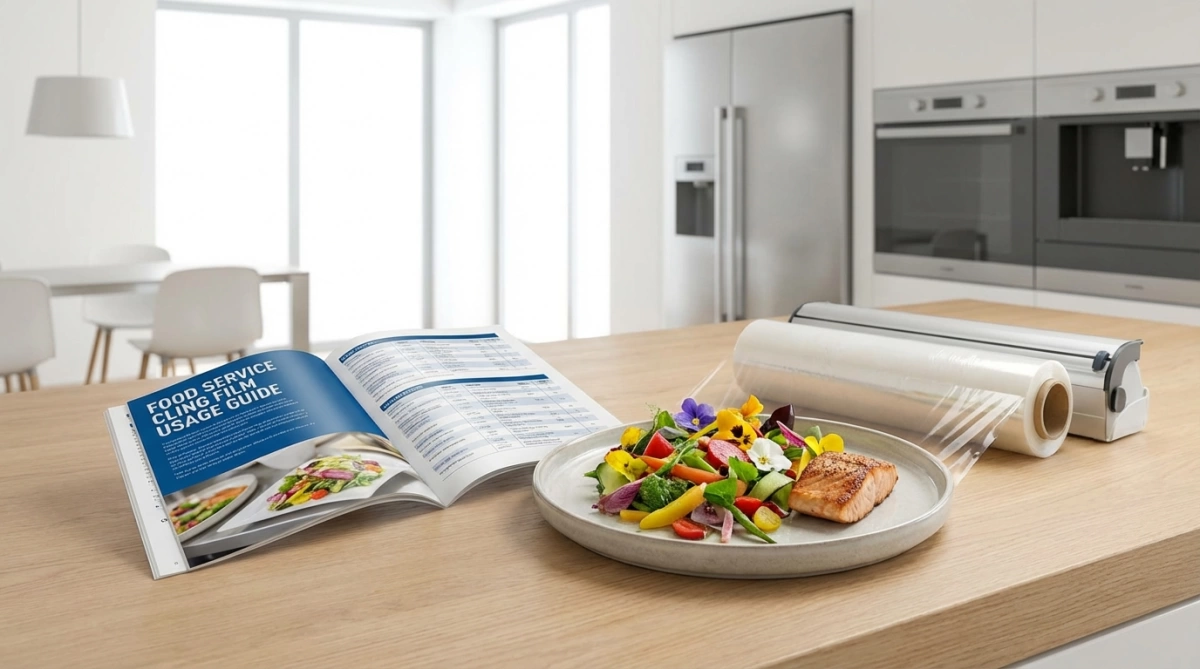
Food service cling film is not the same as household wrap. In professional kitchens, the right film needs to balance cling, tear resistance, safe temperature use, and speed on the line. For most day-to-day prep and cold storage, buyers typically look at 10-15 micron film, then match width, material, and temperature guidance to their containers and workflow.
This guide explains when standard commercial cling film works well, when microwave use is acceptable only with clear labeling, and when kitchens should switch to foil, lids, or other covers instead. It also highlights practical buyer checks so restaurants, delis, caterers, and central kitchens can reduce waste, improve consistency, and avoid avoidable heat-use mistakes.
Food-Service Cling Film vs Household Wrap
In a home kitchen, almost any cling film works. In a busy line or prep room, it doesn’t. Food-service cling film is built for speed, safety, and consistency under pressure—household
Recommended Specifications for Commercial Use
Ideal Food Service Cling Film Thickness (10–15 Micron)
For busy kitchens, thickness is what makes the wrap actually usable on the line:
| Use Case | Thickness (Micron) | Why It Works |
|---|---|---|
| Daily prep & cold storage | 10–12 μm | Good cling, easy to handle, cost-effective for high turnover |
| Hot/cool-down, heavier trays | 12–14 μm | Better tear resistance, holds tension over larger surfaces |
| Transport, stacked pans, catering | 14–15 μm | Heavy-duty protection, less risk of punct |
Safe Temperature Range and Microwave Use for Food Service Cling Film
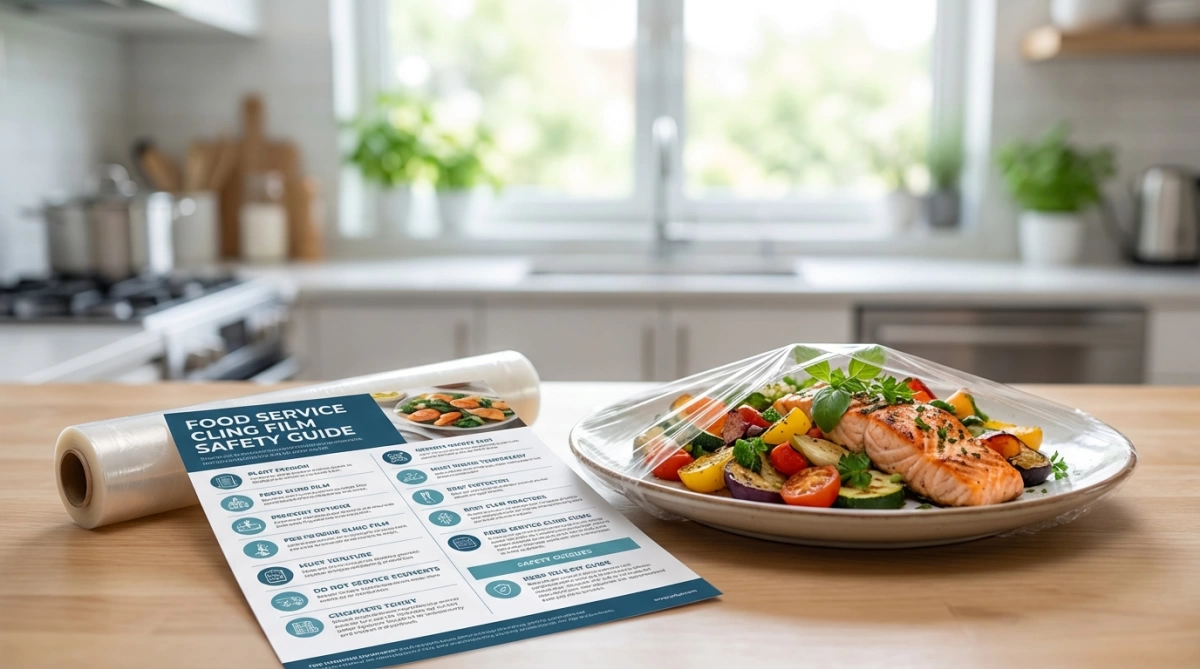
Understanding Cling Film Temperature Resistance in Food Service
In a commercial kitchen, cling film has limits you can’t ignore:
- General guideline:
- Cold use: -20°F to 104–140°F (-29°C to 40–60°C) depending on film type
- Brief microwave contact: usually up to 212°F (100°C) when used correctly and not touching food
- PVC cling film: Great clarity and cling, usually not for high heat or direct contact with very hot, fatty foods unless labeled for it.
- PE cling film: Better chemical stability at higher temps, often chosen when kitchens want safer contact with hot or greasy foods.
Always follow the specs from the film supplier, especially when you’re buying bulk commercial cling film for restaurant or deli use.
Microwave Safe Cling Film: Labels, Symbols, and What They Mean
If you’re using microwave safe cling film in a food service setup, check for:
- Microwave icon (usually a small microwave outline)
- Text like “Microwave Safe”, “For reheating only”, or “Do not use for grilling/oven”
- Food-contact symbol (glass and fork) confirming food-safe plastic film
If the roll doesn’t clearly say microwave safe, treat it as cold-use only. When in doubt, don’t put it in the microwave in a commercial kitchen.
Risks of Overheating Cling Film
Overheating cling film in a busy line kitchen can cause:
- Off-gassing: Strong plastic smell when film gets too hot
- Melting and sagging: Film can collapse into food or stick to containers and GN pans
- Possible contamination: Higher risk when overheated film touches hot, fatty, or acidic foods
Train staff: if film is bubbling, shrinking, or smoking in the microwave, they’re using it wrong.
Rules for Using Cling Film with Hot Food, Reheating, and Steaming
In real-world food service use, follow these rules:
- Let cooked food cool slightly before wrapping tight (avoid trapping steam that can stretch or deform the film).
- In the microwave:
- Use film loosely over the container, not in direct contact with food if possible.
- Leave a small vent so steam can escape.
- Keep the film above the food level, especially for cheese, oils, sauces.
- For steaming/reheating:
- Low–medium power, short bursts.
- Never use cling film as a primary steamer lid for long, high-power runs.
This is especially important if you’re running standard PVC restaurant cling film instead of high-heat specialty wraps.
When Not to Use Cling Film in Commercial Kitchens
There are places where cling film simply doesn’t belong:
- Ovens (convection, combi, deck ovens)
- Salamanders, broilers, cheese melters
- Grills, griddles, planchas, charbroilers
- Direct contact with heating elements or heat lamps at very close range
If you need high-heat coverage, switch to foil, lids, or hotel pan covers, not cling film. For more on how different packaging materials behave in high-heat and prep environments, you can check our breakdown of cling film requirements for supermarket chains and other food operations on our site, where we also cover heat and safety considerations in detail: cling film requirements for supermarket chains.
Daily Usage Best Practices in Professional Kitchens
Dialing in how your team uses food service cling film every day is the difference between clean, safe storage and wasted product. Here’s how I standardize wrapping in busy commercial kitchens.
Basic Wrapping Techniques for Tight, Secure Seals
Use these simple rules so wraps stay tight and don’t pop open mid-service:
- Stretch the film slightly as you pull it over the container so it “shrinks” into place.
- Always anchor one edge first (back rim of the pan or bowl), then stretch across and tuck under the opposite edge.
- For liquids and sauces, double-wrap: first pass for contact, second pass to lock the seal.
- For long-term storage, wrap all the way under the container rim instead of just across the top.
- Keep hands dry and clean; greasy fingers kill adhesion and waste film.
How to Cover Hot vs Cold Foods with Cling Film
Hot and cold foods need different handling to stay safe and avoid film failure:
- Hot food (above 140°F / 60°C)
- Let food steam off briefly until it stops visibly steaming hard.
- Leave a small vent gap if holding hot, then seal fully once cooled.
- Never let film touch bubbling liquids or exposed heating elements.
- Cold food (refrigerated or chilled)
- Make sure the rim is dry for better cling.
- Press the film gently onto the surface of foods like guac, sauces, or custards to reduce oxidation and skinning.
- For high-moisture items (cut fruit, salads), wrap tightly and label with date/time.
Wrapping Stainless-Steel Trays, GN Pans, Bowls, and Plates
Use the right film width and a repeatable motion so pans don’t leak or open:
- Stainless-steel and GN pans
- Use 18″ (45 cm) or wider film for full and half pans.
- Start at the long side, anchor, then stretch across and wrap one full loop under the pan.
- For stacked pans, wrap each pan individually; don’t rely on the top pan to “cover” the one below.
- Bowls and plates
- For smaller bowls, use 12″ (30 cm) film to reduce waste.
- Pull the film tight across the top, then twist slightly at the sides and tuck under for a drum-tight seal.
- Deli and display containers
- Use high-clarity film for grab-and-go and display cases so product looks fresh and clean.
Using Cling Film with Aluminum Foil (Layering Rules)
In commercial kitchens, foil and cling film each have a job:
- For cold storage: film inside (direct contact with food), foil outside (for stacking and light-blocking).
- For transport and catering trays:
- First layer: cling film for a tight seal and leak control
- Second layer: foil for strength, insulation, and stacking
- Avoid using cling film alone on rough or sharp foil edges—they can cut the film; always wrap over smooth rims.
For foil-heavy setups, it can help to match your wrap standards with the same logic you’d apply when choosing slider aluminum foil rolls for foodservice operations so staff don’t switch methods mid-shift (good supplier guidance example).
Speed-Wrapping Hacks for Line Cooks and Prep Teams
Speed matters on a busy line. A few small tweaks can save minutes every hour:
- Keep a bench-top or wall-mounted dispenser right by the cold table or prep station.
- Train staff to pull, stretch, and cut in one motion—no rewinding or “fixing” the roll.
- Use pre-cut lengths for common tasks (like individual deli containers or half pans) and post those lengths on the wall.
- Standardize which film width goes to which station (e.g., 12″ for smalls, 18″ for GN pans, 24″+ for full sheet trays).
Standardizing Wrapping Methods for Consistent Presentation
Consistency is key for brand image, food safety, and inventory control:
- Create simple station-specific rules, like:
- “All GN pans: double-wrap, label top right corner with date/name.”
- “All dressings: film touching surface + label on side.”
- Use one labeling system: product name, date, time, initials, and use-by.
- Run brief training during pre-shift so every cook wraps the same way.
- Spot-check wrapped items during line checks and correct on the spot—don’t let sloppy wrapping become normal.
When your cling film usage is standardized like this, you cut waste, speed up service, and keep food looking and tasting the way it should.
Storage and Dispenser Tips to Reduce Waste in Food Service Cling Film
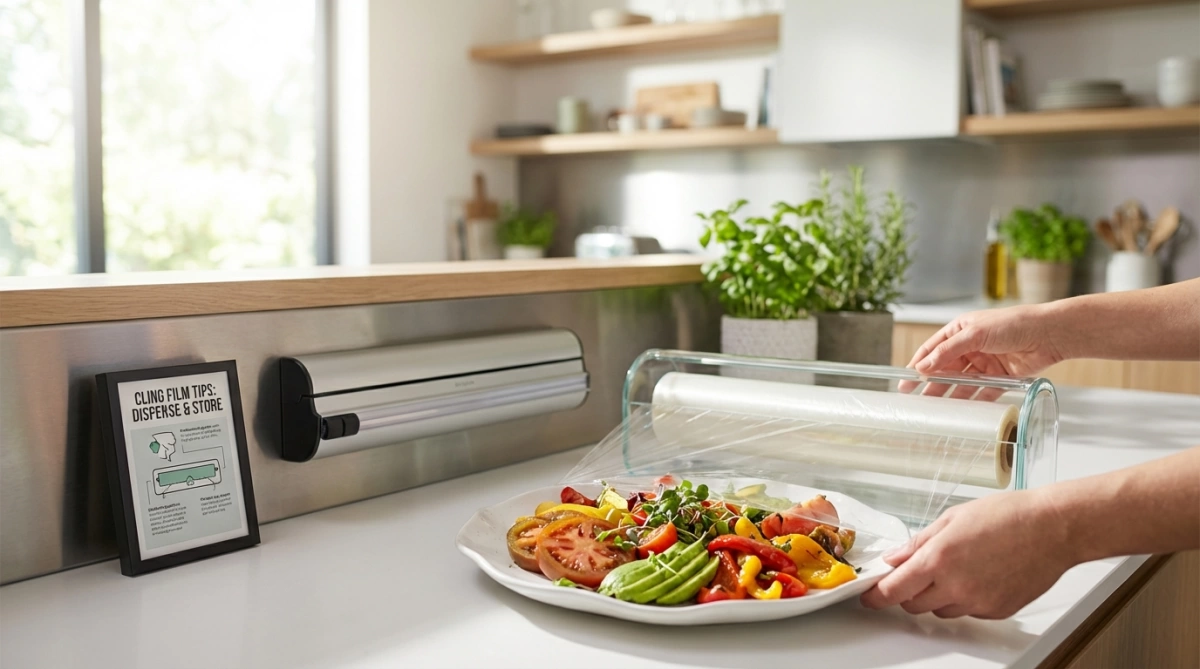
Store Cling Film Rolls the Right Way
In a busy U.S. kitchen, how you store your commercial cling film has a direct impact on waste and performance.
- Keep rolls cool and dry: Ideal storage is around 60–77°F, away from heat lamps, ovens, and dishwashers. High heat softens the film and kills its “snap back” and cling.
- Avoid direct sunlight and steam: UV and moisture can warp the box, loosen the core, and cause edge damage.
- Use a dedicated storage zone: Keep bulk cling film for restaurants on a clean, dry shelving rack—not stacked under a sink or on the floor.
- First In, First Out (FIFO): Rotate boxes so older rolls get used first, especially PVC film with shelf-life considerations.
If you’re also storing foil nearby, keep it organized and clearly separated so staff don’t grab the wrong material. We follow the same principles we use for our safe aluminum foil for food contact to keep packaging clean, dry, and easy to access.
Slide Cutter vs Saw-Tooth Cutter Box
Choosing the right cling film cutter box is a simple way to cut waste and speed up service.
Slide Cutter Cling Film (Recommended for Most Pro Kitchens)
- Cleaner, straighter cuts
- Less chance of film stretching or bunching
- Better for high-clarity food wrap film used on deli counters and bakery display
- Safer and faster for new staff to learn
Saw-Tooth Cutter Box
- Lower cost, basic option
- Works fine for back-of-house where perfect edges don’t matter
- Needs more control to avoid tearing and crooked cuts
In most U.S. restaurants and catering operations, I recommend **slide cutter cling film
Food Service Cling Film Safety & Compliance (FDA, EU, HACCP)
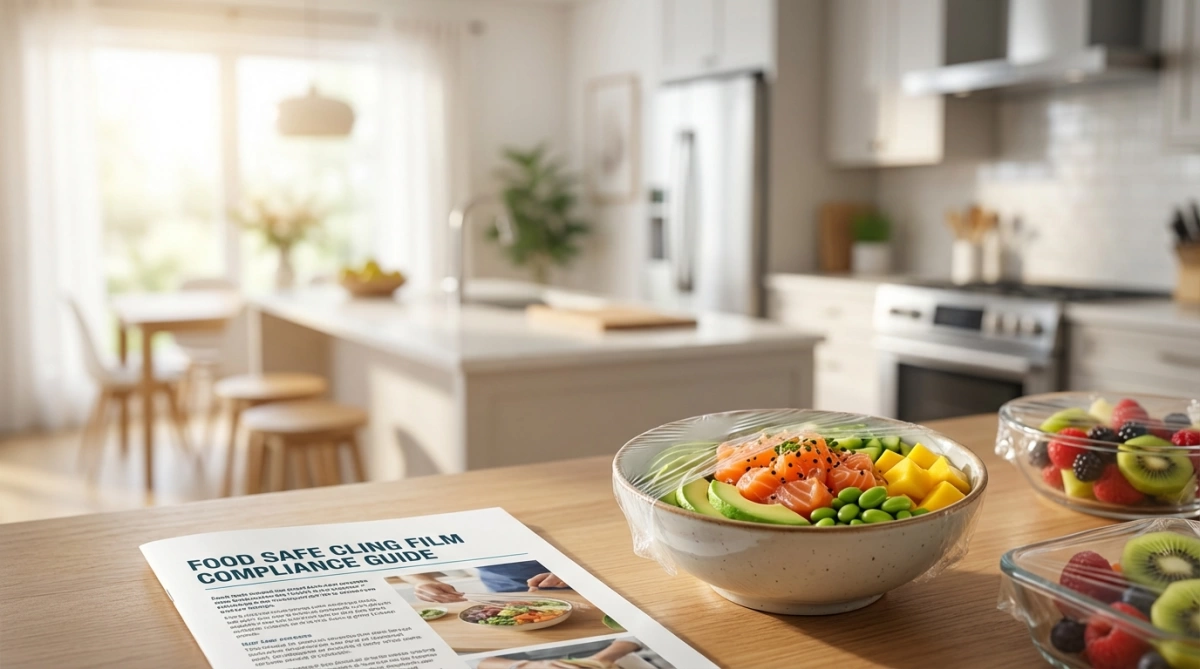
As a cling film factory serving food service customers, I treat food safety and regulatory compliance as non‑negotiable. If the film touches food, it has to be safe, traceable, and properly labeled.
Food-Contact Safety Standards (FDA, EU, Local)
For commercial kitchens in the U.S., I recommend you only use food service cling film that:
- Meets FDA 21 CFR requirements for food-contact plastics
- Complies with EU food-contact regulations (like (EU) No 10/2011) if you also supply EU-style or export operations
- Comes with declarations of conformity and test reports from accredited labs
- Matches your local health department rules and any chain-level brand standards
If you’re also using food-grade bags or other packaging, it’s smart to keep all compliance docs together; we follow the same standard systems we use for our FDA/EU-certified food-grade plastic packaging.
How to Read Food Safe Plastic Film Labels
On commercial cling film rolls, always check for:
- “Food contact” or knife-and-fork symbol
- Temperature range and microwave safe icon (if allowed)
- Material type: PVC or PE (and sometimes “LDPE”)
- Country/region compliance: “FDA compliant,” “EU food-contact compliant,” etc.
- Lot/batch number for traceability and HACCP records
If any of that is missing on a film meant for restaurant use, I’d treat it as a red flag.
BPA-Free, Phthalate-Free & Safer Plasticizers
For food service, especially in the U.S., I strongly recommend:
- BPA-free cling film
- Phthalate-free plasticizers in PVC films (no DEHP, DBP, etc.)
- Plasticizer systems tested for hot, fatty, and acidic foods
When we produce professional cling film, we only use food-contact approved plasticizers and keep documentation ready for audits.
Avoiding Chemical Migration (Hot, Fatty, Acidic Foods)
To keep migration risk low in your kitchen:
- Don’t let cling film directly touch very hot, fatty foods unless the film is specifically tested for that use
- Let food cool slightly before wrapping or use a lid + film combo so the film doesn’t sink into the product
- For cheese, meats, sauces, and oily foods, use films with proven fat-resistance and clear temp limits
- Never exceed the stated temperature resistance or microwave time on the box
HACCP-Friendly Cling Film Practices
To keep your HACCP plan tight, I suggest:
- Logging supplier, item, and lot number for each new roll opened
- Labeling wrapped items with product name, date, time, and staff initials
- Storing film off the floor, away from heat and chemicals
- Training staff not to use damaged, dusty, or unwrapped rolls
- Including cling film handling in your HACCP training and SOPs
Done right, commercial cling film isn’t just a cover—it’s part of your food safety system, and I build our products to fit that standard.
Common Food Service Cling Film Mistakes and Fixes
1. Film melting or warping in the microwave
This usually comes down to heat and contact points.
Typical mistakes:
- Wrapping food too tightly in direct contact with the film
- Using non–microwave-safe film
- Reheating high-fat or high-sugar foods on high power for too long
Fix it:
- Only use microwave safe cling film and check the label/symbols first
- Leave a vent gap or poke a small steam hole
- Keep film above the food, not pressed into sauces, cheese, or fat
- Use medium power and shorter intervals for reheating
- For higher-heat tasks, switch to foil or other heat-safe options (we use the same logic we recommend for our industrial-grade aluminum foil).
2. Poor cling on wet, oily, or chilled surfaces
Cold stainless, condensation, and oil all kill adhesion.
Typical mistakes:
- Trying to stick film directly to wet or greasy rims
- Wrapping extremely cold pans straight out of the blast chiller
Fix it:
- Wipe rim edges dry before wrapping
- Slightly warm the contact area with a dry towel or your hand
- Stretch the film gently to activate cling as you seal the edges
- For very oily trays, use a light fold-over technique: wrap under the pan and back over the top so the film grips itself instead of the surface
3. Cutter box tearing or crushing the film
Most of this is about handling and setup, not the film itself.
Typical mistakes:
- Pressing too hard on the saw-tooth or slide cutter
- Pulling the film at an angle instead of straight out
- Bent box, crushed corners, or a dirty cutting track
Fix it:
- Keep the cutter box clean and dry
- Pull film straight and flat across the blade or slide bar
- Replace damaged cutter bars and boxes immediately
- Mount heavy-use rolls in a bench-top or wall-mounted dispenser so staff doesn’t crush the box on the line
4. Using the wrong thickness or width
Wrong spec = wasted film, broken seals, and angry staff.
Typical mistakes:
- Using thin film for catering trays or bulky items
- Using wide rolls on small stations where half the film gets cut off
- Over-wrapping because the first layer wasn’t strong enough
Fix it:
- Use 10–12 micron for light prep and small containers
- Use 12–15 micron heavy duty foodservice wrap for GN pans, hotel pans, and transport
- Standardize widths:
- 30 cm (12″): small containers, deli portions
- 45 cm (18″): GN pans, sheet pans
- 60 cm (24″): full catering trays and bulk storage
5. Training staff to avoid waste and inconsistent wrapping
If everyone wraps differently, costs go up and pans look sloppy.
Typical mistakes:
- No standard method per station
- Over-pulling film and tossing tangled pieces
- Double or triple wrapping for no reason
Fix it:
- Create simple SOPs with photos: 1 method per pan size and use case
- Do a 10-minute line training: how to pull, stretch, and seal once
- Assign one person per shift to monitor film use and cutter box condition
- Track film cost per cover so teams see the impact of waste
Dialing in these small details keeps your commercial cling film working the way it should: tight seals, clean presentation, and lower waste across the entire kitchen.
Artfullife Professional Cling Film for Food Service
When I designed Artfullife® professional cling film for food service, I built it around what busy U.S. kitchens actually need: speed, consistency, and fewer problems on the line.
Key Features for Pro Kitchens
Artfullife food service cling film is made specifically for restaurants, catering, and deli / supermarket operations, not home use. Core benefits:
- Strong adhesion: Grips stainless, GN pans, melamine, glass, and plastic without constant re-wrapping.
- High clarity: Clean product visibility for prep coolers, grab-and-go, deli, and bakery displays.
- Consistent roll quality: No random thin spots, no weak edges, less tearing under pressure.
- Food-safe formulation: Designed for direct food contact and compliant with major food safety standards.
Heat Resistance, Clarity, and Adhesion
For food service, cling film has to handle temperature swings, moisture, and heavy use:
- Heat resistance: Formulated for typical commercial use ranges, including microwave-safe options when used as directed. It doesn’t sag and melt as fast as cheap household wrap.
- Cold performance: Stays flexible and clingy in walk-in coolers and reach-ins, so seals don’t pop off overnight.
- Clarity: High-clarity film keeps labeling visible and makes it easy to see product freshness and portioning at a glance.
- Adhesion on tough surfaces: Better cling on wet, oily, or chilled containers compared to generic restaurant cling film.
Sizes, Thickness, and Formats
I keep the lineup tight and practical so buyers aren’t guessing:
- Thickness options (typical food service range):
- ~12 micron: everyday prep, cold storage, light wrapping
- ~15 micron: heavier loads, catering trays, deli and bakery, transport
- Widths for food service setups:
- 12″ (30 cm): small pans, quart containers, single plates
- 18″ (45 cm): standard GN pan cover film, prep tables
- 24″ (60 cm): full-size hotel pans, large catering trays, bakery sheets
- Formats:
- Cutter box rolls with slide cutter or saw-tooth edge
- Bulk cling film for restaurants for use in wall-mounted or bench-top dispensers
If you’re sourcing multiple SKUs, my restaurant supply cling film formats are designed to match standard U.S. kitchen setups so you don’t need custom shelving or storage.
Fits Your Workflow Without Retraining the Team
I built Artfullife cling film so it drops straight into existing workflows:
- Works with common cling film cutter boxes and commercial dispensers—no special device needed.
- Feels and handles like premium food wrap line cooks already know, so no retraining or slowing down service.
- Easy to standardize: one thickness for general prep, one heavier-duty for catering, transport, and deli use.
- Clear, simple packaging so staff can grab the right catering cling film roll or deli cling film quickly.
If you’re also looking at related food packaging and storage options from a single supplier, I break down sourcing and quality checks in our guide to choosing a reliable Chinese PVC cling film manufacturer, which follows the same standards I use for Artfullife products.
Quick Reference Chart for Food Service Cling Film
Here’s a fast, practical guide I use with U.S. restaurant and catering clients when we set up Artfullife® food service cling film in their kitchens.
Task-Based Film Thickness & Width
By task
| Task / Station | Thickness | Width | Notes |
|---|---|---|---|
| Cold prep (salads, cut fruit) | 10–12 micron | 12″ / 18″ (30 / 45cm) | Daily line use, fast wrapping |
| Protein & marinated items | 12–15 micron | 18″ (45cm) | Better puncture resistance |
| Bulk storage in walk-in | 12–15 micron HD | 18″ / 24″ (45 / 60cm) | For GN pans and deep trays |
| Deli & bakery display | 10–12 micron | 12″ / 18″ | High clarity for merchandising |
| Catering trays & hotel pans | 12–15 micron HD | 18″ / 24″ | Transport-safe sealing |
| Grab-and-go items (bowls, clamshells) | 10–12 micron | 12″ | Quick, clean presentation |
Standard vs heavy-duty foodservice wrap
- Standard (10–12 micron): line prep, salads, cold storage, deli counters.
- Heavy-duty (12–15 micron): meat, catering, stacked trays, transport, busy banquets.
Hot Holding, Cold Storage, Grab-and-Go
- Hot holding (not direct heat):
- Use 12–15 micron PVC or high-temp PE, loosely vented, microwave safe cling film only.
- Keep film away from direct contact with heating elements or open flame.
- Cold storage (coolers, walk-ins, make lines):
- 10–12 micron works for most; step up to 12–15 micron for heavy pans or sharp edges.
- Grab-and-go service (display fridges, front-of-house):
- High clarity, 10–12 micron for salads, fruit cups, bakery items; keeps product visible and fresh.
At-a-Glance: Artfullife® Food Service Cling Film Use Cases
Artfullife® Standard Cling Film (10–12 micron)
- Best for: line prep, salad bars, deli counters, bakery display, grab-and-go.
- Formats: 12″ and 18″ rolls, cutter box or dispenser-compatible.
- Pick this if: speed, visibility, and low cost per cover matter more than extreme toughness.
Artfullife® Heavy-Duty Professional Wrap (12–15 micron)
- Best for: GN pans, catering trays, meat/protein storage, transport, stacked storage.
- Formats: 18″ and 24″ rolls, ideal for hotel pans and large trays.
- Pick this if: you’re running banquets, off-site catering, or a high-volume kitchen.
For kitchens already using foil for roasting or transport, pairing Artfullife cling film with our affordable aluminum foil solutions for food packaging businesses can streamline both prep and holding workflows while staying cost-efficient (details on aluminum foil options).
Food Service Cling Film FAQ
Microwave use rules for commercial cling film
For microwave safe cling film in a food service kitchen, I follow three core rules:
- Only use film labeled “microwave safe” and “food contact safe.” No label, no microwave.
- Keep the film from touching the food when possible—tent it so steam can escape.
- Low–medium power, short bursts. If the film starts to sag, bubble, or wrinkle hard, stop and re-wrap.
Future of PVC vs PE cling film in pro kitchens
In the U.S. market, I see a steady shift:
- PVC cling film – still the go-to in many restaurants for its strong cling and clarity on deli trays, catering pans, and display cases.
- PE cling film – growing fast thanks to safer plasticizer profiles and easier compliance with stricter regulations and corporate sustainability policies.
Many buyers now mix both: PVC for cold display, high-clarity use; PE for hot food and higher-safety applications, often alongside other safer plastics like the options covered in our guide to safe storage solutions with PE bags.
Estimating covers per roll for cost control
To control food wrap cost per cover in a restaurant, I use this simple formula:
- Covers per roll ≈ (Roll length in ft) ÷ (Average sheet length in ft per cover)
Example: 2000 ft roll / 2 ft per cover ≈ 1,000 covers per roll.
Then: - Film cost per cover = Roll price ÷ Covers per roll
Share this number with the team so they see how waste hits food cost.
12 micron vs 15 micron cling film in real use
In real kitchen work, the difference is obvious:
- 12 micron – good for light wrapping, cold storage, bakery items, low-handling deli work. Cheaper, but tears easier.
- 15 micron – noticeably stronger, better puncture resistance, holds tighter on GN pans and sharp edges, ideal for line work, catering trays, and transport.
If staff are heavy-handed or you’re wrapping pans all day, 15 micron usually saves money by cutting rewraps and waste.
Can cling film go in the oven or under a salamander?
No. Commercial cling film is not made for ovens, salamanders, or grills.
- High heat will melt, shrink, or burn the film, contaminate food, and damage equipment.
- For oven work, use oven-safe lids, foil, or ovenable bags, not cling wrap—no exceptions.
Training new staff to wrap food properly
To get wrapping consistent and fast in a busy kitchen, I keep training simple:
- One standard method for each task – GN pans, round bowls, deli containers.
- Show them how tight is “tight enough” without crushing product.
- Teach “wrap once, not three times” to avoid waste.
- Use a cutter box or wall dispenser and require film to be torn cleanly at the edge.
A 10-minute live demo plus a few “good vs bad” examples on the line works better than any written SOP.
Cling film recycling, disposal, and sustainability
Most commercial cling film (especially PVC) is not widely recycled in U.S. municipal streams, so I focus on:
- Using the right thickness to reduce double-wrapping.
- Cutting to correct size instead of overhanging sheet after sheet.
- Considering PE-based and lower-additive films where possible for a smaller footprint.
- Pairing cling film with reusable containers and silicone covers in some stations, similar to how operators are adopting reusable silicone food pouches as eco-friendlier options for specific items (see our breakdown on reusable silicone food pouches and eco benefits).
Used film should go to landfill or energy recovery unless your local recycler explicitly accepts that film type.
Buyer Checks Before Ordering Commercial Cling Film
When comparing rolls for restaurant, deli, or catering use, the lowest roll price is rarely the only decision point. A film that tears too easily, fails on stainless-steel pans, or lacks clear microwave-use labeling can create more waste and more operational risk than it saves.
- Confirm the intended use: cold storage only, prep-line wrapping, short microwave reheating, or transport.
- Ask for written specifications: thickness range, roll width and length, material type, temperature guidance, and whether microwave use is approved.
- Verify food-contact documentation: ask the supplier what food-contact declaration or compliance paperwork is available for your target market.
- Test on your real containers: GN pans, stainless-steel trays, bowls, and grab-and-go packs can behave differently in daily use.
- Check hot-food limits carefully: if your team wraps food while it is still steaming hard, standard film may sag, lose tension, or contact the food.
- Train staff on one simple rule: if the roll is not clearly labeled microwave safe, treat it as cold-use film.
For higher-risk applications such as hot, fatty, or acidic foods, buyers should ask suppliers for clear usage limits and run a short in-kitchen trial before scaling up. This is especially useful when comparing PVC cling film with PE cling film for mixed prep and reheating environments.
Recommended Commercial Cling Film Specs by Kitchen Use Case
| Use case | Suggested thickness | What it helps with | Buyer check |
|---|---|---|---|
| Daily prep and cold storage | 10-12 μm | Good cling, easy handling, cost-effective for high-turnover use | Confirm the film holds well on dry pan rims and common prep containers |
| Hot fill, cool-down, and heavier trays | 12-14 μm | Better tear resistance and stronger tension over larger surfaces | Check the supplier’s temperature guidance before using around warm food |
| Transport, stacked pans, and catering | 14-15 μm | Heavier-duty protection with lower puncture risk | Request a sample roll and test under stacking and movement conditions |
| Microwave reheating | Varies by product | Only suitable when the roll is clearly labeled for microwave-safe use | Look for explicit wording and symbols; otherwise treat as cold-use only |
FAQ
What should B2B buyers check first?
Start with product specification, MOQ, lead time, packaging options, and compliance documents for food service cling film usage guide.
External Proof and Source Ideas
Request the Right Cling Film for Your Kitchen
If you are sourcing commercial cling film for a restaurant, deli, catering business, supermarket prep room, or central kitchen, send suppliers a short usage brief before asking for pricing.
- Primary use: cold storage, prep, transport, or microwave reheating
- Preferred material: PVC, PE, or open to recommendation
- Required thickness range: 10-12 μm, 12-14 μm, or 14-15 μm
- Common containers: GN pans, trays, bowls, plates, deli packs
- Roll width and dispenser compatibility
- Need for food-contact documents or market-specific compliance paperwork
- Order volume, sample need, and delivery destination
A more complete inquiry usually leads to faster sample matching, fewer application mistakes, and more accurate bulk quotations.
Key Takeaways
- Food service cling film should be selected for operational use, not treated like household wrap.
- A 10-15 μm range covers many common restaurant, deli, and catering applications.
- Cold storage, hot fill, transport, and microwave reheating should not be treated as the same use case.
- If microwave-safe wording is missing, the safest buyer rule is to treat the film as cold-use only.