















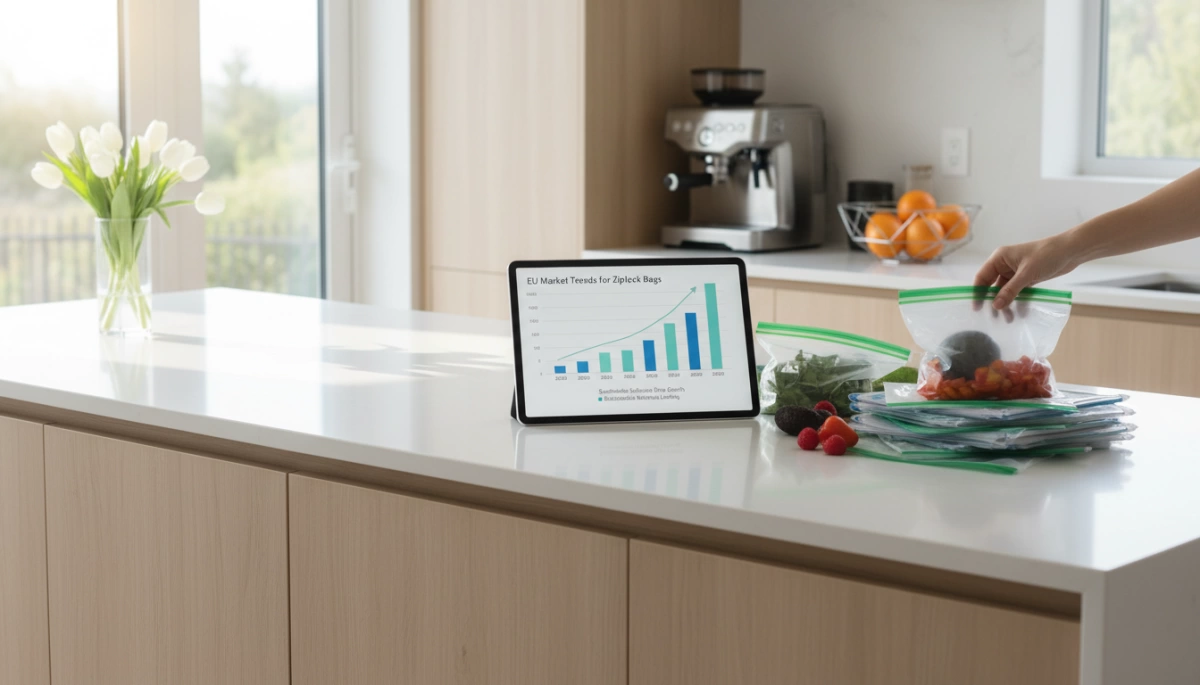
Overview of the Europe Ziplock Bags Market
The European market for reclosable packaging is undergoing a significant transformation, driven by a dual focus on strict regulatory compliance and the circular economy. As a leading supplier, we observe a distinct shift where procurement managers are prioritizing quality assurance and sustainability over low-cost, non-compliant alternatives. The market is moving away from complex, non-recyclable laminates toward advanced mono-material (PE) solutions and certified biodegradable options that align with the region’s rigorous environmental standards.
Current Market Size and Growth Projections
The demand for high-quality ziplock solutions in Europe continues to expand, fueled by the retail, foodservice, and industrial sectors. While market size fluctuates with raw material availability, the trajectory is clearly pointing toward sustainable growth.
- Resin Cost Volatility: Pricing trends currently track oil and resin costs with ±5–10% volatility, influencing short-term wholesale contracts.
- Volume-Dependent Pricing: Growth is supported by flexible wholesale tiers, where bulk orders of 5,000+ pieces significantly reduce unit costs for European distributors.
- Sector Expansion: We are seeing increased adoption of 1.0 mil to 4.0+ mil thickness bags across diverse industries, from light snack packaging to heavy-duty industrial parts storage.
Key Factors Driving Demand in the EU
European buyers are increasingly sophisticated, requiring packaging that offers both superior protection and environmental responsibility. The primary drivers for industry growth include:
- Food Safety Standards: There is an uncompromising demand for BPA-free and phthalate-free materials. Products must meet EU Regulation No. 10/2011 and Framework 1935/2004 to ensure zero chemical transfer.
- Waste Reduction: High-performance seals, such as integral extruded zippers, extend the shelf life of fresh produce and deli meats, directly addressing food waste concerns.
- Versatile Applications:
- LDPE/HDPE: Preferred for high clarity and puncture resistance in retail.
- Silicone: Gaining traction for reusable, heat-resistant (microwave/sous-vide safe) applications.
- Compostable Blends: Rising interest in PBAT/PLA materials for organic waste management.
Primary Market Challenges and Regulatory Restraints
Navigating the European landscape requires overcoming significant technical and regulatory hurdles. Success in this region depends on strict adherence to safety frameworks and adapting to material constraints.
- Regulatory Compliance: Suppliers must provide comprehensive documentation, including REACH certification and migration testing results. Failure to meet these standards bars entry into major retail chains.
- Material Restrictions: The push against single-use plastics is forcing a transition from traditional multi-layer films to mono-material PE structures that support recycling streams.
- Cost Management: With price validity periods often shortening to 15–30 days during high-demand cycles, buyers face the challenge of hedging against raw material inflation while maintaining eco-friendly standards.
Top Trends Shaping the European Ziplock Bag Industry
The European market is currently the global benchmark for packaging standards, driven by a rigorous focus on the circular economy and consumer safety. We are seeing a distinct move away from purely cost-driven procurement toward value-driven sourcing that prioritizes compliance and lifecycle management. The industry is no longer just about containment; it is about meeting strict regulatory frameworks like EU Regulation No. 10/2011 and REACH. For businesses importing into or operating within the EU, staying ahead of these trends is mandatory to avoid supply chain disruptions and meet the evolving expectations of eco-conscious consumers.
Shift Toward Sustainable and Eco-Friendly Materials
The most significant shift we are witnessing is the transition from complex, non-recyclable multi-layer laminates to mono-material structures. In the past, packaging often combined different plastics to achieve barrier properties, making recycling nearly impossible. Now, the trend is heavily favoring Mono-material PE (Polyethylene). These bags offer the necessary flexibility and clarity while remaining fully compatible with existing recycling streams.
This shift is largely driven by Extended Producer Responsibility (EPR) schemes in Europe, which tax non-recyclable packaging heavily. We are helping our partners transition to these single-material solutions without sacrificing durability. For distributors analyzing global movements, understanding the impact of reusable produce bags for international markets provides critical insight into how sustainability is reshaping inventory requirements.
Key Material Shifts:
- Phthalate-Free & BPA-Free: Non-negotiable standards for food contact compliance.
- Migration Testing: Mandatory verification to ensure zero chemical transfer to food.
- Reduced Carbon Footprint: Lighter weight films that maintain puncture resistance.
Rise of Recyclable and Biodegradable Solutions
While recycling remains the primary goal, there is a parallel surge in demand for compostable alternatives, specifically PBAT (Polybutylene adipate terephthalate) and PLA (Polylactic acid) blends. These materials are designed for industrial composting facilities, which are becoming more prevalent across nations like Germany and France. However, it is crucial to distinguish between “biodegradable” marketing fluff and certified compostable reality.
We classify these eco-friendly options based on their end-of-life impact:
| Material Type | Primary Benefit | Typical Application | EU Market Status |
|---|---|---|---|
| LDPE (Mono-material) | High Recyclability | General storage, industrial parts | Standard (High Demand) |
| PBAT / PLA Blend | Industrially Compostable | Organic waste bags, short-term food storage | Growing (Niche) |
| Recycled PE (rPE) | Circular Economy | Non-food retail packaging | Emerging (Regulatory hurdles for food contact) |
Innovations in Convenience and Reusable Features
European consumers are increasingly treating ziplock bags as durable goods rather than single-use items. This has fueled the rise of high-grade silicone food bags and heavy-duty PE bags with thicknesses exceeding 2.7 mil (approx. 68 microns). In markets like Germany, silicone products often must meet LFGB standards, which are tougher than FDA requirements, ensuring the material is odorless and safe for high-heat applications like sous-vide or microwave use.
Convenience also dictates the closure technology. We are seeing a preference for integral extruded zippers over attached sliders. Extruded zippers are formed directly during the film manufacturing process, creating a hermetic seal that is less prone to mechanical failure. This airtight integrity is essential for extending shelf life. When considering preservation, knowing the best way to store food for long-term storage relies heavily on selecting packaging with these advanced barrier and closure technologies.
Key Design Innovations:
- Gusseted Bottoms: Allows bags to stand upright for easier filling and fridge organization.
- Write-on Panels: Improved ink adhesion for labeling dates and contents.
- Tactile Seals: Audible clicks or textured tracks to confirm the bag is closed.
Analysis by Material Type
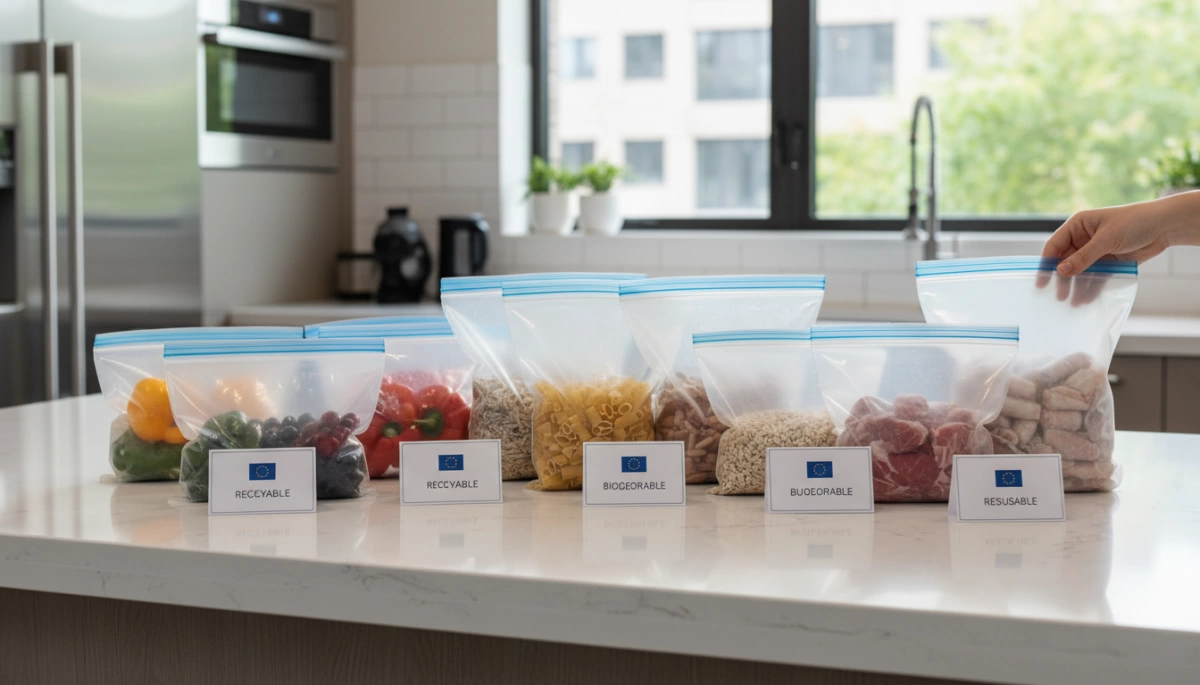
Understanding the material composition is critical for navigating the European market, especially with strict regulations like EU Regulation No. 10/2011 governing food contact. We see a distinct split in demand based on the specific application and end-of-life requirements.
Polyethylene (PE) Ziplock Bags
Polyethylene remains the dominant material in our manufacturing lines due to its versatility and safety profile. In the EU, there is a massive push toward mono-material PE structures to facilitate easier recycling within the circular economy.
- LDPE (Low-Density Polyethylene): This is our standard for flexibility and clarity. It is highly puncture-resistant, making it ideal for everything from fresh produce to industrial parts.
- HDPE (High-Density Polyethylene): We use this for applications requiring rigidity and high tensile strength. It typically has a milky, matte appearance.
For businesses looking to stock up, choosing compliant wholesale bulk zipper bags made from pure PE helps avoid the “sustainability fees” often attached to complex, non-recyclable laminates.
Polypropylene (PP) and High-Clarity Options
When shelf appeal is the priority, Polypropylene (PP) is the material of choice. Unlike the softer feel of PE, PP offers a stiffer, crinkly texture with superior optical clarity. This makes it a staple for retail packaging where the product needs to be fully visible, such as bakery items, textiles, or confectionery.
Key Differences:
- Clarity: PP offers crystal-clear transparency compared to the slight haze of LDPE.
- Barrier: Excellent moisture barrier properties, though less impact-resistant than PE.
Bio-based and Compostable Plastic Alternatives
The market insights from our European partners indicate a rapid shift away from traditional petrochemicals toward biodegradable options. We focus on PBAT and PLA blends that are industrially compostable, catering to markets with strict waste reduction targets like France and Germany.
However, bio-plastics aren’t the only solution for sustainability. There is significant industry growth in the reusable sector. Many EU retailers are now opting for durable, high-heat resistant silicone food storage bags as a premium, long-term alternative to single-use compostables.
Material Comparison for EU Buyers:
| Material Type | Key Characteristic | Typical Application | EU Compliance Focus |
|---|---|---|---|
| LDPE | Flexible, Puncture-Resistant | General Food, Hardware | Recyclable (Mono-material) |
| PP | High Clarity, Stiff | Retail Display, Apparel | Visual Appeal |
| PBAT/PLA | Biodegradable | Organic Produce, Short-term | Compostability Standards |
| Silicone | Heat-Resistant, Reusable | Sous-vide, Freezer, Kitchen | Reusability & Durability |
Classification by Closure and Design
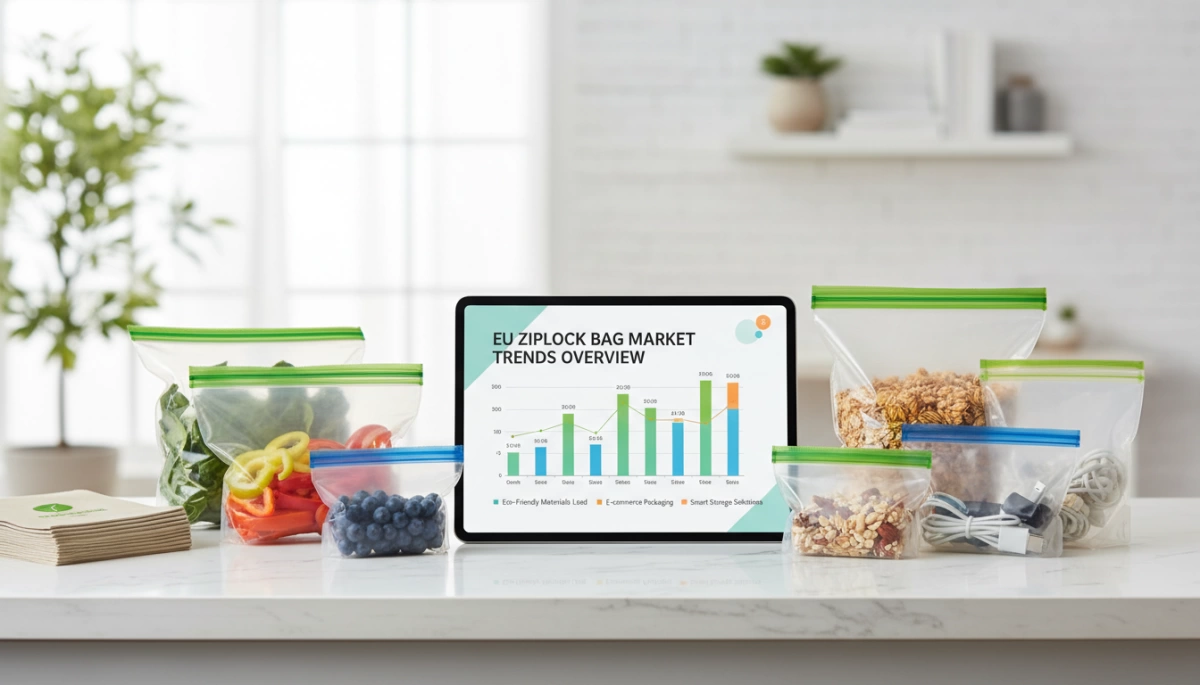
In the European packaging sector, the functionality of the closure system is just as critical as the material itself. We categorize our product lines based on user interaction and seal integrity, ensuring every design meets strict EU Regulation No. 10/2011 standards for food contact safety.
Standard Press-to-Close Systems
The standard press-to-close mechanism remains the dominant choice for high-volume wholesale and industrial applications. We utilize integral extruded zippers, which are formed simultaneously with the film extrusion process rather than attached later. This manufacturing technique creates a superior, airtight seal that prevents leakage and extends the shelf life of fresh produce and deli items.
- Material Compatibility: Primarily available in LDPE (Low-Density Polyethylene) for flexibility and clarity.
- Key Benefit: Cost-effective production with zero risk of mechanical failure common in multi-piece closures.
- Application: Ideal for single-use food storage, sandwich bags, and lightweight parts organization.
Slider Ziplock Bags for Enhanced Convenience
While press-to-close offers economy, slider ziplock bags drive value through ease of use. The ergonomic slider mechanism provides immediate visual and tactile confirmation that the bag is sealed, a feature highly valued in the consumer retail market.
For our OEM partners, we focus on durability. A common market complaint is slider detachment; therefore, our designs reinforce the track to ensure the slider stays engaged even under stress. These are particularly popular for hardware organization and household storage where repeated access is necessary.
Stand-Up Pouches and Specialized Formats
Shelf presence is vital for retail success. Our gusseted bottom designs allow bags to stand upright when filled, maximizing storage volume and improving visibility on supermarket shelves. This format is increasingly replacing rigid containers, reducing plastic weight and transport costs.
Beyond the shape, we integrate specialized features for specific industries:
- Anti-Fog Films: Essential for fresh vegetable packaging to maintain clarity.
- Anti-Static Additives: Critical for packaging electronic components.
- Eco-Friendly Options: As the market shifts, we are seeing a surge in demand for sustainable alternatives to traditional ziplock bags, such as compostable PBAT blends and reusable silicone formats that offer the same structural integrity as traditional plastics.
Major Application Areas in the European Market
The versatility of reclosable packaging drives consistent industry growth across the continent. As manufacturers, we see distinct usage patterns emerging that prioritize regulatory compliance and material efficiency.
Food Packaging and Long-term Storage
In the EU, food contact safety is the absolute baseline. We strictly adhere to EU Regulation No. 10/2011, ensuring our bags are phthalate-free and BPA-free. The market is moving beyond simple transport; it is about extending shelf life to reduce food waste.
- Fresh Produce: Perforated or anti-fog films are essential for maintaining humidity without rotting vegetables.
- Meal Prep: There is a surge in demand for the durability and lifespan of eco-friendly silicone bags, which offer a reusable alternative for sous-vide and microwave cooking.
- Freezer Use: We recommend thicker 2.7 mil materials to prevent freezer burn on meats and prepared meals.
Pharmaceutical and Medical Grade Packaging
This sector demands the highest level of purity and reliability. Our production focuses on high-clarity LDPE films that allow medical staff to visually inspect contents without breaking the sterile seal. Compliance with REACH standards is critical here, as these bags often hold sensitive medication doses or sterile instruments. We utilize integral extruded zippers rather than glued sliders to eliminate any risk of adhesive contamination, ensuring a secure, airtight environment that prevents moisture and dust ingress.
Industrial and Electronic Component Protection
For hardware and electronics, durability is the main priority. Standard sandwich bags cannot handle the weight of industrial parts. We supply heavy-duty bags ranging from 4.0+ mil (101+ microns) specifically designed to resist punctures from sharp screws, bolts, or gears.
- Anti-Static Options: Essential for packaging electronic components to prevent electrostatic discharge damage.
- Mono-material PE: Aligns with industrial recycling streams, making waste management easier for factories.
- Gusseted Bottoms: Provide extra volume for bulky items, ensuring the zipper does not fail under stress.
Consumer Goods and Household Organization
Retailers across Europe are requesting “minimalist packaging” that clearly communicates value and sustainability. We see strong wholesale demand for bulk packs (250+ count) used for general home organization, from sorting travel toiletries to managing craft supplies. The trend here is high-resolution custom printing that features clear eco-labels and QR codes, helping consumers understand the origin and recyclability of the product immediately.
Regional Market Insights within Europe
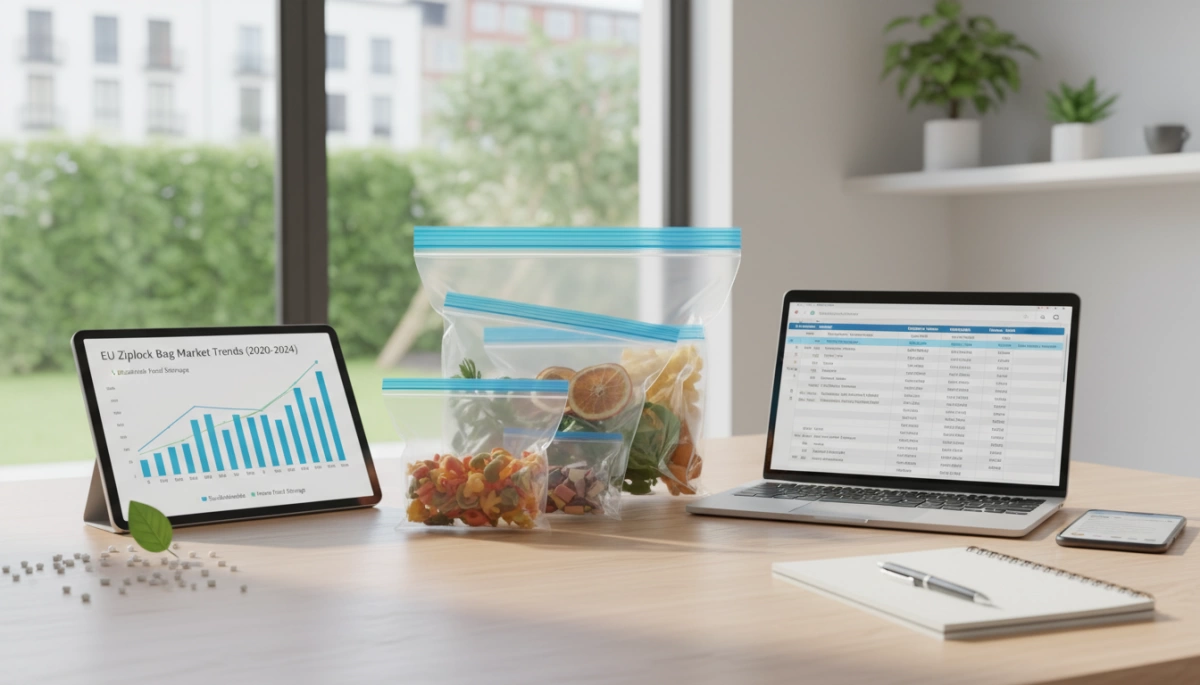
Leading Countries in Ziplock Bag Consumption
When we look at the data, mature markets like Germany, France, and the UK are driving the bulk of the demand. These regions aren’t just buying more; they are buying better. There is a distinct preference here for high-quality, eco-friendly options, specifically LFGB-certified silicone and heavy-duty LDPE bags that can withstand repeated use. In these countries, consumers are highly educated on material safety, pushing retailers to stock products that are explicitly BPA-free and phthalate-free.
Compliance with EU Plastic Directives and Packaging Waste Laws
Navigating the EU Market Trends for Ziplock Bags requires a deep understanding of regulatory frameworks. The landscape is dominated by strict adherence to EU Regulation No. 10/2011 and REACH standards. We have observed a massive shift away from complex laminates toward mono-material (PE) structures. This transition is essential for complying with Extended Producer Responsibility (EPR) schemes, which penalize non-recyclable packaging.
To succeed here, every batch must undergo rigorous migration testing to ensure zero chemical transfer. Understanding the manufacturing process for food storage bags helps buyers appreciate why precise extrusion and material selection are non-negotiable for meeting these safety standards.
Emerging Markets and Distribution Channels
While Western Europe leads in volume, we are seeing rapid industry growth in Eastern European sectors, particularly for industrial and food service applications. The distribution channels are evolving from standard retail shelves to direct B2B wholesale models. Buyers are increasingly seeking market insights to lock in long-term contracts, aiming to hedge against the volatility of resin costs.
- Retail Chains: High demand for 50-count and 250-count bulk packs.
- Industrial Procurement: Focus on 4.0+ mil thickness for heavy-duty parts protection.
- Food Service: Shift toward compostable (PBAT/PLA) options for short-term storage.
Competitive Landscape and Selection Criteria
The European packaging market is highly fragmented, characterized by a mix of established regional converters and global OEM partners. As demand for eco-friendly solutions rises, the competition has shifted from price wars to a battle over compliance and material innovation. We are seeing a clear consolidation where smaller players unable to meet strict industry growth standards regarding sustainability are losing ground to manufacturers who can guarantee certified, circular-ready packaging.
Key Manufacturers and Market Players in Europe
The market is currently driven by a combination of large-scale European brands and specialized contract manufacturers. While local brands dominate the retail shelves in Germany, France, and the UK, the manufacturing backbone often relies on agile OEM/ODM partners capable of high-volume production.
Market insights indicate that the most successful players are those offering a “one-stop” solution—combining extrusion, printing, and bag-making under one roof. This vertical integration allows for tighter quality control over market size demands, ensuring that every batch meets the rigorous standards required for food contact safety.
Factors to Consider When Choosing a Supplier
Selecting the right partner for the EU market is critical, given the regulatory complexity. It is not enough to find a factory that makes bags; you need a partner who acts as a technical consultant. Understanding where the batch freezer bags from your supplier are actually manufactured helps ensure transparency in your supply chain.
Here is a checklist for evaluating potential suppliers:
- Regulatory Documentation: Ensure they provide a valid Declaration of Compliance (DoC) meeting EU Regulation No. 10/2011, REACH, and Framework 1935/2004.
- Material Capabilities: Look for manufacturers transitioning to mono-material (PE) structures or certified compostable blends (PBAT/PLA) to align with EU recycling goals.
- Customization Range: The ability to produce specific thicknesses, from 1.0 mil for light snacks to 4.0+ mil for industrial parts, is essential for “right-sizing” packaging to reduce waste.
- Quality Assurance: Verify that they perform migration testing to ensure zero chemical transfer and use integral extruded zippers to prevent seal failure.
Future Outlook: Digitalization and Smart Manufacturing
Looking at the global forecast, the future of ziplock bag manufacturing lies in precision and transparency. Technology trends are pushing factories toward smart manufacturing processes that utilize automated gauge control to maintain exact film thickness, reducing raw material usage without compromising strength.
Furthermore, digitalization is entering the packaging itself. We anticipate a surge in demand for high-resolution printing that incorporates QR codes for consumer engagement. This allows brands to share data on product origin and disposal instructions directly on the bag, a feature that is becoming increasingly important for building trust in the European retail sector.