















Current Market Size and Growth Projections
Are you noticing the rapid expansion in demand for high-quality food storage solutions? As a manufacturer with over 18 years of industry experience, we have observed a significant upward trajectory in the North American resealable and ziplock products market share. The United States continues to dominate consumption, driven by a cultural shift toward efficient meal prep and rigorous food preservation standards. We are seeing a distinct transition where standard single-use options are evolving into sophisticated, high-durability storage systems.
The food storage market growth we are witnessing is not accidental; it is fueled by three critical drivers shaping our production lines:
- E-commerce Expansion: The rise of online grocery and meal kit delivery services has necessitated robust, leak-proof flexible packaging.
- Food Preservation Needs: US consumers are prioritizing longer shelf life to reduce food waste, increasing the demand for high-permeability films and airtight seals.
- Sustainability Mandates: There is aggressive momentum toward sustainable packaging trends US, pushing wholesalers to source recyclable PE (polyethylene) and eco-friendly alternatives.
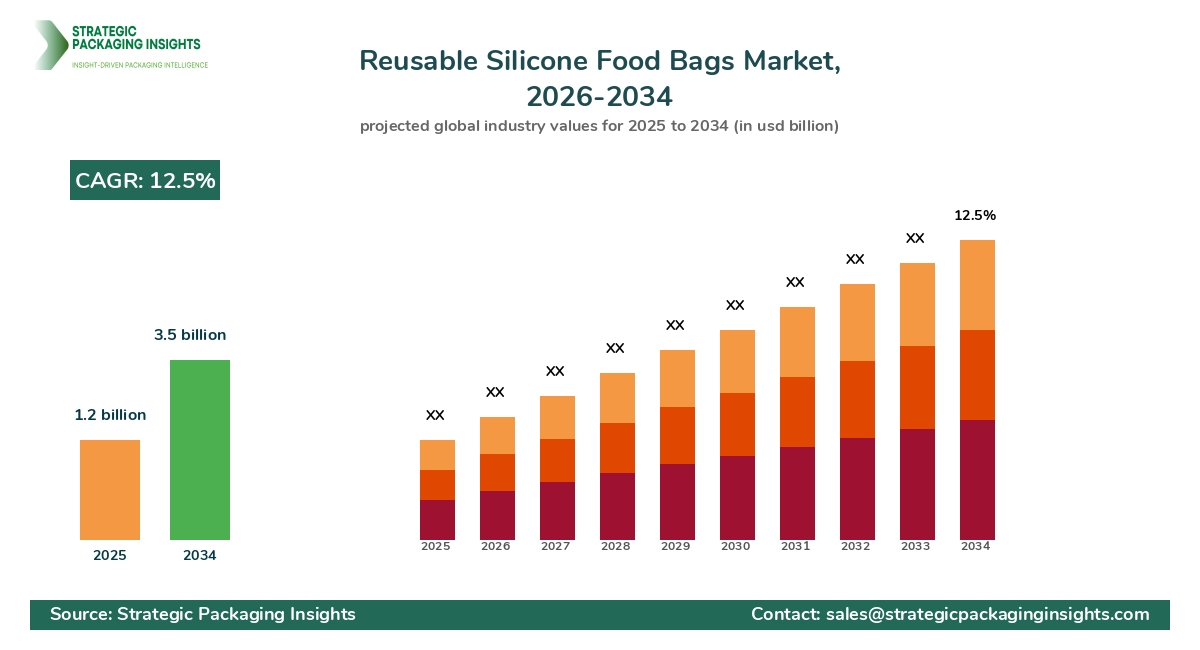
Looking ahead through 2026, we project that the market for food-specific ziplock bags will continue to expand, but the composition of that market will change. The era of generic plastic is fading. Instead, we anticipate that flexible packaging sustainability and material safety—specifically FDA-compliant, food-grade materials—will dictate market leadership. For businesses and importers, the growth opportunity lies not just in volume, but in aligning with the surge in demand for “Green Innovation” and certified safe materials.
Regulatory Landscape Driving Change
The US market is undergoing a seismic shift in packaging compliance, driven by aggressive state-level legislation. As a manufacturer, we are closely monitoring the plastic bag bans 2026 timelines that are reshaping the industry. States like California and New York are leading the charge, moving beyond simple bans to enforce strict definitions of reusability. The legislative loopholes that once allowed slightly thicker plastic bags to pass as “reusable” are rapidly closing, forcing brands to adopt truly durable solutions.
This regulatory pressure is compounded by the expansion of Extended Producer Responsibility (EPR) programs. These mandates shift the burden of waste management onto producers, introducing fees based on the recyclability of packaging materials.
Key Regulatory Impacts on Procurement:
- Recycled Content Mandates: By 2026-2028, many states will require a minimum percentage of post-consumer recycled (PCR) content in packaging.
- Closing Loopholes: “Reusable” plastics must now meet higher durability standards (often requiring stitched handles or specific material thickness) to qualify.
- EPR Fees: Non-recyclable packaging will incur higher fees, directly impacting profit margins for importers and retailers.
For businesses, this means the single-use plastic reduction trend is no longer optional—it is a compliance necessity. We help our partners navigate this complex landscape by providing compliant, FDA-approved materials that align with these evolving standards. Whether shifting to recyclable PE or exploring the safety of reusable storage materials, sourcing the right product now is critical to avoiding future penalties. The accelerated demand for compliant, long-term packaging solutions proves that sustainability is now synonymous with market viability.
Key Trends Shaping the Market
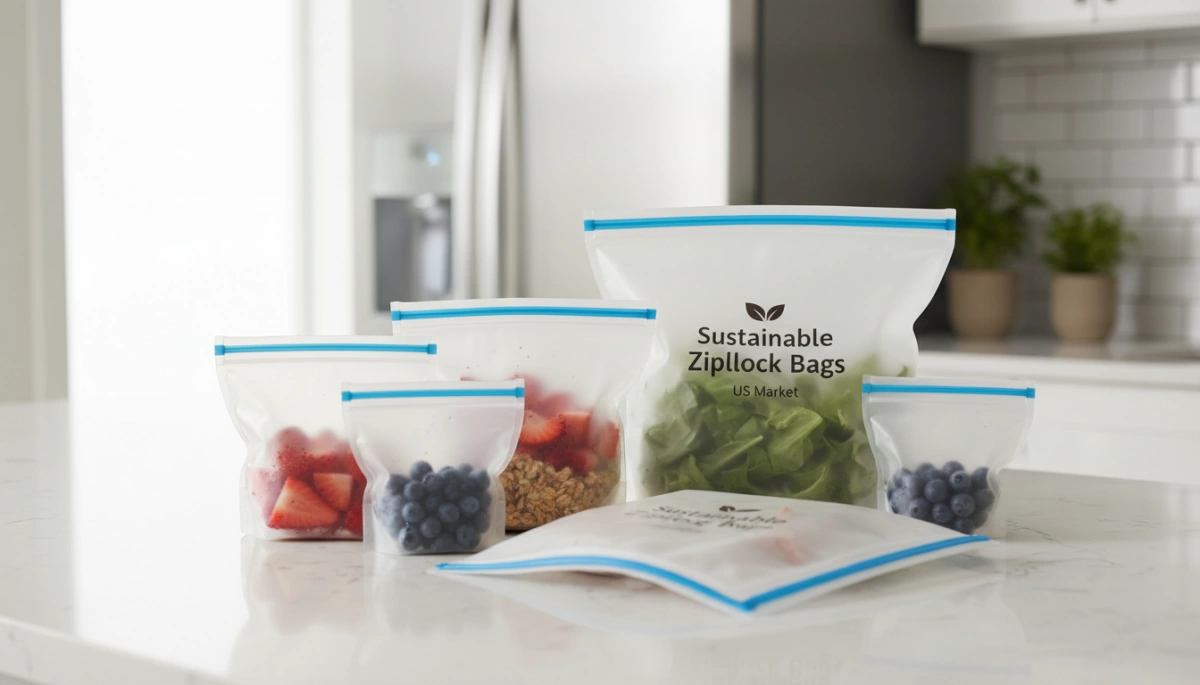
The landscape for food storage is shifting rapidly across the United States. We are moving beyond simple convenience toward a model that prioritizes environmental responsibility and high-performance functionality. As a manufacturer, we see firsthand that the demand for sustainable packaging trends in the US is driving product development. Consumers and businesses alike are turning away from flimsy, single-use films in favor of robust, eco-friendly resealable bags that offer longevity and reduced environmental impact.
The Shift to Sustainability and Specialized Use
The most significant change is the transition to materials that support a circular economy. The market is demanding recyclable, biodegradable, and reusable materials. This isn’t just a consumer preference; it is a mandate for retailers. Businesses are actively seeking cost-effective alternatives to single-use plastics that align with corporate sustainability goals and new regulations.
Beyond materials, the application of these products has evolved. We are seeing a surge in specialized meal prep storage solutions and hospitality-grade packaging.
- Durability: B2B clients require leak-proof performance that can withstand commercial kitchen environments.
- Multi-use Functionality: The trend is moving toward bags that can be washed and reused, reducing overall waste.
- Innovation: Features like stand-up designs for easy filling, airtight slider seals for maximum freshness, and temperature resistance for freezer-to-microwave utility are now standard expectations in the US market.
Material Comparison: Traditional vs. Next-Generation Options
The US market is currently witnessing a distinct split between conventional plastics and emerging eco-friendly materials. While traditional polyethylene (PE) and polypropylene (PP) remain staples for high-volume, low-cost needs, sustainable packaging trends in the US are heavily favoring durability and chemical safety. As a manufacturer, we see a clear pivot where single-use plastic reduction is not just a preference but a regulatory necessity in many states.
Traditional PE vs. Platinum Silicone
For wholesalers and retailers, understanding the technical differences between these materials is critical for inventory planning. Reusable silicone food storage bags offer superior thermal resistance and longevity compared to standard plastics.
| Feature | Traditional Polyethylene (PE) | Platinum Silicone (Eco-Choice) |
|---|---|---|
| Durability | Low (Prone to tearing, limited reuse) | High (Tear-resistant, lasts years) |
| Temperature | Low (Melts/warps in high heat) | Excellent (-40°F to 400°F+) |
| Safety | Generally food-safe, but can degrade | BPA-free, no fillers, hypoallergenic |
| End-of-Life | Recyclable (often requires specialized drop-off) | Incinerates to silica ash (no microplastics) |
| Usage | Cold storage, sandwiches, light duty | Freezer, microwave, oven, dishwasher |
The Rise of Platinum Silicone
Platinum silicone is rapidly becoming the gold standard for premium food storage. Unlike standard “cured” silicone, platinum silicone uses a platinum catalyst, resulting in a purer product with no byproducts. This makes platinum silicone bags wholesale options highly attractive for brands targeting health-conscious consumers. These bags are freezer-to-microwave safe, allowing users to cook, freeze, and reheat food in the same container without fear of chemical leaching.
For brands looking to source these high-end alternatives, identifying companies that make custom silicone bags is the first step toward building a future-proof product line.
Lifecycle Cost and Safety Certifications
While the upfront investment for silicone or advanced biodegradable materials is higher, the lifecycle cost analysis favors reuse. A single FDA-approved reusable bag can replace hundreds of single-use baggies over its lifespan, offering significant long-term savings for the consumer and higher margins for the retailer.
- Safety Standards: We ensure compliance with strict FDA and HACCP standards. In the US market, certification is non-negotiable.
- Environmental Impact: Shifting to durable materials drastically reduces landfill waste.
- Market Positioning: Stocking biodegradable ziplock alternatives and silicone options positions your brand as a leader in the green revolution.
As one of the top manufacturers of food storage bags for 2026, we emphasize that material safety and transparency are the keys to winning consumer trust in this evolving landscape.
Opportunities for Businesses and Wholesalers
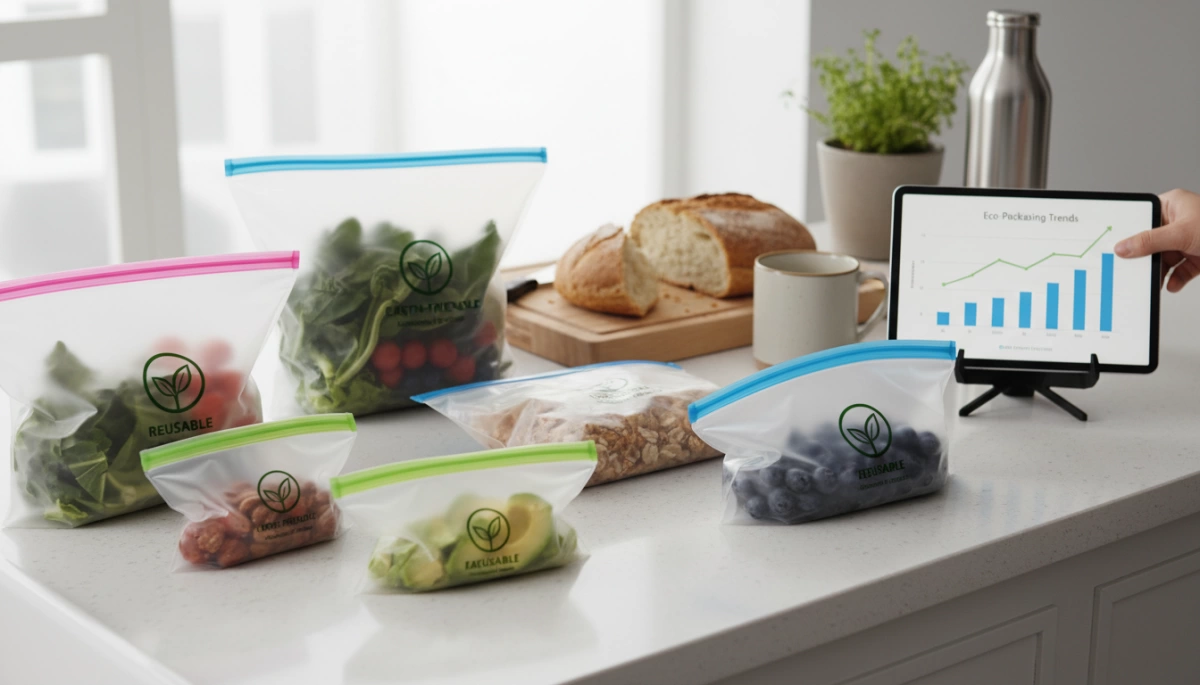
As the US market pivots toward stricter environmental standards, procurement teams face a critical turning point. The demand for sustainable packaging trends US is no longer a niche; it is a baseline requirement for major retailers and e-commerce platforms. For wholesalers, the real opportunity lies in shifting procurement strategies from purely cost-based models to value-based sourcing that prioritizes compliance and material circularity.
Strategies to Capitalize on the Eco-Shift
To stay competitive, businesses must align with wholesale eco ziplock suppliers that understand the regulatory landscape. Sourcing products that meet FDA standards and local recycling mandates is essential to avoid supply chain disruptions.
- Audit Material Compliance: Ensure your manufacturer provides FDA and RoHS certifications to verify that materials are food-grade and free from heavy metals.
- Leverage Low MOQs for Testing: Utilizing flexible manufacturing partners allows brands to test eco-friendly resealable bags in smaller quantities (starting at 5,000 pieces) before committing to mass volume.
- Focus on Durability: US consumers are moving away from “single-use” mindsets. Stocking thicker, high-quality sealed bags that can be reused multiple times increases perceived value and customer retention.
Branding and Customer Retention
Private labeling is a powerful tool in the current market. Offering meal prep storage solutions under a store brand allows businesses to control the narrative around sustainability.
| Feature | Business Benefit | Consumer Benefit |
|---|---|---|
| Custom OEM Packaging | Enhances brand visibility and shelf appeal. | Clear usage instructions and eco-labeling. |
| Recyclable Materials | Aligns with corporate CSR goals. | Guilt-free disposal and recycling participation. |
| High-Performance Seals | Reduces returns due to leakage or spoilage. | Keeps food fresh longer, reducing waste. |
End-of-Life Considerations
We are seeing a surge in demand for zero-waste kitchen products that have a clear end-of-life plan. Wholesalers should prioritize PE-based materials that are widely accepted in US recycling streams over complex laminates that end up in landfills. By partnering with a factory capable of producing mono-material recyclable zipper pouches, distributors can market their products as responsible solutions that meet the evolving expectations of the American consumer.
Choosing the Right Wholesale Eco Ziplock Suppliers
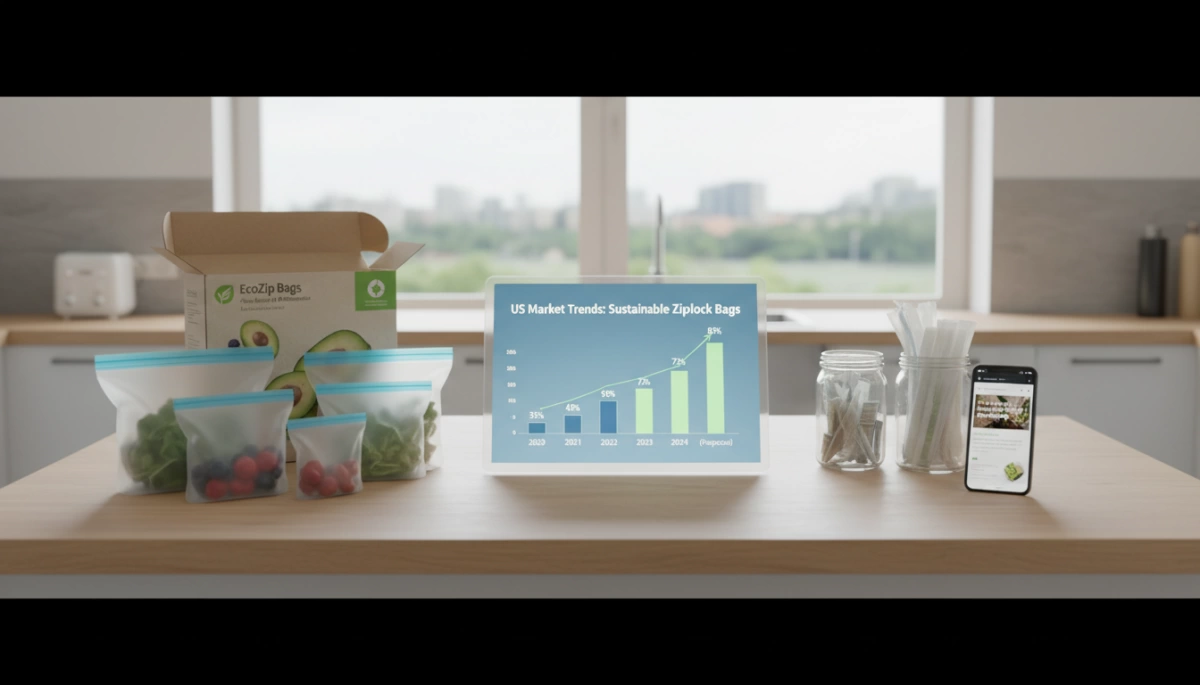
Selecting the right manufacturing partner is critical for navigating the shifting landscape of sustainable packaging trends US. It is not enough to find a factory with low rates; you need a supplier with verifiable experience and robust OEM/ODM capabilities. We bring over 18 years of industry expertise to the table, ensuring that every product line we develop meets rigorous international standards. For US distributors, working with wholesale eco ziplock suppliers who hold valid FDA and RoHS certifications is essential to avoid compliance pitfalls and ensure consumer safety.
At Artfullife®, we position ourselves as your strategic ally in the green revolution. We specialize in producing FDA-approved reusable bags, including premium platinum silicone options and advanced recyclable PE films. Our deep technical knowledge of the manufacturing process for preservative films ensures that our biodegradable and recyclable options do not compromise on freshness or durability. Whether you are sourcing heavy-duty freezer bags or daily storage solutions, understanding nuances like if you can freeze silicone bags safely is part of the expertise we pass on to your brand.
Why Partner with Artfullife®?
- Sustainability Focus: We prioritize recyclable materials and renewable resources to help you meet upcoming packaging regulations.
- Flexible Production: Our low MOQ starting at 5,000 pieces allows for agile market testing without massive upfront capital.
- End-to-End Service: From structural design and 3D sampling to final export, we handle the entire lifecycle.
- Global Compliance: Our products are rigorously tested for safety, ensuring they are non-toxic and food-grade ready for the American market.
Frequently Asked Questions About US Ziplock Bag Trends
Are plastic ziplock bags being banned in the US?
Currently, there is no federal ban on all plastic ziplock bags in the United States. However, the regulatory landscape is shifting rapidly. Many states, such as California and New York, have implemented strict bans on single-use plastic carryout bags, and these regulations are influencing the food storage sector. The market is moving away from flimsy, single-use films toward durable, recyclable options. As a manufacturer, we are seeing increased demand for sustainable packaging trends US retailers can confidently stock, specifically products that meet local recycling standards and material durability tests.
What are the best sustainable alternatives to single-use ziplock bags?
The best alternatives strike a balance between environmental impact and food safety. For many US consumers, the shift is toward eco-friendly resealable bags made from recyclable PE (polyethylene) or compostable materials. We focus on producing high-quality eco-friendly food storage bags that offer the necessary barrier properties to keep food fresh—reducing food waste—while being fully recyclable in standard waste streams. These options provide the convenience customers expect without the environmental guilt associated with traditional single-use plastics.
How will the 2026 packaging regulations affect wholesalers?
Upcoming regulations, particularly Extended Producer Responsibility (EPR) laws slated for 2026-2028 in several states, will require higher percentages of Post-Consumer Recycled (PCR) content and stricter labeling for recyclability. Wholesalers must audit their supply chains now. If your current supplier cannot provide documentation for material composition or FDA compliance, you risk unsellable inventory. We help our partners navigate these changes by ensuring our wholesale eco ziplock suppliers processes align with international standards like FDA and RoHS, ensuring your products remain compliant as laws tighten.
Is platinum silicone really better than plastic for food storage?
Platinum silicone is often cited as a premium alternative due to its heat resistance and durability, making it popular for reusable silicone food storage bags. It is excellent for freezer-to-microwave use and is BPA-free. However, for high-volume daily storage, high-grade recyclable PE remains a superior choice for cost-effectiveness and clarity. While silicone dominates the “zero-waste” niche, advanced PE films are still the standard for affordable, hygienic, and lightweight food preservation in the mass market.
What certifications should I look for in reusable food bags?
When sourcing FDA-approved reusable bags for the US market, safety certifications are non-negotiable. At a minimum, you should verify:
- FDA Compliance: Ensures the materials are safe for direct food contact.
- BPA-Free Certification: Critical for consumer trust, especially for families.
- RoHS/REACH: Confirms the absence of hazardous heavy metals and chemicals.
- Freezer/Microwave Safety Tests: Essential for verifying claims about durability and usage.
Partnering with a factory that manages these certifications internally, like Artfullife, simplifies the procurement process and protects your brand reputation.