















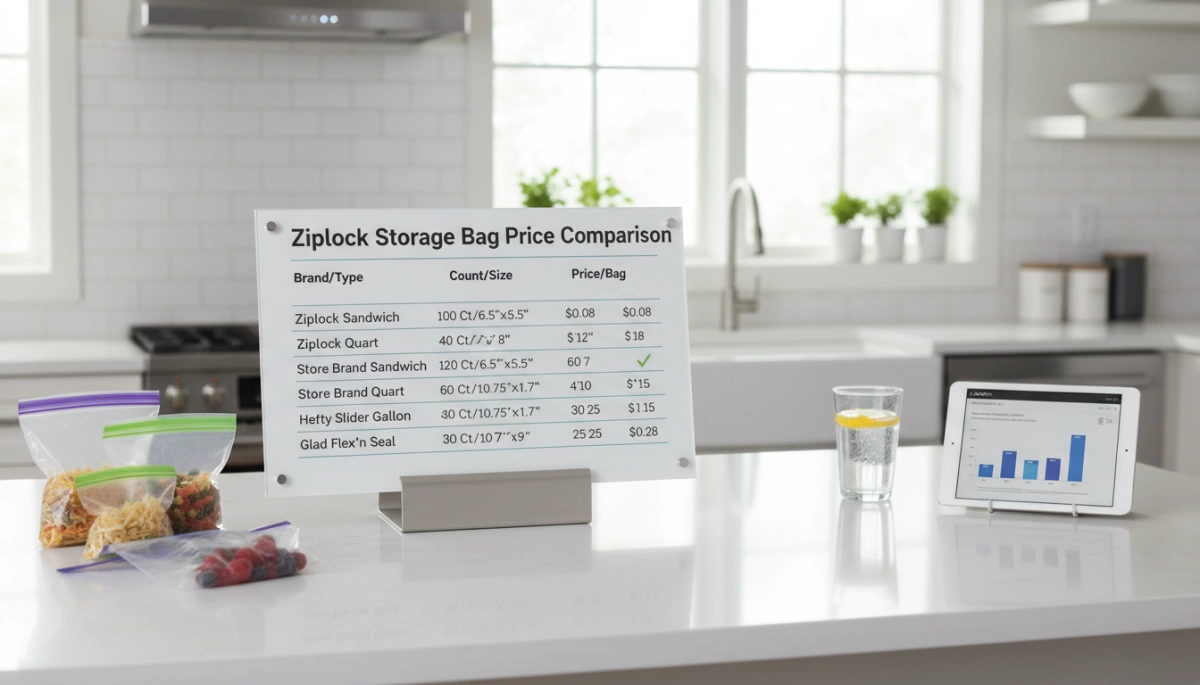
Are you tired of guessing if that “mega pack” is actually a good deal?
Understanding the true Price Breakdown for Ziplock Bags can save your household or business significant money over time.
As a sustainable packaging expert at Artfullife®, I know that the sticker price rarely tells the whole story. The real cost lies in the price per unit, durability, and how often you have to restock.
In this guide, you’ll get a transparent, data-driven look at sandwich, quart, and gallon Ziploc prices for 2026. We will compare bulk Ziploc bags cost against retail markups and reveal the surprising long-term savings of eco-friendly resealable bags.
If you are looking to maximize value without sacrificing quality, this breakdown is for you.
Let’s dive in.
Understanding Ziploc-Style Bags: Types, Sizes, and Key Factors Affecting Price
When you look at the cost of food storage bags, you aren’t just paying for plastic; you are paying for the engineering and raw materials that keep your food fresh. As a manufacturer with over 18 years of experience in producing food sealed bags and kitchen supplies, we know exactly what drives the production cost up or down. Whether you are looking for standard sizes or custom OEM solutions, the price per unit is determined by specific physical variables.
Standard Sizes and Variations
The industry standard sizes—sandwich (snack), quart, and gallon—form the baseline of pricing. However, specialty configurations significantly alter the cost structure:
- Standard Storage: Typically thinner, designed for short-term use.
- Freezer Bags: Require thicker gauges to prevent freezer burn, using more raw material.
- Slider vs. Press Seal: Integrating a plastic slider mechanism adds manufacturing steps and material costs compared to a simple press-to-seal closure.
Key Pricing Influencers
The final quote for a Ziploc-style bag depends on four critical factors during the manufacturing process:
- Material Thickness (Mil Gauge): This is the primary cost driver. We use high-quality PE (Polyethylene) materials; a thicker bag (higher mil) uses more resin, increasing durability and price.
- Seal Type: Complex sealing technologies require advanced automated equipment. A double-lock or slider seal costs more to produce than a standard single track.
- Quantity Purchased: In our factory, volume dictates value. Running our automated lines for a wholesale order (starting at our flexible MOQ of 5,000 pieces) drastically reduces the cost per unit compared to small-batch retail runs.
- Brand vs. Generic: Sourcing directly from a factory like ours eliminates the “brand tax” added by major retail labels for marketing and distribution.
Durability Equals Real-World Value
While a thinner bag might seem cheaper upfront, durability impacts the true cost. A low-quality bag that rips upon opening forces you to use two, doubling your expense. Our focus on FDA-compliant, high-quality construction ensures that even our standard bags offer the strength needed for reliable storage, providing better long-term value than flimsy alternatives.
Current Retail Price Breakdown (2026 Snapshot)
Understanding the current retail landscape is essential for gauging market positioning. When analyzing major US retailers like Walmart, Amazon, Costco, and Kroger, the Price Breakdown for Ziplock Bags varies heavily depending on brand recognition and packaging volume. National brands typically command a premium, while private label options offer a lower entry point for consumers. Whether stocking standard polyethylene options or high-quality food-grade plastic bags, the cost per unit remains the critical metric for profitability.
Average Price Per Bag by Size
Retail pricing fluctuates based on the specific utility of the bag (storage vs. freezer) and the material thickness. Here is a snapshot of current market averages:
- Snack & Sandwich Bags: 5¢ – 10¢ per unit.
- Quart Bags (Storage & Freezer): 8¢ – 15¢ per unit.
- Gallon Bags: 10¢ – 25¢ per unit.
Ziploc Variety Pack Price Comparison
Bulk savings are a major driver in this category. Warehouse clubs and Ziploc variety pack price comparison data show that buying in bulk (300+ counts) can drop the price per unit by nearly 20-30% compared to standard grocery store boxes. Seasonal deals often push these prices lower, specifically for “back-to-school” or holiday food storage promotions.
Retail Brands vs. Private Labels Cost Matrix
The gap between a Ziploc generic brands comparison highlights the margin potential for OEM/ODM manufacturing. Private labels consistently undercut national brands while often utilizing similar material specifications.
| Bag Type | National Brand Avg. Cost (Per Bag) | Private Label / Store Brand Avg. Cost (Per Bag) |
|---|---|---|
| Sandwich / Snack | $0.08 – $0.10 | $0.03 – $0.05 |
| Quart (Standard) | $0.12 – $0.15 | $0.07 – $0.09 |
| Gallon (Freezer) | $0.20 – $0.25 | $0.12 – $0.16 |
| Specialty (Slider) | $0.25 – $0.35 | $0.15 – $0.20 |
Note: Prices are estimates based on 2026 US retail data and fluctuate based on raw material costs and regional promotions.
Bulk and Wholesale Pricing: Where the Real Savings Happen
When you shift from retail purchasing to wholesale reclosable bags pricing, the cost structure changes dramatically. Retail prices include markups for branding, shelf space, and individual packaging. By sourcing directly from a manufacturer, you bypass these layers. We typically see bulk discounts ranging from 40% to 70% lower per unit compared to standard retail costs. For large-scale buyers, this can drive the price down to mere cents per bag, depending on the specifications.
Key Factors Influencing Your Final Cost
To unlock the best food storage bags bulk savings, it is essential to understand how production variables impact the quote. As a direct factory with over 18 years of experience, we use automated equipment to stabilize costs for high-volume orders.
- Direct Factory Sourcing: Eliminating the middleman is the most effective way to lower the price floor. Sourcing from our Foshan facility ensures you pay for materials and production, not distribution fees.
- Minimum Order Quantity (MOQ): Accessing wholesale pricing requires meeting specific volume thresholds. We offer a flexible starting point with an MOQ of 5,000 pieces, making it easier for growing businesses to enter the market.
- Material & Customization: The choice between standard PE, PVC, or eco-friendly materials affects the unit price. Whether you need standard sliders or bulk reusable produce bags for distributors, the material gauge and structural design are primary cost drivers.
- Logistics: Shipping larger quantities consolidates freight costs. With experience exporting to 140+ countries, we optimize packaging to maximize container space, reducing the landed cost per unit.
Businesses like restaurants and retailers achieve the lowest prices by leveraging volume. Our 7-step project proposal process allows us to calculate these variables accurately, providing a transparent cost estimate that balances quality with budget requirements.
The Hidden Costs of Traditional Disposable Ziploc Bags
Buying a box of 100 sandwich bags for a few dollars seems like a bargain at the checkout counter. However, the sustainable food bags long-term cost tells a different story. When you rely on single-use plastics, you aren’t just paying for the material; you are paying for the convenience of throwing money away. The cumulative expense of frequent repurchasing adds up significantly over a year, far stripping the initial low entry price.
Let’s break down the reusable vs disposable storage bags cost. A typical household goes through hundreds of flimsy bags annually. These thin plastics often tear after one use or fail to seal properly, forcing constant trips to the store. In contrast, investing in higher-quality, durable materials—like those used in a silicone pouch or our heavy-duty PE options—stops this cycle of waste.
Comparing the Real Expense
Here is how the costs stack up when you look past the initial price tag:
| Cost Factor | Single-Use Disposable Bags | Durable/Eco-Friendly Bags |
|---|---|---|
| Purchase Frequency | Monthly / Weekly | Once every 1-2 years |
| Durability | Prone to leaks and tears | Thick, leak-proof, freezer-safe |
| Waste Impact | High (Landfill accumulation) | Low (Reusable or Biodegradable) |
| Long-Term Value | Negative (Continuous expense) | Positive (One-time investment) |
The environmental toll is the ultimate hidden tax. Cheap, single-use bags contribute massively to landfill waste. As a manufacturer focused on green innovation, we prioritize materials that balance functionality with environmental responsibility. Whether it is through biodegradable options or robust reusable designs, we ensure you do not have to sacrifice your budget to reduce your footprint.
Reusable and Eco-Friendly Alternatives: True Cost Breakdown
When analyzing reusable vs disposable storage bags cost, the math changes significantly depending on the intended lifespan of the product. While traditional single-use plastics offer a low upfront price, the cumulative expense of repurchasing them monthly adds up quickly for both businesses and households. Switching to durable alternatives shifts the cost structure from a recurring expense to a one-time investment.
Long-Term Savings Calculation
For high-volume users, the sustainable food bags long-term cost is far lower than maintaining a stock of disposables. A quality reusable bag often replaces hundreds of single-use baggies. Exploring a sustainable alternative to Ziploc bags reveals that the initial investment typically pays off within a few months of use.
Break-Even Analysis (Market Averages):
| Feature | Standard Disposable Bag | Reusable/Durable Bag |
|---|---|---|
| Initial Cost | $0.05 – $0.15 per unit | $1.50 – $3.00 per unit |
| Lifespan | 1 Use | 50 – 200+ Uses |
| Cost Per 100 Uses | $5.00 – $15.00 | $1.50 – $3.00 (One-time) |
| Break-Even Point | N/A | After ~15–30 uses |
Artfullife® Eco-Friendly Pricing and Value
At Artfullife®, we bridge the gap between expensive premium silicone brands and wasteful single-use plastics. Our manufacturing process focuses on biodegradable Ziplock alternatives price points that are accessible for wholesale buyers. By leveraging our automated production facility in Foshan, we produce FDA-compliant, leak-proof, and freezer-safe bags that meet strict international standards (CE, RoHS) without the premium markup of retail-only brands.
Why Artfullife® Offers Better Value:
- Material Versatility: We offer durable PE (Polyethylene) for recyclability and innovative biodegradable materials for full sustainability.
- Certified Safety: All products undergo multi-stage QC to ensure they are food-grade and safe for microwaves or freezers.
- Factory Direct: Bypassing middlemen allows us to offer eco-friendly resealable bags value that is hard to beat, with flexible MOQs starting at 5,000 pieces.
- Customization: Unlike generic silicone brands, we provide full OEM/ODM services for structure and appearance design included in our project proposals.
Artfullife® Advantage: Sustainable Quality at Competitive Prices
As a professional manufacturer with over 18 years of industry experience, Artfullife® (Shenzhen Qiaojia) eliminates the middleman to offer true direct factory pricing. We understand that for B2B buyers and brand owners, the price breakdown for ziplock bags isn’t just about the raw material cost—it is about balancing quality, compliance, and scalability. Our facility in Foshan utilizes automated equipment to streamline production, allowing us to offer a flexible Minimum Order Quantity (MOQ) starting at just 5,000 pieces. This lowers the entry barrier for businesses launching custom private-label products compared to competitors requiring massive volume commitments.
Direct Factory Pricing and Customization (OEM/ODM)
Working directly with us means you aren’t paying distributor markups. We guide clients through a comprehensive 7-step project proposal, covering everything from initial consultation and structural design to the final sample development. Whether you need standard vest-style bags or complex companies that make custom silicone bags and plastic alternatives, our OEM/ODM capabilities ensure your specific requirements are met without hidden fees.
Feature-Price Matrix: Balancing Specs and Cost
To help you understand where your money goes, we analyze the cost drivers in our manufacturing process. The final unit price depends heavily on the “artful” combination of functionality and material choice.
| Cost Variable | Impact on Price | Benefit |
|---|---|---|
| Material Thickness | Moderate Increase | Higher durability and reusability rating. |
| Eco-Features | Premium | Biodegradable/Recyclable materials meet “Green Innovation” standards. |
| Seal Type | Variable | Double-lock or slider mechanisms increase production complexity but improve user experience. |
| Compliance | Standard Inclusion | FDA, CE, and RoHS certifications ensure market readiness and safety. |
The Case for Sustainable Value
While generic disposable bags may offer a lower upfront Ziploc bags price per unit, they often lack the structural integrity and environmental credentials modern consumers demand. Investing in Artfullife® sustainable options—crafted from high-quality PE, PVC, or biodegradable materials—provides better long-term value. Our strict quality control, spanning from raw materials to finished goods, ensures that you don’t face losses from defective batches. By choosing leading global manufacturers of reusable silicone food storage bags and eco-friendly plastic producers like us, you align your brand with global sustainability trends while securing a reliable, high-volume supply chain.
Tips for Getting the Best Deal on Resealable Storage Bags
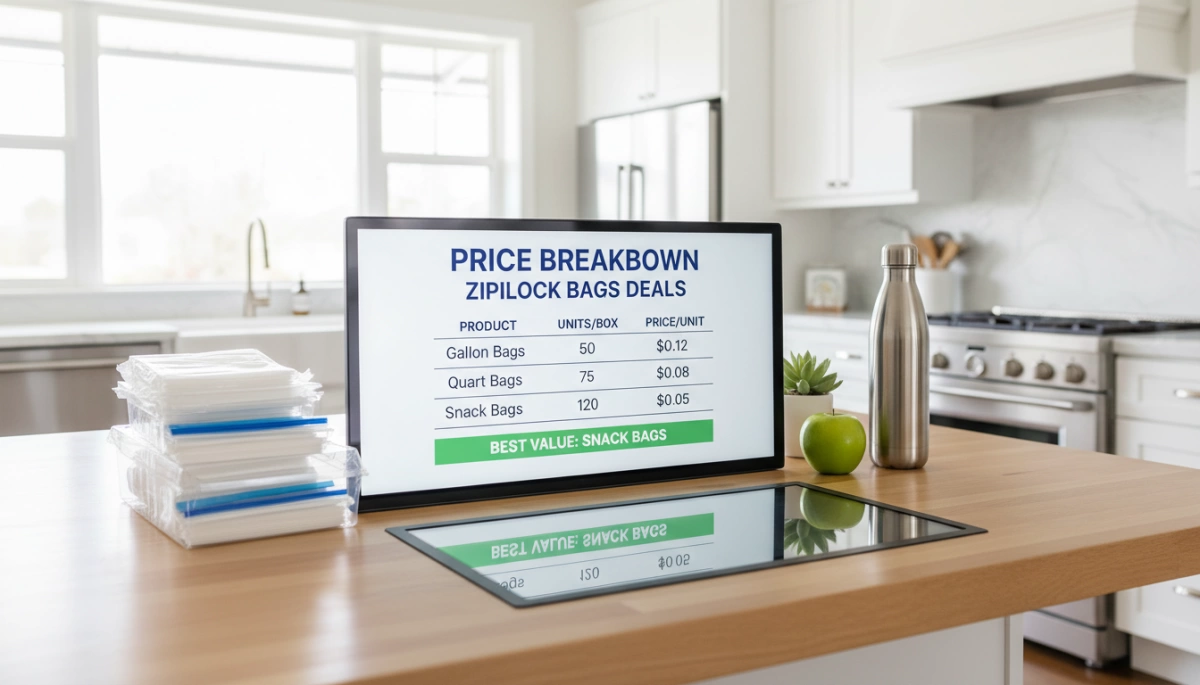
Securing the best value requires understanding where the costs truly lie in the supply chain. When you purchase standard packs from a retail shelf, a significant portion of the Ziploc bags price per unit goes toward branding, retail markup, and outer packaging costs. For businesses, restaurants, or large households, shifting from retail to wholesale is the most effective way to lower expenses. Sourcing directly from a manufacturer allows you to bypass these layers. With our low MOQ of 5,000 pieces, we enable smaller operations to access factory-direct pricing that was previously reserved for massive corporations.
Where to Buy: Retail vs. Wholesale vs. Direct Supplier
- Retail: Best for immediate, low-volume needs (1-2 boxes). You pay the highest price per bag due to distribution and shelf-space costs.
- Wholesale Distributors: Good for mid-sized purchases. You get better wholesale reclosable bags pricing, but you are still paying a margin to the distributor.
- Direct Manufacturer (OEM): The lowest cost option. By working with us, you pay for material costs and converting costs without the brand premium. This is ideal for private labeling or bulk internal use.
Spotting Realistic Pricing and Avoiding Traps
In the manufacturing world, spotting unrealistically low prices is a critical skill. If a quote looks too good to be true, it usually is. Extremely low bids often indicate that the supplier is using inferior resin blends, reducing the gauge (thickness) below the stated spec, or skipping essential quality checks like FDA compliance. A reliable bulk Ziploc bags cost must account for high-quality food-grade PE or biodegradable materials. We maintain strict quality control to ensure that every seal holds, preventing the hidden costs of spoilage and product failure that come with “cheap” bags.
Smart Buying for Heavy Users and Eco-Households
To maximize savings, match your purchasing strategy to your usage volume. Heavy users should focus on bulk procurement to drive down the unit cost. For those prioritizing sustainability, investing in affordable reusable zip bags or biodegradable alternatives offers better long-term value despite the higher initial price point. Many of our clients also consolidate their logistics by ordering mixed containers, combining food storage solutions with other kitchen necessities like recycled content trash bag options to optimize freight and local charges. This holistic approach to procurement ensures you get premium performance for both your wallet and the planet.
Frequently Asked Questions About Ziplock Bag Pricing
How much do Ziploc bags cost per unit on average?
In the retail market, a standard sandwich bag might cost between 5 to 10 cents, while gallon bags can range from 10 to 25 cents depending on the brand. However, for B2B buyers working with a manufacturer like us, the Ziploc bags price per unit drops significantly. Wholesale pricing is determined by raw material costs (PE or PVC), thickness, and order volume. Buying in bulk eliminates retail markups, offering a much lower cost basis for businesses.
Are biodegradable bags worth the extra cost?
Yes, investing in eco-friendly options is increasingly vital for brand reputation and compliance. While the initial material cost for biodegradable resins is higher than standard polyethylene, the long-term value lies in meeting consumer demand for sustainability. We help clients navigate cost-effective alternatives to single-use plastics to ensure you get a product that balances environmental responsibility with a competitive price point.
What is the cheapest way to buy Ziploc bags?
The most economical method is sourcing directly from a factory rather than a distributor. By working with Artfullife®, you access wholesale reclosable bags pricing without middleman fees. We offer a flexible MOQ starting at 5,000 pieces, allowing smaller businesses to access factory-direct rates that are usually reserved for massive corporations.
Do freezer bags cost more than storage bags?
Generally, yes. Freezer bags cost more because they require a thicker gauge (mil) of plastic to prevent freezer burn and ensure an airtight seal. This increases the amount of raw material used per unit. Standard storage bags are thinner and use less material, making them cheaper to produce. We can adjust the thickness specifications in our OEM process to match your budget and performance needs.
How much can I save by switching to reusable bags?
Switching to reusable vs disposable storage bags offers substantial savings over time. While a reusable silicone or heavy-duty PE bag has a higher upfront cost, it can replace hundreds of single-use bags. For commercial kitchens or eco-conscious brands, the break-even point is often reached quickly, reducing the frequency of reordering and minimizing waste disposal costs.