













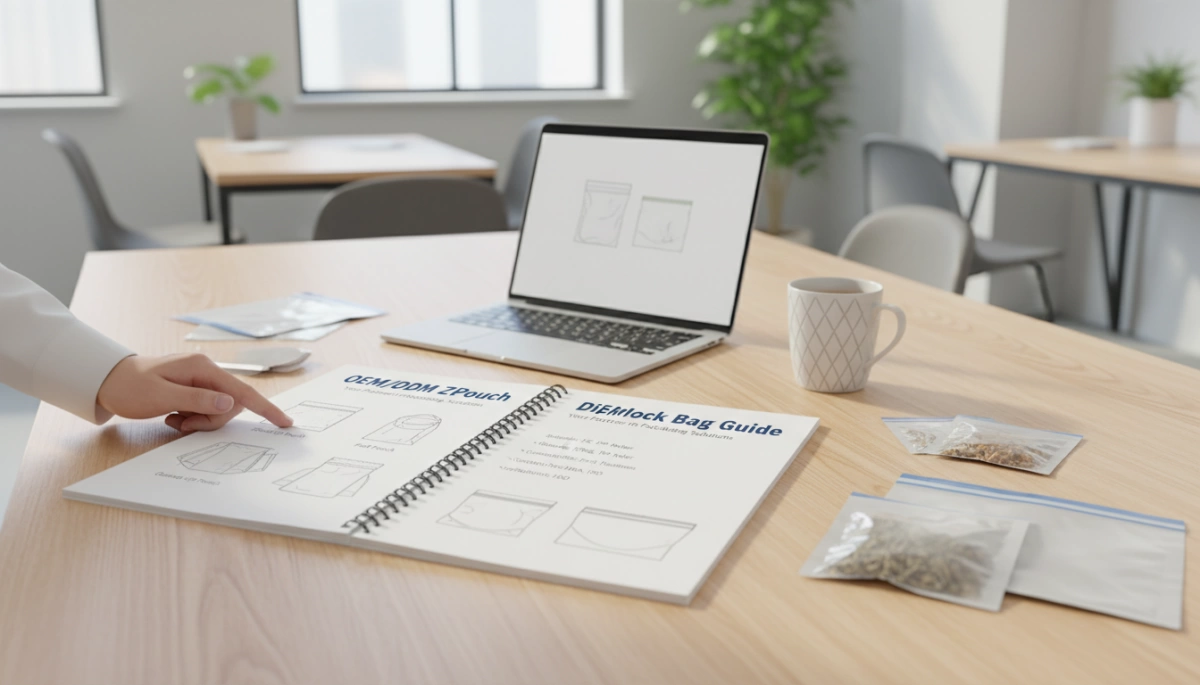
What Are OEM and ODM in Ziplock Bag Manufacturing?
Navigating the world of packaging manufacturing often starts with a single, critical choice: OEM or ODM? As a custom ziplock bags manufacturer with over 18 years of factory-direct experience, we know that understanding this distinction is key to aligning your budget, timeline, and brand strategy. Whether you are launching a startup or scaling a global retail line, the path you choose determines your level of control and your speed to market.
Defining OEM: Full Custom Design and IP Ownership
Original Equipment Manufacturing (OEM) is the path for visionaries who want to build something that doesn’t exist yet. In this model, you own the design, and we provide the manufacturing muscle. If you need a specific bag shape, a unique proprietary closure mechanism, or a specialized material blend that defies market standards, OEM is your solution.
When you partner with Artfullife for OEM, we execute your exact specifications from the ground up:
- Total Creative Control: You dictate the dimensions, food grade ziplock material composition, and structural engineering.
- Intellectual Property (IP): You pay for the tooling and molds, meaning the design belongs exclusively to you. Competitors cannot copy your unique bag structure.
- Custom Structure Design: Our team translates your blueprints into physical samples, ensuring the functionality matches your vision before mass production.
This route requires a higher initial investment for molds but offers the ultimate competitive advantage: a product that is uniquely yours.
Defining ODM: Fast Entry with Existing Templates and Private Labeling
Original Design Manufacturing (ODM) is the streamlined route for brands that prioritize speed and efficiency. Here, you leverage our existing catalog of FDA LFGB certified pouches and proven designs. We have already done the heavy lifting regarding R&D, mold creation, and functionality testing.
Choosing the ODM route allows you to focus on branding rather than engineering:
- Rapid Market Entry: Since the molds already exist, we skip the tooling phase, significantly cutting down lead times.
- Cost Efficiency: You avoid expensive mold fees, making this an excellent option for testing new markets with lower risk.
- Private Label Flexibility: You select from our high-quality, pre-validated stand up ziplock pouch ODM options and apply your own logos, colors, and packaging design.
For many of our clients, ODM provides the perfect balance of professional quality and quick turnaround, allowing you to launch private label ziplock bags without the technical complexities of starting from scratch.
OEM vs ODM: The Side-by-Side Showdown
Deciding between OEM and ODM is often the first hurdle for brands looking to source food storage solutions. As a custom ziplock bags manufacturer with over 18 years of experience, we see this choice dictate the entire trajectory of a product launch. Here is how the two paths compare when working with our factory.
Design Control and Intellectual Property Rights
The biggest difference lies in ownership and creative freedom.
- OEM (Original Equipment Manufacturer): You retain full control. We manufacture OEM vs ODM resealable bags based exactly on your technical drawings and material specifications. If you pay for the custom molds—whether for a unique zipper shape or a specific bag dimension—you own those molds. We strictly protect your Intellectual Property (IP), ensuring your unique design isn’t sold to competitors.
- ODM (Original Design Manufacturer): You leverage our R&D. We provide existing, market-tested designs that you can brand as your own. This is often called private label ziplock bags. While you own your brand’s artwork, the structural design of the bag remains our intellectual property, meaning other clients might use the same underlying structure with different branding.
Cost Breakdown: Tooling Investment vs Product Unit Cost
Your budget allocation changes significantly depending on the route you choose.
- Upfront Investment: OEM requires a higher initial capital outlay. You must pay for cylinder making (for printing) and custom molds if the size or shape is non-standard.
- Unit Cost: ODM eliminates mold fees, significantly lowering the barrier to entry. However, for high-volume orders, OEM can offer better long-term unit economics because the product is optimized specifically for your target price point.
For a deeper dive into how sustainability trends impact manufacturing costs, check our guide on latest trends in sustainable eco-friendly food storage bags for OEM/ODM manufacturing.
Timeline Expectations: Speed to Market for New vs Existing Molds
Time is money, especially in retail.
- ODM (Fast Track): Since the molds are ready and the production lines are calibrated for these standard specifications, we can move straight to printing and production. This significantly shortens lead times, getting your product on shelves faster.
- OEM (Development Track): Creating a custom solution takes time. We need to design the mold, produce a sample, wait for your approval, and then scale up. While our automated facility in Foshan ensures this happens as fast as physically possible, you should factor in extra weeks for the sampling and tooling phase.
MOQ Realities: Minimums for Startups vs Established Brands
Most factories in China demand massive Minimum Order Quantities (MOQs), often starting at 20,000 to 50,000 pieces, which creates a huge risk for new brands.
At Artfullife, we operate differently. We understand that not every business is ready to order a shipping container immediately.
- Our Flexible MOQ: We support orders starting at just 5,000 pieces.
- Scalability: whether you are a startup testing a new biodegradable concept or an established retailer needing high-volume restocks, our capacity scales with you.
Comparison at a Glance:
| Feature | OEM (Custom Design) | ODM (Private Label) |
|---|---|---|
| Design Freedom | 100% Custom | Limited to Existing Templates |
| Tooling Cost | High (Molds + Cylinders) | Low (Cylinders Only) |
| Speed to Market | Slower (Requires Sampling) | Fast (Ready to Run) |
| Ideal For | Unique Innovations & Established Brands | Speed, Testing Markets, & Low Budget |
Material Matters: Choosing the Right Plastic for Your Pouch
Selecting the correct food grade ziplock material is the foundation of a successful product launch. As a manufacturer with over 18 years of experience, I know that the film structure dictates everything from shelf life to user experience. We strictly source raw materials that meet FDA, CE, and RoHS standards to ensure safety and compliance for the US market.
Standard Workhorses: LDPE, HDPE, and PP Blends
For the vast majority of ziplock bag material options, Polyethylene (PE) remains the industry standard due to its versatility and safety profile.
- LDPE (Low-Density Polyethylene): The go-to for consumer sandwich and storage bags. It offers high clarity and excellent flexibility.
- HDPE (High-Density Polyethylene): Provides higher tensile strength and temperature resistance but is less transparent.
- PP (Polypropylene): Used when you need crystal-clear optics for retail display, though it is stiffer than PE.
Understanding the nuances of common materials for OEM/ODM food storage bags is essential for balancing cost against performance.
The Green Wave: Biodegradable, Compostable, and Recyclable Options
Sustainability is no longer a niche; it is a requirement for modern retail. We support brands transitioning to low MOQ sustainable options with eco-friendly formulations.
- Recyclable PE: We engineer mono-material recyclable food storage bags that fit into existing recycling streams without compromising seal strength.
- Compostable Films: Utilizing plant-based materials that break down in industrial composting facilities.
- Biodegradable: Additive-enhanced plastics designed to degrade faster than traditional polymers.
Specialized Films: Freezer-Safe, Microwave-Safe, and High-Barrier Layers
Standard films often crack or melt under extreme conditions. For premium product lines, we customize the film structure to handle specific environments. Freezer-safe bags utilize additives to maintain elasticity at sub-zero temperatures, preventing “freezer burn” and bag breakage.
For products requiring extended shelf life, we implement high-barrier layers to block oxygen and moisture. In some cases, this involves laminating films with food grade aluminum foil packaging or metalized barriers to ensure absolute protection against external contaminants.
| Material Type | Transparency | Flexibility | Primary Application |
|---|---|---|---|
| LDPE | High | High | General Food Storage |
| HDPE | Low (Frosted) | Low | Heavy Duty Storage |
| PP | Crystal Clear | Medium | Retail Display / Snacks |
| Co-Ex Barrier | High | Medium | Freezer & Liquid Safe |
| Bio-Resin | Medium | High | Eco-Friendly Lines |
Customization Capabilities: Making the Brand Yours
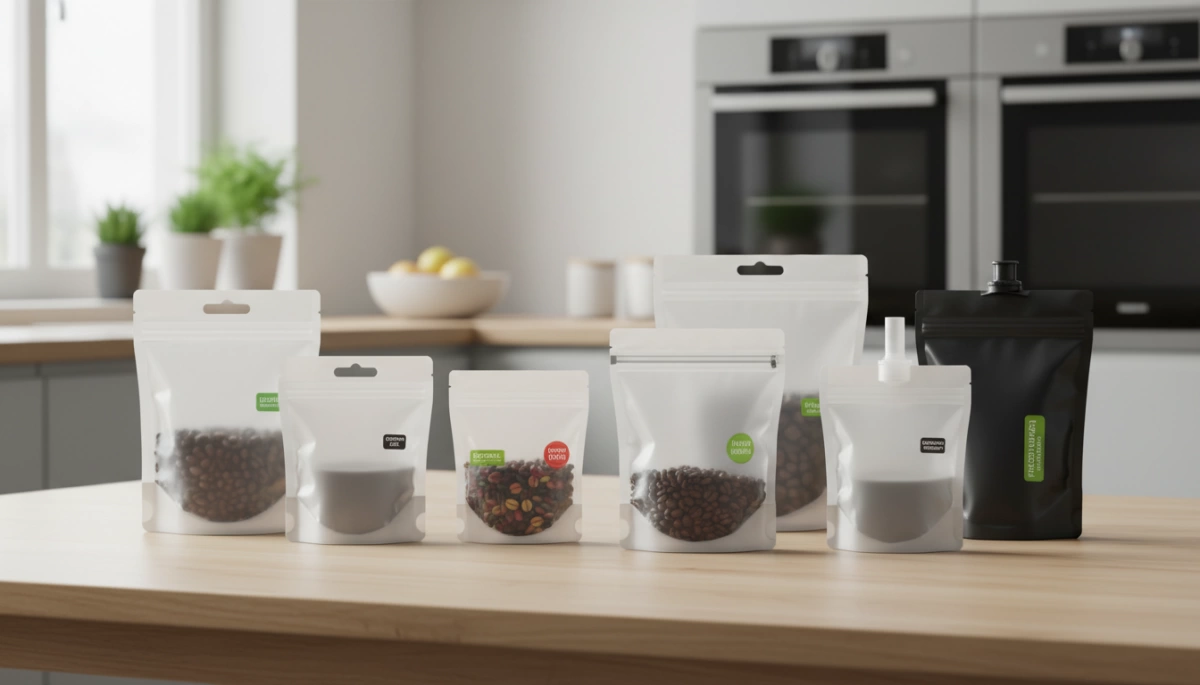
At Artfullife, we know that standing out on the shelf requires more than just a standard plastic sack. With over 18 years of manufacturing experience, we offer deep customization options that transform generic storage into branded assets. Whether you are launching a private label line or upgrading existing packaging, our OEM/ODM Ziplock Bag Guide focuses on tailoring every detail to your market needs.
Closures and Features: Sliders, Press-to-Close, and Secure Seals
The closure system is the critical touchpoint for your customer. We provide various sealing mechanisms designed for usability and freshness retention.
- Press-to-Close: The industry standard for cost-effective, reliable sealing. Ideal for high-volume food sealed bags where everyday convenience is priority.
- Slider Zippers: Offers an effortless open-close experience, often preferred for larger family-pack sizes or premium product lines.
- Double-Lock Seals: Enhanced security for liquids or fine powders to prevent leaks and maintain an airtight environment.
We ensure all closures meet rigorous safety standards. As a factory with FDA, CE, and RoHS certifications, our sealing technologies are tested to maintain food integrity.
Printing and Branding: From Matte Finishes to High-Res Logos
Visual appeal dictates consumer choice. We support full custom printed ziplock bags, allowing you to apply your unique brand identity directly onto the packaging.
- Surface Finish: Choose between matte for a premium, tactile feel or glossy for vibrant, shelf-popping colors.
- Logo Placement: High-definition printing ensures your logo is the focal point.
- Design Support: Our team assists with appearance design to ensure your artwork translates perfectly to the final food grade ziplock material.
Choosing the right partner is crucial for execution. Understanding the key factors to choose an OEM food storage bag manufacturer can help you navigate the complexities of print quality and material compatibility.
Shape and Size: Stand-Up Pouches, Flat Bags, and Gussets
One size does not fit all. We engineer the structural design of the bag to match your specific application, from retail display requirements to storage efficiency.
| Bag Type | Best Application | Key Benefit |
|---|---|---|
| Flat Bags | Sandwich bags, portion control | Space-saving and cost-efficient. |
| Stand-Up Pouches | Snacks, pantry staples, bulk items | Excellent shelf presence; stands upright. |
| Gusseted Bags | High-volume storage | Expands to hold more product without tearing. |
With our flexible Low MOQ starting at just 5,000 pieces, startups and established retailers alike can experiment with different stand up ziplock pouch ODM configurations without the risk of massive inventory overhead. Our automated production lines in Foshan ensure that whether you choose a custom shape or a standard size, the quality remains consistent across every batch.
The Manufacturing Roadmap: From Concept to Carton
Navigating the production floor can seem complex, but at Artfullife, we break the ziplock bag production process down into clear, manageable stages. Whether you are scaling up a startup or expanding an established product line, our 18+ years of manufacturing experience ensures transparency at every step. We operate a modern facility in Foshan with automated equipment, allowing us to maintain stable capacity and strict timelines for global export.
The OEM Path: Mold Creation, Prototyping, and Sampling
For brands that require a fully unique structure—like a specific ergonomic grip or a non-standard gusset shape—the OEM route is the way to go. As a dedicated custom ziplock bags manufacturer, we start by converting your concept into technical 3D drawings.
Once the design is locked in, the real engineering begins:
- Tooling: We fabricate custom metal molds (cylinders) specific to your bag’s dimensions and features.
- Prototyping: We run a small batch using food grade ziplock material to verify the physical properties.
- Sampling: You receive physical samples to test functionality before we flip the switch on mass production.
This path requires a longer lead time upfront for mold creation, but it grants you complete control over the product’s IP and market differentiation.
The ODM Path: Template Selection and Rapid Branding
If speed to market is your priority, our ODM service utilizes our extensive library of existing molds. This eliminates the tooling phase, allowing us to move directly to the design application. You select a proven bag structure, and we apply your artwork and branding.
- Template Selection: Choose from standard stand-up pouches, flat bags, or slider bags.
- Artwork Integration: We optimize your logo and design for rotogravure or digital printing.
- Rapid Production: With no new molds to build, production starts immediately.
This approach is ideal for private label ziplock bags, significantly lowering the barrier to entry with our flexible MOQs starting at just 5,000 pieces. Understanding the nuances of the difference between OEM and ODM ensures you pick the right lane for your launch, balancing cost against customization needs.
Quality Control Checkpoints: Leak Tests, Seal Strength, and Drop Tests
Manufacturing speed means nothing without consistency. Our quality control team enforces strict protocols to ensure every bag meets international standards, including FDA LFGB certified pouches requirements. We don’t just inspect the final product; we monitor the entire line.
Our Standard QC Protocol:
- Leak Testing: We use both air inflation and water submersion tests to guarantee an airtight, leak-proof seal essential for food storage.
- Seal Strength Analysis: We subject the zippers and side seals to burst pressure tests to ensure they won’t pop open during transport or freezing.
- Drop Testing: Filled bags are dropped from specific heights to verify durability and puncture resistance.
- Material Verification: We strictly check raw materials to confirm they are BPA-free and meet all safety specs before they ever hit the machine.
Safety First: Certifications You Can’t Ignore
When sourcing packaging for the US market, safety compliance is not optional—it is the foundation of your brand’s reputation. As a manufacturer with over 18 years of experience, we know that a single compliance failure can shut down a product line. We prioritize strict adherence to international safety standards to ensure every bag leaving our factory is safe for consumer use.
Food Contact Standards: FDA, LFGB, and BPA-Free Compliance
For any product touching food, regulatory compliance is the first hurdle. Our production lines are set up to meet rigorous standards, ensuring we deliver FDA LFGB certified pouches that are safe for direct food contact.
- FDA Compliance: Essential for the United States, ensuring materials are safe for food storage.
- LFGB Standards: A stricter European standard that we also cater to for global brands.
- BPA-Free: We strictly utilize food grade ziplock material that is free from Bisphenol A (BPA) and other harmful phthalates, giving your customers peace of mind.
Understanding the manufacturing process for food storage bags helps clarify how we integrate these safety checks at every stage, from raw material selection to the final seal.
Sustainability Certifications: BPI, OK Compost, and Recyclable Codes
In the era of green manufacturing, vague claims don’t cut it. Retailers and consumers demand proof. We help brands navigate the complex landscape of eco-friendly resealable pouches by aligning with recognized environmental standards.
- Recyclability: We clearly label materials (like PE) with correct recycling codes to facilitate proper disposal.
- Compostability: For clients choosing biodegradable films, we aim for materials compliant with standards like BPI or OK Compost to validate end-of-life claims.
Third-Party Testing: Ensuring Chemical Migration Safety
Internal checks are vital, but independent validation is better. We support third-party testing to verify that our materials perform safely under real-world conditions. This focuses heavily on chemical migration safety—ensuring that no substances transfer from the plastic to the food, even when the bag is exposed to heat, acidity, or freezing temperatures. This rigorous validation protects your brand liability and ensures consistent product quality.
The Bottom Line: Pricing, Lead Times, and Logistics
When sourcing OEM vs ODM resealable bags, the financial picture goes way beyond just the sticker price per pouch. Whether you are launching a startup or scaling an established brand, understanding the total landed cost is the only way to protect your margins. Here is how we break down the numbers and logistics to get your products from our production line to your warehouse.
Calculating True Unit Costs vs Upfront Tooling Investment
The biggest pricing difference between custom and standard options lies in the initial setup. If you choose the OEM route for a fully custom ziplock bags manufacturer experience, you must budget for upfront tooling fees.
- OEM Costs: You pay for copper cylinder molds (for rotogravure printing) and custom zipper dies. This is a one-time investment. While the upfront hit is higher, your actual per-unit cost usually drops significantly on larger runs because you own the efficiency. Understanding the specific types of food storage bag closures and OEM cost guides is essential for accurate budgeting here.
- ODM Costs: There are no mold fees because you are using our existing templates. However, the per-unit price might be slightly higher to account for our development costs. This is often the safer bet for testing new markets with private label ziplock bags.
Shipping and Logistics: Understanding FOB, DDP, and Customs
Getting the bags manufactured is only half the battle; getting them to the US requires navigating international logistics. We offer flexible terms depending on your experience level:
- FOB (Free on Board): We handle everything until the goods are on the ship at the export port. You control the ocean freight and US customs clearance. This is great if you have your own freight forwarder.
- DDP (Delivered Duty Paid): The “hands-off” method. We handle shipping, insurance, duties, and customs clearance, delivering the recyclable resealable packaging solutions right to your door. This eliminates surprise fees at the border.
Why Direct Factory Access Wins Over Middlemen
Working with a trading company or sourcing agent adds a layer of cost and a layer of confusion. Middlemen typically add a 15-30% markup to the factory price. By working directly with us, you cut that fat.
Beyond pricing, direct access improves communication speed. When you need to discuss the typical MOQ for ODM food storage bags or tweak a design feature, talking straight to the manufacturer prevents the “game of telephone” errors that ruin production runs. We give you transparency on timelines and material sourcing that a middleman simply cannot match.
Common Challenges and How to Avoid Them
Sourcing packaging sounds straightforward until you realize your “standard blue” isn’t the factory’s “standard blue,” or your shipment gets stuck in customs right before a holiday. As a custom ziplock bags manufacturer, we see where buyers trip up most often. Navigating the ziplock bag production process requires foresight. Here is how we help you dodge the most common bullets to keep your supply chain moving.
Avoiding Miscommunication in Design Briefs
The biggest enemy of a successful private label ziplock bag launch is a vague design brief. Saying you want a “strong bag” or a “matte finish” is subjective. To us, precision is the only language that matters.
To ensure your custom printed ziplock bags arrive exactly as you imagined, stick to these rules:
- Define Dimensions Clearly: Always specify inner usable space versus outer dimensions. Gussets and zippers eat up space.
- Standardize Color: Never rely on screen renders. Use Pantone (PMS) codes for solid colors and CMYK values for process printing.
- File Formats: Send vector files (AI or PDF) for logos. Low-res JPEGs will result in blurry printing that hurts your brand image.
Managing Quality Inconsistencies During Mass Production
A common nightmare for brands is receiving a “Golden Sample” that is perfect, only to find the actual mass production batch varies in quality. In the plastics industry, slight variances in film thickness or color can happen if standards aren’t locked in.
We mitigate this by establishing a clear tolerance range before we start the OEM vs ODM resealable bags manufacturing flow. You should insist on a signed quality agreement that defines acceptable limits for:
- Film Thickness: Usually +/- 10% is standard industry tolerance.
- Seal Strength: Defined in Newtons to ensure bags don’t burst.
- Visual Defects: What counts as a “pass” versus a “fail” for print registration offsets.
Solving Delays in Sampling and Shipping
Time is money, and delays can kill a product launch. Whether you are building new molds or using existing templates, understanding the typical lead time for OEM vs ODM food storage bag projects is critical for accurate scheduling.
Delays often stem from unrealistic expectations regarding tooling or shipping logistics. If you are going the OEM route, remember that creating custom copper cylinders for rotogravure printing takes time.
- Build a Buffer: Always add 1-2 weeks of buffer time for unforeseen customs holds or material shortages.
- Approve Quickly: Production cannot start until proofs are signed. Fast feedback loops on your end prevent bottlenecks on our end.
- Check the Calendar: Be aware of major holidays like Chinese New Year, which can shut down production for weeks.
FAQs: Answering Your Top Sourcing Questions
As a manufacturer with over 18 years of experience in the kitchen and household supplies industry, we hear the same concerns from procurement officers and brand owners daily. Sourcing custom ziplock bags manufacturer partners involves navigating a maze of technical specs and logistical hurdles. Here, we break down the most critical questions to help you make informed decisions for your next order.
What is the real MOQ difference between OEM and ODM?
The Minimum Order Quantity (MOQ) is often the biggest barrier for new brands. In the OEM vs ODM resealable bags debate, ODM is almost always the lower-risk entry point. Since ODM utilizes our existing templates and sizes—like our standard food sealed bags or produce sliders—we don’t need to stop production lines to re-calibrate machinery for new dimensions.
For fully custom OEM projects, the setup costs for printing cylinders and machine configuration drive the MOQ higher. However, unlike massive industrial conglomerates that demand 50,000+ units just to pick up the phone, Artfullife offers a flexible MOQ starting at 5,000 pieces. This allows businesses to test private label ziplock bags in the market without overcommitting capital to inventory that might sit stagnant. For more insights on navigating these volume requirements, check our guide on B2B food packaging solutions to see how scale impacts unit economics.
Can biodegradable bags handle liquids and freezer temps?
This is the most common technical question regarding sustainable ziplock bag manufacturing. The honest answer is: it depends entirely on the specific material blend. Early generations of cornstarch-based compostables were notorious for dissolving when in contact with hot liquids or becoming brittle and cracking in freezers.
Today, we use advanced material engineering to solve this. For freezer applications, we recommend specialized PE-based recyclable blends or high-grade compostables reinforced for low-temperature elasticity. If your product line involves heavy-duty cold storage, understanding the limits of materials is crucial; for instance, you can read about how different eco-materials perform in extreme cold in our article on freezing silicone bags, which covers similar durability principles. When sourcing biodegradable ziplock bags wholesale, always specify if the end-use involves liquids or sub-zero storage so we can formulate the barrier layers correctly.
How long does custom cylinder mold making actually take?
Time-to-market is critical, and the tooling stage is often the bottleneck. For custom printed ziplock bags requiring rotogravure printing (which offers that high-end, photo-realistic finish), we need to engrave copper cylinders for each color in your design.
- Standard Timeline: 7 to 10 days for cylinder engraving.
- Complex Designs: Up to 14 days if the artwork requires intricate color separation or special matte/gloss combination finishes.
Once the cylinders are ready, we run a physical proof for your approval before mass production begins. This ensures your branding colors match your Pantone codes exactly.
Do I own the molds if I pay for the OEM tooling?
Absolutely. If you pay the tooling fee for a custom size, shape, or print cylinder, you own the intellectual property of that tool. As a professional factory, we store these molds in our climate-controlled facility in Foshan exclusively for your re-orders. We do not use your custom molds for other clients or our own generic stock. This protection of IP is a cornerstone of our relationship with global retailers. When you invest in OEM/ODM services, you are securing a proprietary asset that differentiates your brand on the shelf.