
















Understanding Cling Film for Smoked Meat
What Is Cling Film for Smoked Meat?
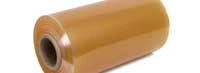
When I talk about cling film for smoked meat, I mean clear, food-grade plastic wrap that clings tightly to meat and containers.
For smoked brisket, ribs, or pork shoulder, cling film gives you:
- A tight, air-resistant seal to slow down drying
- A clear layer so you can see the bark and fat cap
- Flexible coverage for odd shapes like racks of ribs or bone-in pork butt
Used correctly, plastic wrap for smoked brisket or ribs helps lock in moisture and protect flavor once the meat is off the pit.
Standard vs Heavy-Duty Cling Film for BBQ
Not all plastic wrap is the same. For BBQ and smoked cuts, I always match the film to the job:
Standard cling film (thin household wrap):
- Best for:
- Short-term fridge storage (1–2 days)
- Covering pans or trays of rested meat
- Wrapping small leftovers or individual portions
- Pros: Easy to use, inexpensive, stretches well
- Cons: Tears easily, not great for larger or bone-in cuts
Heavy-duty cling film (restaurant-style, meat wrap film):
- Best for:
- Large briskets, whole pork butts, full racks of ribs
- Tighter wrapping for resting smoked ribs in plastic wrap
- Wrapping smoked meat for transport or meal prep
- Pros: Strong, more puncture-resistant, better seal
- Cons: Slightly less stretchy, usually sold in bigger rolls
For serious BBQ, I recommend heavy-duty meat wrap film as your main cling film for smoked meat, and standard film as backup.
Why Smoked Meat Needs Proper Wrapping After Cooking
Once smoked meat comes off the pit, the clock starts ticking. Without proper wrapping:
- Sliced meat dries out quickly in the fridge
- Exposed fat picks up off-flavors from other foods
- Bark gets tough and unappealing
- Leftovers lose that fresh-smoked character fast
Proper wrapping after cooking helps you:
- Slow moisture loss from the surface
- Preserve smoke aroma and seasoning
- Keep meat safe and cleaner during storage and transport
If you care about BBQ meat preservation, using the right wrap is just as important as your rub and wood choice.
How Cling Film Affects Moisture, Flavor, and Freshness
Cling film behaves differently than foil or butcher paper:
-
Moisture retention
- Tight plastic wrap traps juices close to the meat
- Great for pulled pork or sliced brisket you want to stay juicy
- Can soften bark if left wrapped too long while warm
-
Flavor protection
- Acts as a barrier against fridge odors
- Helps keep smoke flavor and seasoning from fading
- Keeps fatty smoked meats like brisket from oxidizing as fast
-
Freshness and texture
- Limits air contact, which slows drying and discoloration
- Works well when you want soft, juicy slices or pulled meat
- Less ideal if you want to keep bark crisp while storing
Used properly, cling film for brisket resting and storage helps you hold onto moisture and flavor without sacrificing safety.
When Cling Film Makes Sense vs Other Wrapping Options
Cling film isn’t always the best tool, but it’s excellent in the right situations.
Here’s when I reach for cling film for smoked meat instead of other wraps:
Cling film is a good choice when:
- You’re wrapping cooled or slightly warm smoked meat for the fridge
- You want an airtight wrap for smoked meat leftovers
- You’re portioning smoked pork, brisket, or ribs for meal prep
- You’re combining it with foil or a pan lid for transport
- You want to prevent freezer burn by wrapping tight before bagging
I usually prefer other wraps when:
- I’m doing the Texas crutch mid-cook → foil
- I want bark to breathe and stay drier → butcher paper
- I’m planning long-term freezer storage → vacuum sealing, with cling film as an inner layer
For home cooks, BBQ enthusiasts, and small food businesses, the sweet spot is simple:
Use cling film for smoked meat as your main tight-seal layer for short-term storage and holding, then pair it with foil, butcher paper, or vacuum bags depending on how long you need that meat to last.
Cling Film Safety for Smoked Meat
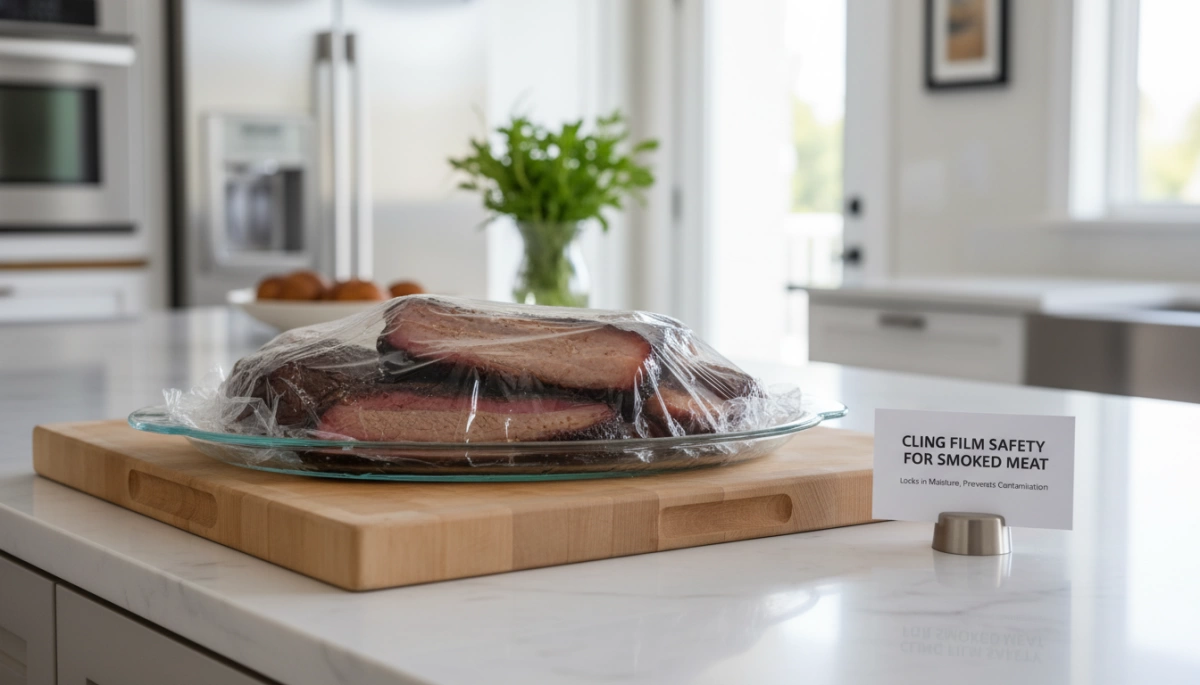
When I wrap smoked brisket, ribs, or pork butt, cling film safety is non‑negotiable. If it’s touching your food, it needs to be food-grade cling film designed for meat.
What Makes Cling Film Food-Grade and Safe
Food-grade cling film for smoked meat should:
- Be clearly labeled “food contact safe” or FDA compliant
- Have no strong plastic or chemical smell
- Stay stable without flaking, cracking, or getting oily when touching fat
- Come from a reputable source, not unlabeled bargain rolls
For commercial use or serious home BBQ, I lean on heavy-duty meat wrap film that’s specifically sold as food-grade cling film for meat. If you’re exporting or catering, it’s worth using wrap that aligns with proper food wrap standards similar to what’s discussed for cling film in food export applications on professional cling film guides.
Temperature Limits for Cling Film with Smoked Meat
Most plastic wrap for smoked brisket and ribs has clear temperature rules:
- Safe zone:
- Cold storage: fridge (34–40°F / 1–4°C)
- Freezer: usually down to -40°F / -40°C
- Do NOT use on:
- Meat hotter than 140°F (60°C) unless the label says it’s oven-safe
- Direct contact with broilers, grills, or open flame
- Inside a smoker or oven unless the film explicitly says it’s heat-safe
If the label doesn’t list a max temperature, I treat it as for cooled meat only.
Is Cling Film Safe for Fatty Smoked Meats?
Fatty cuts like smoked brisket, pork butt, ribs, and pulled pork are tougher on plastics:
- Fat can pull more chemicals out of lower‑quality plastic
- Always use food-grade, high-quality wrap for fatty smoked meat
- Keep it for resting (once cooled a bit) and storage, not direct high-heat cooking
- Don’t wrap a sizzling hot brisket straight off the pit in cling film—let it cool below 150°F first
Handled right, safe plastic wrap for food is fine for fatty smoked meats in the U.S. kitchen or BBQ trailer.
BPA-Free, PVC-Free, and Safer Plastic Options
If you’re picky about safer plastics (I am), look for:
- BPA-free labeling
- PVC-free cling film, often made from PE (polyethylene)
- Wraps marketed as eco-friendly food wrap for BBQ or sustainable packaging for meats
You can pair safer cling film with stainless steel or reusable containers for an even cleaner setup, similar in spirit to using a stainless steel food container system instead of all plastic for storage (see stainless bento-style containers).
When You Should NOT Use Cling Film on Smoked Meat
Skip cling film in these situations:
- Meat is still steaming hot (above ~150°F)
- You’re putting it back on heat (smoker, oven, grill)
- You see melting, shrinking, or strong plastic smell
- Using non-food-grade wrap, painter’s plastic, or any unlabeled film
- You plan long, room‑temperature holding (unsafe for food, regardless of wrap)
If there’s any doubt—especially at high temps or with long holding times—I switch to foil, butcher paper, or vacuum bags instead of cling film for smoked meat.
When to Use Cling Film with Smoked Meat
Using Cling Film Before Smoking (Marinades & Rubs)
I like cling film for the prep stage more than anything. It keeps flavors tight and mess down. Use food‑grade cling film for smoked meat when you:
- Marinate or dry brine: Wrap seasoned brisket, ribs, or pork butt tightly in plastic wrap so the rub stays in contact and the fridge doesn’t dry it out.
- Prevent cross‑contamination: Wrapped trays of rubbed meat won’t drip on other food in your fridge.
For bigger cooks or meal prep, pairing cling film with reusable silicone or other eco-friendly food storage bags can make handling and cleanup easier; if you’re sourcing better storage options, it’s worth checking how leading food storage bag manufacturers plan for 2026 demands.
Wrapping Rubbed Meat Overnight in Cling Film
For overnight rest:
- Wrap the meat snug, 2–3 layers if it’s a big cut like brisket or pork shoulder.
- Push out extra air so the rub doesn’t crust and dry.
- Set it on a tray in the fridge in case any juices leak.
This keeps your marinade and rub locked in and the meat surface tacky, which helps smoke and seasoning stick the next day.
Wrapping Smoked Meat for Resting
For resting smoked brisket or pork butt in cling film:
- Let the meat cool down slightly first (no piping-hot wrapping).
- Wrap tightly to hold in moisture and rendered fat.
- Then place it in a clean towel-lined cooler or warm (off) oven for a short rest.
Cling film for brisket resting works best for short holds (30–90 minutes) when you want juicy slices and you’re not worried about keeping a crispy bark.
Short-Term Fridge Storage with Cling Film
When you’re storing smoked meat in the fridge for 1–3 days:
- Wrap portions (sliced brisket, pulled pork, rib racks) in a tight layer of plastic wrap.
- Remove as much air as you can to cut down on oxidation and fridge odors.
- For extra protection, put wrapped meat in a lidded container or zipper bag.
This keeps leftovers moist and makes reheating easier without drying out.
Long-Term Freezer Storage with Cling Film
Cling film can work for freezing smoked pork butt or brisket, but you have to double up:
- First wrap: tight cling film with all the air pushed out.
- Second wrap: heavy‑duty freezer bag or foil to stop freezer burn.
- Label and date so you know what’s what and when you smoked it.
For longer than 2–3 months, vacuum sealing beats cling film, but a double‑wrap method still protects flavor and texture.
Holding Smoked Meat for Serving with Cling Film
For catering, tailgates, or family gatherings, cling film for smoked meat is useful when:
- You need to hold sliced or pulled meat for a short time before serving.
- You want to keep pans of BBQ from drying out in the fridge or cooler.
- You’re transporting smoked meat and don’t want juices spilling everywhere.
Wrap the meat pan tightly, keep it chilled or properly hot (above 140°F), and only peel back the wrap when you’re ready to serve so the moisture and smoke flavor stay locked in.
How to Wrap Smoked Meat with Cling Film
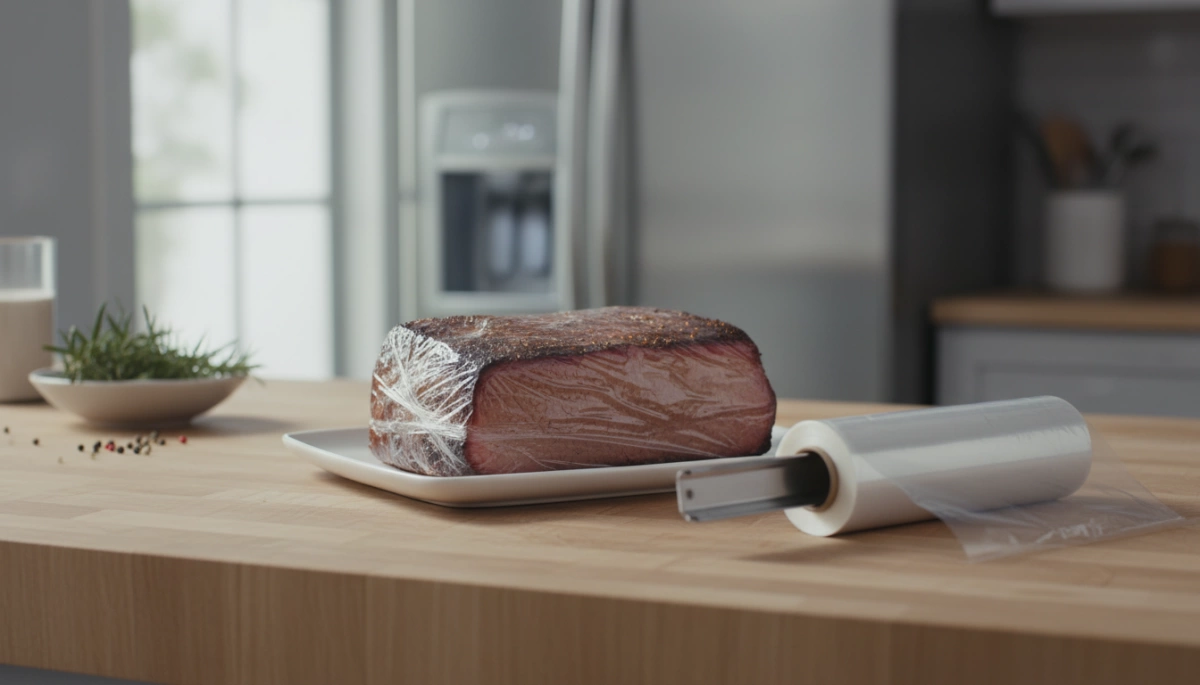
Choosing the Right Cling Film Size and Thickness
For smoked brisket, ribs, and pork shoulder, I always use heavy-duty, food-grade cling film. It grips better and is less likely to tear around bones or sharp edges.
- Width: 12″ works for smaller cuts and ribs; 18″–24″ is better for packer briskets and full pork butts.
- Thickness: Go for heavy-duty meat wrap film marketed for restaurants or BBQ use, not the ultra-thin bargain stuff.
If you want to reduce plastic, pair cling film with reusable containers like stainless steel food containers with pressure-release valves for transport and leftovers.
Cooling Smoked Meat Before Wrapping
Never wrap screaming hot smoked meat in plastic wrap. That’s a food safety and texture issue.
- Let the meat rest unwrapped until it drops below about 150°F–160°F.
- Pat off excess grease so the cling film can grab and seal.
- For fridge or freezer storage, cool it to room temp, then refrigerate until chilled before wrapping tightly.
Step-by-Step: Brisket, Ribs, Pork Shoulder
Here’s how I wrap each cut so it stays juicy without wrecking the bark:
Brisket
- Lay out a long sheet of cling film on a clean counter.
- Place the brisket fat side down in the center.
- Pull the front edge over the brisket, tuck tight, and roll.
- Fold the sides in as you roll so no bark is exposed.
- Add a second layer for long rests, fridge, or freezer.
Ribs
- Cut a sheet longer than the rack.
- Lay the ribs meat side up.
- Wrap like a present: top over, sides in, then roll.
- Double-wrap if bones are poking.
Pork Shoulder / Pork Butt
- Place the shoulder in the middle of a wide sheet.
- Pull the film up and over, stretching it tight to compress.
- Rotate and keep wrapping until all surfaces are sealed.
- For pulled pork, portion in smaller mounds and wrap each separately for easy meal prep.
Removing Excess Air and Double-Wrapping
Air is the enemy of moisture retention for smoked meat.
- Press your hands around the meat as you wrap to squeeze out air pockets.
- Stretch the film slightly as you go so it clings snug.
- For freezing smoked pork butt, brisket, or ribs, double-wrap:
- 1st layer: cling film, tight and airtight
- 2nd layer: another layer of cling film or a snug layer of foil to protect from freezer burn
Labeling, Dating, and Portioning
Treat smoked meat like meal prep and BBQ catering: stay organized.
- Use a permanent marker to label: cut, seasoning, date, and portion size.
- Wrap in single-meal portions for fast weeknight reheats—especially pulled pork and sliced brisket.
- For bigger cooks or events, I’ll wrap in cling film, then stack labeled portions in reusable or retail-ready packaging similar to what I’d spec from professional food packaging suppliers.
Combining Cling Film with Foil or Butcher Paper
You don’t have to choose cling film vs foil or butcher paper—you can use them together.
- Cling film + foil:
- Cling film for airtight sealing and moisture
- Foil outside for structure, transport, and insulation in a cooler
- Cling film + butcher paper:
- Wrap meat in cling film first for storage
- Re-wrap in butcher paper later for reheating that keeps bark closer to original texture
This combo approach lets you dial in bark, moisture, and convenience, whether you’re storing BBQ leftovers, running a backyard cook, or moving trays of smoked meat for a catering job.
Using Biodegradable Cling Film for Smoked Meat
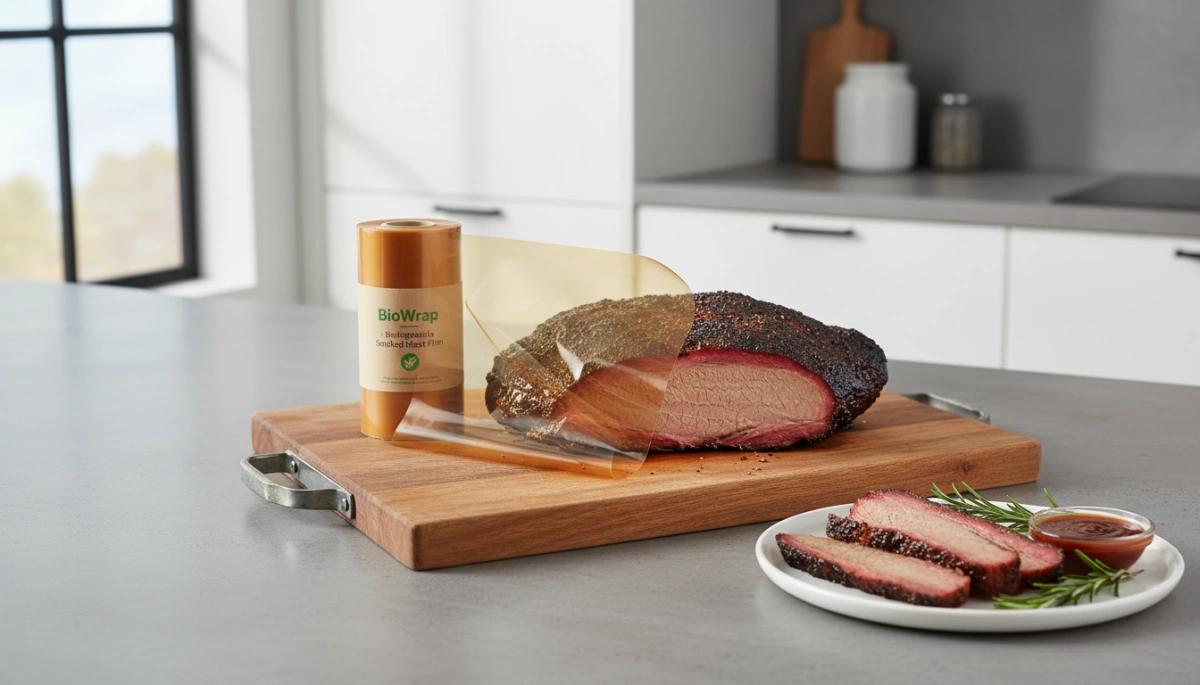
What biodegradable cling film is made of
When I talk about biodegradable cling film for smoked meat, I’m usually talking about wraps made from plant-based materials like corn starch, sugarcane, or other bio-based polymers instead of conventional petroleum plastic. Many of these eco-friendly food wraps for BBQ are designed to break down faster in composting or industrial waste systems, making them a better fit if you’re trying to cut back on single-use plastics. If you’re curious about how different films are engineered, you can dig deeper into preservative film materials and structures to see what’s actually in them.
Eco cling film vs regular plastic wrap
Compared with standard PVC or PE plastic wrap, biodegradable cling film for BBQ usually:
- Clings slightly less aggressively (you may need an extra wrap around the tray or pan)
- Has good but not perfect stretch, depending on the brand
- Performs better from a sustainability standpoint but can cost a bit more
For most home BBQ setups, it’s solid for wrapping smoked meat for storage in the fridge or freezer as long as you wrap tight and press out extra air.
Moisture retention and freshness
Plant-based cling film still gives you the key benefits you want:
- Moisture retention for smoked meat so brisket and ribs don’t dry out
- Protection from fridge smells and cross-contamination
- A barrier that helps cut down on oxidation and color change
For best results, I treat eco cling film like regular plastic wrap: wrap tightly, double-wrap fatty cuts, and keep storage times reasonable.
Sustainable wrap for brisket, ribs, and pork
For smoked brisket, ribs, pork shoulder, or pulled pork, I like using biodegradable cling film for smoked meat in a simple system:
- Brisket / pork butt: Wrap tightly in eco cling film, then place in a reusable container or foil pan for extra protection.
- Smoked ribs: Stack in a pan, wrap the whole pan in eco film to lock in juices.
- Pulled pork / sliced brisket: Portion into meal-size piles, wrap with eco film, then freeze or refrigerate.
If you’re doing bigger batches, pairing biodegradable wrap with reusable pans or containers is a good way to cut waste.
Why BBQ fans are switching to greener wraps
More BBQ folks in the U.S. are moving to sustainable packaging for meats because:
- They’re going through a ton of single-use plastic at every cook
- Eco cling film reduces plastic guilt without giving up airtight wrap for smoked meat
- It pairs well with other low-waste options like reusable containers and butcher paper
If you’re already thinking about cost-effective alternatives to single-use plastics for bigger BBQ events or catering, it’s worth looking at options designed for businesses that need greener packaging at scale, like the solutions outlined in this guide on cost-effective alternatives to single-use plastics for B2B clients.
Mistakes to Avoid with Cling Film on Smoked Meat
Using cling film for smoked meat can be smart, but a few common mistakes will wreck your bark, texture, and food safety. Here’s what I always watch out for when wrapping smoked brisket, ribs, or pork shoulder in plastic wrap.
Wrapping Meat While It’s Too Hot
Never wrap smoked meat in cling film straight off the smoker. If it’s still piping hot:
- The plastic can soften or start to melt if it exceeds its safe temperature range.
- Steam builds up, turning your bark mushy and washing out flavor.
Let the meat cool down to at least warm (around 140°F or below) before wrapping. This protects both the wrap and the bark.
Over-Wrapping and Trapping Too Much Moisture
More layers aren’t always better. Over-wrapping smoked meat in cling film:
- Traps steam and condensation
- Makes ribs or brisket bark soggy
- Can lead to a slightly “boiled” texture
Use just enough cling film to make a tight, airtight seal. If you need extra protection, pair a single plastic-wrap layer with butcher paper or foil instead of ten layers of cling film.
Using Non-Food-Grade or Cheap Cling Film
For smoked meat, especially fatty cuts like brisket or pork butt, always use food-grade cling film for meat:
- Avoid unknown, super-thin, or industrial films not labeled for food contact
- Pick wraps that clearly state they are food-safe and BPA-free
If you’re buying for a home or catering setup, bulk commercial kitchen cling film rolls from a trusted source are better than random bargain rolls with no safety info. For example, I look for suppliers focused on commercial kitchen cling film that explain material, thickness, and food-safety specs.
Leaving Smoked Meat at Room Temperature After Wrapping
Wrapping smoked meat in plastic wrap does not make it safe to leave out. Once wrapped:
- Get it into the fridge within 2 hours (1 hour if it’s really hot in your kitchen)
- Don’t let wrapped brisket or pulled pork sit on the counter “resting” for half the day
Room-temp meat wrapped in cling film is a perfect setup for bacteria growth. Use wrap for moisture retention, not as a food safety shortcut.
Freezer Burn and Poor Sealing Issues
If you’re freezing smoked meat with cling film, the biggest mistake is a loose or sloppy wrap:
- Air pockets cause freezer burn and dry out the meat
- Thin, single layers can tear and expose the surface
To avoid this:
- Wrap tightly and press out as much air as possible
- Double-wrap with cling film, then add a layer of foil for extra protection
- Label and date every package so you rotate and use it on time
Done right, cling film helps lock in moisture retention for smoked meat and keeps your smoked leftovers strong in both flavor and texture.
Alternatives to Cling Film for Smoked Meat
When cling film for smoked meat isn’t the best fit, here’s what I actually reach for and why.
Butcher Paper for Bark-Friendly Wrapping
If you care about bark, butcher paper is king.
- Best for: Brisket, pork butt, ribs once the bark is set
- Pros:
- Breathable, so bark stays crusty instead of soggy
- Handles heat well, great on the smoker and for resting
- Tip: Use unwaxed, food-grade pink butcher paper. It’s the standard on most serious BBQ pits.
Aluminum Foil for Texas Crutch & Holding
Foil is my go-to when I need control and speed.
- Best for: Texas crutch (pushing through the stall), holding in a cooler, transport
- Pros:
- Locks in moisture and juices
- Speeds up cooking and keeps meat hot for hours
- Watch out for: Softer bark and more “pot roasty” texture if you wrap too early. To understand foil’s broader role in the BBQ and food industry, you can look at overall aluminum foil market trends.
Vacuum Sealing for Long-Term Smoked Meat Storage
For serious meal prep and leftovers, vacuum sealing beats cling film for smoked brisket and pulled pork.
- Best for: Freezing smoked meat 1–6 months
- Pros:
- Removes air, fights freezer burn
- Easy to reheat in a hot water bath without drying out
- Tip: Chill meat fully first, then vacuum seal in meal-size portions.
Reusable Wraps & Containers for Eco-Friendly BBQ
If you’re trying to cut down on plastic:
- Best for: Short-term fridge storage, next-day leftovers, sliced smoked meats
- Options:
- Glass or BPA-free plastic containers with tight lids
- Silicone bags for pulled pork and sliced brisket
- Reusable wraps over a tray or pan
- Pros: Less waste, sturdy for transport, easy to stack in the fridge.
How to Choose the Best Wrap for Your Smoked Meat Goals
Match your wrap to your goal:
| Goal / Situation | Best Wrap Option |
|---|---|
| Protect bark & finish on smoker | Butcher paper |
| Push through stall / softer, juicier finish | Aluminum foil (Texas crutch) |
| Long-term freezer storage | Vacuum sealing |
| Short-term fridge storage, easy leftovers | Cling film + container, or reusable containers |
| Eco-friendly and low waste | Butcher paper + reusable containers |
If you’re buying in bulk for BBQ catering or retail, it’s worth comparing different wrap types and thicknesses the same way operators compare food wrap options for bulk orders.