
















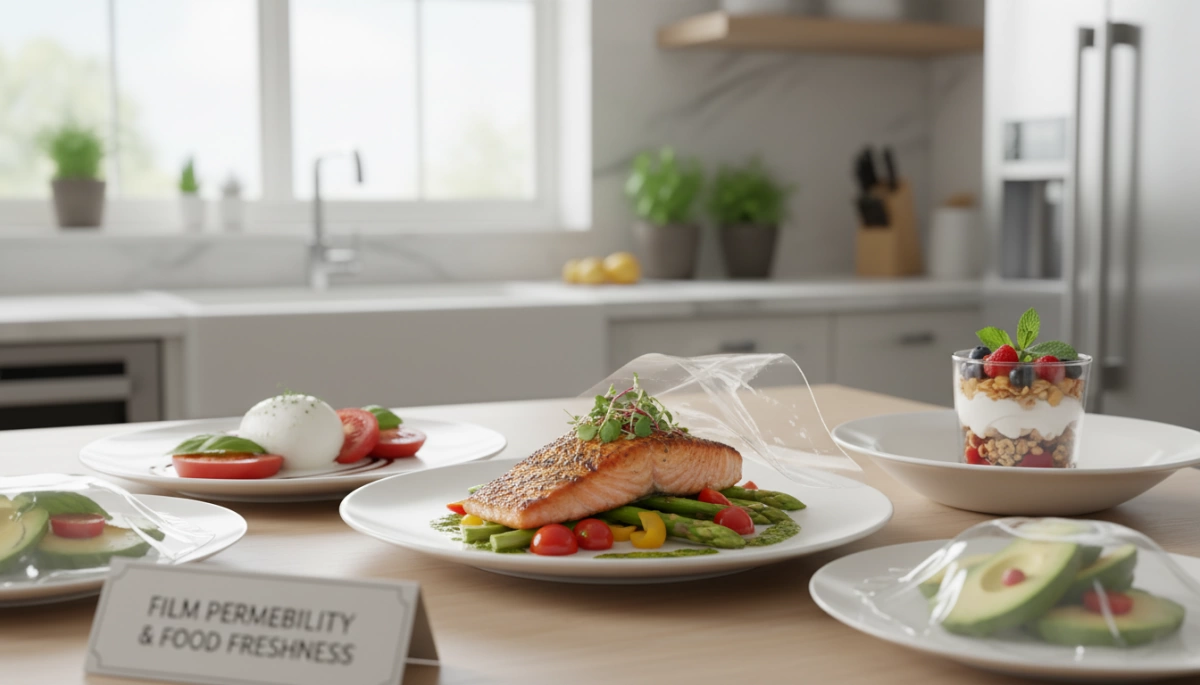
Are you tired of seeing fresh inventory turn into waste before it even leaves the shelf?
The secret to stopping spoilage isn’t just colder fridges—it’s mastering Film Permeability & Food Freshness.
As a packaging specialist, I know that the difference between a crisp salad and a wilted mess often comes down to invisible gas exchange. If your food packaging barrier properties aren’t tuned correctly, you are literally letting money evaporate.
In this guide, you’re going to learn exactly how Oxygen Transmission Rate (OTR) and Water Vapor Transmission Rate (WVTR) dictate shelf life.
We’ll cover everything from the science of food spoilage prevention to selecting the best sustainable food packaging materials that keep products fresh and customers happy.
Let’s dive in.
The Science Behind Film Permeability & Food Freshness
As a manufacturer with over 18 years of experience in eco-friendly household supplies, we understand that keeping food fresh isn’t magic—it’s pure chemistry. The effectiveness of any cling film or storage bag comes down to Food packaging barrier properties and how materials interact with the environment. Whether we are engineering PE cling film or heavy-duty aluminum foil, the goal is always the same: controlling the invisible exchange of gases to maximize shelf life.
Defining OTR and WVTR in Packaging
To understand freshness, you have to understand the metrics we use in the factory. Two critical values determine how a film performs:
- Oxygen Transmission Rate (OTR): This measures the amount of oxygen that passes through a defined area of film over a specific period. High OTR allows food to “breathe,” while low OTR creates a barrier against air.
- Water Vapor Transmission Rate (WVTR): This calculates how much moisture vapor permeates the film. A low WVTR is essential for keeping dry goods dry and moist foods juicy.
How Gases Move Through Polymer Structures
At a microscopic level, plastic films like PE (Polyethylene) and PVC (Polyvinyl Chloride) are not solid walls. They are complex polymer chains with tiny gaps. Gases and moisture pass through these structures based on the density of the material and the thickness of the film (measured in microns).
- PE Cling Film: Offers a balanced structure that provides moderate moisture control without chemical leaching.
- PVC Film: Features a more open structure, resulting in higher permeability, which is why it is often used for red meats that need oxygen to maintain color.
- Aluminum Foil: When produced above 20 microns, it acts as a near-perfect barrier, blocking transmission almost entirely.
Impact on Food Chemistry: Oxidation and Spoilage
If you choose the wrong permeability profile, Food spoilage prevention becomes impossible. The transmission of gases directly triggers chemical reactions that degrade quality:
- Oxidation: High oxygen exposure causes fats in meats and cheeses to go rancid and accelerates enzymatic browning in cut fruits.
- Microbial Growth: Bacteria and mold thrive in environments where oxygen and moisture are uncontrolled.
- Texture Degradation: Improper WVTR leads to freezer burn in frozen goods or wilting in fresh produce due to moisture loss.
Balancing Low Permeability vs. Breathability
Achieving Shelf life extension requires a strategic balance. A “total barrier” isn’t always the right solution. Fresh produce, for example, is a living product that continues to respire after harvest.
- Respiring Items (Produce/Salads): These require films with higher breathability. If the OTR is too low, the produce suffocates, leading to off-odors and rapid rot.
- Non-Respiring Items (Cooked Meats/Cheese): These demand High barrier packaging films to lock out oxygen and lock in moisture.
By optimizing our PE cling film permeability and material thickness (ranging from 8μm to 20μm+), we tailor solutions that match the biological needs of the food, ensuring that what you wrap stays fresh, safe, and marketable.
How Permeability Affects Different Food Categories
Understanding Film Permeability & Food Freshness isn’t just about wrapping food; it’s about matching the material’s breathability to the biological needs of the product. Different foods interact with oxygen and moisture in unique ways. As a manufacturer, we engineer our films to manage these transmission rates specifically for the US market, ensuring optimal shelf life extension and food spoilage prevention.
Fresh Meat and Poultry
Red meat requires a delicate balance of oxygen. To maintain that desirable bright red color (known as “bloom”), the film must allow a specific amount of oxygen to pass through. However, too much oxygen leads to oxidation and rancidity.
- Requirement: High Oxygen Transmission Rate (OTR) for bloom, but controlled to prevent rapid graying.
- Our Solution: We often recommend PVC cling film or specialized breathable PE cling film for short-term display. For long-term storage or bone-in cuts, our heavy-duty films (15–20 µm+) provide the puncture resistance needed while managing gas exchange.
Deli and Cheese
Cheese is a living product that needs to breathe. If the wrapping is completely impermeable, ammonia gas builds up, ruining the flavor. Conversely, if the film is too porous, the cheese dries out and cracks. Deli meats face a similar challenge; they need to retain moisture without becoming slimy from trapped condensation.
- Goal: Balanced moisture barrier food films that prevent drying while allowing off-gassing.
- Spec: Standard medium-duty PE films (10–14 µm) work best here to maintain texture and taste.
Fresh Produce and Salads
Vegetables and leafy greens have a high respiration rate, meaning they continue to “breathe” after harvest. If you seal them in a high-barrier film, they suffocate, leading to condensation, fogging, and rapid rotting.
- Challenge: Managing moisture to prevent “sweating” inside the pack.
- Tech: Our PE films feature anti-fog additives and calculated permeability to let excess moisture escape, keeping salads crisp.
Bakery, Snacks, and Frozen Goods
For dry goods, moisture is the enemy. Bakery items need a low Water Vapor Transmission Rate (WVTR) to stop bread from going stale or cookies from turning soft. In the freezer, a high barrier is critical to stop moisture sublimation, which causes freezer burn.
- Bakery: Light-duty films (8–10 µm) for short-term freshness.
- Frozen/Dry: Heavy-duty barrier films or Aluminum Foil (>20 µm) are essential here. For consumers looking for sustainable alternatives for dry snacks, high-quality reusable silicone food storage bags also offer excellent airtight properties to lock out moisture.
Quick Guide: Film Specs by Food Type
| Food Category | Primary Risk | Required Permeability Profile | Recommended Thickness |
|---|---|---|---|
| Red Meat | Loss of color (Bloom) | High OTR / Medium WVTR | 15–20 µm (Heavy) |
| Produce | Condensation / Rot | High Breathability (Anti-fog) | 10–14 µm (Standard) |
| Cheese | Drying / Mold | Balanced OTR & WVTR | 10–12 µm (Standard) |
| Frozen | Freezer Burn | Low OTR / Low WVTR | 15–20 µm+ or Foil |
| Bakery | Staling | Low WVTR | 8–10 µm (Light) |
Material Choices: Traditional vs. Sustainable Options
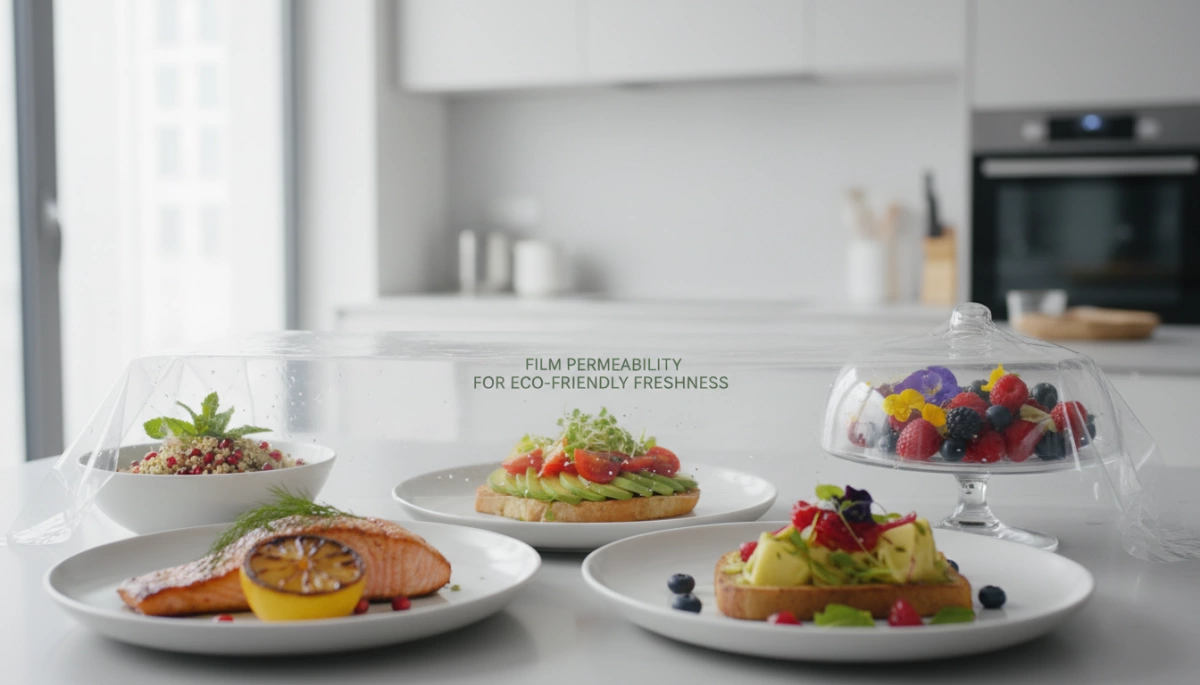
Choosing the right film isn’t just about price; it’s about matching the film permeability to the food’s biology. As a supplier, we see firsthand how different polymers handle gas and moisture transfer. The goal is always to balance Oxygen Transmission Rate (OTR) and Water Vapor Transmission Rate (WVTR) to prevent spoilage.
Comparing Polymer Permeability Profiles
Here is a breakdown of how the most common materials stack up in terms of barrier performance:
| Material | OTR (Oxygen Barrier) | WVTR (Moisture Barrier) | Primary Application |
|---|---|---|---|
| Polyethylene (PE) | High (Breathable) | Low (Good Barrier) | PE cling film, fresh produce, general storage |
| PVC | Moderate | Moderate | Red meat (allows bloom), deli service |
| EVOH | Very Low (High Barrier) | Sensitive to Moisture | High barrier packaging films, MAP applications |
| Polypropylene (PP) | Moderate | Very Low | Bakery, hot foods, snacks |
Advantages of Polyethylene (PE)
We focus heavily on PE cling film permeability because it offers the most versatility for the US market. Unlike older materials, PE provides a safe balance for food spoilage prevention:
- Breathability: It allows enough oxygen exchange to keep fresh produce from suffocating and rotting (managing respiration).
- Moisture Retention: It keeps the product from drying out without creating a swamp inside the package.
- Safety & Clarity: It is PVC-free, meaning no harmful phthalate plasticizers migrate into fatty foods, while still offering excellent contact clarity.
Sustainable and Biodegradable Innovations
The industry is aggressively shifting toward sustainable food packaging materials. We are seeing massive improvements in biodegradable cling film that actually performs. Early versions were often too brittle or too permeable, but newer compostable resins now offer barrier properties comparable to traditional plastics.
For specialized applications, material science is advancing rapidly. Some producers are now evaluating antimicrobial vs antioxidant food film technologies to actively inhibit bacterial growth while maintaining eco-friendly standards.
Recyclable Packaging for Freshness
Sustainability isn’t just about composting; it’s about the circular economy. Our recyclable packaging for freshness focuses on pure PE structures. Since PE is widely accepted in recycling streams (unlike multi-layer laminates or PVC), it helps retailers meet their environmental goals without sacrificing the shelf life extension required for the supply chain.
Practical Specifications for Optimal Freshness
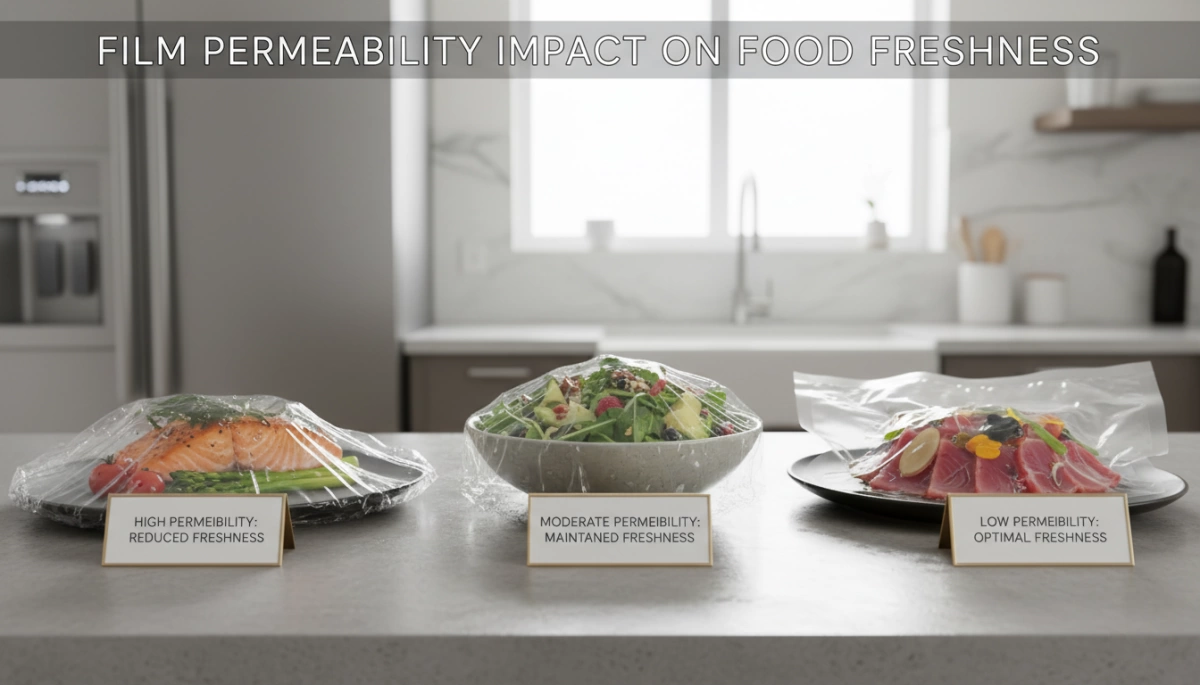
Achieving the perfect balance between shelf life extension and product presentation requires selecting the exact film specifications for your application. At Artfullife, we engineer our films with precise thickness and elasticity profiles to control Oxygen Transmission Rate (OTR) and Water Vapor Transmission Rate (WVTR) effectively.
Selecting the Right Thickness
Film thickness, measured in microns (µm), directly correlates to barrier performance and puncture resistance. Using a “one-size-fits-all” approach often leads to food spoilage or wasted material. We recommend matching the gauge to the specific food category:
| Grade | Thickness Range | Best Application | Barrier Profile |
|---|---|---|---|
| Light-Duty | 8–10 µm | Bakery items, light produce, short-term display | High breathability; prevents condensation on warm items. |
| Standard | 10–14 µm | Deli meats, cheese, daily supermarket use | Balanced moisture retention; standard protection for <24hr storage. |
| Heavy-Duty | 15–20 µm+ | Bone-in meats, seafood, bulk transport | High puncture resistance; lower permeability for extended storage. |
The Impact of Stretching and Sealing
The physical handling of the film changes its permeability properties. When PE cling film is stretched tightly over a container, the polymer structure thins out, which can slightly increase the OTR. This is beneficial for fresh produce that needs to “breathe” but can be detrimental for items sensitive to oxidation.
- Sealing: A hermetic seal is vital. Our high-elasticity films are designed to grip containers securely, preventing ambient air from bypassing the barrier.
- Storage Temperature: Permeability rates fluctuate with temperature. Films stored in refrigerated environments typically exhibit lower transmission rates, aiding in food spoilage prevention.
Integrating Vacuum and Modified Atmosphere Packaging (MAP)
For commercial applications requiring long-term preservation, standard cling application is often integrated with Modified Atmosphere Packaging (MAP) or vacuum systems. Our PE food bags are compatible with vacuum sealing to remove oxygen entirely, stopping aerobic bacterial growth.
While polymer films offer visibility and flexibility, some scenarios require a total barrier against light and moisture. in these cases, innovative aluminum foil solutions serve as the ultimate shield, blocking 100% of oxygen and light to prevent oxidation in sensitive fats and oils. By combining the right polymer films for fresh display with heavy-duty barriers for storage, businesses can significantly reduce waste and improve profitability.
Benefits for Retailers and Suppliers
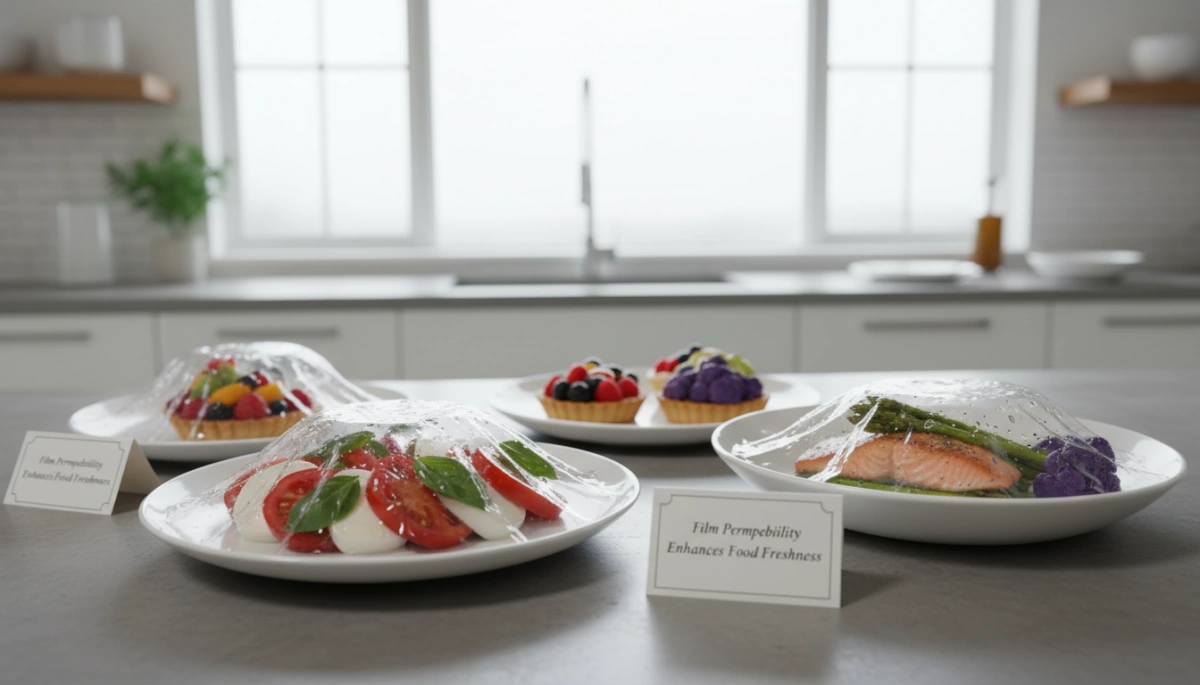
For supermarkets, commercial kitchens, and food distributors, the right packaging isn’t just about wrapping a product—it’s about protecting the bottom line. As a manufacturer with over 18 years of experience, we know that understanding Film Permeability & Food Freshness directly impacts profitability. By selecting films with optimized Oxygen Transmission Rates (OTR) and Water Vapor Transmission Rates (WVTR), businesses can significantly reduce operational losses.
Reducing Food Waste (‘Shrink’)
“Shrink”—the industry term for lost inventory—is a massive profit killer, especially in the fresh produce and meat departments. Standard films often suffocate produce or let meat oxidize too quickly.
- Shelf Life Extension: Our engineered PE cling films and PVC films are designed to balance respiration. This keeps salads crisp and red meats blooming for longer periods on the shelf.
- Spoilage Prevention: By controlling moisture buildup, we prevent the mold and bacterial growth that forces retailers to throw away perfectly good food.
Cost Efficiencies: Yield and Labor
Switching to professional-grade barrier films improves more than just food quality; it streamlines your entire workflow. Cheap, generic films often require double-wrapping to get a secure seal or prevent tearing, which doubles your material costs.
Operational Savings with High-Performance Film:
| Feature | Benefit for Retailers |
| :— | :— |
| Higher Elasticity | Tighter seals with less film usage per item. |
| Anti-Fog Properties | clear visibility prevents customers from poking packages, reducing damage. |
| Puncture Resistance | Fewer tears mean less re-wrapping and lower labor costs. |
Meeting Safety and Sustainability Goals
In the US market, compliance is non-negotiable. We ensure all our products, from PE food bags to heavy-duty cling films, meet rigorous FDA and ROHS safety standards.
- Chemical Safety: Our BPA-free and plasticizer-free PE options ensure no harmful chemicals migrate into fatty foods, protecting your brand reputation.
- Eco-Friendly Shifts: We support sustainability goals by offering recyclable materials that reduce the environmental footprint of your packaging without sacrificing barrier properties.
By sourcing directly from a factory capable of customizing structure and thickness, suppliers can get the exact permeability profile needed to maximize freshness and minimize waste.
Frequently Asked Questions About Film Permeability
How does film thickness impact Oxygen Transmission Rate?
There is generally an inverse relationship between thickness and gas transmission. Simply put, thicker films create a stronger barrier. For example, our heavy-duty films (15–20 µm+) significantly reduce the Oxygen Transmission Rate (OTR) compared to light-duty versions (8–10 µm). If you are wrapping bone-in meats or products requiring long-haul transport, increasing the micron thickness helps lower oxidation risks while providing necessary puncture resistance.
What is the difference between high barrier and breathable films?
It comes down to the specific needs of the food:
- High Barrier Films: Materials like Aluminum Foil or multi-layer structures are designed to block nearly all oxygen and moisture. These are essential for preventing spoilage in fatty foods, cheese, or cooked meats where oxidation causes rancidity.
- Breathable Films: PVC and certain PE formulations allow a controlled amount of oxygen to pass through. This “breathability” is critical for fresh red meat to maintain its bright red “bloom” and for fresh produce to respire without suffocating.
Can biodegradable films really match plastic performance?
The gap is closing rapidly. While traditional PE cling film currently offers the highest elasticity and clarity at the most competitive price point, modern biodegradable innovations are catching up. We engineer our eco-friendly options to meet strict FDA standards, ensuring they provide adequate barrier properties for short-term storage. However, for industrial applications requiring extreme tensile strength or specific OTR control, recyclable PE remains the industry standard.
Why is WVTR critical for bakery products?
Water Vapor Transmission Rate (WVTR) dictates whether your baked goods stay soft or turn stale. Bakery items need a film with a low enough WVTR to trap moisture inside the crumb, preventing it from drying out. However, if the barrier is too high and the product is warm, condensation can form, leading to soggy crusts and mold growth. Our standard PE films are optimized to balance this moisture retention, keeping breads and pastries fresh without becoming waterlogged.