














Understanding Cling Film Materials: PE vs. PVC
When it comes to wrapping hot food, not all plastic films are created equal. The safety of your food depends entirely on the material chemistry of the wrap you choose. As a manufacturer with over 18 years of experience, we see a clear divide in the industry between two primary materials: Polyethylene (PE) and Polyvinyl Chloride (PVC).
The Difference Between PE and PVC
Most consumers assume “plastic wrap is just plastic wrap,” but the structural differences are massive.
- Polyethylene (PE): This is the material we use for Artfullife® products. It is structurally simple, naturally flexible, and does not require harmful additives to function. It is BPA-free and phthalate-free by design.
- Polyvinyl Chloride (PVC): Often found in commercial catering, PVC is naturally brittle. To make it clingy and flexible, manufacturers must add “plasticizers.” These additives are not chemically bound to the plastic, meaning they can move—or migrate—out of the film.
Why PE is the Safer Choice for Heat
PE cling film is chemically stable. Because it doesn’t rely on liquid plasticizers for flexibility, there is a significantly lower risk of chemicals leaching into your food when temperatures rise. While PE will eventually soften around 176°F–195°F (80°C–90°C), it remains inert compared to its PVC counterpart.
In contrast, PVC cling film poses a higher risk with hot food. The plasticizers (often DEHA) used in PVC are lipophilic—meaning they love fat. When you cover a hot, fatty dish (like lasagna or roasted chicken) with PVC, the heat accelerates the migration of these plasticizers directly into your meal.
Material Safety Comparison
| Feature | PE Cling Film (Artfullife®) | PVC Cling Film |
|---|---|---|
| Composition | Low-Density Polyethylene (LDPE) | Polyvinyl Chloride + Plasticizers |
| Additives | BPA-Free, Phthalate-Free | Contains Plasticizers (e.g., DEHA) |
| Heat Stability | High stability; low migration risk | High risk of chemical migration |
| Best For | General storage, microwave reheating | Cold storage only (avoid hot contact) |
Choosing PE vs PVC cling film isn’t just about performance; it’s about reducing chemical exposure. For any application involving heat, PE offers a cleaner, more stable barrier that keeps your food safe from plasticizer migration.
Key Temperature Limits and When It Becomes Unsafe
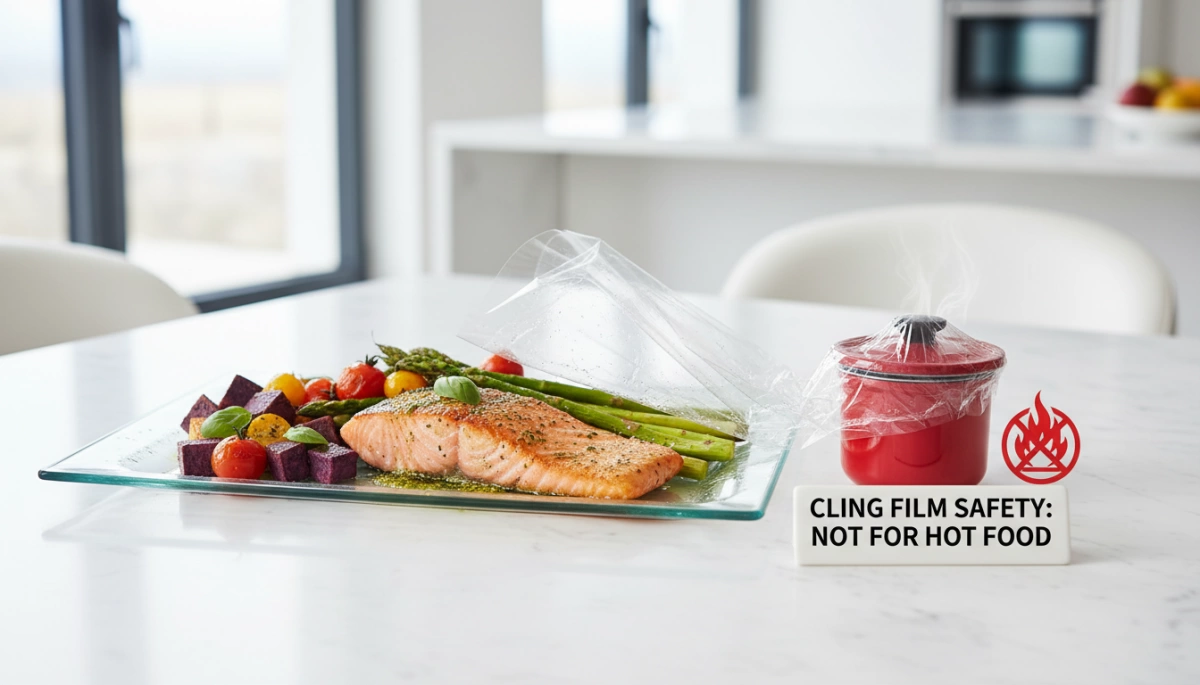
As a manufacturer, we see a lot of confusion regarding exactly how hot plastic wrap can get before it fails. While our Artfullife® PE cling film is engineered for durability, every material has a breaking point. Understanding these thermal limits is the difference between a perfectly reheated meal and a ruined dinner contaminated with melted plastic.
Real-World Heat Thresholds for Microwave Reheating
For standard microwave use, the microwave safe food wrap temperature generally caps at the boiling point of water, which is 212°F (100°C). Our PE (Polyethylene) films are designed to withstand temperatures up to 195°F (90°C) comfortably. However, you need to watch out for the “softening point.”
- PE Softening Point: Begins around 176°F–194°F. The film becomes pliable and may lose tension but remains chemically stable.
- PE Melting Point: Occurs between 230°F–248°F. This is where the structure collapses entirely.
- PVC Limits: PVC films have lower thresholds, often softening as low as 158°F, making them riskier for reheating.
Dangers of Direct Contact with Ovens and Air Fryers
Cling film should never be used in conventional ovens, toaster ovens, or air fryers. These appliances operate at temperatures (350°F+) that far exceed the cling film melting point. Exposure to direct radiant heat or heating elements will cause the film to melt instantly, ruining both the food and potentially damaging the appliance. If you need a cover that withstands high heat or open flames, you are better off learning can you put aluminum foil in microwave or ovens safely, as foil is the correct material for those environments.
High-Fat and Acidic Foods Increase Risks
The biggest hidden danger isn’t the air temperature in the microwave; it’s the food itself. High-fat foods and cling film are a volatile combination. Ingredients like cheese, oils, and fatty meats can reach temperatures well above 212°F very quickly—hotter than boiling water.
- Heat Retention: Fats hold heat and can burn through the film upon contact.
- Chemical Leaching: When superheated fat touches plastic, it accelerates plasticizer migration in cling film. This is why we always recommend leaving a gap between the food surface and the wrap, ensuring the plastic acts as a splash guard rather than a melting lid.
Health and Safety Risks Explained
As a manufacturer, I see a lot of confusion regarding what happens when plastic meets heat. The reality is that temperature changes the molecular stability of the film. When you push cling film past its thermal limits, you aren’t just risking a melted mess; you are inviting potential chemical interactions that compromise food safety.
Chemical Leaching and Plasticizer Migration
The biggest concern with heating plastic wrap is chemical leaching. This is the process where chemicals from the plastic transfer into the food.
- PVC Risks: Traditional PVC films often use plasticizers (like DEHA) to make the material flexible. When heated—especially in contact with fatty foods like cheese or meat—these plasticizers can migrate into your meal. Some of these chemicals are flagged as potential endocrine disruptors.
- PE Safety: At Artfullife, we focus on PE (Polyethylene) cling film, which is inherently BPA-free and phthalate-free. PE does not require the same aggressive plasticizers as PVC, making it a much more chemically stable choice for food contact. However, even with safer materials, heat accelerates molecular movement, so we always advise against direct contact with hot, oily foods.
Melting Points and Contamination
Beyond invisible chemicals, there is the physical risk of the cling film melting point.
- Softening Zone: Our PE cling film begins to soften around 176°F–194°F (80°C–90°C).
- Melting Zone: Actual melting occurs between 230°F–248°F (110°C–120°C).
If the film melts, it can fuse with your food, creating a physical contamination hazard. This is why high-sugar or high-fat foods are dangerous in the microwave; they can get hotter than the boiling point of water (212°F), easily exceeding the film’s heat tolerance. If you need to cover food for high-heat applications like an oven, you should look into the different grades and thicknesses of aluminum foil for food packaging instead of using plastic wrap.
Debunking Myths vs. Facts on Standards
There is a myth that “all plastic is toxic” when heated, but that ignores regulatory science.
- Fact: FDA and EFSA standards strictly regulate food-contact materials. A “microwave-safe” label means the product has been tested to ensure that migration levels remain within safe limits under specific conditions.
- Compliance: Our manufacturing process includes rigorous multi-stage inspections to ensure our PE wraps meet these global safety standards (FDA, CE, RoHS).
- The Caveat: Compliance assumes proper use. Even the highest quality microwave-safe cling wrap is not designed for conventional ovens or prolonged contact with boiling liquids.
Best Practices for Using Cling Film with Hot Food
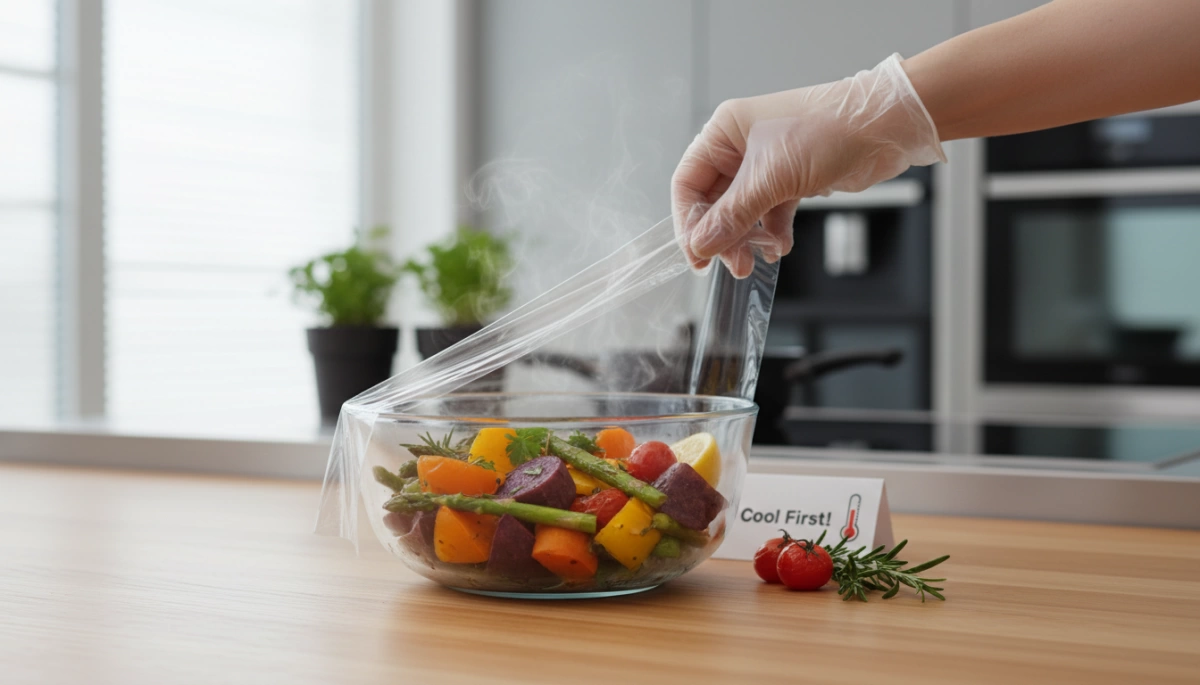
As a manufacturer committed to safety and quality, we know that proper technique is just as important as the material itself. Even high-quality cling film microwave safe products have thermal limits. To prevent the film from melting or shrinking into your meal, you need to follow specific protocols that balance convenience with food safety.
The “One-Inch Rule” for Microwave Safety
The most critical rule for reheating is maintaining a physical barrier. Never let the plastic wrap touch the food directly during heating. We recommend the “one-inch rule”: leave at least one inch (about 2.5 cm) of space between the surface of the food and the film.
When food heats up—especially dishes high in fat, oil, or sugar—localized temperatures can skyrocket well above the boiling point of water (212°F). If the film is in direct contact, these “hot spots” can cause immediate melting or increase the rate of chemical migration. By keeping that air gap, you allow the film to act as a splatter guard and moisture retainer without risking plastic wrap hot food safety.
Venting and Cooling: Essential Steps
Creating a tight seal on a hot dish might seem like a good way to keep food fresh, but in a microwave, it creates a pressure cooker effect. Steam builds up rapidly, which can cause the film to balloon and burst, or worse, warp inward into the food as it cools.
- Vent It: Always turn back one corner of the film or poke small holes in the top before microwaving. This allows excess steam to escape safely.
- Cool It: Never wrap food that is visibly steaming hard or boiling. Let the food cool down until the heavy steam subsides (usually to around 170°F or lower) before covering. This prevents the film from softening prematurely due to intense steam exposure.
Understanding the specific thermal properties of your wrap is vital. For instance, knowing the differences in polyethylene vs. polypropylene for food packaging films helps in selecting the right barrier for different temperature requirements.
Checklist of Do’s and Don’ts for Safe Usage
To keep your kitchen safe and your food chemical-free, stick to this simple guide when handling hot items.
| Category | Action | Why It Matters |
|---|---|---|
| DO | Use PE (Polyethylene) Film | PE is generally BPA-free and contains fewer additives than PVC, making it safer for heating. |
| DO | Use Deep Containers | Allows for the necessary air gap between the food and the rim where the film sits. |
| DO | Vent the Wrap | Prevents dangerous steam burns when removing the cover and stops the film from warping. |
| DON’T | Wrap High-Fat Foods Hot | Cheese, grease, and oils heat up faster than water and can melt film on contact. |
| DON’T | Use in Conventional Ovens | Cling film will melt instantly in toaster ovens or standard ovens; it is not heat-resistant like foil. |
| DON’T | Reuse Heated Film | Once film has been exposed to microwave heat, its structure is compromised. Dispose of it properly. |
When to Avoid Cling Film Altogether
While our Artfullife® PE cling films are engineered for high clarity and general food safety, there are specific high-heat scenarios where plastic wrap hot food safety is compromised. Knowing these hard limits protects your food from contamination and your kitchen from a messy cleanup.
Strict Warnings for Ovens, Grills, and Stovetops
Standard cling film, whether PE or PVC, is never oven-safe. The cling film melting point for Polyethylene (PE) sits between 230°F and 248°F (110°C–120°C). Since most baking and roasting happens at 350°F (175°C) or higher, the film will melt almost instantly, ruining both the food and the cookware.
Avoid using cling film in these environments:
- Conventional & Convection Ovens: Even at low settings, the radiant heat is too intense.
- Toaster Ovens & Air Fryers: The heating elements are too close to the food, causing rapid melting.
- Stovetops & Grills: Never cover a pot while it is actively boiling or simmering on a burner.
- Broilers: Direct exposure to high heat will cause the film to shrink and burn within seconds.
Handling Very Hot, Fatty Dishes
High-fat foods and cling film are a risky combination when heat is involved. Fats, oils, and sugars can reach temperatures significantly higher than the boiling point of water (212°F/100°C). If you pull a cheesy lasagna or a greasy roast directly from the oven and wrap it immediately, the surface temperature of the fat can melt the film on contact.
For these types of meals, we strongly recommend transferring them into heat-resistant stainless steel lunch box containers or waiting for the food to cool completely. This prevents the plastic from warping or leaching chemicals into the oily layers of your meal.
Risks of Prolonged High-Heat Exposure
Even if the temperature is below the melting point, prolonged exposure to heat (like under a heat lamp or in a warming drawer) can cause the film to soften excessively. This weakens the structural integrity of the wrap and increases the likelihood of chemical leaching from cling film, especially with PVC varieties.
Follow these “Red Light” rules:
- Do not use cling film in slow cookers or crockpots.
- Do not use wrap to line baking sheets for hot food.
- Do not let the film touch food that is visibly steaming heavily.
If you need to store hot liquids or soups, consider using durable silicone food bags instead, which offer far superior heat resistance and stability compared to thin plastic films.
Safer and More Sustainable Alternatives to Cling Film
While our PE cling film is engineered for safety and versatility, we understand that certain high-heat scenarios or zero-waste goals call for different tools. As a manufacturer committed to the “Innovate Green” philosophy, we believe in using the right material for the job to ensure food safety and environmental responsibility.
Reusable Lids and Containers
For food that is extremely hot or requires long-term reheating, reusable barriers are often the best choice.
- Silicone Lids: These flexible covers create an airtight seal and can withstand significantly higher temperatures than plastic wrap without warping. If you need flexible covers that handle high temperatures, silicone-wrapped lunch boxes for heat protection offer excellent thermal stability.
- Glass & Stainless Steel: Transferring hot leftovers directly into glass or metal containers eliminates the risk of plastic migration entirely. For meal prep that involves reheating, a stainless steel lunch box with leakproof design is often the most durable choice for handling hot contents safely.
Why Choose Artfullife® PE Films?
When you do need the convenience of wrap, choosing the right type matters. Unlike traditional PVC wraps that may contain harmful plasticizers, our Artfullife® PE (Polyethylene) cling films are BPA-free and phthalate-free. We focus on eco-friendly food wrap solutions that balance performance with safety.
Our Sustainable Advantages:
- Material Safety: We use LDPE which is chemically stable and safe for microwave reheating (up to 212°F/100°C).
- Recyclability: Our PE films are fully recyclable, reducing landfill impact compared to PVC.
- Biodegradable Options: We are actively developing and supplying biodegradable cling film alternatives that break down naturally, aligning with global sustainability trends.
Comparison: When to Use Which Alternative
| Material Type | Best Application | Heat Resistance | Eco-Impact |
|---|---|---|---|
| Artfullife® PE Film | Short-term storage, microwave reheating, covering cold salads | Moderate (Microwave Safe) | High (Recyclable/BPA-Free) |
| Silicone Lids | Covering bowls during cooking, splatter guards | High (Oven Safe) | Reusable (Zero Waste) |
| Stainless Steel | Hot food transport, heavy-duty storage | Very High (Fire/Oven Safe) | Durable (Long Lifespan) |
| PVC Wrap | Not Recommended for Food Contact | Low (Risk of Leaching) | Low (Hard to Recycle) |
By switching to safe alternatives to cling film for high-heat cooking and using our certified PE wraps for daily storage, you optimize both kitchen safety and environmental footprint.
Frequently Asked Questions (FAQ)
Is cling film safe in the microwave?
Yes, but you must use microwave-safe cling wrap made from Polyethylene (PE) and follow strict usage guidelines. While our PE films are designed to withstand reheating temperatures, you should never allow the film to touch the food directly. High-fat or sugary foods can reach temperatures exceeding 212°F (100°C) very quickly, which may cause the cling film melting point to be breached. Always leave a gap of at least one inch between the food and the wrap, and turn back one corner to vent steam.
Does cling film cause cancer or hormone issues?
Concerns about health risks generally relate to older PVC films containing plasticizers like DEHA or phthalates, which can act as endocrine disruptors. At Artfullife, we manufacture BPA-free plastic wrap using LDPE (Low-Density Polyethylene), which is free from these harmful plasticizers. Using PE wrap significantly minimizes chemical leaching from cling film, making it a safer choice for your family compared to traditional PVC options.
Can I use cling film for poaching eggs or sous-vide?
We strongly advise against using standard cling film for direct cooking in boiling water or sous-vide baths. Standard PE cling film begins to soften between 176°F and 194°F (-57°C to +90°C). Since poaching occurs near boiling (212°F), the structural integrity of the film can fail, leading to plasticizer migration in cling film or melting. For these cooking methods, specialized high-heat vacuum bags are the only safe alternative.
What is the best cling film for hot food safety?
The safest option for any heat-related application is high-quality Polyethylene (PE) film. Unlike PVC, PE is chemically stable and does not require aggressive additives to remain flexible. When evaluating different types of food preservative films, always look for FDA-compliant, LDPE-based materials. These provide the best balance of PE vs PVC cling film safety, ensuring your food stays protected without the risk of chemical contamination during reheating.