

















Understanding Poultry Packaging Cling Film
When you pack raw chicken or turkey, you’re not just “covering a tray.” The poultry packaging cling film you choose directly affects freshness, safety, appearance, and shelf life.
What Cling Film Actually Does for Poultry
In professional poultry packaging, poultry cling wrap has four core jobs:
- Protect – Creates a clean barrier between raw poultry and the environment, reducing drip, odor, and cross-contamination.
- Preserve – Controls oxygen exposure to support color retention and slow spoilage in fresh chicken wrap and turkey.
- Contain – Keeps juices inside the tray, helping maintain leak-proof poultry packaging during transport and display.
- Present – Offers high-clarity poultry wrap so products look fresh and appealing in the case, from retail chicken packaging to wholesale packs.
Whether it’s fresh, chilled, or frozen poultry, the right meat overwrap film must stay tight, clear, and safe in real-world conditions.
How Poultry Cling Film Differs from Kitchen Wrap
Regular kitchen wrap is made for home use. Professional poultry tray overwrap is engineered for:
- Stronger stretch and cling to lock onto foam or PET trays without popping loose.
- Better puncture resistance for bone-in poultry film so sharp bones don’t tear through.
- Controlled oxygen permeability to balance poultry shelf life extension with attractive meat color.
- Food-safe migration limits specifically tested for raw poultry contact and long cold storage.
- Machine overwrapping compatibility, not just hand wrapping on a counter.
That’s why supermarkets, processors, and butcher shops rely on dedicated chicken packaging film instead of generic household wrap.
Where Poultry Cling Film Is Used
You’ll see food-safe cling film across the entire poultry supply chain in the US:
- Supermarket poultry wrap – Tray overwrap for poultry in chilled display cases, especially anti-fog cling film for clear visibility.
- Deli poultry packaging – Wrapped marinated chicken, cooked turkey, and prepared items needing strong cling and clarity.
- Butcher shop cling film – Custom-cut poultry packed with puncture-resistant food wrap for both bone-in and boneless cuts.
- Commercial processors – High-speed poultry display film and freezer-safe poultry wrap designed for automated lines and cold-chain logistics.
In my own operation, I focus on PE-based meat wrap that delivers the strength, oxygen control, and sustainability today’s eco-friendly poultry packaging demands—without sacrificing performance on the counter or in the case.
Cling Film Materials for Poultry
PVC Poultry Cling Film: Where It Still Fits
PVC poultry cling film used to be the standard for chicken and turkey trays. It’s clear, flexible, and has good cling and breathability.
Pros:
- Excellent clarity for retail poultry display film
- Strong cling and stretch for tight tray overwrap
- Good oxygen permeability for fresh chicken color
Cons:
- Not widely recyclable in the U.S.
- Contains plasticizers that many retailers now avoid for raw poultry
- Growing pressure from retailers and consumers to move away from PVC in meat overwrap film
Today, PVC poultry cling wrap mainly shows up in legacy operations and some low-cost supermarket poultry wrap programs that haven’t switched yet.
PE Poultry Cling Film: Safer, Recyclable Options
As a PE cling film factory, this is where we focus. PE meat wrap is now the go-to for poultry tray overwrap in many U.S. supermarkets and butcher shops.
Why PE poultry cling wrap is winning:
- Food-safe cling film with no plasticizers
- Compatible with existing tray overwrap machines
- Better fit for recyclable food cling streams where available
- Stronger puncture resistance for bone-in poultry film
- Can be tuned for the right oxygen permeable wrap balance (fresh color + decent shelf life)
For brands already investing in greener packaging or testing edible preservative films or coatings, PE is often the base material that makes the system work.
Plant-Based & Biodegradable Poultry Wrap
Plant-based and compostable cling film for poultry is growing, especially for natural, organic, or premium chicken programs. These films are usually made from bio-based polymers (like PLA blends or other compostable resins) and are designed to break down under industrial composting conditions.
Key points:
- Good for eco-friendly poultry packaging and brand storytelling
- Works well for deli poultry packaging and lower-stress items (boneless cuts, marinated chicken)
- Needs careful testing on freezer-safe poultry wrap applications and bone-in products
- Real performance (strength, fog control, seal) depends heavily on the specific material blend
If you’re considering this route, you’ll want to compare how these films are made versus traditional plastics—similar to how we break down the manufacturing process for food storage bags when we build new product lines.
How Material Impacts Clarity, Seal & Shelf Life
Your cling film material directly affects how your chicken and turkey look and how long they last:
- Clarity & gloss
- PVC: very high clarity
- PE: high-clarity poultry wrap is achievable with the right resin mix
- Plant-based: varies; some are slightly hazier
- Seal & leak control
- PE usually wins on toughness and leak-proof poultry packaging, especially for juicy, high-drip products
- Shelf life & oxygen control
- Higher oxygen permeability keeps fresh chicken pink but shortens shelf life
- Lower oxygen permeability extends shelf life but can darken color faster
- The trick is matching film type (PVC, PE, plant-based) and thickness to your chicken or turkey cut, bone level, and distribution time
In the U.S. market, we’re seeing more chains standardize on PE meat wrap as the sweet spot between food safety, strength, recyclability, and consistent poultry shelf life extension.
Key Performance Features for Poultry Packaging Cling Film
When we design poultry packaging cling film for the U.S. market, I focus on 5 core performance points: puncture resistance, oxygen control, anti-fog, cling & leak protection, and food safety. If any of these fail, you see leaks, rewraps, and shrink in your poultry department.
Puncture Resistance for Bone-In Poultry Cuts
Bone-in chicken and turkey are brutal on weak wrap. A good poultry cling wrap must handle sharp edges without tearing.
What matters:
- Film thickness:
- Boneless cuts: 10–12 mic
- Mixed / small bones: 12–14 mic
- Heavy bone-in (drumsticks, thighs, whole birds): 14–17 mic
- High stretch + rebound so the film flexes around bones instead of popping.
- Tight but not brittle – especially in cold rooms.
| Product Type | Recommended Film Feature |
|---|---|
| Boneless chicken breast | Standard PE meat overwrap film |
| Drumsticks / thighs | Puncture-resistant food wrap, thicker PE |
| Whole chicken / turkey | High-stretch, heavy-gauge bone-in film |
Oxygen Permeability & Color Retention
Fresh chicken and turkey need oxygen permeable wrap to keep that natural pink/light color and avoid “wet” or gray look.
- Controlled oxygen transmission (OTR): lets meat “breathe” without drying out.
- Prevents color fading and keeps trays looking fresh longer.
- Works especially well for retail chicken packaging that sits 1–3 days in open cases.
Rule of thumb:
- Too low OTR = pale, unattractive meat.
- Too high OTR = faster spoilage and drip loss.
Anti-Fog Properties for Display Cases
If your film fogs, your display loses sales. Our anti-fog cling film keeps poultry visible in chilled cabinets.
- Anti-fog coating spreads condensation into a clear layer instead of droplets.
- Ideal for:
- Supermarket poultry wrap in open refrigerated cases
- Deli poultry packaging and meat cabinets
- Boosts poultry display film clarity, so customers clearly see freshness and color.
| Environment | Recommended Feature |
|---|---|
| Open refrigerated case | Anti-fog, high-clarity film |
| Door reach-in coolers | Anti-fog optional but useful |
For more ideas on moisture and clarity control, some customers also pair overwrap with sealed packaging solutions similar to the sealed zipper bag concepts we’ve explored.
Cling Strength, Stretch & Leak Control
For juicy poultry packs, cling strength and stretch are what stop leaks and rewraps.
- Strong cling: film grips tray bottoms and sides without tape.
- High stretch: lets you pull tight overwrap on automatic or manual machines.
- Leak control: tight film + proper stretch reduces purge on shelves and during transport.
Key targets for poultry tray overwrap:
- Tight corners with no folds sticking up.
- No loose film under tray.
- Minimal drip in the case, even after 24–48 hours.
Food Safety Standards & Migration Limits
Any food-safe cling film that touches raw poultry in the U.S. must meet strict regulations.
- Compliant with FDA food contact regulations (e.g., 21 CFR for food packaging materials).
- Low migration: additives stay in the film, not in your chicken.
- No harmful plasticizers in direct contact with meat (a key advantage of modern PE meat wrap over older PVC in many cases).
When I spec film for customers, I insist on:
- Full food contact documentation & test reports
- Clear migration limit data for raw meat and poultry contact
- Traceable production and quality checks on every batch
Bottom line: the right poultry packaging cling film combines strength, oxygen control, clarity, anti-fog, and certified safety. If one piece is missing, you pay for it in lost shelf life, messy cases, and product shrink.
Types of Poultry Packaging Cling Film in the Market
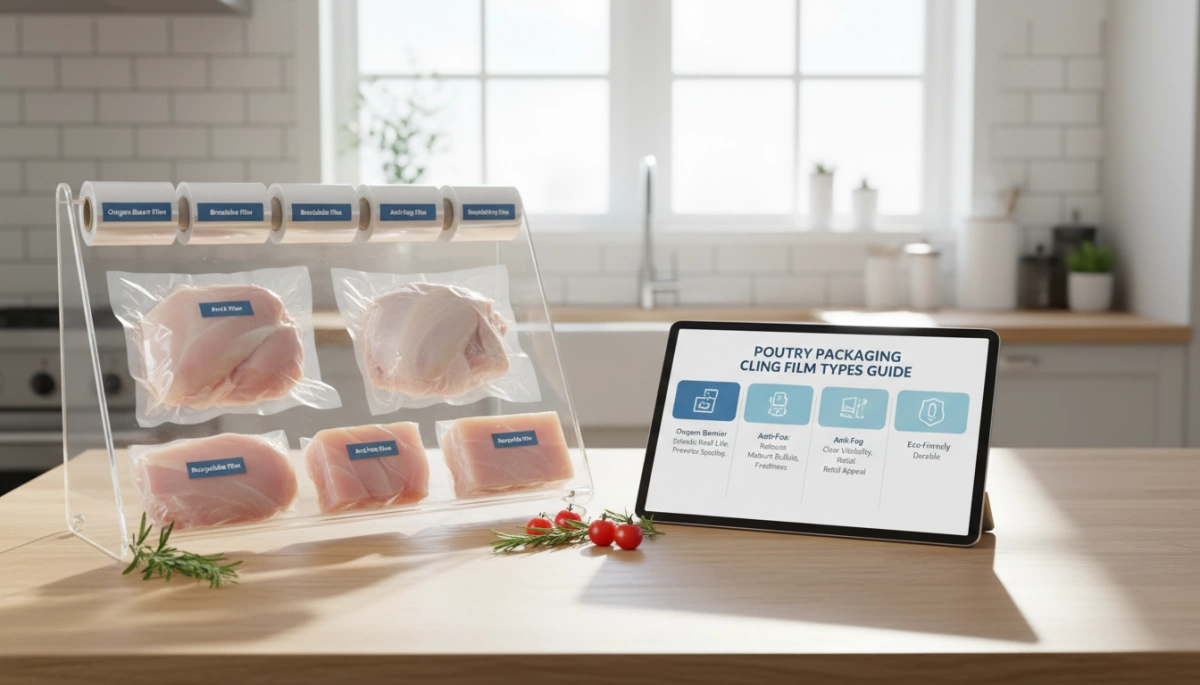
Traditional PVC Poultry Overwrap Film
PVC poultry cling film is the “old standard” for supermarket chicken trays. It’s clear, stretches well, and has good oxygen permeability for fresh poultry color. But it comes with downsides:
- Not widely recyclable in the U.S.
- Ongoing concerns about plasticizers and food contact safety
- Increasing pushback from retailers looking for more sustainable poultry packaging
PVC poultry cling wrap still shows up in legacy operations, but most new projects are moving toward PE or plant-based options.
PE-Based Meat and Poultry Tray Overwrap
PE (polyethylene) meat overwrap film is where we focus as a factory because it fits what U.S. processors and retailers actually need now:
- Food-safe cling film with no plasticizers
- Better recyclability vs PVC in many local programs
- Strong, puncture-resistant food wrap for bone-in poultry
- Great clarity and gloss for retail chicken packaging
For poultry tray overwrap, PE cling film has become the go‑to option for supermarkets, butcher shops, and deli poultry packaging that want safer, more sustainable meat overwrap film.
Biodegradable and Compostable Poultry Wrap
Biodegradable poultry wrap and compostable cling film are growing fast in eco‑focused and premium poultry brands. These plant-based cling films:
- Use materials like PLA or other bio-based resins
- Offer solid clarity and decent stretch for fresh chicken wrap
- Support eco-friendly poultry packaging and brand storytelling
You’ll see these more in specialty retailers and brands already educating shoppers about compostable packaging and types of food preservative films.
Specialty Poultry Display Films
For tougher applications, specialty poultry display film and freezer-safe poultry wrap step in:
- Anti-fog cling film for chilled display cases so packs stay clear, not cloudy
- High-clarity poultry wrap to make color and texture pop at retail
- High-barrier oxygen permeable wrap tuned for poultry shelf life extension
- Freezer-grade poultry wraps that resist brittleness, tears, and freezer burn
These specialty meat overwrap films are what serious retailers use when they’re done dealing with leaks, fogged packs, and short shelf life in their supermarket poultry wrap programs.
Why the Right Poultry Packaging Cling Film Matters
Choosing the right poultry packaging cling film isn’t just a packaging decision—it directly impacts freshness, safety, and your bottom line.
How to Choose the Best Poultry Packaging Cling Film
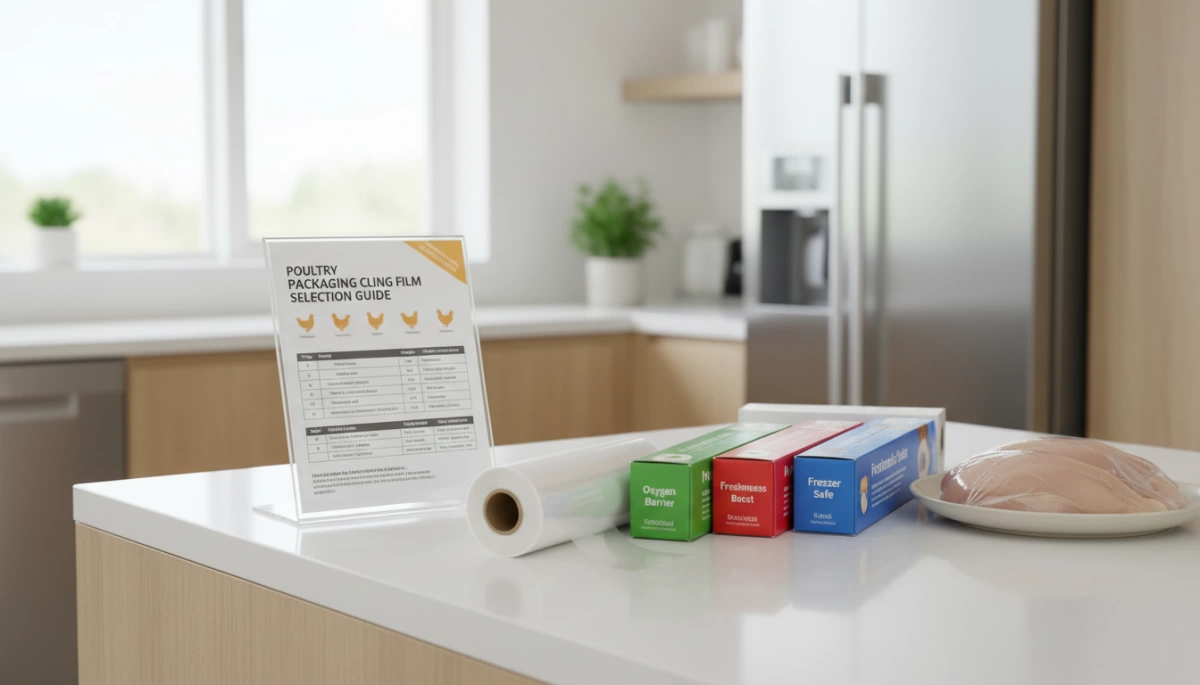
Choosing the right poultry packaging cling film is all about fit: product type, equipment, and your store workflow. Here’s how I look at it when helping U.S. poultry processors, supermarkets, and butcher shops switch to PE poultry cling wrap.
Match Film Thickness to Poultry Type
Use thickness to control puncture resistance, leak control, and cost.
| Poultry Type / Use | Suggested Thickness Range | Notes |
|---|---|---|
| Boneless chicken breasts, thighs | 10–12 mic | Good clarity and stretch, cost-effective |
| Small bone-in cuts (drumsticks, wings) | 12–14 mic | Better puncture-resistant food wrap |
| Whole chicken / turkey parts (bone-in) | 14–18 mic | Extra strength, fewer rewraps |
| Frozen chicken pieces | 14–18 mic | Helps reduce tears in handling |
Rule of thumb: more bone and more handling = thicker PE chicken packaging film.
Pick the Right Roll Size for Your Setup
- Manual wrapping (butcher counter / small deli):
- Common widths: 11″–18″
- Lighter rolls are easier for staff to handle all day.
- Automatic or semi-auto overwrappers (supermarkets / processors):
- Common widths: 13″–20″+
- Larger OD rolls reduce changeovers and downtime.
Always align roll width with your tray sizes to cut waste and speed up wrapping.
Check Machine Compatibility and Stretch Behavior
Not every meat overwrap film runs the same on every wrapper.
- Confirm core size, roll diameter, and unwind direction match your machine.
- Test stretch behavior:
- Too tight: film thins, easier to puncture on bone-in poultry.
- Too loose: poor seal, leakers, and messy shelves.
- For high-speed lines, ask for a film designed for automatic tray overwrap for poultry to avoid snap-back and wrinkles.
Test Performance: Fridge, Freezer, and Display
PE poultry cling wrap has to look good and perform from backroom to cart.
- Chilled display:
- Check anti-fog cling film options so packs stay clear in cold cases.
- Look for oxygen permeable wrap to keep fresh chicken color stable.
- Refrigerated storage:
- Watch for seal hold and juice control over several days.
- Freezer use:
- Ask for freezer-safe poultry wrap and check for brittleness and cracks after freezing.
You can also learn more about how different plastic formulations affect food protection and shelf life in this breakdown of common preservative film materials and their performance.
Balance Price, Performance, and Sustainability
For most U.S. customers, the “best” poultry display film is the one that hits all three:
- Cost:
- Thinner film lowers price per roll, but can increase leakers and labor.
- Track total cost per wrapped tray, not just cost per pound of film.
- Performance:
- Strong seals, clear optics, and leak-proof poultry packaging cut shrink and rewraps.
- Sustainability:
- Choose PE meat wrap that’s recyclable where facilities exist.
- If your brand pushes eco-friendly poultry packaging, consider biodegradable poultry wrap for premium lines.
When I design PE poultry cling film for our own factory, this is exactly the balance I optimize for: oxygen control, strength, and clarity without blowing up your packaging budget.
Sustainable Poultry Packaging Options
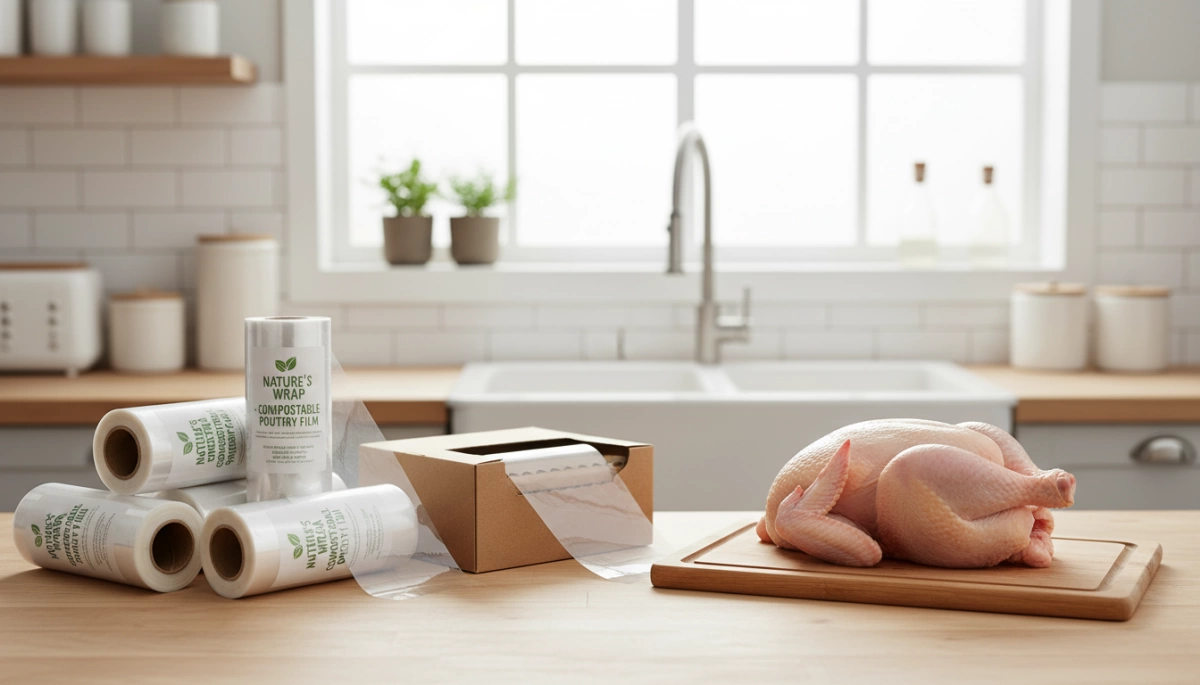
Biodegradable Poultry Wraps & Compostable Cling Film
For poultry, I’m seeing more buyers move from PVC to biodegradable poultry wrap and compostable cling film made from plant-based materials like PLA or modified starch.
Quick facts:
| Option | Works Best For | Key Benefits | Watch-Outs |
|---|---|---|---|
| Compostable cling film | Fresh chicken trays, deli poultry | Lower footprint, compostable in right system | Needs certified composting stream |
| Plant-based poultry wrap | Premium retail, eco lines | Great for branding, clean-label messaging | Usually higher cost per roll |
If your store already promotes reusable lunch gear like stainless steel food containers with BPA-free materials, compostable cling film fits naturally into that same “low-waste” story.
Recyclable Cling Film Choices for Meat and Poultry
As a PE cling film factory, I focus on recyclable PE meat wrap for poultry tray overwrap. Compared with mixed-material wraps, mono-PE structures are easier to recycle in U.S. film recycling streams (where available).
Why PE poultry cling wrap is winning:
- Recyclable structure (where programs exist)
- Food-safe cling film with stable performance on raw chicken and turkey
- Good balance of strength, stretch, and leak control
- Compatible with most poultry tray overwrap lines
PVC vs PE vs Plant-Based: Environmental Impact
| Film Type | Recyclability | Typical Use Today | Environmental Notes |
|---|---|---|---|
| PVC poultry cling film | Hard to recycle | Legacy supermarket wraps | Additives, disposal and incineration concerns |
| PE chicken packaging film | Widely recyclable* | Modern meat overwrap film | Lower impact, simpler stream, no chlorine |
| Plant-based cling film | Industrial composting | Eco-focused or premium poultry lines | Best when composting access is available |
*Where store drop-off or film recycling exists.
PE is the best “bridge” option: more sustainable than PVC, easier for operations than most compostables, and familiar to U.S. recyclers.
How Eco-Friendly Poultry Cling Film Affects Operations & Branding
Switching to eco-friendly poultry packaging doesn’t just cut waste—it changes how customers see your brand and how your backroom runs.
Operational impact:
- Similar wrapping speed if you stay with PE meat wrap
- Fewer complaints about odor vs some PVC films
- Easier messaging around food contact safe film and recyclability
Branding impact:
- Stronger sustainability story on retail chicken packaging
- Higher trust with younger, eco-aware shoppers
- Easier to align poultry with other eco products like reusable lunch boxes and containers, which many U.S. families already use.
If you want to cut PVC, improve shelf appeal, and talk honestly about sustainability, PE-based recyclable poultry display film plus selected compostable cling films for premium lines is the most practical path right now.
Artfullife® Solutions for Poultry Cling Film

Artfullife® biodegradable & compostable poultry films
I design Artfullife® poultry cling film to give you a real alternative to PVC without losing performance. Our biodegradable poultry wrap and compostable cling film are:
- Made from plant-based and PE-based materials for food-safe cling film that meets U.S. food-contact standards
- Engineered for poultry tray overwrap, deli packs, and butcher counter use
- Built to help retailers shift to eco-friendly poultry packaging without reworking their entire operation
For buyers who also manage bags, our approach is similar to what we do with our eco-friendly food storage bags: lower impact, same or better usability.
Strength, clarity & oxygen control in Artfullife® meat wraps
Our PE meat wrap for poultry is tuned for the three things U.S. retailers care about most:
- Strength & puncture resistance: Holds up to bone-in poultry film needs, reducing leaks and rewraps
- High clarity poultry wrap: Clean, glossy shelf look that makes fresh chicken and turkey pop in the case
- Controlled oxygen permeability: Enough oxygen permeable wrap for good color on fresh poultry, with tight poultry shelf life extension targets
You get a poultry cling wrap that’s tough, clear, and stable in real-world cold-chain conditions.
How butchers, delis & supermarkets use Artfullife® cling film
I see our poultry packaging cling film used across:
- Butcher shops: Daily wrap for fresh chicken pieces, bone-in cuts, and marinated poultry
- Delis: Deli poultry packaging for sliced turkey and cooked chicken, using anti-fog cling film for clean display doors
- Supermarkets: High-volume poultry display film on automatic overwrappers for retail chicken trays and bulk pack programs
In most cases, stores swap out PVC and move to our recyclable food cling or biodegradable poultry wrap with minimal retraining.
Support, custom sizes & supply options from Artfullife®
As a PE cling film factory, I keep things simple for U.S. buyers:
- Custom sizes & gauges: Roll widths, lengths, and thickness dialed in for your exact retail chicken packaging and freezer-safe poultry wrap needs
- Machine-ready options: Rolls built for both manual wrapping and automatic meat overwrap machines
- Steady supply: Consistent lead times and volume support for chains, distributors, and regional processors
If you’re looking to move from PVC to sustainable meat packaging and want a film that just works, Artfullife® poultry cling film is built for that switch.
Best Practices for Wrapping Poultry with Cling Film
Manual Wrapping Techniques for Poultry Trays & Loose Cuts
For manual poultry wrapping, consistency is everything. Whether you’re using poultry cling wrap on foam trays or loose cuts, dial in a simple, repeatable process:
- Keep film tight and smooth – Stretch the chicken packaging film firmly over the tray, pull under the bottom, and seal on the underside so the top stays clean, clear, and drip‑controlled.
- Double-wrap bone-in cuts – For bone-in poultry film applications (drumsticks, thighs, wings), add an extra turn under the tray or a small patch layer where bones might poke through.
- Avoid trapped air – Press gently around the product to push out air pockets before the final pull; this improves leak control and poultry shelf life extension.
- Keep the sealing area dry – Wipe tray bottoms quickly so the meat overwrap film grabs and holds. Wet plastic kills cling strength and leads to rewraps.
Machine Overwrapping Tips for Consistent Seals
If you’re running an overwrap machine for supermarket poultry wrap or deli poultry packaging, small tweaks make a big difference:
- Match film to machine – Use PE meat wrap designed for tray overwrap for poultry; wrong friction or stretch behavior causes film breaks and loose packs.
- Set proper tension and temperature – Too much tension = punctures; too little = loose film. Heat should be just enough to seal without shrinking or clouding the high-clarity poultry wrap.
- Check corners and bottom seams – Corners are the first place leaks show. Make sure the film is tucked and sealed tightly on the underside.
- Run test wraps for new films – When you switch to eco-friendly poultry packaging or a new roll width, run a short test and lock in new settings.
Storing & Handling Poultry Cling Film Rolls
Good storage keeps your food-safe cling film performing the way it should:
- Store at stable room temperature – Avoid hot back rooms and direct sun; heat can affect stretch, clarity, and cling.
- Keep rolls dry and clean – Moisture and dust on the edges create wrinkles and sealing issues, especially for anti-fog cling film.
- Use first-in, first-out – Rotate stock so older freezer-safe poultry wrap gets used first.
- Protect from crushing – Don’t stack heavy cases on rolls; it can warp cores and cause uneven unwinding.
Many operations that use poultry cling wrap are also looking at other packaging improvements such as stainless steel food containers with pressure release valves to streamline storage and merchandising.
Common Poultry Wrapping Mistakes to Avoid
Here are the issues that waste the most time and money in retail chicken packaging and butcher shop cling film use:
- Film too thin for the product – Using light film on bone-in chicken or heavy turkey pieces leads to punctures and leaks. Step up the gauge for bone-in poultry film.
- Overstretching the wrap – Overshooting the stretch weakens puncture resistance and cling strength. Let the film’s built‑in elasticity do the work.
- Ignoring fogging – If your chilled display cases fog over, switch to anti-fog poultry display film to protect visibility and customer confidence.
- Poor hygiene at the wrap station – Cross-contamination risk jumps when raw poultry drip touches tables, cutters, or roll surfaces. Sanitize often and keep a strict raw-only zone.
Dialing in these basics keeps your sustainable meat packaging tight, clean, and reliable—with fewer leaks, fewer rewraps, and better-looking poultry on the shelf.
Real-World Poultry Packaging Examples
Supermarkets improving poultry display
In U.S. supermarkets, the biggest shift we see is moving from PVC poultry cling film to high-clarity PE poultry tray overwrap. When retailers switch to oxygen permeable wrap with strong anti-fog, they typically see:
- Brighter, more stable chicken color in the case
- Far fewer leakers and rewraps on bone-in trays
- Better shelf life and less markdown on fresh chicken and turkey
One Midwest chain that moved to our PE meat overwrap film on all fresh chicken SKUs cut rewraps by over 25% and reported cleaner display cases with less drip and odor.
Butcher shops upgrading from PVC to biodegradable poultry wrap
Independent butcher shops are using biodegradable poultry wrap as a clear point of difference. When they replace PVC poultry cling film with plant-based or compostable PE alternatives, they get:
- Food-safe cling film with solid stretch and puncture resistance for bone-in poultry
- A visible sustainability story they can share at the counter
- Less plastic guilt for regulars buying fresh chicken wrap every week
Most shops keep one bone-in poultry film (slightly thicker, higher strength) and one everyday eco-friendly poultry display film for boneless cuts and marinated chicken.
Traditional vs eco-friendly poultry films in practice
When we compare traditional PVC meat overwrap film to eco-friendly PE or plant-based cling film in real operations, three things stand out:
- Leak control: Modern PE poultry cling wrap can match or beat PVC on seal and leak resistance
- Clarity: High-clarity poultry wrap in PE now delivers the same “glossy” look shoppers expect
- Operations: No chlorine, better recyclability, and fewer headaches with local sustainability goals
Processors that combine PE-based poultry tray overwrap with better logistics, like the support we outline in our guide to global cling film export and supply chain logistics, see smoother rollouts chain-wide.
Lessons from commercial poultry packers
Large poultry packers care about speed, consistency, and compliance. From our work with them on poultry cling wrap lines, the key lessons are:
- Match film thickness to cut type: wings and drumsticks need tougher, puncture-resistant food wrap
- Test oxygen permeability by SKU: some items need more bloom, others need more barrier
- Always trial films on actual lines: performance on auto overwrappers at speed matters more than lab specs
- Sustainability sells: switching to recyclable food cling or eco-friendly poultry packaging helps with retailer scorecards and brand image
When operations choose the right chicken packaging film up front, they cut waste, protect product, and stay ready for stricter food-contact and sustainability rules.
Poultry Packaging Cling Film FAQs
Is cling film safe for raw poultry?
Yes—if it’s certified food-safe cling film and used correctly.
- Use FDA-compliant food contact safe film designed for meat and poultry.
- Look for documentation on overall migration limits, BPA-free, and phthalate-free (especially vs older PVC films).
- For USDA‑inspected plants, your poultry cling wrap must meet USDA and FDA food-contact rules and be suitable for cold-chain use.
- Always keep raw chicken and turkey fully wrapped to prevent cross-contamination in the case, fridge, or cart.
Can I use biodegradable cling film for bone-in chicken and turkey?
Yes, but it needs to be engineered for bone-in poultry.
- Choose puncture‑resistant biodegradable poultry wrap with good stretch and toughness.
- Make sure it’s tested for bone-in poultry film applications (drumsticks, whole birds, turkey pieces).
- Check recommended storage temp and shelf life; not all compostable films are freezer-safe poultry wrap.
Why does oxygen permeability matter for poultry freshness?
Oxygen permeability is key to how fresh poultry looks and how long it lasts.
- Oxygen permeable wrap helps maintain that natural pink color in fresh chicken and turkey.
- Too high permeability = faster oxidation, odor, and shorter poultry shelf life.
- Too low (high-barrier) can cause color shifts and off-notes if not matched to product type.
- Our PE chicken packaging film is tuned to balance color, drip control, and shelf life for U.S. retail.
Is PVC cling film still a good option for poultry?
PVC poultry cling film is still used, but many US retailers are moving away from it.
- Pros: strong cling, high clarity, good for meat overwrap film on trays.
- Cons: plasticizer concerns, recycling challenges, and growing retailer restrictions.
- Most chains now prefer PE-based meat wrap or eco‑friendly poultry packaging to reduce regulatory and sustainability headaches and improve brand image.
- If you’re comparing cost, consider total cost (leaks, spoilage, rewraps) like we break down in our analysis of the cost-effectiveness of modern preservative film vs traditional packaging at EcoArtfullife.
How and where can I buy high-quality sustainable poultry cling film?
You can source sustainable poultry packaging directly from us as a PE cling film factory.
- We offer recyclable food cling and biodegradable poultry wrap for supermarket poultry trays, butcher counters, and deli cases.
- Custom poultry tray overwrap sizes, roll lengths, and core specs available for both manual and automatic overwrap machines.
- We support U.S. customers with samples, spec sheets, and guidance on switching from PVC to PE meat wrap or plant‑based options.
If you’re upgrading your supermarket poultry wrap program or private label, reach out to our team—we’ll match the right high-clarity poultry wrap to your products, equipment, and sustainability targets.