














Bottom line up front: If you want to source eco-friendly kitchenware in China efficiently in 2026, define the exact material standard first, shortlist export-ready factories second, and verify compliance before you place a deposit.
For retailers, distributors, and private label brands, the biggest mistake is buying an eco claim instead of buying a material system, quality standard, and production plan you can actually audit. China still leads this category because strong supply chains, tooling support, packaging coordination, and export experience can often sit under one supplier relationship, reducing handoffs, delays, and quality risk when timelines get tight.
This guide focuses on the buyer checks that matter most before sampling and before mass production: product definition, supplier capability, compliance documents, MOQ, lead time, packaging, and repeat-order consistency.
Bottom line up front
If you want to source eco-friendly kitchenware in China efficiently in 2026, the fastest path is to define the exact material standard first, shortlist export-ready factories second, and verify compliance before you place a deposit. For retailers, distributors, and private label brands, the biggest mistake is buying an eco claim instead of buying a material system, quality standard, and production plan you can actually audit.
After more than 18 years in export manufacturing, we have seen the same pattern again and again: the buyers who move fastest are not the ones who request the lowest price first. They are the buyers who lock product scope, compliance documents, sample criteria, MOQ, lead time, and packaging details before mass production starts.
Why China still leads eco-friendly kitchenware sourcing
China remains the most practical sourcing base for eco-friendly kitchenware because it combines material supply chains, tooling capability, packaging support, and export experience in one place. A serious supplier can move from concept discussion to sample development, lab testing, custom packaging, and bulk production without forcing the buyer to coordinate multiple factories.
For B2B buyers, that matters because fewer handoffs usually mean fewer delays, lower defect risk, and better accountability when a timeline gets tight.
Start with the right definition of eco-friendly
Before you compare quotations, define what eco-friendly means for your product line. In practical sourcing terms, most kitchenware projects fall into three groups:
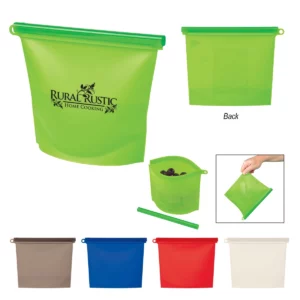
- Reusable products: silicone food storage bags, lunch boxes, durable cleaning tools, and long-life kitchen accessories.
- Recyclable products: aluminum foil products, mono-material packaging, and selected PE-based storage products where recycling infrastructure exists.
- Biodegradable or compostable products: only suitable where the material, application, and disposal conditions are clearly understood.
If your target market is a supermarket group or distributor, you should define the claim at product level, not brand level. A reusable silicone bag and a recyclable foil product cannot share the same compliance logic, testing plan, or consumer messaging.
Choose suppliers based on capability, not only on catalog size
A polished catalog does not prove factory depth. When we evaluate a manufacturing partner or when buyers evaluate us, the real signals are operational:
- Can the supplier explain raw material grades in clear, commercial language?
- Can they support OEM or ODM work instead of only stock goods?
- Can they quote realistic MOQ and lead time instead of making vague promises?
- Can they provide food-contact, packaging, or environmental documentation relevant to your market?
- Can they maintain quality consistency across repeat orders?
Ask to see actual factory capabilities, not just product photos. A reliable supplier should be able to discuss production flow, quality control points, packaging options, and export experience with confidence.
Compliance documents to verify before sampling
One of the most expensive sourcing mistakes is waiting until after sample approval to discuss compliance. That reverses the correct order. In 2026, buyers should confirm documentation early, especially for products that contact food or are marketed with sustainability claims.
- Food-contact safety: ask for relevant FDA, LFGB, or equivalent test basis where applicable.
- Material declarations: confirm whether the product is silicone, PE, aluminum, bamboo fiber, cellulose, or another system, and whether additives are used.
- Factory and brand proof: review available documents such as the certificates shown on our Brand Facts and Certifications page.
- Packaging claims: if the packaging itself is promoted as recyclable or eco-friendly, request evidence for that claim too.
The goal is not to collect paperwork for a folder. The goal is to reduce the chance of compliance surprises after you have already committed tooling, artwork, and inventory budget.
Sampling should test business fit, not just product appearance
Many buyers treat sampling like a visual approval step. In reality, a useful sample round should answer business questions:
- Does the material feel right for your target retail price point?
- Does the packaging protect the product in shipping?
- Is the size suitable for shelf presentation or ecommerce fulfillment?
- Does the product performance match the claim on the label?
- Can the factory repeat this sample quality at scale?
If you are sourcing for a chain store, importer, or distributor, sample review should include both commercial and technical stakeholders. Purchasing may focus on cost, but sales teams care about presentation, and quality teams care about repeatability.
Lock MOQ, lead time, and packaging before production
For eco-friendly kitchenware, quotation discussions should always include the full commercial structure, not only unit price. At minimum, confirm:
- Minimum order quantity by SKU and by color
- Lead time for first order and repeat orders
- Tooling or mold costs if custom development is involved
- Inner pack, master carton, barcode, and labeling requirements
- Inspection standard and defect definition
At Artfullife, many buyers start with pilot runs before scaling into regular replenishment. That is often the most efficient path because it gives the factory and the buyer a controlled first production cycle with fewer variables.
Common pricing traps in eco product sourcing
Low quotations are often low because something has been removed from the scope. The missing item may be material quality, packaging thickness, labor steps, or inspection control. The quotation is not necessarily dishonest, but it may not be comparable.
Ask every supplier to quote on the same specification sheet. If one supplier offers a much lower price, check whether they changed the material weight, removed custom packaging, shortened testing, or excluded the export carton standard you need.
Quality control should happen before shipment, not after complaints
The cheapest time to find a defect is before the goods leave the factory. A practical QC workflow usually includes raw material confirmation, first article review, inline inspection during production, and final pre-shipment review. For kitchenware, this may include sealing performance, odor check, print adhesion, dimension tolerance, and carton drop resistance depending on the product type.
If your business depends on repeat supermarket or retail orders, consistent quality is more important than winning one cheap order. One failed shipment can erase the margin from several successful ones.
Why this matters to B2B buyers
B2B buyers are not simply buying kitchenware. They are buying delivery reliability, claim safety, repeat order stability, and a factory relationship that can support growth. A sourcing process that looks slower at the beginning is usually faster over the full buying cycle because it reduces rework, resampling, delays, and customer complaints.
That is why we recommend balancing sustainability goals with commercial reality. Choose products that your market can understand, sell, and replenish profitably.
FAQ
How do I identify a reliable eco-friendly kitchenware factory in China?
Start with export experience, material knowledge, sample quality, compliance readiness, and communication speed. A good supplier should answer technical and commercial questions clearly, not just send a generic catalog.
Should I prioritize biodegradable, recyclable, or reusable products?
That depends on the product category, end market, and disposal environment. In many kitchenware categories, reusable products create the clearest long-term value proposition for retailers and consumers.
What documents should I request before ordering?
Request product-specific compliance information, material declarations, packaging details, and any applicable certification support. If you need a starting point, review our public certification references here.
What is the safest way to start with a new supplier?
Use a structured sample round, align the specification sheet, confirm packaging, and begin with a controlled first order before scaling into a larger replenishment program.
Next step for buyers
If you are planning a 2026 sourcing program for eco-friendly kitchenware, reusable storage products, or sustainable kitchen cleaning lines, contact our team through the inquiry page. We can help you evaluate product direction, MOQ structure, packaging options, and the most practical path from sample to mass production.
Expert Buyer Checks Before You Approve a Supplier
Use the questions below to separate a capable export supplier from a catalog trader or an underprepared factory.
- Define the material system, not just the claim: Ask whether the product is silicone, PE, aluminum, bamboo fiber, cellulose, or another material system, and confirm whether additives affect testing, labeling, or disposal claims.
- Verify market-fit documentation early: For food-contact items, request the relevant test basis for your destination market before sample approval and before deposit payment.
- Test sampling for repeatability: A good sample is not only attractive; it should also match your target price point, packaging method, shipping needs, and likely production consistency.
- Compare commercial terms line by line: Review MOQ by SKU, first-order lead time, repeat-order lead time, tooling cost, packaging specification, and inspection standard alongside unit price.
- Use a pilot run when risk is high: For new SKUs, custom packaging, or private label work, a controlled first production run often reduces expensive scale-up mistakes.
Risk note: Sustainability and food-contact requirements vary by product, claim language, and destination market. Supplier documents help you screen risk, but importer-side review is still important before final launch.
Eco-Friendly Kitchenware Sourcing Comparison
| Product group | Typical examples | Why buyers choose it | What to verify first | Main buyer caution |
|---|---|---|---|---|
| Reusable products | Silicone food storage bags, lunch boxes, durable cleaning tools, long-life kitchen accessories | Supports repeat-use positioning and longer service life | Material grade, food-contact test basis where applicable, durability expectations, repeat-order consistency | Do not assume every reusable claim supports the same compliance or marketing language across markets |
| Recyclable products | Aluminum foil products, mono-material packaging, selected PE-based storage products | Can fit buyers who want simpler material streams and more practical end-of-life messaging | Actual material structure, local recycling relevance, packaging claim support, labeling accuracy | Recyclability depends on material format and local infrastructure, not on a broad claim alone |
| Biodegradable or compostable products | Application-specific products where disposal conditions are clearly defined | May suit selected programs with clear disposal pathways | Claim basis, disposal conditions, test standard used, target-market acceptance | This is the highest-risk area for vague claims and buyer misunderstanding if conditions are not clearly explained |
Buyer takeaway: compare suppliers only after you decide which product group you are actually buying into, because the testing logic, packaging language, and commercial risk are different in each case.
Buyer FAQ
What should I define before requesting quotations?
Start with the material system, target market, product dimensions, packaging needs, MOQ target, lead-time requirement, and any food-contact or sustainability claim you expect to use. This makes supplier quotes easier to compare fairly.
Should compliance be checked before or after sampling?
Earlier is better. Buyers should discuss the relevant compliance basis before final sample approval and before placing a deposit, especially for food-contact items or products marketed with environmental claims.
How do I compare two suppliers without being misled by price?
Use the same RFQ format for both suppliers and compare unit price together with MOQ, tooling cost, packaging details, lead time, documentation, and inspection standard. The lowest quote is not the lowest-risk option if the commercial scope is incomplete.
Ready to Shortlist a Supplier?
If you are comparing eco-friendly kitchenware suppliers for retail, distribution, or private label, send your target SKU list, material preference, destination market, MOQ target, packaging requirement, and timeline.
That makes it easier to review feasibility, sample scope, documentation readiness, and first-order production planning before you commit budget.
Request a sourcing review or ask for a sample-and-compliance checklist before mass production starts.
Key Takeaways for B2B Buyers
- Define the material standard before you compare quotations.
- Treat eco claims as a verification task, not a marketing shortcut.
- Evaluate suppliers on capability, documentation, and repeatability, not only on catalog size.
- Use sampling to test packaging, price fit, performance, and production consistency.