
















Are you tired of paying for “shipped air” or dealing with crushed cartons upon arrival?
Optimizing your logistics is just as important as selecting the right product. As a trusted manufacturer, Artfullife® knows that efficient container loading for plastic bags is the secret to protecting your bottom line.
In this post, you’re going to master the art of bulk ziplock bags shipping.
From accurate CBM calculation for ziplock cartons to expert stacking techniques, we’ll cover exactly how to maximize space and ensure your food-grade bags arrive in pristine condition.
Ready to reduce freight costs and eliminate transit damage?
Let’s dive into the ultimate Container Loading Guide for Ziplock Bags.
Understanding Shipping Container Basics for Bagged Products
At Artfullife®, we know that efficient logistics is just as critical as our strict quality control in manufacturing. Optimizing your supply chain starts with mastering container specifications. Shipping costs significantly impact your bottom line, especially for high-volume items like bulk ziplock bags. Whether you are ordering our standard food storage sets or custom OEM solutions, understanding container specifications is the first step toward reducing freight costs per unit.
Standard Dimensions and Capacities: 20ft vs. 40ft
Choosing the right container size depends on your total order volume. For lightweight plastic products like our PE food bags or PVC cling films, volume (CBM) is often the limiting factor rather than weight. We utilize standard container sizes to calculate the most efficient CBM basics for your order.
| Container Type | Internal Length | Internal Width | Internal Height | Approx. Capacity (CBM) | Max Payload |
|---|---|---|---|---|---|
| 20ft Standard | 19′ 4″ (5.9m) | 7′ 8″ (2.35m) | 7′ 10″ (2.39m) | 33 CBM | ~28,000 kg |
| 40ft Standard | 39′ 5″ (12.03m) | 7′ 8″ (2.35m) | 7′ 10″ (2.39m) | 67 CBM | ~26,000 kg |
| 40ft High Cube | 39′ 5″ (12.03m) | 7′ 8″ (2.35m) | 8′ 10″ (2.69m) | 76 CBM | ~26,000 kg |
Key Regulations and Weight Distribution
Compliance is mandatory for global distribution. We adhere to the CTU Code (Code of Practice for Packing of Cargo Transport Units) to ensure safety during sea transit and prevent cargo damage.
- Weight Distribution: Evenly spreading cartons prevents shifting. For PE food bag packaging, this is crucial to prevent lower cartons from being crushed by uneven pressure, which could compromise the bag seals.
- Customs Considerations: All shipments must match the manifest strictly. Our team ensures all FDA, CE, and RoHS compliance documentation is properly prepared and accessible to facilitate smooth customs clearance in over 140 countries.
FCL vs. LCL for Bulk Ziplock Shipments
Deciding between FCL (Full Container Load) and LCL (Less than Container Load) impacts both cost and product safety. We help clients choose the best method based on their order size.
- FCL (Full Container Load): Best for large wholesale orders. You rent the entire container, ensuring your ziplock bag export packaging is not mixed with other cargo. This minimizes contamination risks and maximizes security.
- LCL (Less than Container Load): Ideal for smaller orders or trial runs (starting at our flexible 5,000 pc MOQ). Your goods share space with other shipments. In these cases, we use reinforced outer cartons to protect your products against external pressure in shared environments.
Preparing Your Ziplock Bags for Export
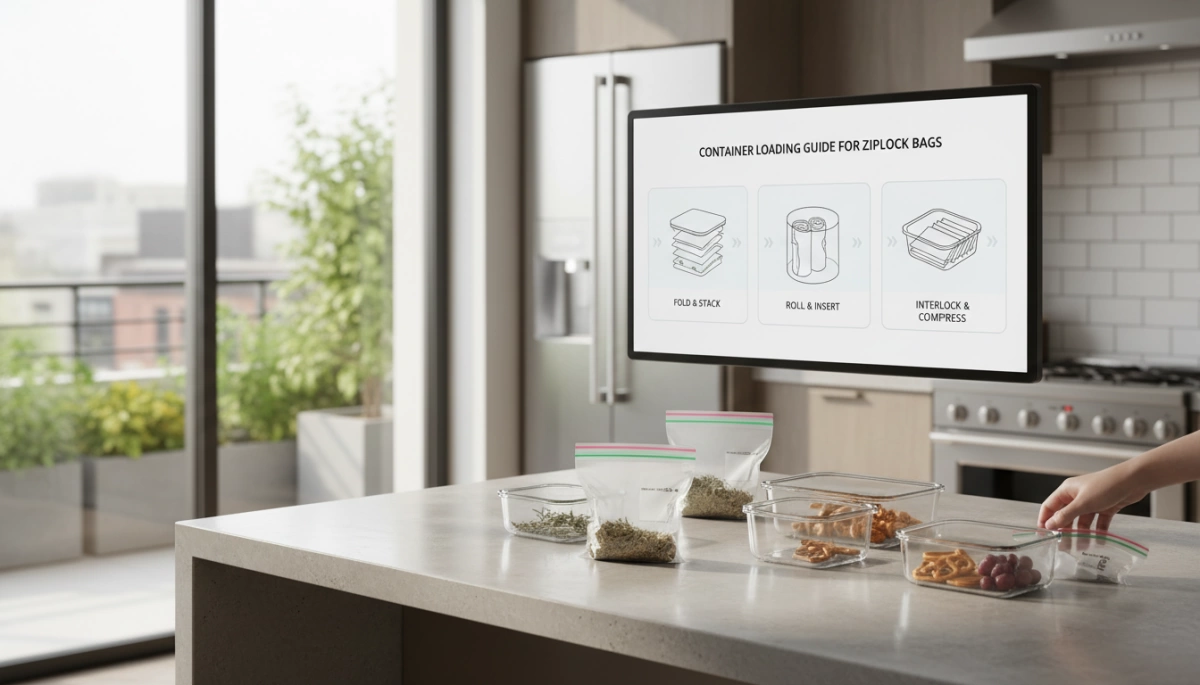
Successful global logistics starts long before the container doors close. As a manufacturer with over 18 years of experience, we know that ziplock bag export packaging requires a strategic approach to ensure products arrive in retail-ready condition. We don’t just throw bags in a box; we engineer the packaging to withstand the rigors of ocean freight.
Carton Specifications and Packing Counts
Standardization is the key to maximizing space and ensuring stability. At Artfullife®, we utilize high-strength, double-wall corrugated cartons designed to resist stacking pressure. While we offer full OEM customization, adhering to standard carton dimensions for ziplock export helps optimize pallet patterns.
- Master Carton Weight: We recommend keeping cartons under 33 lbs (15 kg). This meets standard US labor safety guidelines and prevents box failure at the bottom of a stack.
- Packing Counts: This depends on the product type. Bulk PE food bag packaging might be packed 1,000 count per case, whereas our retail-ready 3-in-1 food storage sets have lower counts due to the added volume of retail boxes.
- Labeling: Clear, FDA-compliant labeling on the master carton is essential for smooth customs clearance.
Material Considerations and Temperature Stability
The material you choose impacts how the product behaves inside a hot shipping container. Polyethylene (PE) and LDPE are standard for food-sealed bags, but they can be sensitive to extreme heat.
- Thickness (Mil): Thicker bags (4–8 mil) are more rigid and stack better, while thinner bags (2 mil) require tighter packing to prevent slumping.
- Blocking Prevention: High temperatures can cause PE layers to stick together (blocking). We use specific slip additives in our resin blend to ensure easy opening upon arrival.
- Material Type: Understanding the specific properties of sealed zipper bags is crucial; for instance, slider mechanisms create a “high point” in the carton that must be accounted for to prevent uneven stacking.
Inner Packaging Best Practices
To protect the integrity of the zip seal, inner packaging is non-negotiable. We use a protective inner poly liner for all bulk shipments to guard against moisture and dust. For ziplock bags, we often alternate the orientation of the bundles (head-to-toe) inside the carton. This technique distributes the bulk of the zipper tracks evenly, preventing the carton from bulging and ensuring a flat, stable surface for the next layer in the container.
Calculating CBM and Container Capacity for Ziplock Cartons
Accurate volume calculation is the backbone of logistics planning. Before we ship your order from our factory, we determine the exact Cubic Meter (CBM) volume to ensure you aren’t paying for “air” in the shipping container. Understanding CBM calculation for ziplock cartons helps you maximize your shipping budget and ensures that your bulk order arrives efficiently.
Step-by-Step CBM Formula
To calculate the CBM of a single master carton, we use a simple formula based on the carton’s external dimensions in meters.
Formula:
Length (m) × Width (m) × Height (m) = CBM per Carton
Example Calculation:
Let’s say we are shipping a standard master carton containing 50 retail boxes of our quart-sized slider bags.
- Dimensions: Length 0.45m, Width 0.35m, Height 0.30m
- Calculation: 0.45 × 0.35 × 0.30 = 0.047 CBM
Once you have the single carton CBM, you can estimate the total volume for your order. If you order 5,000 pieces packed into 100 cartons, the total volume is 4.7 CBM.
Estimating Cartons Per Container
While the theoretical volume of a container is fixed, the usable space varies based on how tightly the cartons fit. Here is a general guide for wholesale ziplock container capacity:
| Container Type | Internal Capacity (Theoretical) | Usable Capacity (Practical) | Est. Cartons (based on 0.047 CBM) |
|---|---|---|---|
| 20ft GP | 33 CBM | 28 CBM | ~595 Cartons |
| 40ft GP | 67 CBM | 58 CBM | ~1,230 Cartons |
| 40ft HQ | 76 CBM | 68 CBM | ~1,445 Cartons |
Note: The “Usable Capacity” accounts for the inevitable gaps between boxes and clearance near the door.
Factors Affecting Real-World Capacity
The math provides a baseline, but physical realities inside the container dictate the final count. When we design common packaging and labeling options, we consider how these factors impact loading efficiency:
- Palletization vs. Floor Loading: Placing cartons on pallets (skids) significantly speeds up unloading at your warehouse but reduces usable container space by 10-15% due to the pallet volume and inability to stack to the absolute ceiling.
- Carton Dimensions: If the carton size doesn’t divide evenly into the container’s width (approx. 2.35m), “dead space” is created. We try to optimize shipping container space for poly bags by using standardized carton sizes that fit snugly side-by-side.
- Stacking Height: PE and PVC materials are dense. We must ensure the bottom cartons can support the weight of the stack without crushing the product, which sometimes limits how high we can load, even in a High Cube container.
Optimal Stacking and Loading Techniques
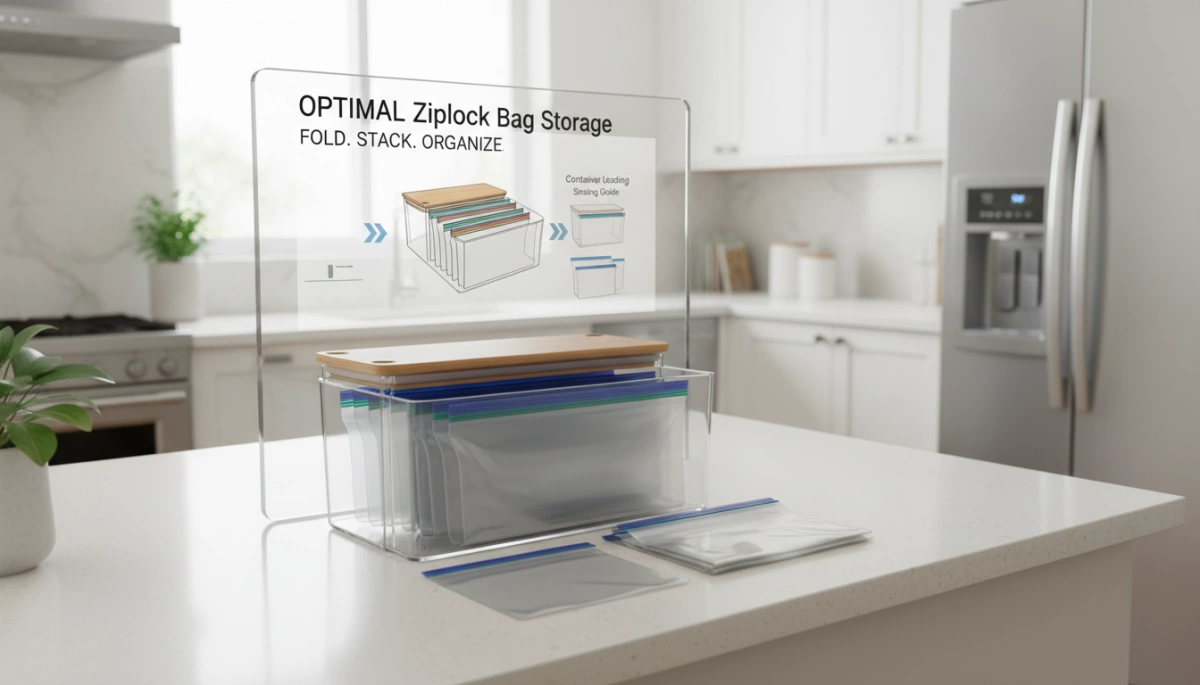
Loading a container isn’t just about playing Tetris; it is about physics and protecting the structural integrity of the product. At Artfullife, we treat the loading phase as the final step of our quality control process. To optimize shipping container space for poly bags, we rely on proven floor planning strategies that prevent cargo shifts during ocean transit.
Floor Planning and Brick Pattern Stacking
Stability starts at the floor. We never stack cartons in straight vertical columns (column stacking), as this makes the load prone to toppling when the ship rolls. Instead, we utilize a brick pattern (interlocking) method. By rotating the cartons 90 degrees on alternating layers, we create a unified, stable block. This technique binds the tiers together, significantly reducing the risk of collapse without requiring excessive strapping.
Weight Distribution and the Heavy-on-Bottom Rule
Proper weight distribution for shipping bags is non-negotiable. Ziplock bag cartons can be deceptively dense, especially when packed with high-micron thickness freezer bags.
- Base Layer: Always place the heaviest cartons on the floor to lower the center of gravity.
- Mixed Loads: If you are consolidating an order that includes heavier sustainable alternatives to ziploc bags (like silicone) alongside lighter PE cling wrap, the heavy silicone cartons must act as the anchor at the bottom.
- Balance: Weight must be spread evenly across the floor. An unbalanced container can cause crane issues at the port or dangerous handling conditions for trucks.
Side-by-Side vs. Centered Loading
When stacking cartons in a shipping container, gaps are the enemy. We prioritize tight, side-by-side loading from the front wall back. If the carton dimensions don’t perfectly match the container width, we center the load and fill the side voids with dunnage rather than leaving one side exposed. This prevents the “domino effect” where cartons slide into empty spaces during transit.
Managing Stack Heights
While we want to maximize volume, we never exceed the crush limit of the bottom carton. Polyethylene (PE) bags are flexible, but excessive overhead weight can compress the bottom cartons, potentially damaging the zip seals or causing the bags inside to “block” (stick together) due to pressure. We calculate the maximum stack height based on the carton’s corrugated strength test (ECT) to ensure the bottom row arrives in the same condition it left our factory.
Filling Voids and Securing the Load
Even with a perfectly calculated floor plan, gaps between pallets or carton stacks are inevitable. Leaving these spaces empty is a recipe for disaster; if the cargo shifts during ocean transit, you risk crushed packaging and compromised seals. To ensure preventing damage bulk bag shipment, we must immobilize the load effectively.
Recommended Dunnage Options
We prioritize using professional dunnage to lock the cargo in place. Relying on makeshift fillers can lead to compliance issues or ineffective bracing.
- Inflatable Dunnage Bags: These are the gold standard for void filling dunnage shipping cartons. We place them in gaps greater than 4 inches to prevent lateral movement. They cushion the impact and keep stacks vertical.
- Corrugated Board & Honeycomb: For smaller gaps or to protect the face of the rear pallets, we use rigid honeycomb boards. This distributes pressure evenly, which is critical for softer retail boxes often used in private label food storage bags manufacturing.
- Strapping and Bracing: For the final row near the container doors, we use heavy-duty polyester strapping (cross-lashing) to prevent the load from falling out when the doors are opened at the destination warehouse.
Moisture Control: Stopping Container Rain
Temperature fluctuations at sea cause condensation, known as “container rain.” While our PE and PVC ziplock bags are moisture-resistant, the corrugated master cartons are not. Excess moisture can weaken the cardboard, causing stacks to collapse.
To mitigate this, we implement a strict moisture control protocol:
- Desiccant Poles/Bags: We hang high-absorption calcium chloride desiccants along the container walls to pull moisture from the air.
- Ventilation Check: We ensure container vents are not taped over unless specific dry-cargo requirements dictate otherwise, allowing airflow to regulate internal temperature.
- Pallet Moisture Content: If pallets are used, we verify they are kiln-dried and meet international standards to avoid introducing moisture into the sealed environment.
Special Considerations for Artfullife® Eco-Friendly Ziplock Bags
As a manufacturer dedicated to the “Innovate Green” philosophy, we handle our eco-friendly product lines with specific protocols during the biodegradable ziplock bulk logistics process. Shipping sustainable products requires more than just standard loading; it demands strict attention to environmental conditions to preserve the integrity of sensitive materials.
Handling Biodegradable and Reusable Lines
Eco-friendly materials, such as compostable films or reusable silicone, often have different physical properties compared to traditional plastics. Biodegradable bags can be more sensitive to humidity and temperature fluctuations inside a shipping container. To prevent premature degradation or warping, we prioritize moisture control by placing industrial desiccants strategically throughout the container.
When we ship heavier items, such as those highlighting customizable silicone bag features, we adjust our stacking patterns. These reusable products are denser than standard disposable bags, requiring reinforced bottom layers to prevent carton compression.
Compliance and Documentation
For wholesale ziplock container capacity planning, we also factor in the accessibility of compliance documents. Since our products meet FDA, CE, and RoHS standards, ensuring these certifications are readily available upon arrival streamlines the import process.
- Document Placement: We attach relevant eco-certifications to the lead pallet or right inside the container doors for immediate customs inspection.
- Labeling: Cartons are clearly marked with material composition (e.g., PE, PVC, or Bio-based) to match the shipping manifest perfectly.
Customs Advantages and Brand Appeal
Proper loading directly impacts brand perception. Retailers focused on sustainability expect pristine packaging. By securing the load effectively, we ensure that the eco-friendly narrative is maintained from our factory floor to the retail shelf. Well-organized, undamaged shipments signal reliability to customs officers, often resulting in faster clearance for green commodities.
Real-World Examples and Loading Plans
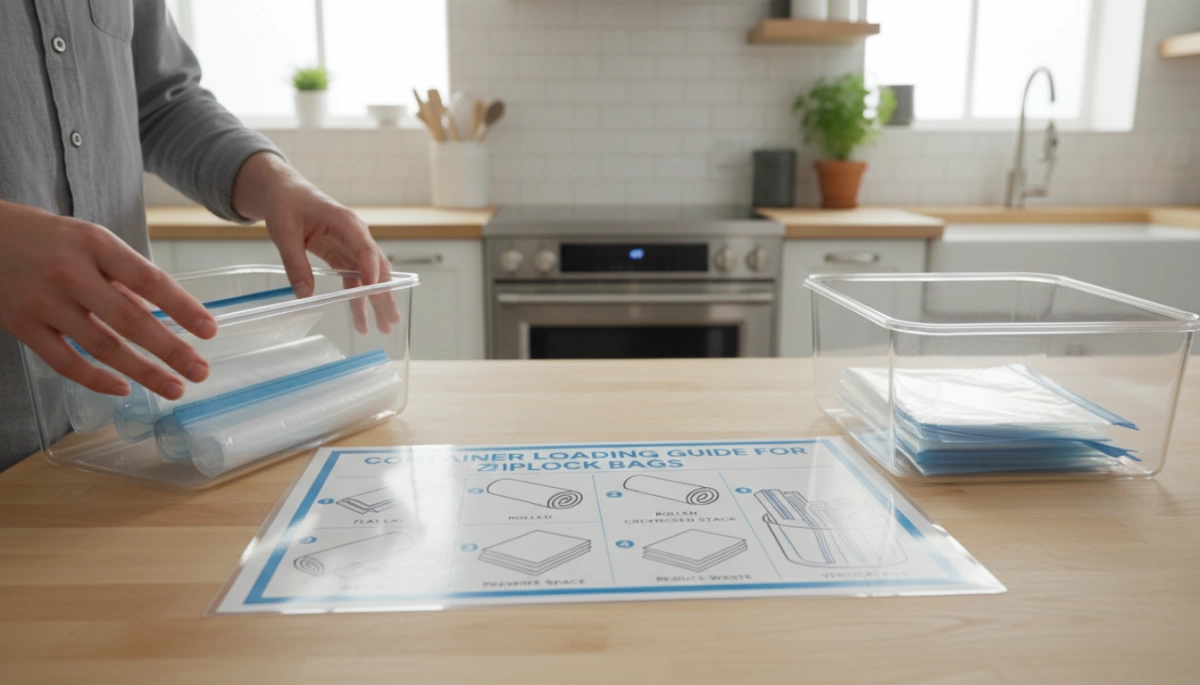
At Artfullife, we have spent over 18 years refining how we move product from our factory floor to your warehouse. Whether you are hitting our flexible MOQ of 5,000 pieces or scaling up to a massive wholesale ziplock container capacity order, the loading plan is just as critical as the manufacturing process. A solid plan prevents “shipping air” and ensures your goods arrive ready for retail.
Sample Plan: 10,000–50,000 Pcs (LCL to Partial FCL)
For mid-sized orders ranging from 10,000 to 50,000 pieces, we typically look at Less than Container Load (LCL) or consolidated shipments. Here is how we break down a typical 50,000-piece order of standard quart-size slider bags:
- Packaging: Retail boxes of 50 counts, packed 20 retail boxes per master carton.
- Total Master Cartons: 50 master cartons.
- Total Volume: Approximately 2.5 to 3.5 CBM (depending on box thickness).
- Strategy: Since this doesn’t fill a 20ft container, we focus on pallet stability. We use corner guards and shrink wrap to ensure these 50 cartons stay unitized alongside other cargo.
If you are looking to scale up or adjust your packaging dimensions to fit specific pallets, knowing how to find OEM manufacturers for custom food storage bags is essential for coordinating these logistical details early in the design phase.
Before vs. After: Inefficient vs. Optimized Loading
We often see distributors lose money by ignoring carton dimensions relative to container width. Here is a comparison of a bulk ziplock bags shipping scenario involving a 20ft container:
| Feature | Inefficient Loading (Standard Pallets) | Optimized Loading (Floor Loaded/Slip Sheets) |
|---|---|---|
| Stacking Method | Column stacking (prone to toppling) | Brick/Interlocked stacking |
| Space Utilization | 70-75% (Lost space due to pallets) | 90-95% (Floor to ceiling usage) |
| Carton Count | ~800 Master Cartons | ~1,050 Master Cartons |
| Risk Factor | High shifting risk in void spaces | Low risk (tight pack prevents movement) |
By choosing to optimize shipping container space for poly bags through floor loading or custom slip sheets, we can often fit 20-25% more product in the same footprint.
Cost Savings Estimates
Optimizing your load directly impacts your bottom line. When we maximize the CBM calculation for ziplock cartons, the freight cost per unit drops significantly.
- Freight Savings: Fitting 20% more bags into a container means you are paying 20% less shipping per box. Over a year, this equals thousands of dollars in retained margin.
- Reduced Claims: A tight, well-planned load reduces the physical movement of cartons. This minimizes crushed corners and damaged seals, drastically reducing insurance claims and unsellable inventory.
- Fuel Efficiency: Consolidating shipments means fewer trips. It is a smarter way to handle logistics that aligns with both cost-cutting and sustainability goals.
Common Mistakes to Avoid in Container Loading
Even seasoned importers slip up. When shipping bulk ziplock bags, a single error in the loading plan can lead to crushed cartons, rejected customs entry, or massive surcharges. Here are the pitfalls we see most often at Artfullife®.
Overloading Weight Limits
Plastic is heavier than it looks. While a 20ft container might hold 28–33 CBM, you often hit the weight limit before filling the volume. Overloading weight limits is the number one reason containers get flagged at weigh stations.
- The Fix: Always calculate total gross weight (cartons + pallets) against the container’s max payload, not just the volume.
Ignoring Void Spaces
Empty space is the enemy of stability. If you leave gaps between pallets without void filling dunnage shipping cartons, the load will shift as the ship rolls. This movement crushes the bottom layers and can compromise the zip seals inside.
- The Fix: Use airbags or honeycomb cardboard to lock everything in place.
Poor Pallet Alignment
Sloppy stacking ruins product. Poor pallet alignment—specifically carton overhang—reduces vertical compression strength by up to 30%. If the corners of your ziplock bag cartons aren’t supported by the pallet corners, the boxes will collapse under the weight of the stack.
Neglecting Documentation
Physical loading is only half the battle. Neglecting documentation like the Packing List or Bill of Lading leads to expensive demurrage fees at the port. These administrative delays can severely impact the typical lead time for OEM food storage bag projects, causing you to miss retail windows. Ensure your weight and count declarations match the physical load exactly.
FAQs: Container Loading for Ziplock Bags
Navigating the logistics of bulk ziplock bags shipping can be tricky. Based on our 18+ years of manufacturing experience at Artfullife, we have compiled the most common questions we receive from distributors and retailers regarding container loading for plastic bags.
How many cartons of ziplock bags fit in a 20ft container?
The exact count depends heavily on the specific dimensions of your retail packaging. For standard wholesale ziplock container capacity, a 20ft container typically offers between 28 and 33 cubic meters (CBM) of usable space.
If you are ordering our standard flat bags packed in compact master cartons, you can fit significantly more units than if you are shipping bulky retail-ready boxes. We always recommend performing a precise CBM calculation for ziplock cartons before finalizing your order volume. For clients ordering our eco-friendly food storage bags, we provide detailed packing lists to help you maximize every inch of space.
Is palletizing necessary for bulk bag shipments?
Palletizing is not strictly mandatory, but it depends on your receiving facility’s capabilities.
- Floor Loading: This method involves stacking cartons directly on the container floor. It is the best way to optimize shipping container space for poly bags, allowing you to fit 10–20% more product than palletized loads.
- Pallet Loading: Using pallets makes unloading much faster if you have a forklift, but you lose volume due to the pallets themselves and the inability to fill gaps perfectly.
For 40ft container pallet loading of bags, we usually suggest slip sheets or low-profile pallets if labor costs at the destination are a primary concern.
How do I prevent moisture damage during ocean transit?
“Container rain” occurs when temperature fluctuations cause condensation inside the steel container. Since moisture can weaken cardboard cartons and potentially affect the hygiene of food-grade products, ziplock bag export packaging requires care.
- Desiccants: We recommend hanging high-absorption desiccant bags inside the container.
- Ventilation: Ensure the container vents are not taped over unless specific atmospheric control is required.
- Quality Cartons: We use durable, multi-layer corrugated boxes that resist ambient humidity better than standard recycled board.
What is the best stacking pattern for lightweight poly bag cartons?
To ensure stability and prevent damage in bulk bag shipments, we strictly avoid column stacking (stacking boxes directly on top of one another in straight lines), as this can cause toppling.
The most effective method for stacking cartons in a shipping container is the brick pattern (interlocking). By alternating the orientation of the cartons on each layer, the load locks itself together. This distributes weight evenly and prevents the bottom layers from being crushed, which is critical for maintaining the integrity of the zip seals inside.