















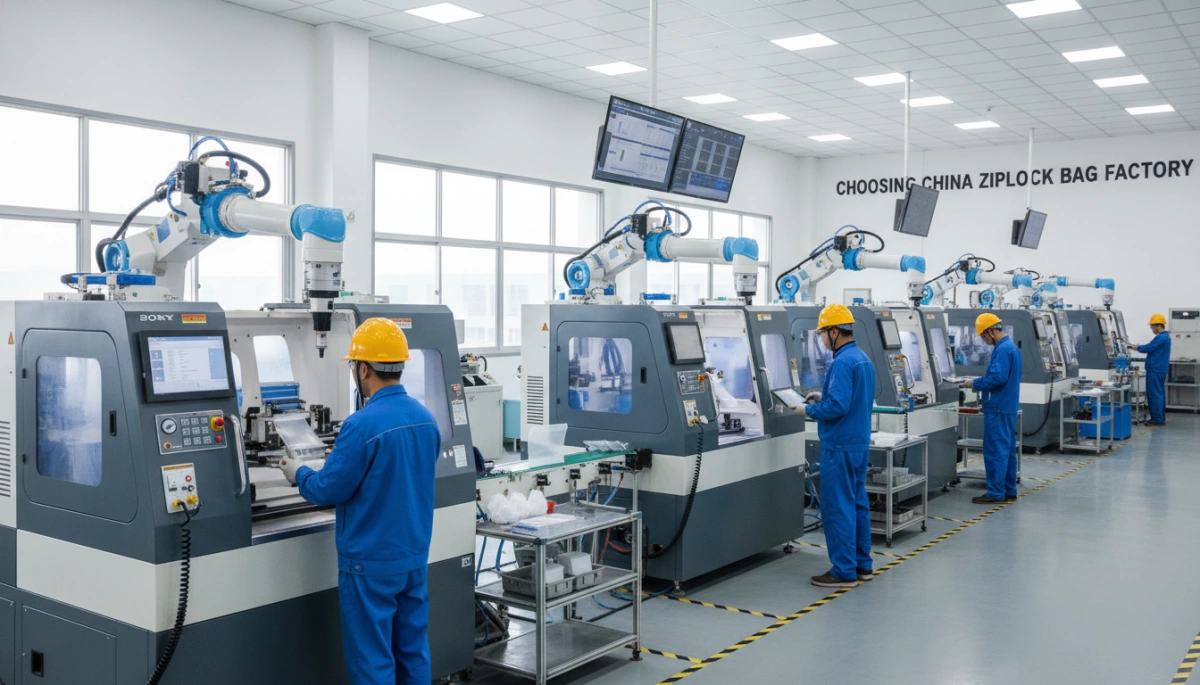
Struggling to navigate the maze of Alibaba suppliers for your packaging needs?
Selecting the right China Ziplock Bag Factory is the difference between a profitable product line and a logistical nightmare.
I know that vetting manufacturers remotely can feel like a gamble.
But it doesn’t have to be.
In this post, you’re going to learn exactly how to distinguish high-quality OEM manufacturers from risky trading companies.
From verifying FDA compliance and ISO certifications to negotiating MOQs for biodegradable options, I’ve distilled years of sourcing experience into a practical checklist.
So if you want to secure a reliable, cost-effective partner for 2026, this guide is for you.
Let’s get started.
How to Choose a China Ziplock Bag Factory: Define Your Requirements
Before I even open a supplier directory, I tell every client that clarity is the foundation of a successful import business. You cannot effectively execute on How to Choose a China Ziplock Bag Factory without a precise technical blueprint. Vague inquiries lead to inaccurate quotes and production delays. Here is how I break down the initial planning phase to ensure you match with a manufacturing partner that can actually deliver on your vision.
Pinpoint Product Specifications
To get a “Factory FOB price” that is actually relevant, you need to lock down the physical DNA of your product. A factory needs more than just a photo; we need technical data.
- Material Types: Are you looking for standard PE (Polyethylene), advanced food-grade platinum silicone, or sustainable biodegradable blends like PBAT/PLA?
- Dimensions: clearly define length, width, and gusset depth.
- Thickness: Know your required “mil” (US standard) or micron count. producing durable, reusable silicone bags requires different machinery than thin, single-use films.
Context: Food-Grade vs. Industrial Application
The intended use of the bag dictates the compliance level you must demand.
- Food Storage: If you are targeting the kitchenware market, the factory must be equipped for FDA compliance and produce BPA-free products. Features like airtight and leak-proof sealing systems are non-negotiable here.
- Industrial/General: Focuses more on tensile strength and basic containment.
- Temperature Versatility: If the bag needs to be microwave-safe or used for sous-vide (like our silicone lines), specify this upfront to ensure the material can withstand thermal stress.
Volume and Scalability
Understanding your numbers helps filter out mismatched suppliers immediately.
- MOQ (Minimum Order Quantity): Startups should look for factories willing to support lower entry points for trial orders.
- Production Capacity: For bulk wholesale, verify the factory has the infrastructure—such as a 20,000 sqm facility with fully automatic production lines—to handle massive volume without lead-time bottlenecks.
Personalization and Branding (OEM/ODM)
Are you buying off-the-shelf or building a brand?
- Custom Design: Look for OEM/ODM services if you need unique shapes, such as 3-in-1 sets or specific flat/vest designs.
- Printing & Aesthetic: Verify the factory’s capability for high-quality printing or logo embossing on stainless steel and silicone surfaces to ensure your brand stands out.
Research and Identify Potential Factories
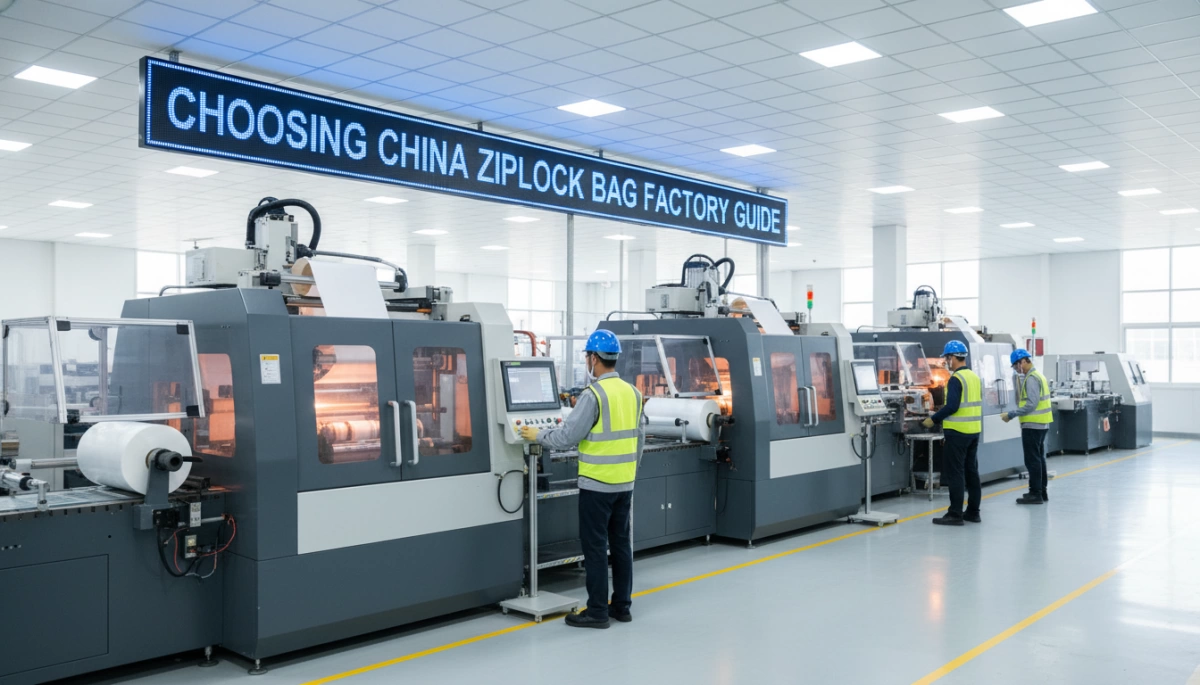
Finding reliable Ziplock bag manufacturers in China takes more than a quick scroll through a search engine. You need a targeted strategy to filter out middlemen and secure a partner who can deliver consistent quality and scale.
Leverage Online Platforms
Start your search on major directories like Alibaba and Global Sources. These platforms are useful for building a broad list of candidates. Look for suppliers with “Verified” badges and substantial operating history. However, treat these listings as a starting point. Always cross-reference their profiles with their official websites to ensure their core competency matches your needs, specifically if you are looking for dedicated food-grade packaging factories.
Use Social Proof for Verification
Dig deeper by checking a company’s presence on professional networks like LinkedIn. Legitimate manufacturers often post real photos of their production floors, attendance at international trade shows, and team updates. This transparency is a good sign. We rely on our 18+ years of industry experience under Shenzhen Qiaojia Household Products Co., Ltd. to demonstrate stability, and you should look for similar longevity in your partners.
Factory vs. Trading Company: How to Spot Direct Manufacturers
Distinguishing between a trading company and a direct factory is crucial for your margins. A trading company adds a markup, while a manufacturer offers Factory FOB pricing. Here is how to tell them apart:
- Infrastructure: A real factory owns its equipment. For instance, our facility covers 20,000 sqm with fully automatic production lines and employs over 200 staff. If a supplier cannot prove they own the physical plant, they are likely a middleman.
- Technical Knowledge: Manufacturers can instantly answer complex questions about material composition or OEM ziplock bag production. Traders usually need time to ask the actual factory.
- Customization Depth: Direct factories offer comprehensive R&D support. Understanding OEM vs. ODM branding differences is key here; a true manufacturer can guide you from design to finished product without communication lags.
Regional Hubs: The Guangdong Advantage
Geography matters in manufacturing. Guangdong, particularly Shenzhen where we operate, is a global hub for high-performance silicone and plastic production. Factories in this region benefit from mature supply chains for materials like food-grade platinum silicone and PE film. Sourcing from these established hubs often guarantees better access to logistics and higher quality standards compared to isolated facilities.
Evaluate Factory Legitimacy and Experience

Finding a supplier is easy, but validating them is where the real work happens. When you are figuring out How to Choose a China Ziplock Bag Factory, you must verify that the company is a legitimate manufacturing entity and not just a middleman with a website. Start by checking their official business license and registration to ensure they have the legal standing to export ISO certified factories China standards.
Review Track Records and Portfolios
Experience prevents expensive mistakes. You want a partner who has refined their manufacturing process over decades, not years. At Artfullife, we leverage 18+ years of industry experience to anticipate production challenges before they affect your order. Always ask to see a specific portfolio. reviewing their past work on eco-friendly storage bags for supermarkets can give you immediate insight into their ability to handle retail-grade specifications.
Assess Production Capabilities
Capacity is king when you plan to scale. A small workshop might handle your sample run, but they will bottleneck your bulk orders. To verify a factory’s true strength, look for these hard numbers:
- Facility Size: A robust manufacturer should have a substantial footprint, ideally around 20,000 sqm, to accommodate raw material storage and production zones.
- Automation: Fully automatic production lines are essential for keeping costs down and ensuring consistent airtight seals.
- Workforce: A staff of 200+ employees indicates the operational bandwidth to handle peak season demands.
Conduct Audits: Virtual and On-Site
Trust, but verify. If you cannot fly out personally, schedule a China packaging factory audit through a third-party service or request a live virtual tour via video call. Reputable Ziplock bag manufacturers China will be transparent about their operations. Ask to see their clean rooms and quality control stations live. If a supplier hesitates to show you the production floor, it is a major red flag.
Prioritize Quality Control and Certifications
When verifying ziplock bag manufacturers China, documentation is your first line of defense. A factory might have great pricing, but without the right certifications, your shipment could get stuck at customs or liable for safety issues. For any product coming into contact with food, we ensure our production lines meet strict regulatory standards.
Essential Certifications for Food-Grade Packaging
You simply cannot compromise on safety when sourcing food storage solutions. We recommend looking for the following core certifications to ensure compliance with US and international standards:
- FDA Compliance: Mandatory for any material touching food. FDA certified plastic bags and silicone containers ensure no harmful chemicals leach into consumables.
- ROHS and REACH: These certify that the products are free from hazardous substances like lead or mercury.
- ISO 9001: This indicates the factory follows a rigorous quality management system, ensuring consistency from the first unit to the ten-thousandth.
AQL and Material Integrity Testing
Certificates prove legality, but AQL quality control (Acceptable Quality Limit) ensures consistency. A professional manufacturer should offer transparent AQL standards, defining exactly how many defects (if any) are acceptable per batch. Before authorizing a shipment, you must validate the physical integrity of the bags through specific tests:
- Seal Strength: We test our airtight systems rigorously. If you are sourcing reusable freshness bags for export, the locking mechanism must be leak-proof to prevent food spoilage.
- Thickness and Durability: Verify the micron thickness. A bag that tears under basic stress creates a poor customer experience.
- Temperature Resistance: High-quality materials like platinum silicone should withstand microwaves and freezers without degrading.
Verifying Sustainability Standards
The market is shifting, and eco-friendly food storage suppliers are in high demand. However, you need to watch out for greenwashing. If a factory claims their product is biodegradable, ask for proof.
- Compostability: Look for PBAT or PLA materials that are certified to degrade naturally.
- Recyclability: Ensure the materials used, whether PE or silicone, can be properly processed at their end-of-life.
- Material Purity: For reusable options, demand BPA-free and platinum-grade silicone reports to guarantee the product is truly sustainable and safe for long-term use.
Assess Customization, Pricing, and Terms
When you are ready to finalize a partner, the conversation shifts from technical specs to business viability. A factory might have the best machines, but if their terms kill your margins or they can’t execute your brand vision, they aren’t the right fit. We approach this phase with total transparency, focusing on long-term scalability rather than quick wins.
Customization Capabilities: OEM/ODM Services
In the competitive US market, off-the-shelf products often don’t cut it. You need a partner capable of full OEM/ODM ziplock bag production. This goes beyond simple logo placement. At our facility, customization involves tailoring the entire product DNA—from specific micron thickness and airtight sealing mechanisms to advanced gravure printing for high-definition retail packaging.
We also support material innovation. If your brand wants to transition away from traditional plastics, we can customize molds for sustainable alternatives to Ziploc bags, such as platinum silicone or biodegradable PBAT blends.
Key Customization Checkpoints:
- Printing: Up to how many colors? Is it rotogravure or digital?
- Shape & Size: Can they produce custom shapes (e.g., jar-shaped bags) or vest-style cuts?
- Add-ons: Options for slider zippers, vent holes, or hang tabs.
Pricing Transparency: FOB vs. CIF
Pricing structures in China can be tricky. We emphasize Factory FOB pricing (Free On Board) because it gives you the most control and transparency. Many trading companies quote DDP (Delivered Duty Paid) to hide inflated logistics costs. By sticking to FOB, you know exactly what you are paying for the product versus the shipping.
Common Pricing Components to Verify:
| Cost Component | What to Look For | Warning Sign |
|---|---|---|
| Unit Price | Based on material weight & complexity. | Suspiciously low price often means recycled/impure scrap material. |
| Mold/Plate Fees | One-time cost for custom sizes/prints. | Recurring setup fees for repeat orders. |
| Sample Fee | Cost to prototype your design. | Refusal to refund sample cost upon bulk order placement. |
MOQ Flexibility for Startups and Testing
High Minimum Order Quantities (MOQs) are the biggest barrier for new brands. While huge industrial runs are cost-efficient, MOQ flexible manufacturers allow you to test the market without sitting on dead stock. We often work with clients to find a middle ground—perhaps starting with a higher unit cost for a smaller trial run of custom printed ziplock bags, then scaling up to standard bulk volume once the product is validated.
Payment Security and IP Protection
Your design is your intellectual property. Never work with a factory that is hesitant to sign a Non-Disclosure Agreement (NDA). We prioritize payment security and clear contracts that outline dispute resolution. Whether you are sourcing FDA-approved PE film or high-end silicone bags, your manufacturer should provide a clear contract detailing delivery timelines and quality guarantees before a single dollar is transferred.
Communication, Sampling, and Logistics
Finding a factory with great machinery is only half the battle; the other half is ensuring they can actually work with you efficiently. In my 18+ years of experience in this industry, I have seen excellent products fail simply because the communication pipeline was broken. When executing your China sourcing guide, pay close attention to how the team interacts with you from the very first email.
Test Responsiveness and Clarity
Time zones are a reality, but professional Ziplock bag manufacturers China will always have a system in place to respond promptly.
- Speed: A reliable partner usually responds within 24 hours. If a simple quote takes a week, expect production updates to be even slower.
- Language Proficiency: You need a dedicated account manager who speaks clear English. Misunderstandings regarding “micron thickness” or “biodegradable additives” can be costly.
- Technical Knowledge: The sales team should know their product. They should be able to explain the difference between our food-grade platinum silicone and standard PE without needing to “ask the engineer” for every single detail.
Request Samples: Don’t Skip This Step
Never place a bulk order based on a PDF catalog alone. You need physical proof of quality. When we send out samples, we encourage clients to test the seal strength and material clarity rigorously. This is your chance to verify if the prototype matches the food storage bag market trends and consumer demand you are targeting.
What to check in your sample:
- Airtight Seal: Does the zipper track close smoothly and hold water without leaking?
- Print Quality: Are the custom logos sharp, or do they look pixelated?
- Odor: Food-grade materials should be odorless.
Logistics Planning and Long-Term Support
Once the sample is approved, the focus shifts to getting the goods to your warehouse. Since many direct manufacturers (including us) operate on Factory FOB pricing, you get the best base price, but you need to understand the logistics.
- Freight Forwarding: Decide if you want the factory to handle shipping (CIF/DDP) or if you will use your own forwarder.
- Customs & Duties: Ensure the factory provides the correct HS codes for custom printed ziplock bags to avoid surprise taxes at the border.
- After-Sales: A real partnership goes beyond the shipment. Look for a supplier who offers support after delivery, whether it’s handling feedback or helping you scale up for the next busy season.
Red Flags to Avoid and Best Practices
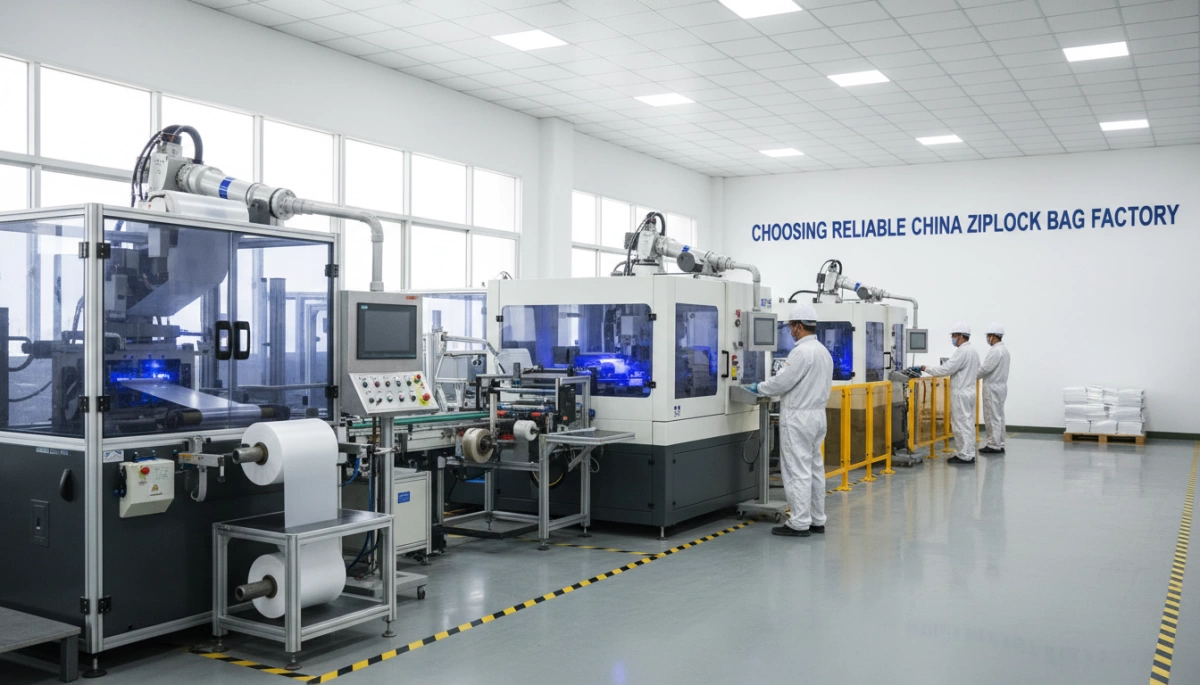
When you are deep in the trenches of sourcing, it is easy to get blinded by a low price tag. But in my 18 years of manufacturing experience, I can tell you that cutting corners always costs more in the long run. To protect your brand reputation and margin, you need to spot the warning signs early and stick to a strict sourcing protocol.
Spotting Common Pitfalls and Ethical Risks
If a quote looks suspiciously low compared to the market average, that is a major red flag. Often, these “too good to be true” prices indicate the use of substandard fillers, recycled scrap material, or non-food-grade plastics rather than high-quality PE or platinum silicone. Another dealbreaker is vague communication. A legitimate partner should be able to clearly explain their QC process, material sources, and production timelines without hesitation.
Watch out for these warning signs:
- Ghosting or Vague Answers: If they dodge specific questions about FDA compliance, material thickness (mils/microns), or lead times, run.
- Lack of Transparency: Refusal to allow third-party factory audits or video inspections often hides poor labor practices or environmental violations.
- Inconsistent Samples: If the prototype feels premium but the bulk production runs cheap, you are dealing with a classic bait-and-switch.
Best Practices: Tech Packs and Avoiding Greenwashing
To get exactly what you want, never rely on a simple description. Always provide a detailed tech pack. This document should specify exact dimensions, material composition, sealing mechanism type, and print files. It leaves no room for interpretation and holds the factory accountable to your standards.
Finally, be vigilant about the sustainability factor. There is a massive amount of greenwashing in material claims right now, where standard plastics are marketed as “eco-friendly” simply because they are slightly thinner. True sustainability involves certified biodegradable materials (like PBAT/PLA) or high-durability reusables. Understanding the current market trends and opportunities in sustainable packaging is crucial to ensure you aren’t paying a premium for fake claims. Always verify certifications like BPI or compostability standards before printing “eco-friendly” on your packaging.
Case Study: Selecting a Sustainable Ziplock Bag Factory
When we decided to expand our line at Artfullife®, sourcing truly biodegradable bag suppliers was a rigorous process. We moved beyond standard plastics to find sustainable packaging options that could meet strict US market standards without falling apart on the shelf. The goal was to source materials like PBAT and PLA that perform just as well as traditional LDPE.
Real-World Sourcing with Artfullife®
We didn’t just pick the first factory with “eco-friendly” in their name. We initiated a pilot program with three different ziplock bag manufacturers in China. The challenge was finding a partner who could replicate our exact specifications for custom printed ziplock bags using compostable resins.
Here is how the outcomes compared:
- Factory A (Low Cost): Offered the lowest price but failed consistency tests. The seal strength varied significantly, leading to potential leaks.
- Factory B (Mid-Range): Good material quality, but communication regarding FDA certified plastic bags was vague.
- Factory C (Selected Partner): Higher initial unit cost, but they provided full transparency on raw material sourcing and passed every quality audit.
Cost Efficiency vs. Quality Consistency
It is tempting to prioritize the lowest FOB price, but in the long run, quality consistency wins. We found that paying a premium for Eco-friendly food storage suppliers with robust QA processes reduced our defect rate to near zero. Cheap inputs often lead to “greenwashing” claims that don’t hold up under scrutiny.
Lessons Learned
The most critical takeaway is the value of verified documentation. We now mandate that every batch comes with updated certifications (like BPI for compostability). If you are looking for reliable food storage solutions that align with sustainability goals, clear communication and rigorous background checks are your best tools against risk.
FAQ: Choosing a China Ziplock Bag Manufacturer
Navigating the landscape of ziplock bag manufacturers in China can bring up a lot of questions, especially regarding compliance and logistics. Here are the answers to the most common inquiries we receive from B2B buyers and distributors.
What is the standard MOQ for custom ziplock bags?
Minimum Order Quantities (MOQ) vary significantly based on whether you are buying stock items or requiring OEM ziplock bag production.
- Stock Items: For plain, unbranded bags, MOQs are often lower, sometimes starting at 1,000 to 5,000 units, allowing new businesses to test the market.
- Custom Orders: If you need specific sizes, thickness, or custom rotogravure printing, the MOQ usually jumps to 10,000 or 50,000 units. This is because setting up the production line and printing cylinders carries a fixed cost.
When negotiating, asking about MOQ flexible manufacturers is smart, but understanding the unit cost implications is crucial. For a deeper dive into how design ownership impacts these terms, reviewing the distinctions in OEM vs. ODM for food storage manufacturing helps clarify what level of customization fits your budget.
How do I verify if a factory is truly FDA certified?
Claiming to have FDA certified plastic bags is easy; proving it requires documentation. A trustworthy manufacturer should provide a test report from a third-party accredited lab (like SGS, TUV, or Intertek) rather than just a certificate image.
- Check the Standard: Ensure the report references FDA 21 CFR 177.1520 (for olefin polymers) or similar relevant codes.
- Verify Dates: Reports should be recent (within the last 1-2 years).
- Material Match: The tested material listed on the report must match the specific resin (PE, Silicone, etc.) you are purchasing.
What is the difference between LDPE and compostable bag materials?
The choice between Low-Density Polyethylene (LDPE) and biodegradable options comes down to your sustainability goals and performance needs.
- LDPE: This is the industry standard for clarity, flexibility, and moisture resistance. It is recyclable but not biodegradable.
- Compostable (PBAT/PLA): These materials are designed to break down in industrial composting environments. They offer a lower carbon footprint but may have a shorter shelf life and different texture.
As consumer awareness grows regarding whether ziploc bags have microplastics, many brands are shifting toward verified sustainable packaging options or high-grade silicone alternatives to ensure safety and eco-friendliness.
Can I get a sample before placing a bulk order?
Absolutely. Never place a bulk order without a physical inspection. Requesting samples allows you to verify:
- Seal Integrity: Does the zipper close easily and stay airtight?
- Clarity and Feel: Is the material consistent with the specified micron thickness?
- Print Quality: Are the logos sharp and aligned correctly?
Most China sourcing guides recommend paying the express shipping fee for samples; it is a small price to avoid a container load of defective product.