

















Struggling to navigate the complex Import Requirements for Ziplock Bags?
You aren’t alone.
One wrong HS code or a missing FDA compliance document can result in your shipment being seized at the port or hit with massive antidumping duties.
I know the risks because I’ve helped countless businesses navigate these exact hurdles at Artfullife®.
In this guide, you’re going to get the complete, 2026-updated roadmap for importing reclosable bags into the US.
We’ll cover tariff classifications, food-grade certifications, and the critical import documentation you need to clear Customs without a hitch.
Let’s get your shipment moving.
HTS Classification for Ziplock Bags
Getting your Ziplock bags HS code wrong isn’t just a minor administrative error; it is the fastest way to trigger Customs delays, audits, or unexpected duty bills. As a supplier, we see importers constantly struggle to pinpoint the correct classification because the Harmonized Tariff Schedule (HTS) for plastics is incredibly nuanced. You need to know exactly what your bag is made of and how it’s constructed before you even think about shipping.
Navigating HTS 3923.21 and 3923.29 Codes
The primary classification for plastic sacks and bags falls under Heading 3923. The distinction between HTS 3923.21 and 3923.29 codes usually comes down to the chemical composition of the plastic:
- 3923.21: This covers bags made of polymers of ethylene. Since most standard ziplock bags are made from Polyethylene (PE), this is the most common subheading.
- 3923.29: This covers bags made of other plastics, such as Polypropylene (PP) or laminates that don’t rely primarily on ethylene.
If you are importing standard HTS 3923.21 reclosable bags, you are likely looking at a code like 3923.21.0030 (Polyethylene bags, reclosable, with integral extruded closure), but this depends heavily on current tariff schedules.
Distinguishing Between Household and Packing Use
US customs classification zipper bags can shift based on their intended use. CBP (Customs and Border Protection) differentiates between:
- Packing/Conveyance (Heading 3923): Bags used to package goods for commercial transport or sale.
- Household Articles (Heading 3924): In some specific rulings, if the bags are sold as retail consumer goods (like a box of sandwich bags) rather than industrial packaging, scrutiny on the classification changes, though they often revert to 3923 based on material.
Impact of LDPE and HDPE Materials
Your material specifications—specifically density—directly impact the statistical suffix of your HS code. You must identify if your bags are:
- LDPE (Low-Density Polyethylene): Common for clear, flexible consumer ziplock bags.
- HDPE (High-Density Polyethylene): More rigid, often used for industrial or heavy-duty liners.
While both fall under “polymers of ethylene,” the duty rates and import duties polyethylene reclosable bags can vary based on these technical specs.
Identifying Closure Types and Integral Zippers
Not all closures are treated equally. Customs looks for an integral extruded closure. This means the zipper tracks are formed directly from the film during the extrusion process, rather than a separate slider mechanism attached later.
- Integral Zippers: Usually classified specifically as “reclosable” under polyethylene subheadings.
- Slider/Slide-Rite: May be classified differently depending on whether the slider is the primary value component.
Consulting CBP Rulings for Accuracy
Never guess. The most reliable way to ensure compliance is consulting CBP rulings for accuracy. We strongly advise utilizing the Customs Rulings Online Search System (CROSS) to review past CBP rulings ziplock bags. If your product is unique (e.g., a complex laminate or specialized bio-material), requesting a binding ruling from CBP before importation locks in your duty rate and prevents costly surprises at the port.
Duty Rates and Antidumping Risks
Understanding the financial landscape is just as critical as selecting the right material. When sourcing from overseas, the “sticker price” is never the final cost. You must account for standard duties, potential trade remedies, and evolving import regulations to calculate a viable landed cost.
Standard Ad Valorem Duty Rates for Plastic Bags
Most polyethylene bags fall under specific subheadings of HTS 3923. The standard import duties for polyethylene reclosable bags generally range between 3% and 6.5% depending on the specific resin and country of origin (COO). However, for imports from China, you must also factor in Section 301 tariffs, which can add a significant percentage on top of the standard rate. It is vital to verify the current HTS classification with your customs broker before finalizing a purchase order to avoid margin erosion.
Antidumping Duties (ADD) and Countervailing Duties (CVD)
This is the most complex area for importers. The U.S. enforces strict antidumping duties on plastic bags from China and Vietnam, specifically targeting “retail carrier bags” (like t-shirt bags). Rates for these specific categories can be exceedingly high to offset foreign subsidies.
However, not all bags fall under this scope. Ziplock food storage bags often have different classifications compared to retail carrier bags. As a manufacturer, we assist clients by providing precise product specifications to distinguish our food-grade solutions from restricted categories. Similarly, companies sourcing from custom printed trash bag manufacturers must carefully review the scope of ADD orders to determine if their specific bag thickness and handle style trigger these additional taxes.
Impact of 2026 De Minimis Rule Changes
The regulatory environment is shifting. The de minimis rule changes for imports in 2026 and 2026 aim to close loopholes that allowed low-value shipments (under $800) to enter the U.S. duty-free. This is particularly relevant for businesses relying on small parcel logistics or dropshipping models. Stricter enforcement means that even smaller B2B sample orders or trial runs may soon require formal entry filings and duty payments, increasing the administrative burden for new importers.
Calculating Total Landed Costs Effectively
To ensure profitability, you need a comprehensive view of your expenses. A low FOB price means nothing if logistics and taxes eat your margin. We recommend using a landed cost model that includes:
- Product Cost (FOB): The price paid to the factory.
- Freight & Insurance: Ocean or air transport fees.
- Customs Duties: Standard ad valorem rate + Section 301 tariffs.
- ADD/CVD: If applicable based on specific bag type.
- Merchandise Processing Fee (MPF): Charged by CBP for formal entries.
- Harbor Maintenance Fee (HMF): For ocean freight entering U.S. ports.
By accurately mapping these costs upfront, you avoid surprise bills at the port of entry.
FDA Compliance for Food-Contact Bags
When importing food storage solutions, meeting FDA food contact ziplock bags standards is the single most critical step for U.S. market entry. The FDA regulations, specifically under 21 CFR 177.1520, dictate the chemical composition of olefin polymers used in polyethylene (PE) and polypropylene (PP) bags. We ensure that every batch is manufactured using virgin resin FDA compliance bags protocols. Using 100% virgin raw materials—rather than recycled scraps—is the only reliable way to guarantee that no unknown contaminants leach into food products.
Beyond the base resin, importers must verify that the final product is a BPA-free food storage bags import. We rigorously screen for bisphenol A (BPA), phthalates, and heavy metals to meet both FDA and stringent state-level safety laws. For brands looking to expand their portfolio, our custom OEM options in reusable silicone bag production also undergo this strict chemical vetting to ensure total safety.
To clear U.S. Customs without delays, you must possess a valid Certificate of compliance plastic bags, often referred to as a Declaration of Compliance (DoC). This document acts as a legal guarantee that the materials meet all safety specs. We recommend pairing the DoC with recent third-party lab reports (from agencies like SGS or Intertek) to validate food-grade plastic bags import requirements. This documentation trail proves to the FDA and CBP that your supply chain is transparent, safe, and fully compliant.
Key Compliance Checkpoints:
- 21 CFR 177.1520: Verifies the safety of olefin polymers for direct food contact.
- Virgin Material: Ensures no contamination from recycled plastics.
- Chemical Safety: Confirms the absence of BPA, heavy metals, and harmful phthalates.
- Third-Party Testing: Provides objective lab results to support the Declaration of Compliance.
Essential Import Documentation

Successfully clearing US Customs requires a precise paper trail. We often see new importers face delays not because of product quality, but due to mismatched or missing paperwork. As your manufacturing partner, we provide the necessary data to ensure your import documentation for ziplock bags FDA CBP filings are accurate and timely.
Commercial Invoice and Packing List
These are the foundation of your entry . The commercial invoice must explicitly state the material composition (e.g., 100% Virgin LDPE), dimensions, and the correct HTS classification (typically 3923.21). Vague descriptions like “plastic bags” can trigger inspections. The packing list must match the invoice exactly, detailing the net and gross weights, which is critical for calculating freight and duties.
Securing the Bill of Lading and Certificate of Origin
The Bill of Lading (BOL) acts as your receipt and title to the goods. For shipments from China, a Certificate of Origin is often required to verify the manufacturing source. This document is essential for determining if your shipment is subject to standard duty rates or additional Section 301 tariffs. We ensure the country of origin on the paperwork matches the “Made in China” markings on the cartons to prevent seizure.
FDA Prior Notice and Affirmation of Compliance
Since ziplock bags are classified as food-contact substances, they fall under FDA jurisdiction. You must file an FDA Prior Notice before the goods arrive at the port of entry.
- Affirmation of Compliance (AofC): We provide the necessary codes confirming that the resin used meets 21 CFR 177.1520 standards.
- Manufacturer Registration Number: While not always mandatory for food packaging (unlike food itself), having our factory registration details helps streamline the review process.
Managing ISF (Importer Security Filing)
For ocean freight, the ISF (Importer Security Filing), also known as “10+2,” must be filed by the importer at least 24 hours before the cargo is loaded onto the vessel at the port of origin. Failure to file this on time can result in fines up to $5,000 per violation. We provide the container stuffing location and consolidator details early in the process to help you meet this deadline.
Labeling Mandates for Traceability
Physical documentation on the product is just as important as the digital filing. US regulations increasingly demand traceability. Your bags and master cartons should include:
- Country of Origin: “Made in China” must be clearly visible.
- Batch/Lot Numbers: Essential for tracking production runs in case of a recall or quality audit.
- Suffocation Warnings: Mandatory for bags with openings larger than 5 inches in states like New York, California, and Massachusetts.
Emerging State-Level Packaging Rules
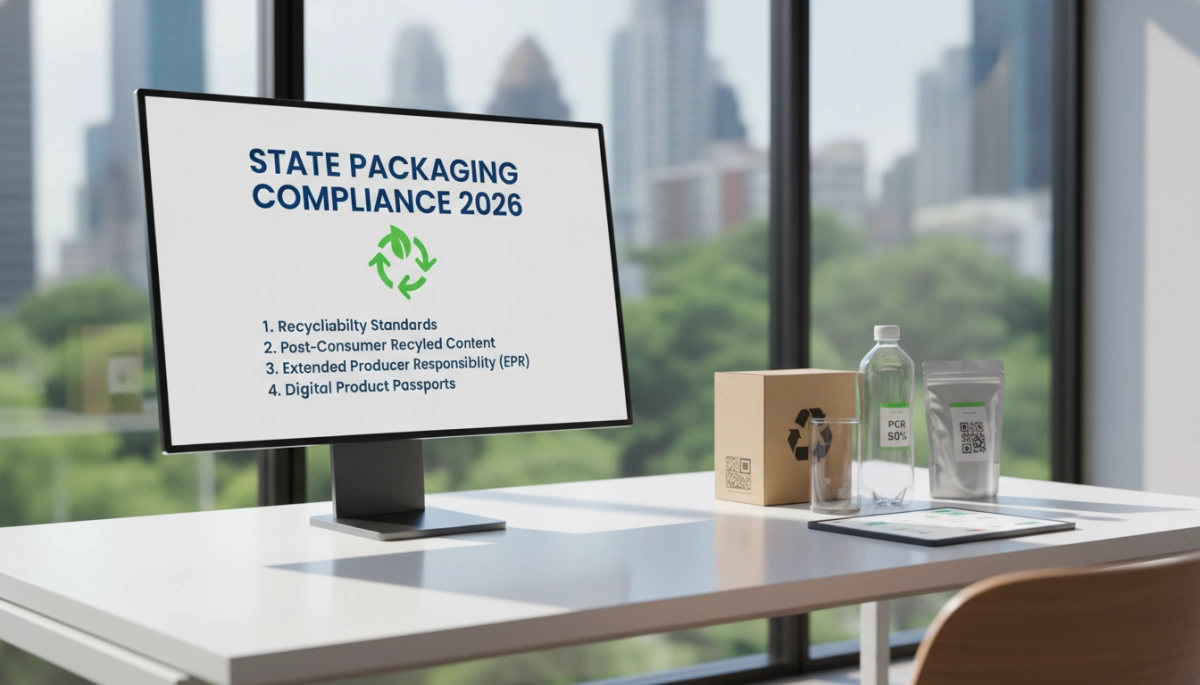
The regulatory landscape in the United States is shifting fast. It is no longer enough to just meet federal standards; importers must now navigate a patchwork of state-specific laws that target waste and chemical safety. If you are distributing nationwide, your packaging needs to comply with the strictest state regulations, which usually means adhering to the aggressive environmental standards set by states like California and New York.
Adapting to California Plastic Bag Bans 2026
California is leading the charge with legislation like SB 54, which mandates significant reductions in single-use plastic waste. By 2026, producers will face stricter requirements for California plastic bag bans 2026, pushing the market toward truly recyclable or compostable materials. Retailers are increasingly rejecting traditional single-use LDPE film bags in favor of certified reusable or compostable options. We work directly with buyers to transition their inventory to materials that meet these evolving durability and reusability standards.
Navigating PFAS Bans in Food Packaging
State-level PFAS bans in food packaging are becoming a major compliance hurdle. States including Maine, New York, and California have prohibited the use of per- and polyfluoroalkyl substances (“forever chemicals”) in food contact materials. These chemicals were historically used for grease resistance but are now a liability. We ensure our manufacturing process strictly excludes these substances, providing the necessary material safety data sheets (MSDS) to prove your products are PFAS-free and safe for retail shelves.
Complying with EPR and SB 343
Extended Producer Responsibility (EPR) programs are forcing importers to take financial responsibility for the end-of-life management of their packaging. Additionally, California’s SB 343 “Truth in Labeling” law restricts the use of the “chasing arrows” recycling symbol. You cannot claim a bag is recyclable unless it meets specific collection criteria. We assist clients in adjusting their packaging artwork and material choices to ensure compliance with these strict truth-in-advertising laws, avoiding potential lawsuits or retail rejection.
Shifting Toward Sustainable Biodegradable Alternatives
To future-proof supply chains, many of our partners are switching to sustainable biodegradable ziplock alternatives or durable reusables. We offer eco-friendly material formulations that align with ASTM D6400 compostability standards. For brands targeting the zero-waste demographic, understanding the safety and durability of silicone storage bags is essential for offering a compliant, high-value alternative to single-use plastics.
Sourcing Compliant Bags from Artfullife®
Finding a supplier that balances regulatory compliance with competitive pricing is often the hardest part of the import process. At Artfullife, we simplify this by operating as a direct-to-factory manufacturer with over 18 years of experience serving the U.S. and global markets. We don’t just sell products; we provide a compliance-ready supply chain that mitigates risk at customs.
Accessing Food-Grade and BPA-Free Inventory
Safety is our baseline. We manufacture our food storage bags using strictly verified materials, including LDPE, HDPE, PEVA, and Silicone. Every batch is guaranteed BPA-free and meets rigorous international safety standards. Whether you are importing standard sandwich bags or heavy-duty freezer bags, our production lines adhere to FDA (U.S.), LFGB (Europe), CE, and RoHS requirements. This ensures that your goods clear customs without flagging safety concerns regarding food contact substances.
Customization: Mil Thickness and Eco-Friendly Inks
One size rarely fits all in the U.S. retail market. We offer full OEM/ODM support to tailor specifications to your brand’s needs.
- Material Gauge: We customize the mil thickness to meet specific performance claims, such as “puncture-resistant” or “freezer-grade.”
- Closures: From standard press-to-close zippers to advanced slider mechanisms, we help you select the right types of food storage bag closures to balance cost and functionality.
- Sustainable Printing: We utilize eco-friendly inks and recyclable packaging options, helping you align with cost-effective alternatives to single-use plastics that modern consumers demand.
Direct Factory Pricing and Transparency
By sourcing directly from our facility, you bypass middleman markups. Our modern manufacturing capabilities ensure stable capacity and direct factory pricing, even for orders starting at our flexible MOQ of 5,000 pieces. We believe in total transparency; we welcome third-party testing and quality audits at any stage of production, from raw resin inspection to the final finished good.
Streamlining Documentation for Import
We understand that missing paperwork causes delays. Our team assists in preparing the essential documentation required for U.S. Customs and Border Protection (CBP). We provide:
- Material Safety Data Sheets (MSDS)
- FDA Compliance Declarations
- Lab Test Reports
This proactive approach ensures you have the necessary proof of compliance before the container ever leaves the port.
Importer Compliance Checklist
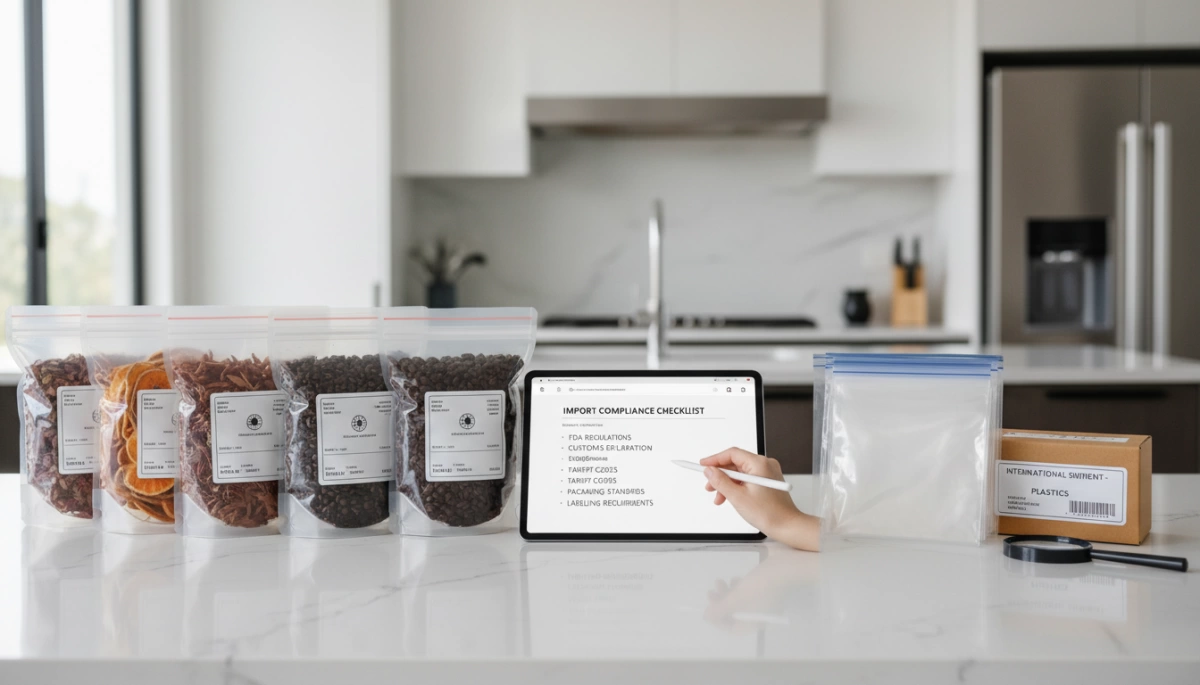
Successfully bringing food storage products into the U.S. requires more than just finding a supplier; it requires a rigorous adherence to regulatory standards. We recommend using a structured checklist to ensure nothing slips through the cracks during the procurement process.
- Confirm Correct HS Codes and Duty Exposure: Before placing an order, verify the specific Harmonized Tariff Schedule (HTS) code—typically under the 3923 heading for plastic articles—to determine the exact duty rate. Misclassification can lead to unexpected costs or customs delays.
- Request Material Specs and Test Reports: Always demand a Material Safety Data Sheet (MSDS) and valid test reports (FDA, LFGB, or RoHS) to prove safety. If you are sourcing reusable food packaging or biodegradable options, verify that the certifications match the specific resin used.
- Prepare Accurate FDA and CBP Filings: For food-contact items, ensure the FDA Prior Notice is filed correctly and that the Affirmation of Compliance codes are included in your customs entry.
- Conduct Pre-shipment Quality Inspections: Don’t wait until the container arrives to check quality. We support third-party or factory-direct inspections to verify thickness, seal integrity, and print quality before the goods leave the loading dock.
- Finalize Landed Cost Calculations: Look beyond the FOB price. Factor in freight, insurance, tariffs, and harbor maintenance fees to determine your true profit margin per unit.
Frequently Asked Questions
What is the HS code for ziplock bags?
Correct classification depends on the material and intended use. For standard polyethylene (PE) reclosable bags, the most common Ziplock bags HS code falls under HTS 3923.21 (Sacks and bags of polymers of ethylene). If the bags are made from other plastics like PVC or polypropylene, they typically fall under HTS 3923.29. It is critical to distinguish between “household use” (often taxed differently) and commercial packing supplies to avoid reclassification penalties by CBP.
Are there antidumping duties on Chinese bags?
Yes, antidumping duties plastic bags China are a significant consideration for U.S. importers. Polyethylene Retail Carrier Bags (PRCBs) from China are subject to specific antidumping (AD) and countervailing duties (CVD). However, not all ziplock bags fall under this order. The scope generally covers bags designed for carrying goods (like t-shirt bags), but specific reclosable food storage bags may have different rulings. Always verify the specific case numbers with a customs broker before shipping.
How to ensure FDA approval for food bags?
To guarantee safety, FDA food contact ziplock bags must meet 21 CFR 177.1520 standards for olefin polymers. As a manufacturer, we ensure compliance by using virgin resin FDA compliance bags rather than recycled scraps for food-grade orders. Importers should always request a Declaration of Compliance (DoC) and third-party lab reports (like SGS or Intertek) verifying the material is free from heavy metals and BPA.
What are the new de minimis rules for 2026?
The regulatory landscape regarding de minimis rule changes imports 2026 2026 is tightening. U.S. Customs is increasing scrutiny on shipments claimed under Section 321 (the $800 tax-free threshold) to prevent abuse by commercial entities avoiding tariffs. Importers should prepare for stricter data reporting requirements and potential exclusions for products subject to Section 301 tariffs or antidumping orders, meaning “duty-free” entry for bulk commercial samples may no longer apply.
Why switch to biodegradable ziplock alternatives?
Shifting to sustainable biodegradable ziplock alternatives is driven by both regulation and consumer demand. With state-level bans on single-use plastics (like California’s SB 54) coming into effect, brands must adopt compostable materials or reusable designs to remain compliant. Beyond compliance, offering eco-friendly options helps brands align with market trends, much like how retailers now strategically choose reusable bags for grocery wholesale to reduce environmental impact.