
















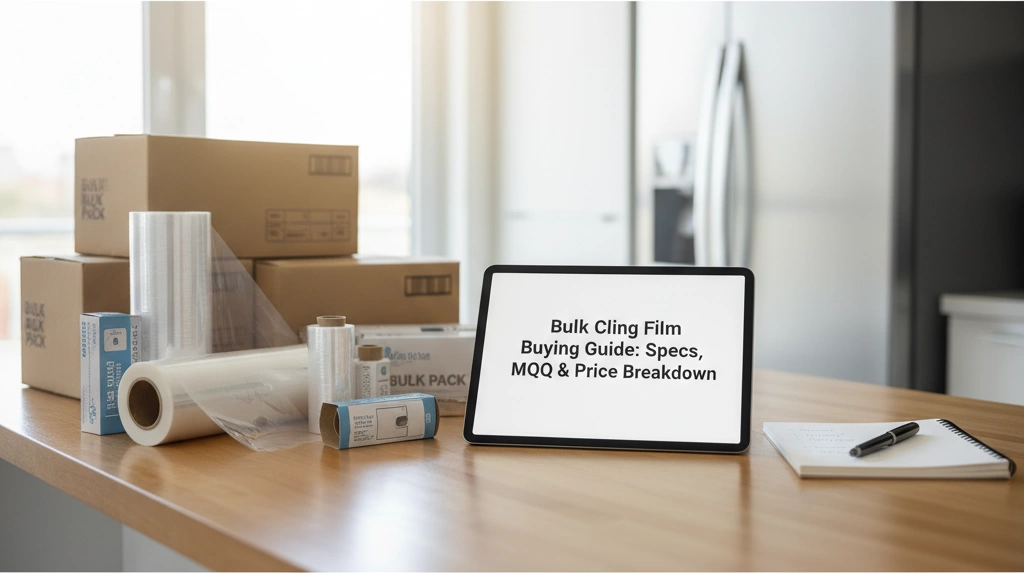
If you’re buying cling film in bulk and feeling unsure about specs, MOQ, and pricing, you’re not alone.
Pick the wrong thickness, roll length, or material, and you’ll either overspend on performance you don’t need—or waste money on film that tears, doesn’t cling, or isn’t compliant for food use. Add in confusing minimum order quantities (MOQ) and opaque quotes, and it’s easy to lock your cash flow into the wrong deal.
This bulk cling film buying guide is built to fix that.
You’ll see exactly:
- Which specifications actually matter (microns, width, length, material, food-grade certifications)
- How MOQ works, when to push back, and how to scale orders without overstocking
- A clear price breakdown—from per-roll costs to hidden logistics and shipping fees
Whether you’re running a supermarket, café, or packaging line, you’ll get a practical framework to compare suppliers, avoid common traps, and negotiate with confidence.
And yes—along the way, we’ll show you how suppliers like Artfullife structure real-world specs, MOQs, and pricing so you can benchmark every quote you get.
Let’s get straight into how to buy bulk cling film the smart way.
Understanding Bulk Cling Film Basics
If you buy a lot of food packaging film every month, getting cling film right can quietly save you thousands of dollars a year. In this guide, I’ll walk through the basics of bulk cling film so you can choose specs that actually fit your operation instead of guessing at “standard” rolls.
What Cling Film Is Made Of (And Why It Matters)
Most commercial plastic wrap rolls fall into three main material types:
-
LDPE (Low-Density Polyethylene) Cling Film
- Pros: Good clarity, strong, reliable seal, lower odor, recyclable in some streams.
- Best for: Supermarkets, meal prep, e‑commerce packaging, and general food-grade cling wrap in the U.S.
- Performance: Balanced stretch and strength, great for cold storage and display.
-
PVC (Polyvinyl Chloride) Cling Film
- Pros: Excellent cling, high stretch, tight seal around irregular shapes.
- Best for: Food service where “tight wrap” and presentation matter (meat trays, deli, produce).
- Performance: Very elastic and sticky; however, you must confirm food-safe, compliant formulations for your market and application.
-
Biodegradable & Eco Friendly Cling Film
- Options: Bio-based, compostable, or films with recycled content.
- Pros: Lower environmental impact, good for eco-positioned brands and chains.
- Watch-outs: Usually higher cost, may have different shelf-life or strength; not all are suitable for high-heat or long-term storage.
In our own wholesale cling film lines for the U.S. market, we typically recommend LDPE for general food packaging and specialized PVC or eco lines where tight cling or sustainability claims are key.
Common Business Uses for Bulk Cling Film
Bulk cling film is used across almost every part of the food and packaging value chain. The most common buyers we serve are:
-
Supermarkets & Grocery Stores
- In-store meat, produce, bakery, and deli counters.
- Rewrapping damaged or open packs for saleable presentation.
-
Restaurants, Cafes, and Catering
- Covering food pans, prep containers, hotel pans, and trays.
- Short-term storage, event catering, and transport.
-
Meal Prep & Food Production
- Central kitchens, commissaries, and ready-meal producers.
- Wrapping trays, sealing portions, staging ingredients.
-
E‑Commerce & General Packaging
- Protecting products from dust and moisture.
- Securing multi-piece items within shipper boxes.
-
Industrial Uses & Pallet Wrap
- While true pallet wrap is usually stretch film, some operations use heavier cling film for bundling and light industrial wrapping.
Wherever you need a clear, food-safe, flexible barrier, bulk cling film is usually the lowest-cost, highest-flexibility option.
Why Bulk Cling Film Beats Retail Rolls
If you’re still buying your food grade cling wrap from retail stores or club packs, you’re almost certainly overpaying. Bulk cling film has three big advantages:
-
Lower Cost Per Foot
- Wholesale cling film pricing is based on material, thickness (microns), and roll length.
- Longer rolls and pallet quantities spread manufacturing and packaging costs, bringing down your cling film price per roll and per foot.
-
Consistent Specs and Performance
- Retail brands change sizes and specs often.
- Bulk sourcing lets you lock in standard industrial cling film specs across locations, so dispensers, cutters, and workflows stay consistent.
-
Business-Focused Packaging
- Longer rolls, stronger cores, and carton quantities designed for commercial kitchens and supermarkets, not home pantries.
In short: retail rolls are made to look cheap on the shelf. Bulk rolls are built to actually be cheap over millions of square feet of film.
Key Pros of Bulk Sourcing Cling Film
When you move to true wholesale cling film, the benefits go beyond basic pricing:
-
Real Cost Savings
- Better volume discount packaging.
- Less packaging waste, fewer changeovers, and lower labor per wrapped item.
-
Fewer Stockouts and Emergencies
- Predictable lead times and pallet quantities mean you’re not running to a store when a busy weekend hits.
- Easier to build a simple reorder and safety-stock model around stable MOQ and lead times.
-
Custom Branding and Private Label
- We supply private label cling film rolls with custom boxes, cores, and labels for retailers and distributors.
- Options for custom printed cling wrap cartons that match your brand and improve shelf presence if you resell.
-
Better Fit for Your Equipment
- Match roll width, core size, and length to your commercial dispensers and automation, not the other way around.
For our U.S. customers, we typically standardize a few core specs across all sites, then add custom-branded outer cartons where needed.
Who Benefits Most From Bulk Cling Film?
Almost any business that uses cling film every day should be buying in bulk, but the value looks a bit different by size:
-
Small Shops and Single Locations
- Examples: independent restaurants, small groceries, specialty bakeries.
- Benefits:
- Lower per-roll cost versus retail.
- More durable commercial rolls that last longer during service.
- Ability to start with lower MOQ cling film options and scale up.
-
Medium to Large Chains
- Examples: regional supermarket chains, QSR and fast-casual brands, multi-unit caterers.
- Benefits:
- Significant savings from volume discount packaging and long-term agreements.
- Consistent cling film specifications across all locations.
- Strong leverage for wholesale MOQ negotiation, private label, and better payment terms.
-
Distributors and Resellers
- Sell to restaurants, grocers, and institutions.
- Benefits:
- Access to custom printed, private label cling film.
- Flexible SKUs (standard, heavy-duty, eco friendly cling film) to serve different customer tiers.
- Better margins with pallet or container-level pricing.
If your team is going through more than a few light-duty retail rolls per week, shifting to bulk cling film is usually one of the fastest, easiest packaging cost wins you can make.
Cling Film Specifications That Actually Matter
When you’re buying bulk cling film for a U.S. business, a few specs decide everything: how it performs, what it costs, and whether your team actually likes using it.
Core Bulk Cling Film Specs: Thickness, Width, Length, Material
These four specs drive both price and performance:
| Spec | What It Means | Typical Business Range (US) |
|---|---|---|
| Thickness | Film strength & stretch (in microns or gauge) | 8–10 μm light / 10–15 μm standard / 15–23 μm heavy |
| Width | How wide the roll is | 12″ • 18″ • 24″ • 30″ |
| Length | Feet of film per roll | 1,000–3,000+ ft per roll |
| Material | LDPE, PVC, or eco options | Food-grade LDPE or PVC, plus biodegradable lines |
If a quote doesn’t clearly list all four, I treat it as incomplete.
Cling Film Thickness (Microns) and Performance
Thickness is where a lot of people overpay. Here’s the simple breakdown:
-
8–10 μm (lightweight):
- Good for: light produce, bakery items, short shelf-life items
- Pros: cheapest, more footage per roll
- Cons: tears easier, less puncture resistance
-
10–15 μm (standard food service):
- Good for: restaurants, delis, supermarkets prep
- Pros: balanced strength and stretch, daily go-to spec
- Cons: slightly higher cost, but usually best value
-
15–23 μm (heavy-duty):
- Good for: sharp/rigid items, small trays, transport
- Pros: strong, resists tears, better for longer holding times
- Cons: higher price, overkill for simple cover-and-store
If your team is fighting with tears or leaks, you probably need to step up 2–3 microns, not jump to the thickest film on the list.
Width and Length: Matching Film to Your Dispensers
Match cling film size to how your kitchen or store actually works:
Common widths (USA):
- 12″ – small pans, portions, home meal kits
- 18″ – standard restaurant and deli benches
- 24″–30″ – bakery trays, catering, full sheet pans
Roll length:
- 1,000–1,500 ft – easier to handle, less weight
- 2,000–3,000+ ft – fewer changeovers, lower cost per foot
Before buying, confirm:
- What width your dispensers are set up for
- Shelf or bench space for longer/heavier rolls
- Who’s handling rolls (line cooks vs central kitchen staff)
If you run high-volume catering or events, look at large-format cling film rolls that pair well with pro dispensers and speed up prep; we cover this in more depth in our guide on large-format cling film rolls for catering.
Cling Performance: Stickiness and Ease of Use
“Cling” is where cheap film usually fails.
Key points:
-
One-sided cling
- Easier to handle, less self-stick mess
- Better for fast-moving kitchens
-
Double-sided cling
- Stronger seal, great for wrapping trays or irregular shapes
- Can be annoying if your staff isn’t used to it
What to ask suppliers:
- Is the film one-sided or double-sided cling?
- How does it behave on stainless steel, plastic, and cardboard?
- Does it work well in cold rooms / refrigeration?
Always test samples on your actual surfaces before locking in a spec.
Transparency and Shelf Presentation
If you’re selling food in-store, clarity matters:
- High clarity / gloss: Better product visibility, looks fresher
- Low haze: No “milky” look over fresh produce or meats
- Anti-fog options: Useful in refrigerated cases and grab-and-go
For supermarkets and delis, paying a bit more for anti-fog, high-clarity film usually pays off in better shelf presentation and less repacking.
Food Safety and Compliance (US & Global)
For anything that touches food, don’t compromise here.
At minimum, your bulk cling film should be:
- Food-grade and BPA-free
- FDA-compliant for direct food contact (21 CFR compliant)
- Supporting certificates for:
- FDA / US food contact compliance
- EU Regulation 10/2011 (if you export or co-pack for EU)
- ISO / HACCP / BRC from the manufacturer is a nice plus
Always ask for:
- Declaration of compliance
- Migration test reports (for hot fill, microwave use, etc. if relevant)
If a supplier is slow or vague on documents, I move on.
Eco-Friendly and Recyclable Cling Film Options
In the U.S., more restaurants, meal-kit brands, and grocers are asking for greener options. The main routes:
-
Recycled-content LDPE film
- Uses post-consumer or post-industrial resin
- Good for general packaging, not always for direct food contact (check certs)
-
Biodegradable / compostable films
- Often plant-based or modified plastic
- Better sustainability story, higher cost
- Check certifications (e.g., ASTM D6400, EN 13432) if you claim “compostable”
-
Recyclable mono-material LDPE
- Easier to recycle where #4 film programs exist
- Good balance between performance and eco claims
If you’re already testing eco trash bags or storage bags, the same thinking applies; we’ve broken down options in our guide to recycled-content trash bag options.
Spec Trade-Offs: Performance vs Cost
The goal is fit-for-purpose, not “max everything.”
Keep these rules of thumb:
- Don’t overspec:
- If you only cover pans overnight in a walk-in, you likely don’t need 20+ μm heavy-duty.
- Do pay up when:
- Film frequently tears on sharp trays or corners
- You’re wrapping for transport or delivery, not just storage
- Product appearance directly affects sell-through (meat, bakery, produce)
What I do with clients:
- Pick 1 primary spec for 70–80% of usage (usually 10–15 μm, 18″ width)
- Add 1 heavy-duty spec for special uses (sharp items, transport)
- Keep eco or premium display spec only where it truly adds value
That mix usually gives the best balance of cost, speed, and performance in U.S. kitchens, groceries, and packaging operations.
Matching Cling Film Specs to Your Business Scenario

In this Bulk Cling Film Buying Guide: Specs, MOQ & Price Breakdown, I always start with one key idea: the “right” cling film specifications depend on how you use it every day. Below is how I match bulk cling film to different business types in the U.S. so you don’t overpay or fight with the wrong rolls on the line.
Supermarkets & Grocery Stores
For supermarkets and neighborhood groceries, consistency and display matter most. When I build specs for supermarket cling film supplier programs, I usually recommend:
- Material: Food grade PVC or LDPE, crystal-clear for meat, deli, and produce cases
- Thickness: 8–12 microns for most trays and in-store wrapping (standard strength, good stretch)
- Width: 11–18 in rolls for meat/deli counters; wider width for back‑room prep
- Length: 1000–3000 ft commercial plastic wrap rolls to reduce changeovers
- Cling type: Strong one‑sided cling for fast wrapping on trays; no “snap back”
- Extras: High transparency and anti-fog options for premium meat and produce display
If you also stock other packaging like reusable grocery bags, align your cling film specs with your overall store sustainability plan, similar to how you’d spec large volume trash bag manufacturers for your back-of-house.
Restaurants, Cafes & Catering Services
In restaurants and catering, speed and durability beat perfect appearance. For restaurant cling wrap wholesale programs, I focus on:
- Material: Food grade PVC or PE; heat-resistant enough for warm pans
- Thickness: 10–15 microns for stronger tear resistance in busy kitchens
- Width: 12–18 in everyday rolls; a few wider rolls for full pans and hotel pans
- Length: 2000–3000 ft to avoid roll changes during rush periods
- Use cases: Covering pans, partial prep, leftovers, line stations, and event trays
- Tip: Keep one SKU of heavy‑duty cling for catering trays that travel off‑site
This balance gives commercial kitchen food wrap that doesn’t constantly tear or waste film.
Food Processors & Central Kitchens
For food processors and central kitchens, industrial cling film specs need to work with equipment and strict QA:
- Material: High-clarity, food grade PVC or LDPE, matched to your process and temperature range
- Thickness: 12–18 microns for automated wrappers, high-tension applications, and longer shelf life
- Width & format: Machine rolls tailored to your wrapping line; verify core size and roll OD
- Performance: Consistent cling, predictable stretch, and low break rate at high speed
- Compliance: Full food safe plastic film certifications (FDA, EU, and relevant GFSI standards)
I usually recommend locking these specs into an internal standard so every plant orders the same film.
E‑Commerce & General Packaging Users
If you’re using food packaging film in bulk for e‑commerce or general packaging (non-food):
- Material: LDPE cling film or a slightly stiffer PE film for bundling and dust protection
- Thickness: 10–20 microns depending on product weight and handling abuse
- Width: Narrow rolls for small items; wider rolls for bundling multiple units
- Use cases: Keeping lids on, securing cables, bundling boxes, light pallet stabilization
- Note: For full pallets or heavy loads, step up to dedicated pallet wrap and stretch film instead of standard cling
This setup keeps your bulk plastic wrap pricing in line while protecting products in transit.
Heavy‑Duty vs Standard Cling Film
You don’t always need premium specs. I use this rule:
-
Standard cling film (8–12 microns):
- Light to medium loads
- In‑store food wrap, produce, bakery, light trays
- Short transport and quick turnover
-
Heavy‑duty cling film (12–18+ microns):
- Bone‑in meats, sharp edges, or heavy trays
- Central kitchen and processing lines
- Long haul shipping or freezer storage
- Rough handling in warehouses or catering
Pay for heavy‑duty only where the risk of tearing and product loss is real.
Simple Internal Spec Sheet for Cling Film
To keep your team and suppliers aligned, I always suggest a simple spec sheet for every cling film SKU you buy in bulk:
- Columns to include:
- Use case (meat counter, hot kitchen, e‑commerce, etc.)
- Material (PVC / LDPE / eco friendly cling film)
- Thickness (microns)
- Width and roll length
- Core size and dispenser type
- Cling type (one‑sided / double‑sided)
- Color/tint (clear, tinted)
- Certifications (FDA food grade, ISO certified packaging suppliers, etc.)
- Target MOQ and preferred supplier
Share this sheet with your wholesale saran wrap suppliers and ask them to quote exactly to it. That’s how you get clean cling film supplier quote comparison and avoid “surprises” later in the process.
MOQ Basics for Bulk Cling Film
What MOQ Means in Wholesale Cling Film
In bulk cling film, minimum order quantity (MOQ) is the smallest volume a supplier will sell at wholesale pricing. It’s usually set per SKU (specific width, length, thickness, and core size), not for your entire order.
In plain terms:
If the MOQ for a 12″ x 2000′ food grade cling wrap is 200 rolls, you need to buy at least 200 of that exact spec to unlock a bulk price.
Why Manufacturers and Wholesalers Use MOQs
As a cling film supplier, I use MOQs to keep unit costs down and production stable. MOQs help us:
- Run extrusion and slitting machines efficiently with fewer changeovers
- Buy resin and packaging materials in large, cost‑effective batches
- Reduce leftover odd specs that nobody wants later
- Hold reasonable stock levels without tying up too much capital
This is why minimum order quantity cling film rules are stricter on niche specs and private label cling film rolls than on standard food service sizes.
Typical MOQ Ranges for Rolls, Pallets, and Private Label
Exact numbers vary by spec and region, but for U.S. buyers, these are common wholesale ranges:
-
Standard bulk cling film rolls (stock specs)
- 100–300 rolls per SKU for local, domestic production
- 1–2 pallets if shipped from a regional warehouse
-
Pallet orders for distributors and chains
- 1 pallet ≈ 400–1,000 rolls depending on film width and roll length
- 2–5 pallets per order for multi‑location restaurant groups and supermarkets
-
Private label / custom printed cling wrap
- 3,000–10,000 rolls per design or spec
- Often framed as a full container or a minimum film tonnage
If you’re also investing in reusable food packaging (for example, shifting some SKUs to eco‑friendly silicone storage solutions for businesses), you’ll want to balance those MOQs with your ongoing need for food grade cling wrap.
How MOQ Impacts Cash Flow, Storage, and Reordering
Getting MOQ wrong can quietly eat into your margins. Here’s how it plays out:
-
Cash flow:
- Higher MOQ = bigger upfront check.
- You might sit on months of bulk cling film while your cash is locked in inventory.
-
Storage space:
- A single pallet of commercial plastic wrap rolls takes floor space and racking.
- Over‑ordering forces you to store film in less‑than‑ideal conditions, risking damage or dust.
-
Reordering cycle:
- Higher MOQ means fewer orders per year, but larger ones.
- Lower MOQ keeps your stock fresher and specs flexible, but your bulk packaging material costs per roll may go up slightly.
For most U.S. restaurants, caterers, and small grocery chains, the sweet spot is an MOQ that:
- Turns over in 60–120 days
- Fits cleanly into your existing pallet spaces
- Keeps you within budget while still qualifying for a wholesale cling film guide level price
Once you know your monthly usage, you can start real wholesale MOQ negotiation from a position of data, not guesses, and make sure the cling wrap MOQ for small business actually fits how you operate day‑to‑day.
Strategies To Handle And Negotiate Cling Film MOQ
When you move from retail rolls to bulk cling film, Minimum Order Quantity (MOQ) can make or break the deal. Here’s exactly how I’d handle it so you don’t tie up cash or warehouse space you don’t need.
Estimate The Right Bulk Cling Film Order Size
Start with what you already use. Keep it simple and data-driven:
- Pull 3–6 months of purchase records for cling film (or similar food packaging film in bulk).
- Convert everything to a common unit, like “rolls per week” or “pounds per month.”
- Adjust for:
- Seasonality (holidays, BBQ season, school year, etc.)
- Planned growth (new menu items, more online orders, new store opening)
- Waste and damage (usually add 5–10% buffer)
A quick rule of thumb I use:
- For restaurants and cafes: target 1–2 months of usage per order.
- For supermarkets and commissary kitchens: 1–3 months, depending on storage.
- For e‑commerce and general packaging: 1–2 months, unless you have very stable volume.
If a supplier’s MOQ equals more than 3–4 months of your real use, that’s a red flag. You’ll overstock and risk product aging before you use it.
Split MOQ Across Branches, SKUs, Or Partners
If the MOQ feels too high, don’t walk away immediately. Get creative about how you meet it:
- Split across locations:
- Chain or multi‑unit operator? Ask to split one MOQ across several branches.
- Example: 200 cartons MOQ = 80 for your main store, 60 for Store B, 60 for Store C.
- Split across SKUs:
- Combine different widths/thicknesses in one order.
- Example: 40% 12″ rolls, 40% 18″ rolls, 20% heavy‑duty rolls, all under the same MOQ.
- Share with partner businesses:
- Team up with nearby restaurants, bakeries, or meal prep brands.
- One of you becomes the “buyer of record,” then you split the pallet/case.
- Mix related products:
- Many suppliers also sell vacuum bags, food storage solutions, or other food packaging.
- You can often meet MOQ by mixing cling film with other packaging you already use.
This is where working with a flexible B2B partner matters. For example, we often help food brands combine cling film with other B2B food packaging solutions so they can hit MOQ without overbuying any single item.
Negotiate MOQ Without Killing The Relationship
Suppliers set MOQs for a reason (production runs, setup time, logistics), so the goal is to meet them halfway, not just demand “lower MOQ.”
Here’s what actually works in the U.S. market:
- Be upfront with your real numbers:
- “We use about 120 rolls/month. A 600‑roll MOQ is 5 months of stock, that’s heavy for our cash flow.”
- Offer predictability:
- Propose a 6–12 month forecast.
- Suggest a blanket PO with scheduled releases instead of one massive shipment.
- Ask for stepped MOQs:
- Example: Trial at 30% of standard MOQ for the first order, then commit to full MOQ if quality and service meet your expectations.
- Trade flexibility for terms:
- Accept a slightly higher price per roll.
- Accept shorter payment terms (if your cash flow allows) in exchange for lower MOQ.
- Use long‑term potential:
- If you’re growing or adding locations, say it clearly: “We expect volume to double in 12 months if this spec performs well.”
Good wholesale cling film suppliers want stable, repeat customers. If you show that you’re serious and predictable, you have leverage to ask for MOQ flexibility.
When It’s Worth Paying A Bit More Per Roll
Sometimes the cheapest unit price isn’t the best business decision.
It often makes sense to accept a higher cling film price per roll when:
- You have limited storage space.
- Cash flow is tight and you don’t want to lock money into slow‑moving inventory.
- You’re still finalizing your cling film specifications (thickness in microns, material, width).
- You’re testing new processes (new production line, new menu items, more takeout volume).
Quick example:
- Option A: $1.80/roll, MOQ 2,000 rolls
- Option B: $2.10/roll, MOQ 600 rolls
If you only use 300–400 rolls a month, Option B is usually smarter. The extra $0.30/roll is often cheaper than:
- Extra warehouse space
- Tied‑up cash
- Risk of spec changes that make old stock unusable
Use Trial Orders, Sample Runs, And Test Pallets
Before you commit to a full‑scale bulk cling film order, you should see how it behaves in your real world:
- Ask for free or low‑cost samples:
- Test stretch, cling, cut‑ability, and clarity with your team.
- Run it on your existing cutters/dispensers and see if anyone complains.
- Start with a test pallet or “pilot MOQ”:
- Enough to last 2–4 weeks under normal conditions.
- Use it across different shifts, locations, and product types.
- Track real feedback:
- Are rolls consistent from core to core?
- Any issues with tearing, tunnels, or poor cling on certain containers?
- Any differences when wrapping hot, cold, or greasy foods?
- Use findings to lock your spec:
- If a certain thickness or material performs better, adjust your final spec sheet.
- Then negotiate your official MOQ and long‑term pricing based on proven usage.
If you’re wrapping a lot of fresh foods for display, you can also look at case studies on cling film for supermarket packaging uses and specs to sanity‑check your test results against what other U.S. retailers are doing.
Bottom line: treat MOQ like a dial, not a wall. Use your data, split orders smartly, negotiate with a long‑term mindset, and don’t be afraid to pay a bit more up front to keep your operation flexible and cash‑healthy.
Bulk Cling Film Price Breakdown
When you buy bulk cling film in the US, your price per roll comes down to a few simple cost drivers: material, specs, and volume. If you understand those, it’s much easier to tell if a quote is fair.
How Per‑Roll Wholesale Pricing Is Calculated
Most wholesale cling film pricing is based on:
- Material + weight
- LDPE vs PVC vs eco options (biodegradable or recycled).
- Heavier rolls (thicker or longer) = more resin = higher cost.
- Conversion cost
- Extruding, slitting, rewinding, packaging, and QC.
- Overhead + margin
- Labor, energy, freight to warehouse, plus supplier margin.
A simple way to think about it:
Per‑roll price ≈ (material cost per lb × roll weight) + processing cost + packaging + margin
If two quotes look very different, they almost always differ in thickness, roll length, or material.
Price Tiers: Economy vs Standard vs Heavy‑Duty
In bulk cling film, suppliers usually build three price levels:
-
Economy cling film
- Thinner microns, shorter rolls, basic LDPE or PVC.
- Best for light-duty food wrap, small cafes, and low-stress uses.
- Lowest cling film price per roll, but also least durable.
-
Standard cling film
- Mid-range thickness and length.
- Sweet spot for most restaurants, supermarkets, and meal prep.
- Balanced cost vs performance; usually the best value per foot.
-
Heavy‑duty cling film
- Higher microns, stronger and more puncture-resistant.
- Used by central kitchens, processors, and industrial users.
- Higher price per roll, but often lower cost per usable foot because you get less waste and fewer breaks.
How Core Size, Roll Length, and Packaging Affect Unit Price
Specs can quietly move your unit price up or down:
-
Core size (1″, 2″, 3″)
- Larger industrial cores (3″) cost slightly more but work better in dispensers.
- Smaller cores for retail-style rolls can bump packaging costs.
-
Roll length
- Longer rolls = higher price per roll, but usually cheaper per foot.
- For commercial kitchens and supermarkets, max out length as far as your dispensers and staff can handle.
-
Packaging format
- Plain cartons, no dispenser: lowest cost.
- Cutter box / slide cutter: adds convenience, adds cost per roll.
- Shrink-wrapped multi-packs or retail boxes: more packaging, higher unit cost but better for resale.
If you don’t need retail-ready boxes, skip them and put budget toward better specs instead.
Private Label, Printing, and Branding Costs
If you want private label cling film rolls with your logo, there are extra layers on top of the base film price:
- Printed boxes or labels – design, plates, and printing.
- Printed film (logos, patterns) – plate fees and higher production complexity.
- Custom SKUs – special core, film tint, or box size.
Common add-ons:
- One-time plate/setup fee (can be waived above certain MOQs).
- Small per‑roll surcharge for branded cartons or printed film.
For many US buyers, it’s worth comparing the cost of private label cling film vs. keeping plain cartons and investing in other sustainable packaging like eco‑friendly food storage bags or branded labels applied in-house.
How Volume Discounts Really Work on Large Orders
Volume discounts on wholesale cling wrap are usually tied to:
- Total lbs/tons of film per order or per year.
- Order frequency and predictability (e.g., monthly blanket PO).
- SKU consolidation (fewer specs = less setup and waste for the factory).
In practice:
- Going from 1 pallet to 3–5 pallets can drop your per‑roll price noticeably.
- Committing to a 6–12 month contract volume often unlocks the best rate, even if each shipment is smaller.
- Asking for a volume discount packaging tier (e.g., price at 1 pallet, 3 pallets, and full container) gives you clarity on how much you save as you scale.
The key is to compare cost per foot or cost per lb, not just cost per roll, so you’re truly comparing apples to apples across different specs and suppliers.
Hidden and Extra Costs in Bulk Cling Film Orders
When you buy bulk cling film, the roll price is only half the story. The real cost per roll includes a lot of small add-ons that can quietly eat your margin if you don’t track them.
Common Hidden Fees In Wholesale Cling Film
When you see a low “per‑roll” price, ask what’s included and what’s extra. Typical hidden charges:
- Packaging:
- Carton cost (plain vs printed boxes)
- Extra inner wrap or shrink for each roll
- Special export packaging for containers
- Palletizing:
- Pallet charge (wood or plastic)
- Stretch wrap, edge protectors, strapping
- Pallet fumigation or heat treatment for export
- Labels and printing:
- Custom labels with your logo or barcodes
- Extra languages or regulatory text for food grade cling wrap
- Change fees when you update artwork or specs
- Admin and handling:
- Small‑order or “low value” fee if you’re under their standard MOQ
- Documentation fees (commercial invoice, packing list, certificates)
- Bank wire or credit card processing fees
Tip: When you request quotes from cling film suppliers, tell them you want “all‑in pricing to my warehouse” so they roll these extras into the unit cost.
How FX, Payment Terms, And Duties Change Your Real Cost
If you source wholesale cling film from overseas (Asia to US, EU to US, etc.), your real cost per roll jumps around with:
- Exchange rates:
- If your quote is in CNY or EUR but you pay in USD, FX swings can erase any savings.
- Ask how long the FX rate is fixed and if they’ll revise pricing for big moves.
- Payment terms:
- Prepayment (100% T/T before production) usually gives the best price but hits your cash flow.
- 30/70 terms, net‑30, or net‑60 may cost more per roll but free up cash.
- L/C (letter of credit) adds bank fees that need to go into your landed cost.
- Duties and import taxes:
- US import duties on plastic packaging, possible anti‑dumping duties, and local taxes.
- Customs broker fees, port charges, and inspection fees.
- If you’re buying from a US‑based importer, these are baked into their price; if you import yourself, they’re on you.
Always ask for:
- Incoterms (FOB, CIF, DAP, etc.)
- A clear breakdown of who pays freight, duties, brokerage, and insurance
This is critical to compare imported cling film vs local US suppliers accurately.
Total Landed Cost Formula For Cling Film
To know your real price, use a simple landed cost formula. In plain English:
Total landed cost =
(product cost)
- (packaging & pallet fees)
- (inland freight at origin)
- (international freight & insurance, if any)
- (duties, taxes, customs & broker fees)
- (inland freight to your warehouse)
- (bank/FX/payment fees)
Then:
Landed cost per roll =
Total landed cost ÷ Number of rolls received in good condition
If you’re already tracking other packaging like aluminum foil or trays, you can plug cling film into the same kind of model you’d use for other materials. For example, teams that already manage total cost for items like innovative aluminum foil solutions will find this approach familiar.
How To Compare Cling Film Quotes Apples‑To‑Apples
Suppliers structure quotes differently, so you need to normalize everything before you decide.
Do this every time:
-
Standardize the unit:
- Convert everything to cost per roll and cost per 1,000 ft (or per meter).
- Adjust for thickness (microns) and roll length so you’re not fooled by shorter, cheaper rolls.
-
Normalize the terms:
- Bring all quotes to the same Incoterms (e.g., calculate them all to “delivered to my warehouse”).
- Add estimated freight and duty to FOB quotes so you can compare them to DDP/DAP offers.
-
Include all extras:
- Add pallet, packaging, labeling, and admin fees into the unit cost.
- Add payment and FX costs, especially if you wire overseas.
-
Adjust for quality:
- If one cling film is 8 microns and the other is 12 microns, the thicker one may give more usable yield and less breakage.
- Calculate “effective cost” by factoring in waste rates (e.g., if cheaper film tears more, you use more per tray).
-
Don’t forget service:
- A slightly higher per‑roll price might be worth it if you get shorter lead times, better fill rates, and fewer stockouts.
Simple Landed Cost Examples Per Roll
Here are rough, simple examples to show how landed cost works for US buyers. Numbers are illustrative only.
Example 1: Domestic US supplier, pallet order
- 1,000 rolls of standard food grade cling film
- Unit price (delivered): $1.25/roll
- Extra fees (pallet, labels, admin) total: $150 for the full shipment
- Total product + extras: $1,250 + $150 = $1,400
- Landed cost per roll: $1,400 ÷ 1,000 = $1.40/roll
Example 2: Import from Asia, full container (higher volume, lower unit)
- 20,000 rolls, price FOB: $0.70/roll → $14,000 product cost
- Ocean freight + insurance: $3,000
- Duties and broker fees: $2,000
- US inland freight to your warehouse: $1,500
- Bank/FX fees: $500
- Total landed cost: $14,000 + $3,000 + $2,000 + $1,500 + $500 = $21,000
- Landed cost per roll: $21,000 ÷ 20,000 = $1.05/roll
At first glance, $0.70/roll looks way cheaper than $1.25/roll, but once you factor in freight and duties, your real savings are closer to $0.35 per roll. Then you still have to decide if the higher volume and longer lead times fit your business.
Example 3: Smaller imported order (LCL or shared container)
- 2,000 rolls, price FOB: $0.80/roll → $1,600 product cost
- Shared ocean freight, insurance, and fees: $1,500
- Duties, broker, and inland freight: $900
- Total landed cost: $1,600 + $1,500 + $900 = $4,000
- Landed cost per roll: $4,000 ÷ 2,000 = $2.00/roll
Here, the small import batch actually ends up more expensive per roll than buying from a domestic supplier because freight and overhead are spread across fewer rolls.
The takeaway:
- Large, well‑planned import orders usually win on cost per roll.
- Smaller or urgent top‑ups often make more sense from a local US cling film supplier, even at a higher list price.
If you build a simple spreadsheet with these pieces—product cost, all fees, freight, and duties—you’ll get a clear, honest picture of what each roll of bulk cling film really costs you, and you can negotiate with suppliers from a stronger, data‑driven position.
Regional and Global Bulk Cling Film Pricing Factors
Bulk cling film pricing is not the same worldwide. As a U.S.-focused wholesale cling film supplier, we see clear patterns by region that directly impact your cling film price per roll and your total landed cost of packaging film.
Typical Price Differences by Region
In broad terms (for similar specs and quality):
- Asia: Usually the lowest ex-factory price for bulk cling film and pallet wrap, thanks to lower labor and often lower overhead. Once you add sea freight, duties, and international packaging logistics costs, the gap vs U.S. pricing can shrink.
- U.S.: Mid-range prices, but faster lead times, easier communication, and lower risk. For many restaurants, supermarkets, and e‑commerce brands, the total cost is competitive after you factor in freight and inventory risk.
- EU: Often the highest base prices due to stricter regulations, higher labor costs, and higher energy prices, but also strong consistency and traceability.
If you’re a U.S. supermarket chain focused on display-ready packaging, you’ll see these regional differences show up clearly when you compare quotes on retail-ready cling wrap for supermarkets and other food packaging films in bulk, especially for branded or private-label cling wrap for supermarket chains.
What Drives Regional Cling Film Pricing
Across regions, three things move wholesale cling film pricing the most:
- Labor costs: Higher wages and benefits push up the cost of commercial plastic wrap rolls and pallet stretch wrap.
- Energy costs: Cling film production is energy-heavy. Electricity and gas prices in a region flow straight into the price per roll.
- Raw materials (resin): LDPE vs PVC cling film pricing tracks global resin markets. When resin spikes, you feel it in both heavy-duty and standard cling film, no matter where it’s made.
Tariffs, Trade Policy, and Currency Swings
If you’re buying imported cling film, your real cost is sensitive to policy and FX:
- Tariffs and duties: Extra import duties on plastic film can wipe out most of the savings from a cheaper overseas quote.
- Trade policies: Anti-dumping cases, new packaging regulations, or environmental rules can change landed cost quickly.
- Currency swings: If you pay suppliers in EUR or CNY, exchange rates can move your bulk plastic wrap pricing up or down several percent in a single quarter.
We always recommend running an apples-to-apples landed cost model that includes base film price, freight, duties, and FX exposure before you switch to imported vs local cling film suppliers.
Local Supplier vs Importing
From a U.S. buyer standpoint, the trade-offs usually look like this:
-
Local suppliers (U.S./nearby):
- Higher base price per roll in many cases
- Shorter lead times, easier reorders, lower minimum order quantity (MOQ) risk
- Faster response on issues, claims, and spec changes
-
Importing (Asia/EU and others):
- Lower ex-factory prices on wholesale cling film and pallet wrap
- Higher shipping costs for palletized film and longer lead times
- More risk on delays, quality variation, and policy changes
If your operation is very sensitive to stockouts (for example, high-volume supermarkets or central kitchens), paying a bit more for a stable local supply often saves money overall through fewer emergency shipments and less downtime.
When to Lock in Long-Term Pricing
For larger buyers, long-term contracts or forward pricing can be a smart move. We usually suggest considering a contract when:
- Your monthly usage of bulk cling film is stable and predictable.
- Resin prices are rising or volatile, and you want budget certainty.
- You’re ready to commit volume in exchange for better volume discount packaging tiers.
In those cases, we’ll often structure a 6–12 month agreement with:
- A fixed or formula-based price tied to resin indexes
- Clear volume bands for discounts on wholesale cling film
- Agreed review points if raw material or freight markets move sharply
Used correctly, long-term pricing turns an unpredictable cost line into something you can plan and forecast, while still keeping you competitive in your market.
Shipping and Logistics for Bulk Cling Film
How Bulk Cling Film Is Packed and Shipped
For bulk cling film and commercial plastic wrap rolls, I stick to a few standard packing setups that keep freight efficient and product damage low:
- Cartons: Each carton usually holds 4–12 rolls, shrink‑wrapped and poly‑bagged for food safety.
- Pallets: Cartons are stacked on 40″×48″ pallets, stretch‑wrapped, corner‑protected, and labeled by SKU, lot, and production date.
- Containers: For export loads, pallets go into 20′ or 40′ containers; for mixed loads we can ship loose cartons if that optimizes space.
If you’re buying cling film together with other food packaging like OEM/ODM food storage bags, combining SKUs in the same pallet often improves load efficiency and lowers your average landed cost of packaging film. For deeper material details, you can look at this overview of common materials for OEM and ODM food storage bags.
Key Shipping Cost Drivers
Your shipping costs for palletized film depend on a few predictable levers:
- Distance: The further the pallet travels, the higher your per‑pallet and per‑roll freight.
- Mode:
- Domestic: parcel (small orders), LTL (less‑than‑truckload), or FTL (full truckload).
- International: sea freight for cost efficiency, air freight only when timelines are tight.
- Load efficiency: How “full” the truck or container is—dead space and partial pallets raise your cost per roll.
- Service level: Standard vs expedited, liftgate service, appointment delivery, and inside delivery all add surcharges.
- Accessorials: Residential delivery, limited access, and extra paperwork (like export docs) quietly push up total cost.
Typical Freight Cost Ranges (Domestic vs International)
These are ballpark ranges I see in the U.S. market; they’re not quotes, but they help you sanity‑check supplier offers:
- Domestic (within the U.S.)
- LTL pallet of bulk cling film: ~$80–$180 per pallet depending on distance and lane.
- That often works out to around $0.50–$2.00 per roll on typical 50–200 roll pallets, depending on roll size and how tightly we load.
- International (importing by sea)
- Ocean freight allocated per pallet can be ~$60–$200 per pallet once you spread container cost, port fees, and drayage.
- On a high‑volume container, that can drop to $0.30–$1.20 per roll, especially for longer rolls and denser pallet loads.
- Air freight (rush or small trial orders)
- Often not economical for heavy rolls; think several dollars per roll just for freight.
When we quote bulk plastic wrap pricing, I always suggest looking at cling film price per roll including freight, not just ex‑works or FOB numbers.
Order Frequency and Consolidation Strategy
How often you order has a direct impact on your yearly cling film spend:
- Fewer, larger orders
- Better volume discounts and sharper freight rates per pallet.
- Lower shipping cost per roll and less admin time per PO.
- Needs more warehouse space and higher short‑term cash outlay.
- More frequent, smaller orders
- Easier on cash flow and storage, but higher freight per roll.
- Helpful if your forecast is unstable or you’re testing new specs.
- Smart middle ground
- Consolidate cling film with other packaging SKUs (like pallet wrap and stretch film, bags, labels) into shared pallets.
- Set a minimum pallet or container fill rate target with your supplier to keep load efficiency high.
Storage, Handling, and Shelf‑Life Tips
Bulk cling film rolls are durable, but how you handle them affects performance and waste:
- Storage conditions
- Keep cartons in a cool, dry area, out of direct sunlight.
- Avoid storing near heaters, ovens, or dock doors with big temperature swings.
- Stacking and handling
- Don’t over‑stack pallets beyond the rating printed on the carton; crushing reduces roll performance.
- Train staff to handle rolls by the core, not squeezing the edges of the film.
- Shelf life
- Most food grade cling wrap holds up 12–24 months under normal warehouse conditions.
- Run FIFO (first in, first out) by lot and date, and separate domestic and imported lots if specs differ.
If you’re using premium food preservation films for retail or export, it’s worth aligning your storage practices with the guidance in this article on cling film solutions for better shelf life.
Greener Logistics Options and Cost Premium
Many U.S. buyers now ask me for greener options that fit their sustainability goals:
- Higher‑efficiency palletizing: Optimized stacking and stronger pallet wrap to reduce damaged rolls and re‑shipments.
- Mode choices: Favoring rail or sea where possible instead of long‑haul air or expedited truck moves.
- Eco friendly cling film and packaging: Using recycled cartons, lighter cores, and biodegradable plastic wrap where it makes sense.
You’ll usually see a 5–15% premium on greener logistics setups (and sometimes on eco friendly cling film itself), but that’s often offset by reduced damage, fewer returns, and a stronger sustainability story for your brand.
How to Compare and Evaluate Cling Film Suppliers
Choosing the right bulk cling film supplier in the U.S. isn’t just about the cheapest quote. It’s about consistent specs, true food safety, and a partner who doesn’t disappear when there’s a problem. Here’s how I’d evaluate wholesale cling film suppliers step by step.
Checklist for Wholesale Cling Film Quotes
When you get a quote, go through it line by line:
- Product specs clearly listed
- Material: LDPE, PVC, or biodegradable
- Thickness (microns or gauge)
- Width and length per roll
- Core size (common: 1″, 1.5″, 3″)
- Cling type: one-sided or double-sided
- Price structure
- Unit price per roll / per case
- Price breaks by volume (e.g., 1 pallet, 3 pallets, 1 container)
- Extra charges: packaging, palletizing, labels, printing
- MOQ (minimum order quantity)
- By roll, case, pallet, spec, and private label
- Lead time + Incoterms (for imports)
- EXW, FOB, CIF, DDP, etc. and expected transit time
- Valid-through date
- Quote validity, especially important with resin price swings
If two quotes don’t show the same units (e.g., one by roll, one by pound), ask them to restate so you can compare apples to apples.
What to Look for in Spec Sheets & Food-Safety Docs
Do not skip the paperwork, especially for food grade cling wrap used in supermarkets, restaurants, and central kitchens.
Key documents to request:
- Detailed spec sheet
- Material type (clear LDPE, PVC, biodegradable blend, recycled content %)
- Thickness tolerance range
- Tensile strength, elongation, and cling performance data
- Recommended use: direct food contact, freezer, microwave, etc.
- Food safety certifications
- FDA-compliant for food contact (U.S. market)
- EU regulations compliance if you export or co-pack
- Any additional food-contact test reports
- Migration and heavy-metal tests
- Confirm low migration and no restricted substances for food packaging
If you’re selling into stricter export markets, look for suppliers already supplying food‑safety certified cling film for global markets with documented lab tests and compliance records: food‑safe cling film certifications.
Supplier Reliability Signals to Check
You’re not just buying rolls. You’re buying a system that has to be consistent year-round.
Look for:
- Certifications
- ISO 9001 (quality management)
- ISO 22000 / HACCP (food safety) where applicable
- Audit history
- Third‑party audits from major retailers, food groups, or global brands
- Quality control systems
- Incoming raw material checks
- In‑process checks (thickness, weight, cling strength)
- Final inspection with documented batch records
- Traceability
- Each pallet/lot traceable back to production date and resin batch
Ask for proof, not just logos on a brochure.
Service Terms: Lead Times, Payment, Returns
Even great film is a problem if you can’t get it when you need it.
Important service terms to review:
- Lead time
- Standard production time for repeat orders
- Peak‑season lead time (holidays, Q4)
- Stock options
- Do they hold safety stock for you?
- Can they support urgent rush orders?
- Payment terms
- Prepaid, net 15/30/45, or LC for international buys
- Any early‑payment discounts
- Returns & defect policy
- Clear process for handling defective rolls (credit, replacement, photos required)
- Response time on quality claims
- Incoterms & responsibilities
- Who owns the risk and cost at each step (especially if importing)
Get this in writing before your first serious order.
Using Samples and Trial Orders the Right Way
Never move to full‑scale bulk orders without testing.
Here’s how I run trials:
- Start with samples
- Test in real kitchens or packing lines
- Check cling, tear resistance, clarity, ease of cutting
- Make sure it fits your existing dispensers
- Pilot / test pallet
- One mixed pallet with your main SKUs
- Run it for at least 2–4 weeks in normal operations
- Collect feedback
- From kitchen staff, produce teams, or packers
- Track roll usage vs your current film (waste, changeovers, breaks)
- Check consistency
- Multiple boxes in the pallet should feel and perform the same
- Confirm label accuracy and lot traceability
If a supplier resists sending samples or a reasonably priced trial pallet, that’s a bad sign.
Red Flags in Cling Film Suppliers
Walk away fast if you see:
- Vague or incomplete spec sheets (“standard film” with no numbers)
- No food‑safety documents for food grade cling wrap
- Refusal or delay in sending test reports or certifications
- Big differences between sample quality and delivered bulk rolls
- Constant excuses on lead times and missed ship dates
- Surprises on invoices: extra fees not listed in the quote
- Very low pricing with no clear explanation (often a sign of downgraded resin or weak QC)
- Poor communication, slow replies, or no single point of contact
Your cling film is a small cost per item, but a huge headache when it fails. Set clear standards, verify with documents and real‑world trials, and only lock in long‑term deals with suppliers that can prove they’re stable, compliant, and consistent.
Negotiating Better Deals on Bulk Cling Film
Use Volume, Contract Length & Predictability as Leverage
When we negotiate bulk cling film, we lean on three things:
-
Volume:
- Share your annual usage, not just one order.
- Ask for a price grid: 1 pallet / 3 pallets / 5+ pallets.
- If your volumes are growing, mention it—future volume is leverage.
-
Contract length:
- Consider 6–12 month contracts in exchange for better pricing.
- Lock in either a fixed price or a formula (e.g., resin index + margin).
- Add a review clause every 3–6 months so you’re not trapped if resin prices crash.
-
Predictability:
- Share a rough forecast by month/quarter.
- Offer scheduled releases (e.g., 1 pallet/month) from a blanket PO.
- The more predictable you are, the more room suppliers have to improve your bulk cling film pricing.
Bundle Products & Services for Better Pricing
If you’re buying other packaging, use that to your advantage:
- Bundle trash bags, foil, or lunch boxes with cling film to build a bigger ticket and push for better overall pricing, similar to how we structure deals for cost‑effective trash bag solutions for businesses.
- Standardize specs across locations (same cling film thickness in microns, core size, and width) so the supplier can run longer production and cut cost.
- Ask for package deals that include:
- Free or discounted dispensers
- Storage and logistics support
- Better rates when you hit volume milestones across all SKUs, not just one.
Negotiate Shipping, Payment Terms & Service Extras
Price per roll is only part of the game. Push on the total package:
-
Shipping:
- Ask for delivered pricing (DDP/landed) so freight surprises don’t eat your margin.
- Negotiate reduced freight at higher pallet counts or when you combine SKUs.
- For imports, clarify who handles duties, customs, and insurance.
-
Payment terms:
- Start with standard (Net 30) and push toward Net 45 or Net 60 as trust builds.
- Ask about early-payment discounts (e.g., 1–2% off for paying in 10 days).
- For first orders, secure partial deposits instead of 100% prepay.
-
Service extras:
- Free or low‑cost samples and test pallets.
- Priority production slots in peak season.
- Defect/returns policy with clear response times and replacement terms.
Switch Suppliers vs. Renegotiate
You don’t always need a new supplier; sometimes you just need a new deal:
-
Renegotiate when:
- Quality and service are solid, but pricing drifted above market.
- Your volume has grown and you now qualify for better bulk plastic wrap pricing.
- They’re willing to adjust specs, logistics, or payment terms to match your needs.
-
Switch when:
- Repeated quality issues or missed delivery commitments.
- Refusal to share food‑safety documents, test reports, or basic certifications.
- They won’t budge on clearly uncompetitive pricing, even with data.
Always get at least 2–3 competitive quotes before a big move so you know if your current supplier is really off the mark.
Document Everything So Quotes Match Invoices
To keep bulk cling film deals clean and avoid arguments later, nail down the details in writing:
-
Confirm in the final quote/PO:
- Exact specs: material (LDPE or PVC), cling film thickness (microns), width, length, core size.
- Price per roll, per case, and per pallet.
- MOQ, lead times, and delivery terms (FOB, CIF, DDP, etc.).
- Who pays for palletizing, labels, packaging, and documentation.
-
Add clear service and quality terms:
- Defect rate limits and what counts as a defect.
- Replacement/credit process and timeline.
- Validity period of pricing and what triggers a price review (e.g., resin cost swings).
-
Keep a shared deal sheet internally:
- So your team orders the correct wholesale cling film specs every time.
- So AP can quickly check if invoices match the negotiated terms.
A clean, documented agreement saves you time, keeps your costs predictable, and lets you focus on selling, not chasing down packaging issues.
Planning Your Long‑Term Cling Film Buying Strategy
If you use bulk cling film regularly, you don’t want to think about it every week. A simple long‑term strategy will keep you in stock, protect your margins, and give you room to upgrade to better specs (like eco options) when it makes sense.
Forecasting Bulk Cling Film Demand
Start with how much cling film you’re actually using today, then project forward.
Here’s a simple way that works well for most U.S. restaurants, groceries, and food producers:
- Pull usage data:
- Look at:
- Last 6–12 months of cling film purchases
- How many rolls you use per week / per location
- If you don’t have exact data, estimate:
- Small restaurant: often 2–6 commercial plastic wrap rolls/month
- Busy supermarket department: 1–3 rolls/day per station
- Tie it to your sales:
- For a quick rule of thumb:
- Forecasted rolls = (Average rolls used per $10,000 in sales) × (Projected sales)
- As your sales go up or down seasonally, your cling film forecast follows.
- Layer in seasonality:
- Expect higher cling film usage:
- During holidays (Thanksgiving, Christmas, New Year)
- BBQ and catering season (spring/summer)
- Big local events or sports seasons
- Plan higher orders 1–2 months ahead of those peaks.
- Recheck quarterly:
- Update your forecast every 3 months:
- Add new locations
- Remove closed or slow units
- Adjust for menu changes or new packaging formats
Simple Reorder And Safety‑Stock Model
You don’t need fancy software. A basic reorder system for bulk cling film can be:
- Define safety stock:
- Think: “What’s the minimum number of days of stock I never want to go below?”
- Small user: 30 days of usage
- Medium chain: 45–60 days
- Large or multi‑state chain: 60–90 days (because delays hurt more)
- Safety stock (rolls) = Average daily use × Safety days
- Set a reorder point:
- Reorder point (rolls) = (Average daily use × Lead time in days) + Safety stock
- Example:
- Daily use: 10 rolls
- Lead time: 20 days
- Safety stock: 200 rolls
- Reorder point = (10×20) + 200 = 400 rolls
- When inventory hits 400 rolls, place a new order.
- Decide your order quantity:
- Most U.S. buyers pick:
- 1–3 months of usage per order for domestic supply
- 3–6 months if importing by container
- Balance:
- Enough to get volume discounts
- Not so much that you run into storage problems or risk spec changes (e.g., switching to eco friendly cling film later).
- Track in a simple tool:
- Use:
- A shared spreadsheet, or
- Your existing inventory software with:
- Current stock
- Reorder point
- On‑order quantity
- Expected delivery date
Diversifying Suppliers Vs. One Primary Partner
Both strategies can work; it depends on your risk tolerance and volume.
-
When one primary cling film supplier makes sense:
- You want:
- Consistent specs across all locations
- Strong volume discount
- Simple ordering and billing
- Works best if:
- The supplier is domestic
- Lead times are stable
- They offer backup plants or warehouses
- You want:
-
When to diversify suppliers:
- You have:
- Multiple regions (East Coast / West Coast)
- Any imported cling film in your mix
- Smart setup:
- 70–80% volume with your main supplier at better pricing
- 20–30% volume or “emergency cover” with a secondary supplier
- This protects you from:
- Port issues
- Resin shortages
- Sudden price spikes
- You have:
-
Keep backup options warm:
- Get quotes every 6–12 months from at least 1–2 alternate wholesale cling film suppliers
- Keep their spec sheets and test reports on file
- Run a small trial order so you know their real‑world performance
Preparing For Resin And Raw Material Price Swings
Cling film pricing moves with resin (LDPE, LLDPE, PVC) and energy costs. You can’t control the market, but you can blunt the impact:
-
Use longer‑term deals where it helps:
- For steady volume:
- Consider 6–12 month contracts with:
- Volume commitments
- Defined price review periods (quarterly or semiannual)
- Consider 6–12 month contracts with:
- Ask for:
- Clear resin index references for any price adjustment (e.g., based on an industry resin price index)
- For steady volume:
-
Stagger purchases:
- Avoid buying all your annual volume at one price in a single month
- Split into multiple buys (e.g., quarterly) to average out spikes
-
Flex your specs:
- When resin prices jump:
- Review thickness (microns), width, and length
- Maybe move from a heavier film to a well‑engineered standard film that still performs but uses less material
- If you’re interested in cost control and sustainability at the same time, it helps to understand how preservative and plastic films compare to other packaging; this is covered in more depth in our overview of the cost‑effectiveness of preservative film vs traditional packaging (https://www.ecoartfullife.com/news/costeffectiveness-of-preservative-film-vs-traditional-packaging/).
- When resin prices jump:
-
Build a “price band” plan:
- Decide in advance:
- At what price level you:
- Lock in a contract
- Switch specs
- Add or remove a secondary supplier
- At what price level you:
- Decide in advance:
Watching Emerging Cling Film Trends
Your long‑term strategy should leave room for upgrades that customers and regulators increasingly care about.
Key trends we’re actively building into our cling film lineup:
-
Biodegradable and eco friendly cling film:
- Compostable and biodegradable plastic wrap options are growing fast
- You’ll see more:
- Plant‑based films
- Recycled‑content cling film
- For the U.S. market, check:
- Food‑grade certifications
- Local composting standards (many areas still limit what’s accepted)
-
Tinting and printed branding:
- Light tints (green, blue) for:
- Quick ID (raw vs cooked, allergen‑free lines)
- Custom printed cling wrap:
- Brand logos
- Handling instructions
- Use‑by or batch marking blocks for staff
- Light tints (green, blue) for:
-
Automation and dispenser systems:
- More kitchens and processors are moving to:
- Wall‑mounted cutters
- Safety blade dispensers
- Semi‑automatic wrapping systems
- When planning long term:
- Make sure your chosen film widths and core sizes match the dispenser systems you may adopt later.
- More kitchens and processors are moving to:
-
Market shift and regulatory pressure:
- Expect:
- Tighter rules on single‑use plastics
- More focus on recyclability, especially in states like California and New York
- It’s smart to monitor broader packaging trends, like developments in preservative film and next‑gen materials discussed in our preservative film market trends and future outlook (https://www.ecoartfullife.com/news/preservative-film-market-trends-and-future-outlook/).
- Expect:
Creating An Internal Cling Film Buying Checklist
To keep your team on the same page, build a simple, repeatable checklist. Here’s a template you can adopt and tweak:
- Specs and usage:
- Film material:
- LDPE / LLDPE, PVC, or biodegradable
- Thickness (microns):
- Standard range for each use (e.g., 8–12 µm for general food wrap, higher for industrial)
- Widths and roll length:
- Match to your dispensers and machines
- Food safety:
- FDA‑compliant, food‑grade documentation required
- Typical monthly usage by site
- Supplier and pricing:
- Approved suppliers and backup suppliers
- Target price bands per roll and per pound
- Volume discount tiers
- Contract terms (length, review dates, resin surcharge rules)
- Ordering rules:
- Reorder points and safety stock levels
- Standard order quantities:
- Per SKU
- Per branch or warehouse
- Who approves:
- Small orders
- Large or international orders
- Logistics and storage:
- Preferred shipping mode (LTL, FTL, or container)
- Maximum pallets per location
- Storage conditions:
- Cool, dry, away from heat and sunlight
- Rotation policy (first in, first out)
- Quality and compliance:
- Required test reports:
- Food‑contact safety
- Performance specs (thickness, cling, tensile)
- Process for:
- Handling defects
- Approving spec changes
- Testing new eco friendly cling film or suppliers
- Review schedule:
- At least once per year:
- Recheck specs vs actual use
- Compare current suppliers with market pricing
- Decide on any upgrades (eco, branding, automation)
With a clear forecast, simple reorder rules, supplier backup, and a tight checklist, cling film becomes low‑drama and high‑control. That’s exactly what you want for a packaging item that touches your food, your brand presentation, and your operating costs every single day.