















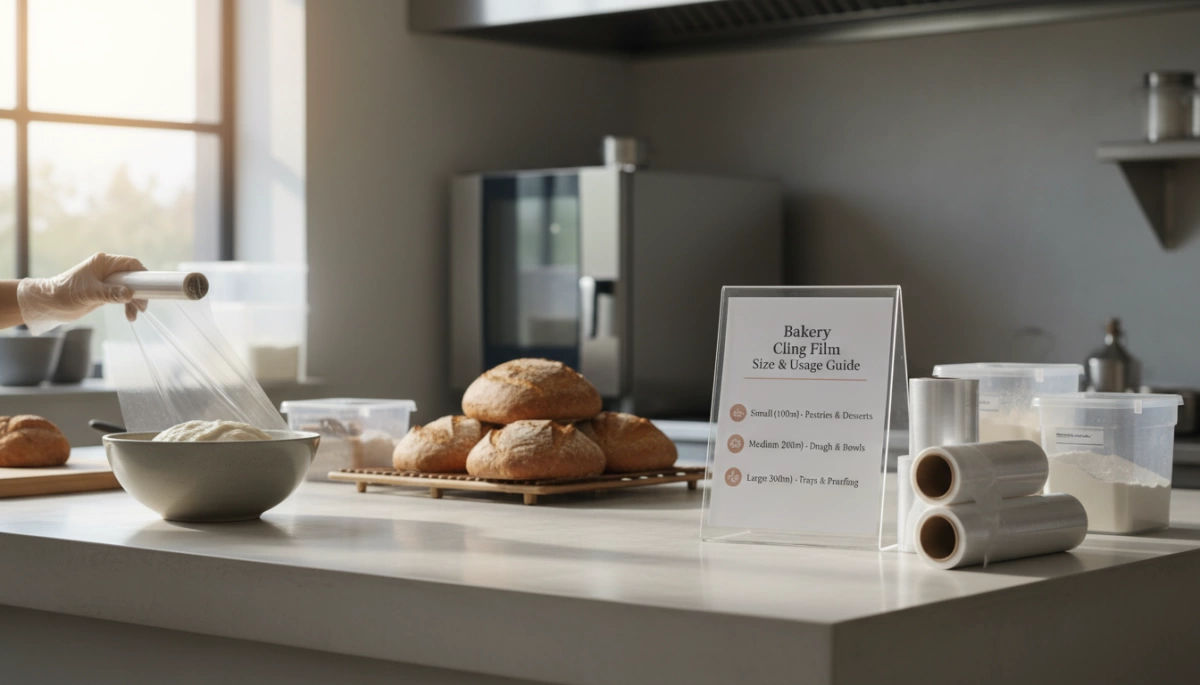
Understanding Cling Film Materials for Bakery Use
When you are wrapping fresh dough or sealing a display tray, the type of plastic you use matters more than you might think. Many bakers stick with what they know, but choosing between PE (Polyethylene) and PVC (Polyvinyl Chloride) impacts food safety, shelf appeal, and your environmental footprint.
PE vs. PVC: Choosing the Right Food Safe Plastic Wrap
Historically, PVC was the go-to for its extreme stickiness. However, modern food safety standards have shifted the conversation. In a professional bakery setting, the chemical composition of the film is critical.
- PVC (Polyvinyl Chloride): Known for high “cling,” but often contains plasticizers. These can migrate into food, especially when in contact with high-fat items like buttercream or pastry dough.
- PE (Polyethylene): The safer, modern alternative. It is chemically inert, meaning it creates a safe barrier without the risk of plasticizers leaching into your products.
We strongly advocate for PE food wrap for baking because it balances performance with strict safety compliance.
Why PE is the Top Choice for Bakeries
As a supplier, we see a massive shift toward PE films in commercial kitchens. The reason is simple: bakeries deal with fats, oils, and fluctuating temperatures.
- Safe for High-Fat Content: Unlike PVC, PE is safe for direct contact with butter, oils, and shortening. You can wrap a greasy croissant or a frosted cake without worry.
- Anti-Fog Technology: Nothing kills a sale faster than condensation obscuring your product. Our PE films are engineered with anti-fog properties, ensuring high clarity plastic film even when wrapping warm bread.
- BPA-Free & Recyclable: Sustainability isn’t just a buzzword; it’s a requirement. We focus on recyclable cling film roll options that are BPA-free, helping you reduce waste without sacrificing durability.
If you are looking to future-proof your bakery’s operations, switching to high-clarity PE formulations is the smart move for both safety and presentation.
Next Step
Would you like me to detail the specific width recommendations for your standard bakery trays and proofing equipment next?
Standard Bakery Cling Film Sizes and Applications
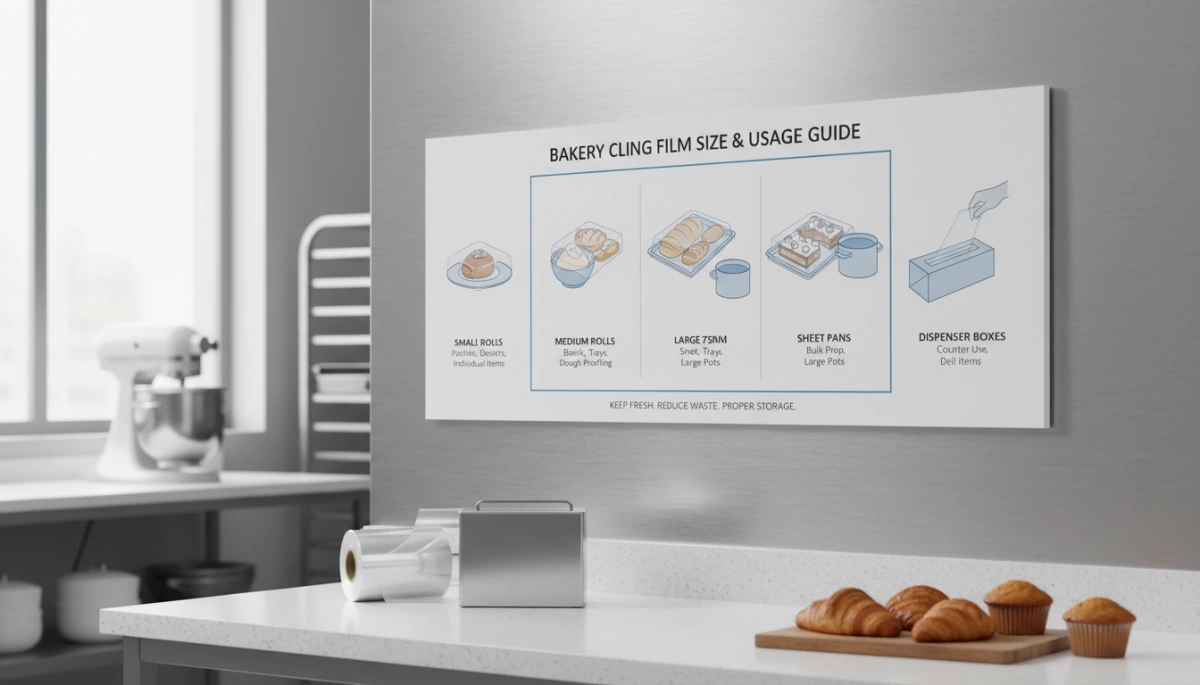
In a high-volume baking environment, using the correct film size isn’t just about convenience—it’s about speed and reducing waste. As a supplier, we know that struggling with a narrow roll on a wide pan kills productivity. We recommend stocking specific widths tailored to your commercial kitchen cling film needs to ensure every tray and bowl is sealed efficiently.
Choosing the Right Width
We generally categorize our bakery cling film width options into three main tiers based on common bakery equipment:
- 300mm (12″) – Precision and Small Goods: This is your go-to for smaller tasks. It is ideal for wrapping individual pastries, sealing small ingredient bowls, or covering plated desserts for display. It prevents the waste of using a wide sheet on a small item.
- 450mm (18″) – The Industry Standard: This is the most critical size for any professional baker. It is designed to fit standard 18″ x 26″ full-sheet pans perfectly. Using catering grade plastic wrap at this width allows you to seal a full tray in a single pass, ensuring an airtight seal for proofing without needing to double-wrap or stretch the film to its breaking point.
- 500mm+ (20″+) – Oversized Equipment: For large dough troughs, mixing bowls, and non-standard equipment, standard widths won’t cut it. We offer wider options to ensure you can cover large surface areas securely.
Roll Length and Cost Efficiency
Standard domestic rolls simply don’t last in a commercial setting. We supply rolls ranging from 300m to 1500m.
- Efficiency: Longer rolls mean fewer changeovers during a busy shift.
- Cost: Buying larger rolls significantly reduces the cost per meter. Just as you look for the best deals on PE food storage bags for bulk storage, choosing the right film length optimizes your operational budget.
Quick Reference: Width vs. Application
Use this guide to match the film to the container:
| Film Width | Best Application | Typical Containers |
|---|---|---|
| 300mm (12″) | Ingredient storage, individual wrapping | Small bowls, quarter-sheet pans, cake boxes |
| 450mm (18″) | Bulk fermentation, bakery tray wrapping film | Full-sheet pans, half-sheet pans, proofing racks |
| 500mm+ (20″+) | Bulk dough storage, equipment coverage | Large dough bins, mixing bowls, oversized trays |
Next Step
Would you like me to detail the specific thickness (micron) recommendations for different dough types in the next section?
Cling Film Thickness Microns: Durability vs. Performance
Choosing the right catering grade plastic wrap isn’t just about width; thickness is the silent hero in a busy bakery. Measured in microns, the thickness determines whether your wrap stretches beautifully over a delicate tart or holds tight against a rising sourdough without snapping. In our experience supplying professional bakery food storage materials, we typically see a range between 8 and 15 microns.
Finding that “sweet spot” ensures you aren’t overspending on heavy film for light jobs, or risking tears on heavy doughs.
Micron Ratings Explained
Here is a quick breakdown of how we classify film thickness for bakery workflows:
| Thickness (Microns) | Best Application | Performance Note |
|---|---|---|
| 9–10 Microns | Light-Duty & Retail Display | High clarity. Excellent for wrapping sandwiches or plating individual pastries where high clarity plastic film is needed for shelf appeal. |
| 11–12 Microns | Standard Proofing & Transport | The bakery standard. Balances elasticity with strength. Perfect for covering dough bins or transport racks. |
| 13–15 Microns | Heavy-Duty & Puncture Resistant | Puncture resistant cling wrap designed for sharp crusts, bone-in items (if branching into deli), or deep-freeze storage. |
How Thickness Affects Usability
Going thicker adds strength, but it changes the mechanics of the wrap. A 13–15 micron film offers superior resistance against tearing, which is vital when wrapping crusty artisan breads or trays with sharp edges. However, you sacrifice a little bit of “cling” and stretchability compared to thinner gauges.
Conversely, 9–10 micron films are incredibly sticky and easy to handle for quick wrapping, but they won’t withstand the pressure of expanding dough during fermentation. As we develop high-quality PE food packaging solutions, we always advise bakers to match the micron rating to the specific stage of production to minimize waste and maximize freshness.
Key Takeaway: For general daily use, 11-12 microns is usually the most versatile choice for the average commercial kitchen.
Would you like me to create a comparison chart for different bakery types (e.g., Patisserie vs. Bread Bakery) and their ideal film inventory?
Best Practices for Professional Bakery Food Storage
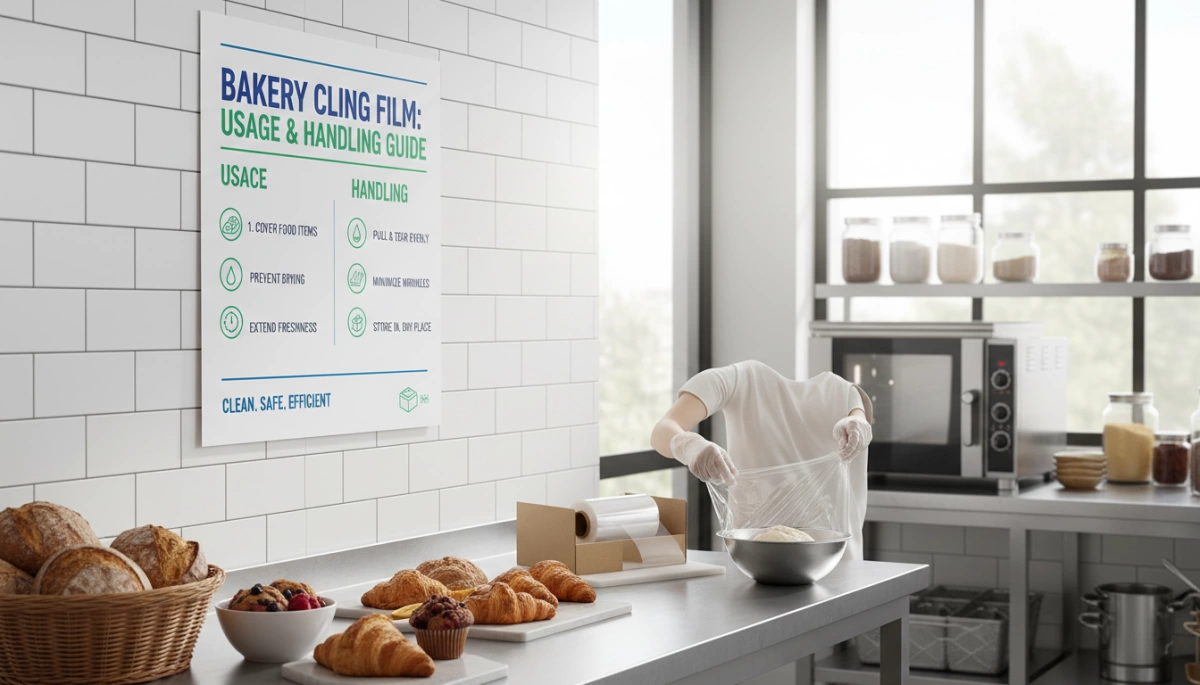
Success in a commercial kitchen isn’t just about the recipe; it’s about how you handle the product after it leaves the mixer. Using catering grade plastic wrap correctly ensures consistent results, reduces spoilages, and keeps your display looking crisp.
Here is how to get the most out of your film during daily operations:
Optimizing Proofing and Storage
- Mastering Humidity Control: During fermentation, dough needs a humid environment. Use our PE film as a tight proofing dough cover. unlike cloth, it creates an airtight seal that prevents the dough surface from drying out and forming a “skin,” ensuring an even rise.
- Preventing Cross-Contamination: In a busy walk-in fridge, strong odors (like yeast, onions, or cheese) can migrate. Wrapping racks securely with commercial kitchen cling film isolates delicate pastries from savory items.
- Freezer Protection: Quality film acts as a barrier against cold air. Tight wrapping prevents ice crystals from forming directly on the product (freezer burn). For loose items that cannot be wrapped easily, sourcing from a reliable PE food bag manufacturer acts as a perfect complementary storage solution to our film.
Retail Display and Transport
- Visual Appeal: Customers eat with their eyes. Our high clarity plastic film is engineered to be invisible. It protects the product without dulling the colors of your frosting or glaze.
- Anti-Fog Performance: If you are wrapping warm breads or placing items in a chilled display case, standard film fogs up. We use anti-fog cling film technology so condensation spreads out evenly, keeping the view of the product crystal clear.
Temperature Safety Limits
Don’t guess with heat. Adhering to safety limits prevents plastic migration into food.
| Application | Safe Range | Recommended Usage |
|---|---|---|
| Microwave | Up to 110°C | Microwave safe food wrap is ideal for reheating, but avoid direct contact with high-sugar/fat foods. |
| Freezer | Down to -40°C | Flexible PE resists cracking in deep freeze environments. |
| Ambient | Room Temp | Perfect for protecting bakery tray wrapping film on countertops. |
Reducing Waste and Costs
- Match Width to Application: Don’t use a 450mm roll for a 300mm tart. Using the correct size bakery cling film width instantly cuts material costs by 20-30%.
- Use Slide Cutters: Boxes equipped with slide cutters prevent the film from tangling and bunching up, which is the number one cause of discarded film in kitchens.
Would you like me to create a comparison chart showing the cost savings of switching to thinner, high-strength PE films?
Food Safety and Compliance Considerations
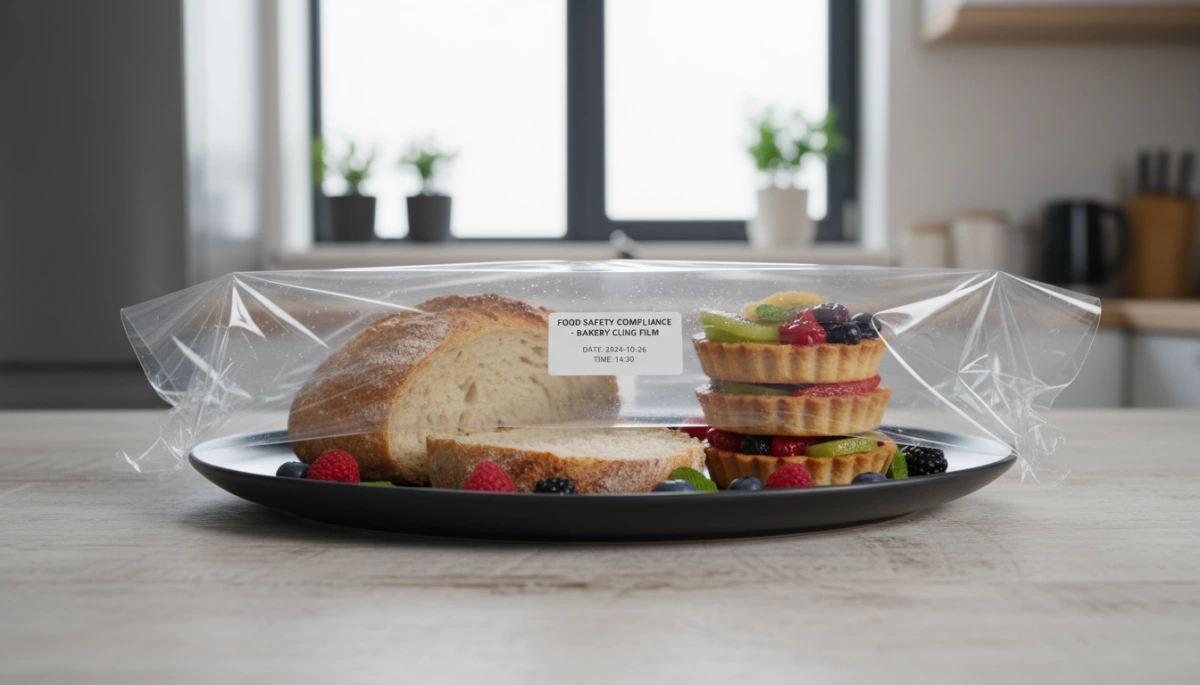
In the food industry, compliance is non-negotiable. As a supplier, we ensure our food safe plastic wrap meets rigorous global standards, strictly adhering to FDA and EU regulations for direct food contact. You need absolute confidence that the material touching your raw dough, finished pastries, and ingredients is free from harmful contaminants.
Low-Migration Films for High-Fat Products
Bakery environments present unique challenges because many products—like buttery croissants, ganache, and oil-based doughs—are high in fat. Inferior films can degrade or leach plasticizers when in contact with fats. Our bakery cling film utilizes advanced low-migration PE formulations. This ensures that no unwanted substances transfer to your food, preserving both the safety and the pure flavor profile of your goods.
Just like our specialized PE bags for bread and bakery items, our films are engineered to handle the specific chemistry of bakery products without compromising quality.
Certified for Temperature Extremes
Modern bakeries need versatility. Your packaging must perform reliably from the deep freeze to the oven.
- Microwave Safe: Our microwave safe food wrap remains stable and does not melt or release chemicals during reheating.
- Freezer Ready: Prevents freezer burn without becoming brittle or cracking at low temperatures.
We are committed to providing only tested, compliant materials. We don’t just sell film; we provide the documentation and certification required to keep your commercial kitchen fully compliant during health inspections.
Would you like me to detail the sustainable and custom options available for your bakery’s specific branding needs next?
Sustainable and Custom Cling Film Options for Bakeries
As the global push for sustainability grows, commercial kitchens are moving away from traditional PVC wraps. We specialize in PE food wrap for baking because it balances high performance with environmental responsibility. Unlike PVC, Polyethylene (PE) is BPA-free and widely recyclable, making it the preferred choice for modern, eco-conscious bakeries.
Our recyclable cling film roll options are designed to reduce plastic waste without compromising on the cling or seal required for proofing dough. By optimizing the film’s structure, we can offer thinner, stronger films that use less raw material while maintaining the durability needed for professional use. For businesses looking to expand their eco-friendly inventory, exploring PE plastic food covers alongside film is a smart move for comprehensive sustainable storage.
OEM and ODM Customization Services
Every bakery has unique equipment and branding needs. We don’t just sell standard rolls; we provide custom size cling film tailored to your specific operations. Whether you need a non-standard bakery cling film width for a specialized machine or a specific thickness for heavy-duty transport, our manufacturing capabilities cover it.
We also support private labeling for retailers and large chains. You can customize the packaging, core diameter, and roll length to fit your brand identity.
Customization Capabilities:
| Feature | Custom Options Available |
|---|---|
| Width | Custom cuts from 200mm to 600mm+ to fit specific trays. |
| Thickness | 8 microns (economy) to 15+ microns (heavy-duty/puncture resistant). |
| Length | Short retail rolls (30m) to bulk catering rolls (1500m). |
| Branding | Custom printed boxes, cores, and private labels. |
| Material | Standard PE, Anti-fog PE, and biodegradable blends. |
Would you like me to draft the “Frequently Asked Questions” section next to address common queries about microwave safety and film storage?
Frequently Asked Questions
Understanding the technical specs of your packaging material is crucial for running an efficient kitchen. Here are the answers to the most common questions we get from professional bakers regarding our commercial kitchen cling film.
What width is best for standard bakery trays?
For standard full-sheet pans (18” x 26”), the 450mm (18-inch) bakery cling film width is the industry standard. It provides just enough overhang to create a secure seal around the rim without wasting material. If you are primarily covering smaller proofing boxes or half-sheet pans, a 300mm (12-inch) roll is usually sufficient. Using the correct width reduces plastic waste and speeds up your workflow during the morning rush.
Is PE cling film microwave-safe?
Yes, high-quality PE food wrap for baking is generally microwave-safe. Unlike PVC, which can release harmful chemicals at high heat, Polyethylene (PE) is heat-stable for reheating and defrosting applications. However, we always recommend venting the film (poking a few holes or leaving a corner open) to allow steam to escape. Always check the specific temperature rating on the box, typically safe up to around 110°C.
How does thickness affect cost and performance?
There is a direct balance between cost and durability.
- 8–10 Microns: Most cost-effective. Best for light jobs like wrapping sandwiches or covering distinct bowls.
- 11–12 Microns: The standard for catering grade plastic wrap. Offers good stretch and cling without tearing easily.
- 13–15 Microns: Puncture resistant cling wrap. Essential if you are wrapping trays with sharp metal edges or stacking heavy items.
While thinner films save money upfront, a film that tears mid-wrap wastes time and product. We generally recommend 11-12 microns as the best all-rounder for bakeries.
Can cling film be used with high-fat doughs and fillings?
Absolutely, provided you are using PE (Polyethylene) film. This is a critical safety point. Traditional PVC films contain plasticizers that can migrate into high-fat foods like buttery croissants, ganache, or brioche dough. Our food safe plastic wrap is made from PE, which is chemically
For standard full-sheet pans (18” x 26”), the 450mm (18-inch) bakery cling film width is the industry standard. It provides just enough overhang to create a secure seal around the rim without wasting material. If you are primarily covering smaller proofing boxes or half-sheet pans, a 300mm (12-inch) roll is usually sufficient. Using the correct width reduces plastic waste and speeds up your workflow during the morning rush.
Is PE cling film microwave-safe?
Yes, high-quality PE food wrap for baking is generally microwave-safe. Unlike PVC, which can release harmful chemicals at high heat, Polyethylene (PE) is heat-stable for reheating and defrosting applications. However, we always recommend venting the film (poking a few holes or leaving a corner open) to allow steam to escape. Always check the specific temperature rating on the box, typically safe up to around 110°C.
How does thickness affect cost and performance?
There is a direct balance between cost and durability.
- 8–10 Microns: Most cost-effective. Best for light jobs like wrapping sandwiches or covering distinct bowls.
- 11–12 Microns: The standard for catering grade plastic wrap. Offers good stretch and cling without tearing easily.
- 13–15 Microns: Puncture resistant cling wrap. Essential if you are wrapping trays with sharp metal edges or stacking heavy items.
While thinner films save money upfront, a film that tears mid-wrap wastes time and product. We generally recommend 11-12 microns as the best all-rounder for bakeries.
Can cling film be used with high-fat doughs and fillings?
Absolutely, provided you are using PE (Polyethylene) film. This is a critical safety point. Traditional PVC films contain plasticizers that can migrate into high-fat foods like buttery croissants, ganache, or brioche dough. Our food safe plastic wrap is made from PE, which is chemically inert and safe for direct contact with fats and oils. Just like our [food-grade plastic bags](https://www.ecoartFor standard full-sheet pans (18” x 26”), the 450mm (18-inch) bakery cling film width is the industry standard. It provides just enough overhang to create a secure seal around the rim without wasting material. If you are primarily covering smaller proofing boxes or half-sheet pans, a 300mm (12-inch) roll is usually sufficient. Using the correct width reduces plastic waste and speeds up your workflow during the morning rush.
Is PE cling film microwave-safe?
Yes, high-quality PE food wrap for baking is generally microwave-safe. Unlike PVC, which can release harmful chemicals at high heat, Polyethylene (PE) is heat-stable for reheating and defrosting applications. However, we always recommend venting the film (poking a few holes or leaving a corner open) to allow steam to escape. Always check the specific temperature rating on the box, typically safe up to around 110°C.
How does thickness affect cost and performance?
There is a direct balance between cost and durability.
- 8–10 Microns: Most cost-effective. Best for light jobs like wrapping sandwiches or covering distinct bowls.
- 11–12 Microns: The standard for catering grade plastic wrap. Offers good stretch and cling without tearing easily.
- 13–15 Microns: Puncture resistant cling wrap. Essential if you are wrapping trays with sharp metal edges or stacking heavy items.
While thinner films save money upfront, a film that tears mid-wrap wastes time and product. We generally recommend 11-12 microns as the best all-rounder for bakeries.
Can cling film be used with high-fat doughs and fillings?
Absolutely, provided you are using PE (Polyethylene) film. This is a critical safety point. Traditional PVC films contain plasticizers that can migrate into high-fat foods like buttery croissants, ganache, or brioche dough. Our food safe plastic wrap is made from PE, which is chemically inert and safe for direct contact with fats and oils. Just like our food-grade plastic bags used for bulk storage, our PE film ensures no chemical leaching occurs during long fermentation periods.
What are the advantages of catering-grade over domestic cling film?
Catering grade plastic wrap is engineered for the demands of a professional environment.
- Length: Rolls are typically 300m to 1500m long, reducing the frequency of roll changes.
- Dispensing: They come in reinforced cutter boxes (often with slide cutters) that withstand daily abuse.
- Cling & Clarity: Professional films often feature anti-fog cling film technology, keeping products visible in display cases even when condensation forms.
How to store rolls for maximum shelf life?
To maintain the tackiness and unwinding ease of your recyclable cling film roll, store it in a cool, dry place away from direct sunlight and ovens. Excessive heat can cause the layers to fuse, making it difficult to unroll, while extreme cold can make the plastic brittle. A temperature range of 15°C to 25°C is ideal for maintaining the film’s elasticity.
Would you like me to create a comparison chart highlighting the cost-benefit analysis of switching from PVC to PE film for your specific product line?