














Raw Material Basics: PVC vs PE Cling Film
When buyers ask me about PVC vs PE cling film, what they really want to know is simple: What is this stuff actually made of, and is it safe to touch my food? Let’s start with the raw materials, because they drive almost everything else: performance, safety, and cost.
What Is PVC Cling Film?
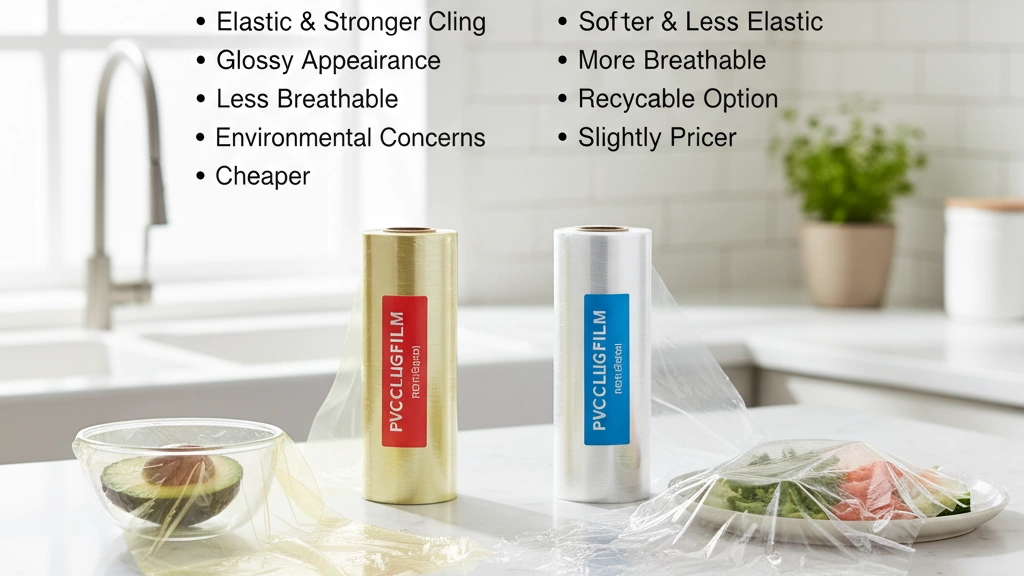
PVC cling film is made from polyvinyl chloride resin plus a high level of plasticizers to make it soft and stretchy.
- Base resin: PVC (polyvinyl chloride)
- Typical plasticizers:
- DEHA (Di-2-ethylhexyl adipate)
- DOA (Dioctyl adipate)
- Other phthalate and non-phthalate systems depending on the supplier
- Why plasticizers?
PVC is naturally rigid. It only becomes “cling film” when 20–35% plasticizer is added to give it stretch, cling, and flexibility.
This plasticizer system is the main reason PVC can cling so aggressively—but it is also the main source of migration risk into fatty and oily foods.
What Is PE Cling Film?
PE cling film is made from polyethylene resins, typically blends of:
- LDPE (Low Density Polyethylene)
- LLDPE (Linear Low Density Polyethylene)
- Metallocene PE (mPE) for high performance
Key point: PE cling film does not need plasticizers. The polymer chain structure itself is soft and flexible, especially in metallocene PE, which gives:
- High stretch and elasticity
- Strong cling without additives like DEHA
- Excellent clarity and gloss with the right grade
This is why food grade polyethylene wrap is considered inherently safer for direct food contact, especially
Performance Comparison: PVC vs PE Cling Film
Stretch & Elasticity in Real Use
For U.S. supermarkets and kitchens, “stretch” is what decides speed and waste.
- PVC cling film
- Very soft and elastic, stretches easily with little force
- Great for manual overwrap of meat trays
- PE cling film (especially metallocene PE)
- Higher “snap-back” stretch, more controlled tension
- Better for consistent wrapping on busy prep tables and automatic lines
Bottom line: PVC feels softer; modern metallocene PE delivers more controlled stretch with less neck‑down and less film waste.
Cling & Self‑Adhesion Performance
You need the wrap to grab the tray, not peel back in the cooler.
- PVC
- Naturally high cling and self‑adhesion
- Excellent on foam trays, plates, and stainless tables
- PE
- Cling is engineered into the formula (no plasticizers)
- High‑grade food grade polyethylene wrap can match or beat PVC on most trays and containers
For supermarket meat rooms and delis, our PE cling films are tuned so staff don’t fight with “non‑stick” film during rush hours.
Clarity, Gloss & Shelf Presentation
Presentation sells—especially meat and produce.
- PVC
- Very high gloss and clarity
- Strong “wet look” on red meat and poultry
- PE
- New metallocene PE grades offer crystal clarity and strong gloss
- Less yellowing risk over time
Today’s reality: With the right PE grade, customers rarely see a difference on the shelf, but you gain a safer and more sustainable material.
Anti‑Fog Performance in Refrigerated Cases
Fog kills impulse buys.
- PVC
- Needs anti‑fog additives; performance varies a lot by supplier
- PE
- Can be formulated with long‑lasting anti‑fog for salad bars, cut fruit, and chilled produce
- Ideal for U.S. retailers pushing fresh‑cut and grab‑and‑go
If anti‑fog is core for your produce program, look for PE anti‑fog cling film specifically rated for refrigerated display use.
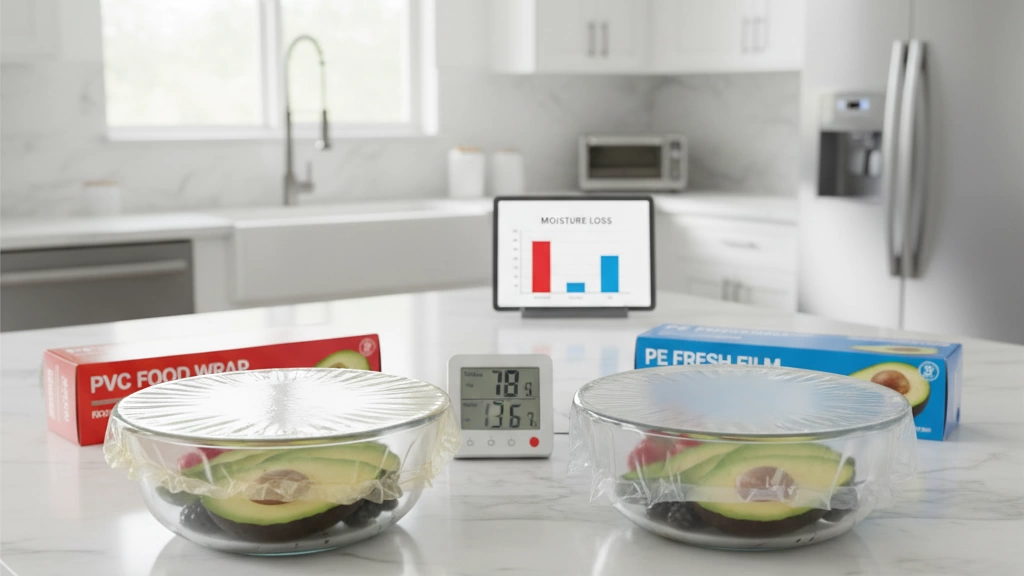
Oxygen Permeability & Product Freshness
Oxygen transmission controls color and shelf life.
- PVC
- Higher oxygen permeability
- Great for fresh red meat where bloom color is important
- PE
- Lower oxygen permeability
- Better for produce, cheese, bakery, and items where slower oxidation is preferred
For meat‑heavy operations, PVC still has an edge on bloom; for mixed or produce‑focused stores, PE is usually the smarter overall choice.
Temperature Resistance: Freezer, Fridge & Microwave
U.S. buyers care a lot about microwave safe cling film.
- PVC
- Not ideal for high heat; plasticizer migration risk in hot/oily foods
- Some wraps not recommended for direct microwave contact
- PE
- Excellent for freezing and refrigeration
- Food‑grade PE cling film is typically microwave safe when used per label (avoid direct contact with high‑fat foods at very high temps)
Always confirm compliance with FDA food‑contact rules and check the supplier’s microwave guidance.
Tear & Puncture Resistance
Breakage slows lines and wastes film.
- PVC
- Soft, but can tear on sharp bones or corners
- Adequate for manual supermarket overwrap
- PE
- Metallocene PE has superior puncture and tear resistance
- Ideal for industrial packaging lines, high‑speed overwrap, and heavy catering trays
For food factories and central kitchens, PE usually wins on uptime and reduced breakage.
Quick Where PVC Wins vs PE Wins
| Feature / Use Case | PVC Cling Film | PE Cling Film (Metallocene) |
|---|---|---|
| Stretch feel (manual wrapping) | Softer, very elastic | Controlled stretch, less waste |
| Cling on trays & plates | Excellent | Excellent with right formulation |
| Clarity & gloss | Very high | Equal or better with premium PE |
| Anti‑fog performance | Good if formulated | Excellent for produce & salad bars |
| Oxygen permeability (red meat bloom) | Advantage for fresh meat | Better for produce, cheese, bakery |
| Freezer & microwave use | Limited for hot/oily foods | Stronger choice for freezer + microwave |
| Tear/puncture on sharp products | Moderate | Stronger, more durable |
| Food factories & auto wrapping lines | Acceptable | Preferred for high‑speed & heavy‑duty use |
For supermarkets and food factories focused on safety, ESG, and cost‑in‑use, high‑performance PE cling film is usually the better long‑term platform. If you’re planning a broader packaging upgrade, it’s worth pairing PE wrap with other sustainable packaging solutions like reusable produce bags for retail and distribution.
Health and Food Safety: PVC vs PE Cling Film
PVC plasticizer migration into fatty foods
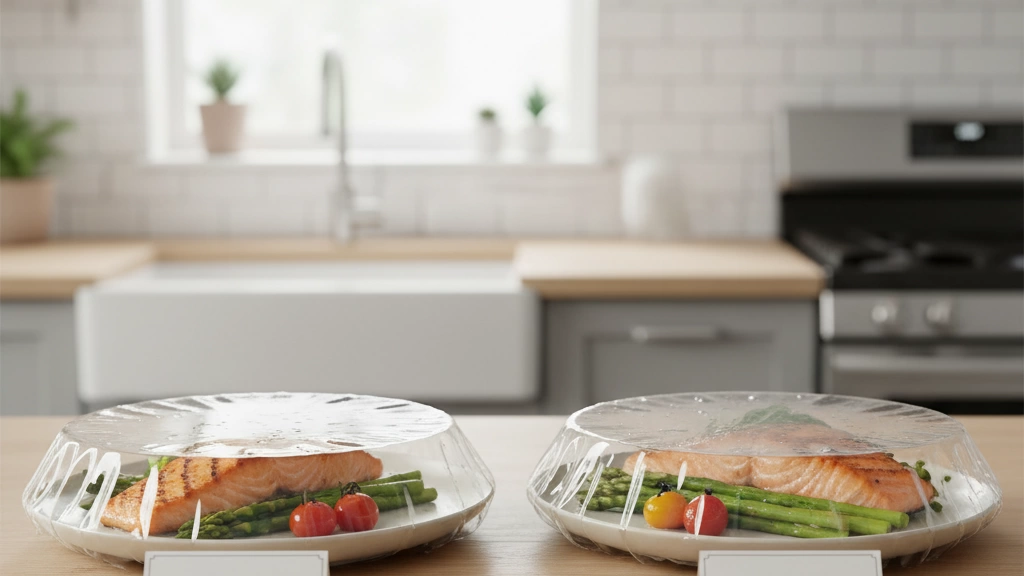
PVC cling film is made soft and stretchy by adding plasticizers like DEHA, DOA, DINP, etc. These additives are not chemically bonded to the PVC, so they can migrate into food, especially:
- High-fat foods (meat, cheese, butter, deli items)
- Oily, marinated, or processed products
- Long storage times at chilled or room temperature
In real use, that means PVC wrap in direct contact with fatty foods can slowly transfer small amounts of plasticizer into the product you’re selling or serving.
DEHA and endocrine disruptor concerns
Some PVC plasticizers (including DEHA and certain phthalates) are under review as possible endocrine disruptors. Key concerns:
- Potential impact on hormones with long-term, repeated exposure
- Higher migration into oily foods and hot-contact scenarios
- Extra scrutiny for baby food, kids’ meals, and sensitive consumers
I’m not saying every PVC-wrapped product is unsafe, but if you run a supermarket, deli, or food plant, this is a risk you can easily avoid by moving away from PVC.
EU, FDA and Prop 65 rules for PVC wrap
Regulators have already reacted:
- EU (Regulation (EU) 10/2011 & specific national rules)
- Strict migration limits for DEHA and other plasticizers
- Some countries recommend avoiding PVC for fatty foods and hot use
- FDA (U.S.)
- Allows certain PVC plasticizers but sets specific migration limits
- Requires testing and documentation for food-contact approval
- California Prop 65
- Requires warnings if a product exposes consumers to listed chemicals above certain levels
- Some phthalates and related plasticizers appear on the list, increasing compliance pressure
If you’re selling into the U.S. plus EU or UK retail, PVC compliance quickly becomes a headache.
Why many European supermarkets phased out PVC
Most large European retailers have quietly shifted away from PVC cling film because:
- Plasticizer migration and consumer perception issues
- Complex, changing chemical regulations across countries
- Sustainability goals and PVC’s bad image (chlorine, dioxin risk in waste)
- Desire for one global spec that’s safe and easy to defend
The trend is clear: PVC is shrinking, PE and other non-PVC films are growing.
Why PE cling film is plasticizer-free and safer
PE cling film (LDPE, LLDPE, metallocene PE) doesn’t need plasticizers to be soft and flexible. That gives it a major safety edge:
- No added plasticizers, no phthalates
- Very low overall migration into food
- Strong track record as food-grade polyethylene wrap worldwide
For U.S. buyers, that means fewer compliance worries and an easier story to tell customers who ask if your plastic wrap is “food safe.”
If you’re also using plastic bags or containers, the same logic applies—this is why a lot of operators are rethinking storage options and turning to safer materials instead of questionable plastics, similar to what we cover in our guide on whether you should store food in plastic bags.
How to read food wrap compliance documents
When you review a cling film spec or certificate, focus on:
- Regulatory scope
- Look for FDA food-contact, EU 10/2011, and, if relevant, Prop 65 statements
- Migration test results
- Check “overall migration” and “specific migration” into fatty food simulants (like olive oil or isooctane)
- Confirm test conditions: time, temperature, and food type must match how you actually use the film
- Positive statements
- “No added plasticizers/phthalates” for PE films
- List of compliant substances and any usage limits
If a supplier won’t give you full migration reports or can’t clearly state which regulations they meet, that’s a red flag—especially for PVC cling film touching fatty or hot foods.
Use Cases by Food Type and Application
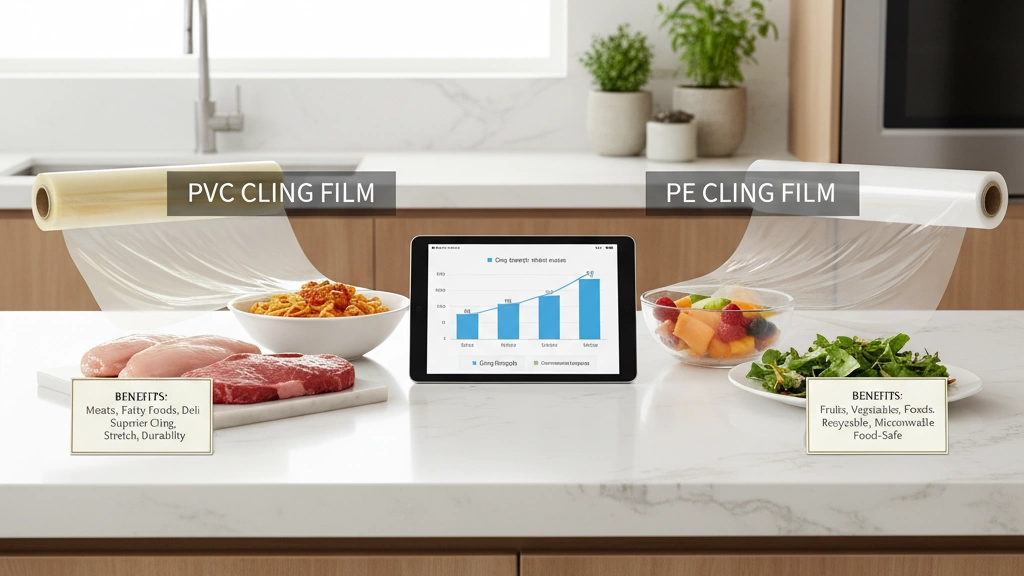
Best cling film for fresh red meat, poultry & seafood
For fresh meat and seafood in US supermarkets, I recommend high-clarity PE cling film over PVC in most cases:
-
Red meat in trays (beef, lamb, pork)
- Use metallocene PE cling film with good stretch and gloss.
- PE’s higher oxygen barrier vs PVC helps control drip and odor while still keeping color stable.
- No plasticizers = no migration risk into fatty meat.
-
Poultry & seafood
- PE cling film is safer for high-fat skin and oily fish.
- Strong puncture resistance handles bones and sharp shell edges.
- Choose anti-fog PE for refrigerated fish counters so packs stay clear in cold cases.
I still see some US plants using PVC on red meat for extreme breathability, but when we run side-by-side tests, most switch to PE for safety and regulatory peace of mind.
Packaging fruits, vegetables & salad bars
For produce, PE cling film is a clear win:
-
Whole fruits & vegetables
- PE has balanced moisture and gas control, keeping greens crisp without fogging.
- Anti-fog PE is ideal for cut fruit cups and veggie trays in open display coolers.
-
Salad bars & self-serve cases
- Use pre-cut PE sheets or hand rolls to quickly cover pans and GN containers.
- PE handles frequent opening/closing without tearing and is safer around dressings and oils.
If you’re also selling prepared salads or grab-and-go bowls, pair PE wrap with durable containers or even stainless steel food containers for travel and display to level up both presentation and durability.
Wrapping cheese, deli, bakery & ready-to-eat
-
Cheese & deli meats
- These are high-fat foods. I strongly prefer PE cling film to avoid PVC plasticizer migration.
- PE wrap clings tightly to blocks, slices, and logs without “oily sweating” issues.
-
Bakery (bread, pastries, cakes)
- PE gives soft cling that doesn’t crush delicate toppings.
- Great clarity for front-of-store bakery displays and in-store made items.
-
Ready-to-eat meals & sides
- PE cling film is the safer choice over hot counters and refrigerated grab-and-go.
- Works well on plastic, paper, or foil trays—if you’re using foil pans, you might also want to look at our guide on buying food-grade aluminum foil for hot-hold and oven use (https://www.ecoartfullife.com/news/buy-aluminum-foil/).
Microwave, hot-hold & meal prep
US customers expect microwave-safe cling film, and this is where PE really stands out:
-
Microwave reheating
- PE cling film (food-grade, with clear labeling) is safe for vented microwave use.
- No plasticizers = lower risk of chemicals migrating into hot, oily foods.
- Always leave a small vent opening; don’t let wrap touch food directly if it’s very oily or very hot.
-
Hot-hold counters & catering
- PE handles typical hot-hold temps better than PVC and keeps pans covered without sticking and tearing.
- For US meal-prep businesses, PE wrap is ideal for batch prep, chilling, and reheating in one workflow.
Industrial lines: FFS, stretch & automatic wrapping
On high-speed packaging lines, PE cling film is now competitive with PVC:
-
Stretch overwrapping (supermarket trays)
- Metallocene PE formulas run smoothly on automatic and semi-automatic stretch wrappers.
- High elasticity and tear resistance reduce downtime and film breaks.
-
Form-fill-seal & industrial packers
- PE cling film is available in machine rolls and jumbo rolls tuned for consistent tension and sealing.
- Less dust and no plasticizer bleed means cleaner equipment and fewer adjustments.
For factories still on PVC, we usually run a short trial with PE machine rolls and dial in tension, cutting, and sealing. In most cases, they stay with PE after seeing the scrap reduction and safety upgrade.
When I still spec PVC vs when PE clearly wins
I’m open about this: there are still a few edge cases where I’ll accept PVC, but they’re shrinking fast.
When I still sometimes see PVC used:
- Very specific high-breathability red meat applications where specs haven’t been updated in years.
- Old wrapping machines tuned only for PVC that haven’t been recalibrated yet.
Where PE cling film is clearly the better choice:
- Any high-fat food (cheese, deli, fatty meat, oily ready-meals).
- Microwave or hot-hold usage in US homes, restaurants, or meal-prep.
- Produce, salad bars, and bakery, where anti-fog and clarity matter.
- Retailers and food factories with ESG and safety targets that want to move away from PVC.
In my own business, when I’m asked for a new spec today, I start with PE cling film by default and only consider PVC if there’s a very narrow, technical reason—and even then, I’ll push for a PE trial first.
Cost and Sustainability: PVC vs PE Cling Film
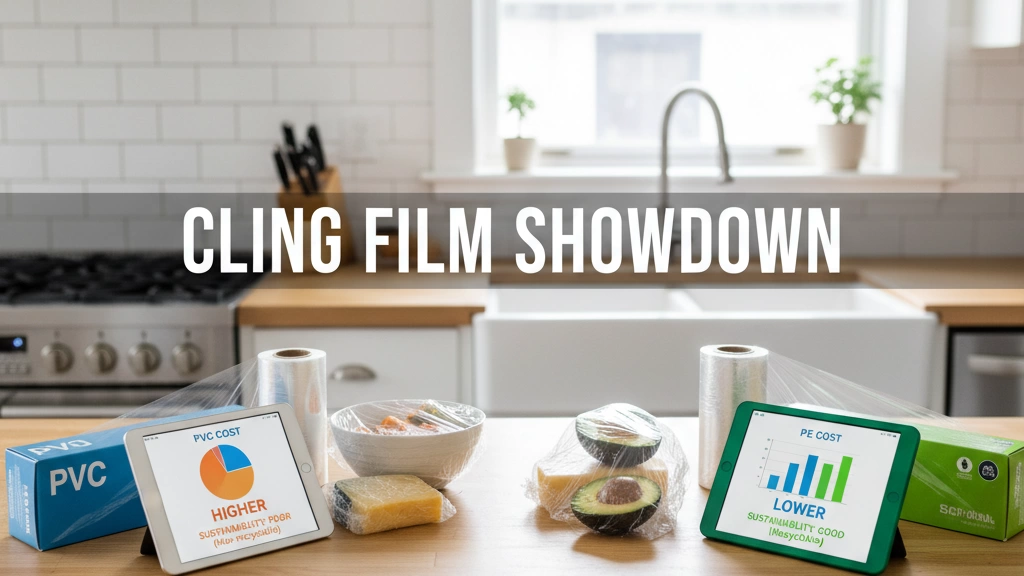
When I compare PVC vs PE cling film for U.S. supermarkets and food factories, I look at real cost-in-use + ESG impact, not just list price.
2026 Price: Per Roll, Per Meter, Per Tray
On the U.S. market in 2026, PVC often looks cheaper per roll, but that’s not the full story.
Typical trend (commercial grades, not retail mini rolls):
- Per roll: PVC can be 5–15% cheaper than comparable PE rolls
- Per meter: PE is usually similar or slightly higher than PVC
- Per packed tray (the only number that really matters):
- PE often wins because you can run thinner gauges (9–12 μm) with less breakage and better stretch
- That means more trays per roll and lower labor waste from re-wrapping
If you’re buying for a supermarket group or a central kitchen, always ask your supplier for a cost-per-1,000 trays estimate, not just a price list.
Thickness, Roll Length & Yield = True Cost-in-Use
Two PE films at different specs can have completely different economics. Key factors:
-
Film thickness (gauge)
- Thinner PE (with metallocene) can deliver the same performance as thicker PVC
- Example: Switching from 12 μm PVC to 10 μm PE can cut film usage by 10–20% without losing strength
-
Roll length
- Longer rolls = fewer changeovers, less downtime, less core waste
- For busy meat or produce lines, fewer roll swaps per shift = real labor savings
-
Yield (trays per roll)
- Ask your supplier: “How many meat trays / produce trays can I wrap per roll at my standard size?”
- This is the simplest way to compare PVC vs PE cost in real operation
Recyclability & Waste Handling: PVC vs PE
From a waste and recycling standpoint, PE has a clear advantage:
-
PVC cling film
- Hard to recycle; most MRFs in the U.S. reject PVC in film streams
- Can contaminate other plastic recycling
- Often treated as mixed plastic waste headed to landfill or incineration
-
PE cling film
- Same base family as common polyethylene bags and stretch film
- In theory, mechanically recyclable where thin-film PE is accepted
- Easier to integrate into store take-back programs or specialty film recycling
For retailers pushing eco-friendly food wrap alternatives, PE is simply more compatible with future recycling systems, something we discuss a lot when we talk about sustainable food-contact materials.
Dioxin & Incineration Concerns with PVC
PVC brings regulatory and PR risk around its end-of-life:
- When PVC is improperly incinerated, especially at low temperatures, it can form dioxins, which are persistent environmental pollutants
- Many waste contractors and ESG teams try to minimize PVC in the waste stream to reduce:
- Hazardous emissions risk
- Future compliance and liability concerns
This is one of the reasons large European retailers have quietly shifted away from PVC wraps and why many U.S. ESG teams are starting to flag PVC in internal materials audits.
How PE Cling Film Supports ESG & Retailer Goals
PE cling film fits much better with ESG, plastic reduction, and sustainability reporting:
- Material simplification: One major polymer (PE) across wraps, bags, and some films = cleaner waste stream data
- Lower material usage: High-performance PE lets you downgauge (thin the film) while maintaining performance
- Better fit for recycling pilots: PE films are the go-to when retailers trial in-store film collection
- Lower hazard perception: No plasticizers, no chlorine, fewer questions from customers and auditors
If you’re reporting under **CSRD-style frameworks, GRI, or internal Scope
Why Choose Artfullife PE Cling Film
If you’re running a supermarket, commissary kitchen, or food plant in the U.S., Artfullife® PE cling film is designed to replace PVC without giving up performance.
Metallocene PE = High Stretch, Strong Cling, Clear Look
We use metallocene-grade PE, not basic LDPE. That gives you:
- High stretch: tight, secure wrap on trays and containers
- Strong cling: self-adhesion without extra heat or tape
- High clarity & gloss: clean shelf appearance for meat, produce, bakery
| Feature | Artfullife Metallocene PE | Standard PE | Typical PVC Wrap |
|---|---|---|---|
| Stretch | ★★★★☆ | ★★☆☆☆ | ★★★★☆ |
| Cling | ★★★★☆ | ★★☆☆☆ | ★★★★★ |
| Clarity/Gloss | ★★★★☆ | ★★★☆☆ | ★★★★★ |
| Plasticizers | None | None | Yes |
Formats for Every Operation
We supply commercial PE cling film for most retail and foodservice setups:
- Hand rolls – deli, back-of-house, prep tables
- Machine rolls – supermarket stretch-wrap machines, tray overwrapping
- Pre-cut sheets – high-speed prep, central kitchens, salad bars
- Jumbo rolls – converters and large food factories
Branding Options: Anti-Fog, Color, Printing
You can tune the film to your operation and brand:
- Anti-fog PE cling film for produce cases and refrigerated displays
- Colored film for product coding or visual control
- Custom printed film for private label branding and promotions
For a wider look at how innovative food wraps are evolving, we share more market insight in our overview of preservative film trends and future outlook.
Food-Grade Certifications You Can Show Auditors
Artfullife PE cling film is built for strict U.S. and global food standards:
- FDA compliant food-contact PE
- EU 10/2011 compliant for export-ready operations
- BRCGS food safety system support
- Halal & Kosher options for diversified customer bases
Migration tests and declarations of compliance are available for your QA team.
Service: Stable Supply, Consistent Quality, Real Support
As a focused supplier to supermarkets and food plants, we back the product with:
- Consistent roll quality – uniform thickness, smooth unwinding, strong edges
- Stable supply – reliable lead times and replenishment planning
- Technical support – help with machine settings, film spec selection, and trials
Performance vs PVC in Real Trials
In U.S. customer trials (meat rooms, produce packing, RTE kitchens), our PE cling film has:
- Matched or outperformed PVC on stretch and tightness on trays
- Delivered equal or better clarity for fresh meat and produce
- Reduced concerns about plasticizer migration into fatty foods
- Run smoothly on existing automatic stretch-wrap machines with minor adjustments
If you’re looking to phase out PVC without sacrificing speed, presentation, or cost-in-use, Artfullife PE cling film is built to make that switch straightforward.
Buying Guide: How to Pick PVC or PE Cling Film
Simple decision flow: meat vs mixed vs produce-focused
Use this quick flow to choose PVC vs PE cling film:
-
Mainly fresh red meat & poultry on trays?
- Need strong stretch + high oxygen transfer for bright red color
- If regulations allow and you accept plasticizer risk: PVC can still work
- If you want safer, plasticizer‑free film: choose high‑stretch metallocene PE
-
Mixed operation (meat + produce + deli + bakery)?
- You need one “all‑round” food grade wrap
- Pick PE cling film for safer contact with fatty, acidic, and ready‑to‑eat foods
-
**Produce‑heavy (
PVC vs PE Cling Film FAQ
Is PVC cling film being phased out or banned in my country?
- In the U.S., PVC cling film is not banned, but it’s under tighter scrutiny for food contact, especially with fatty foods.
- In the EU and UK, many major retailers have voluntarily phased out PVC for fresh food because of plasticizer migration and recycling issues.
- Trend globally: shift from PVC to PE for supermarket and foodservice use.
If you’re serving health‑conscious customers or selling into retailers with ESG targets, plan to move away from PVC.
Can PE cling film safely go in the microwave and freezer?
- Freezer: PE cling film is generally safe for freezing; just avoid direct contact with very sharp edges (bones, shells).
- Microwave: Use microwave-safe, food-grade PE only. Keep film from touching food with high fat or sugar when very hot.
- Always check:
- “Microwave safe” on the box or spec sheet
- FDA and EU food-contact compliance
Which is cheaper today for supermarkets, PVC or PE cling film?
Typical 2026 reality (varies by market):
| Item | PVC Cling Film | PE Cling Film (Metallocene) |
|---|---|---|
| Price per roll | Often slightly lower | Slightly higher |
| Yield per roll | Lower (heavier, thinner) | Higher stretch, better yield |
| True cost per wrapped tray | Similar or PE cheaper | Often wins on cost-in-use |
When you factor in:
- Fewer breaks on the line
- Better stretch and coverage
- Lower compliance risk
PE usually wins on total cost, not just sticker price.
What regulations cover food-grade plastic wrap and migration limits?
For U.S. buyers, check:
- FDA 21 CFR for food-contact plastics
- Overall and specific migration limits (SML) for additives
For global/regional use:
- EU 10/2011 for plastic materials in contact with food
- Local rules (California Prop 65, etc.) for substances of very high concern
Any serious supplier should provide:
- Declaration of Compliance (DoC)
- Migration test reports for fatty, acidic, and aqueous foods
If you need deeper background on material rules, our breakdown of polyethylene vs polypropylene for food packaging films is a good primer: polyethylene vs polypropylene for food packaging films.
Is PVC cling film banned in Europe or only restricted in certain uses?
- PVC cling film is not fully banned in Europe.
- It is restricted by:
- Tight plasticizer migration limits
- Retailer and brand owner policies
- Many European supermarkets have stopped using PVC for fresh meat, deli, and produce and switched to PE or other safer options.
Differences between cling film, stretch film and shrink film
| Type | Main Use | Material Commonly Used |
|---|---|---|
| Cling film | Direct food contact, wrapping | PVC or PE |
| Stretch film | Pallet/unit load wrapping | LLDPE, metallocene PE |
| Shrink film | Multipacks, display packs | PE, PO, or PVC shrink (mostly phased out) |
If it’s touching food directly, you want food-grade cling film, not generic stretch or shrink film.
How to store and handle cling film rolls for best performance?
- Store at room temperature (60–77°F / 15–25°C)
- Avoid direct sunlight and high heat
- Keep rolls upright, dry, and wrapped in their packaging
- Don’t stack heavy items on top of rolls
- Rotate stock: FIFO (first in, first out)
Good storage = better stretch, cling, and no edge damage.
Where to buy commercial-grade PE cling film wholesale?
You should be looking for:
- Food-service and supermarket–grade PE cling film
- Metallocene PE formulas for high stretch and clarity
- Full documentation: FDA, EU 10/2011, BRCGS, Halal, Kosher
- Stable supply, consistent roll quality, and technical support
We supply wholesale PE cling film in:
- Hand rolls
- Machine rolls
- Pre-cut sheets
- Jumbo rolls for converters
If you’re also exploring advanced barrier or active packaging, our write-up on antimicrobial vs antioxidant food film gives context on how films can protect food quality.
How long can food stay fresh under PVC vs PE films?
It depends on food type, temp, and display, but as a rough guide:
| Food Type | PVC Cling Film | PE Cling Film (Right Grade) |
|---|---|---|
| Fresh red meat | Good bloom, good O₂ transfer | Very good with high-O₂ PE |
| Poultry/seafood | Good but plasticizer concern | Preferred: safe, good shelf life |
| Produce | Good, but less favored in EU | Excellent, especially with anti-fog |
Under proper chill (32–39°F / 0–4°C), PE cling can match or beat PVC performance when the oxygen permeability is tailored to the product.
When should a business switch fully from PVC to PE cling film?
You should seriously consider switching when:
- Retailers or corporate HQ push ESG or PVC reduction
- You package a lot of fatty foods (meat, cheese, RTE meals)
- You’re facing compliance questions about plasticizers (DEHA, etc.)
- You want simpler recycling and waste handling
- You’re upgrading or automating packaging lines and need cleaner, safer specs
For most U.S. supermarkets, meal-prep kitchens, and food factories, the smarter long-term move is to standardize on high-performance PE cling film and use PVC only where it’s absolutely required and documented.